
Mexico Fleet Leasing Market to Reach USD 992.58 Million by 2034
The Mexico fleet leasing market size was valued at USD 580.37 Million in 2025 and is projected to reach USD 992.58 Million by 2034, growing at a compound annual growth rate of 6.14% from 2026-2034.

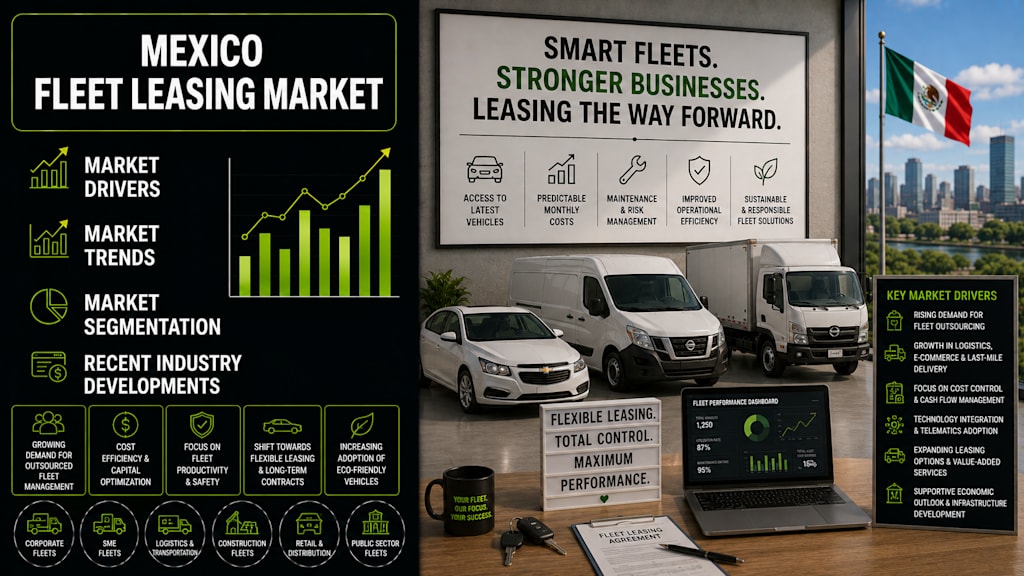
Mexico Fleet Leasing Market Size, Growth, and Forecast (2026–2034)
Efficient transportation is a critical component of modern business operations. Whether for logistics, sales activities, service delivery, or corporate mobility, companies rely on vehicle fleets to maintain productivity and customer satisfaction. However, owning and managing large fleets can involve significant costs and operational complexities. As a result, many organizations are increasingly turning to fleet leasing as a flexible and cost-effective alternative. In 2026, fleet leasing continues gaining momentum across Mexico as businesses seek smarter mobility solutions.
The Mexico fleet leasing market was valued at USD 580.37 Million in 2025 and is projected to reach USD 992.58 Million by 2034, expanding at a compound annual growth rate (CAGR) of 6.14% during 2026–2034. This growth reflects increasing demand for operational flexibility, cost optimization, and efficient vehicle management solutions.
Fleet leasing allows businesses to access vehicles through long-term agreements without the financial burden of ownership, enabling organizations to focus on core operations while reducing maintenance and asset management responsibilities.
Request a Sample Report with Latest 2026 Data & Forecasts:
Key Trends Shaping the Mexico Fleet Leasing Market
Several important trends are influencing market development:
• Growing adoption of outsourced fleet management solutions
• Rising demand for electric and fuel-efficient leased vehicles
• Increasing integration of fleet telematics and digital monitoring systems
• Expansion of subscription-based mobility services
• Growing focus on cost optimization and operational efficiency
These trends demonstrate how companies are modernizing transportation strategies to remain competitive.
Major Growth Drivers in the Mexico Fleet Leasing Industry
Several factors continue supporting market expansion.
One of the primary growth drivers is the need for cost-effective transportation solutions. Leasing allows businesses to avoid large upfront vehicle investments while maintaining operational flexibility.
Another important factor is the growing demand for fleet modernization. Companies increasingly seek access to newer vehicles equipped with advanced technologies, improved fuel efficiency, and enhanced safety features.
The expansion of logistics, transportation, and delivery services is also contributing significantly to market growth. Businesses operating in these sectors often require scalable vehicle solutions that can adapt to changing operational demands.
Additionally, fleet leasing simplifies vehicle maintenance and lifecycle management, making it an attractive option for organizations looking to reduce administrative burdens.
The increasing focus on sustainability and environmental responsibility is also encouraging businesses to explore cleaner and more efficient vehicle options through leasing programs.
Role of Technology in Fleet Leasing
Technology is transforming the fleet leasing industry in several ways.
Telematics systems allow businesses to monitor vehicle performance, driver behavior, fuel consumption, and maintenance requirements in real time.
Artificial intelligence is helping fleet operators optimize routes and improve operational efficiency.
Digital platforms are simplifying vehicle management, contract administration, and service scheduling.
Predictive maintenance technologies are also helping reduce downtime and improve fleet reliability.
These innovations continue enhancing both customer experiences and operational performance.
Investment Opportunities in the Mexico Fleet Leasing Market
The expanding market presents several attractive opportunities for investors and businesses.
Companies are investing in fleet management software, electric vehicle leasing programs, and connected mobility solutions to strengthen market competitiveness.
There is also increasing interest in sustainable transportation initiatives and smart fleet technologies.
Investments in digital infrastructure and vehicle tracking systems continue supporting innovation.
Partnerships between leasing providers, vehicle manufacturers, and technology companies are creating new opportunities for growth.
With continued expansion expected through 2034, the market presents promising long-term investment potential.
Challenges Impacting the Mexico Fleet Leasing Industry
Despite positive growth prospects, several challenges remain.
One challenge is economic uncertainty, which can influence business investment decisions and fleet expansion plans.
Another issue is vehicle supply chain disruptions, which may affect fleet availability and replacement cycles.
Fluctuating fuel prices can also impact transportation costs and leasing demand.
Additionally, the transition toward electric mobility may require further investment in charging infrastructure and support systems.
Future Outlook (2026–2034)
Looking ahead, the Mexico fleet leasing market is expected to continue its steady expansion.
Between 2026 and 2034, demand for flexible, technology-enabled, and sustainable transportation solutions is likely to increase. Businesses are expected to prioritize mobility strategies that improve efficiency while reducing operational costs.
Future developments may focus on connected vehicle technologies, artificial intelligence, predictive maintenance systems, and greater adoption of electric fleets.
The continued growth of logistics, e-commerce, and corporate transportation services is also expected to support market expansion.
Overall, the market appears positioned for sustained development driven by digital transformation, fleet optimization, and changing business mobility needs.
Conclusion
The Mexico fleet leasing market is steadily evolving as organizations seek more efficient, flexible, and cost-effective transportation solutions. Supported by technological innovation, growing logistics activity, and increasing demand for operational efficiency, the market is expected to experience continued growth during 2026–2034.
Although challenges such as supply chain disruptions and economic uncertainty remain, ongoing investment in digital fleet technologies and sustainable mobility solutions is likely to support long-term development. As transportation continues playing a critical role in business success, fleet leasing will remain an important component of Mexico’s evolving mobility landscape.
About the Creator
Jackson Watson
I'm a market research analyst at Imarc group company delivering data-driven insights, industry analysis, and customized research solutions. We support businesses with market sizing, competitive analysis, and strategic decision-making.
Enjoyed the story? Support the Creator.
Subscribe for free to receive all their stories in your feed.
Comments
There are no comments for this story
Be the first to respond and start the conversation.