
Mexico Electric Truck Market Size, Industry Trends, and Growth Outlook 2026–2034
Mexico Electric Truck Market Size Growth Share Industry Demand & Forecast 2034

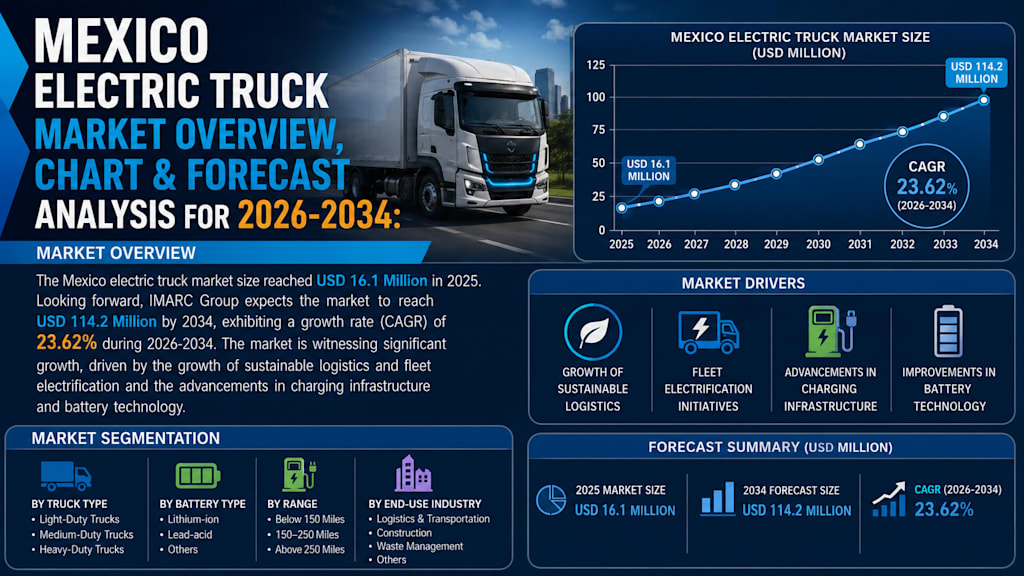
Mexico Electric Truck Market: Key Trends Driving Industry Expansion Through 2034
The transportation industry in Mexico is undergoing a gradual transformation as businesses seek more efficient and sustainable ways to move goods across the country. Electric trucks are becoming an increasingly important part of this transition, offering an alternative to conventional diesel-powered commercial vehicles. Growing attention to environmental goals, improvements in battery technology, and rising interest in fleet modernization are contributing to the adoption of electric trucks in various transportation applications.
According to industry estimates, the Mexico electric truck market reached a value of USD 16.1 million in 2025. The market is projected to grow significantly over the coming years, reaching approximately USD 114.2 million by 2034 at a CAGR of 23.62% during 2026–2034. This growth reflects broader changes in the logistics, transportation, and commercial vehicle sectors.
Request a Sample Report with Latest 2026 Data & Forecasts:
Growing Interest in Sustainable Transportation
Sustainability has become an important consideration for businesses operating vehicle fleets. Transportation activities contribute significantly to greenhouse gas emissions, encouraging both public and private organizations to explore cleaner mobility solutions.
Electric trucks produce no tailpipe emissions, making them an attractive option for companies seeking to reduce their environmental impact. Many logistics providers, retailers, and distribution companies are evaluating electric vehicles as part of their long-term sustainability strategies. As environmental targets become more prominent across industries, demand for electric commercial vehicles is expected to increase.
In addition, international companies operating in Mexico often align their transportation practices with global sustainability commitments, further supporting the adoption of electric truck fleets.
Expansion of E-Commerce and Urban Deliveries
The continued growth of e-commerce is creating new opportunities for electric truck deployment. Online shopping has increased demand for efficient delivery services, particularly in urban and metropolitan areas.
Electric trucks are well suited for last-mile and regional delivery operations because these routes typically involve shorter distances and predictable travel patterns. Fleet operators can often recharge vehicles during scheduled downtime, helping optimize operational efficiency.
As delivery volumes continue to rise, logistics companies are exploring electric vehicles to support urban distribution networks while addressing concerns related to emissions and fuel consumption.
Advancements in Battery Technology
Battery performance remains one of the most important factors influencing electric truck adoption. Recent technological developments have improved battery capacity, charging efficiency, and vehicle range.
Modern battery systems allow commercial vehicles to travel longer distances on a single charge compared to earlier electric truck models. These improvements are making electric trucks more practical for a wider range of transportation applications.
Battery manufacturers are also focusing on reducing charging times and improving durability. As technology continues to advance, businesses may find it easier to integrate electric vehicles into daily fleet operations.
Development of Charging Infrastructure
Charging infrastructure plays a critical role in supporting electric mobility. The availability of charging stations can influence purchasing decisions for fleet operators considering electric truck investments.
Mexico is gradually expanding its charging network through both public and private initiatives. Businesses are also developing dedicated charging facilities at warehouses, logistics centers, and distribution hubs.
As charging infrastructure becomes more accessible, concerns regarding vehicle range and charging availability may decrease, helping encourage broader adoption of electric trucks across different industries.
Fleet Electrification Strategies
Many organizations are reviewing their fleet management strategies to improve operational efficiency and reduce long-term operating costs. Electric trucks are increasingly being included in fleet modernization plans.
Although electric vehicles often require higher upfront investment compared to conventional trucks, they can offer savings through lower fuel expenses and reduced maintenance requirements. Electric drivetrains contain fewer moving parts, which can help lower servicing costs over time.
Large fleet operators are conducting pilot programs and phased vehicle replacements to better understand the operational benefits of electric truck technology. These initiatives are helping companies evaluate performance under real-world conditions.
Opportunities Across Multiple Industries
The adoption of electric trucks extends beyond traditional freight transportation. Several industries are exploring their potential applications.
Retail businesses can use electric trucks for local product distribution. Food and beverage companies may incorporate electric vehicles into urban delivery operations. Manufacturing organizations can utilize electric trucks for regional transportation between production facilities and distribution centers.
Municipal services and utility providers are also examining electric commercial vehicles for specific operational needs. This diversification of applications is expected to contribute to market growth over the forecast period.
Challenges Facing Market Expansion
Despite positive growth prospects, several challenges remain. Vehicle acquisition costs continue to be a consideration for many businesses, particularly small and medium-sized enterprises.
Charging infrastructure coverage remains uneven in certain regions, which may limit adoption for long-distance transportation applications. In addition, fleet operators often require detailed planning to integrate charging schedules into existing logistics operations.
Battery replacement costs and concerns regarding vehicle range under demanding operating conditions may also influence purchasing decisions. Addressing these challenges will be important for supporting wider market adoption.
Outlook Through 2034
The outlook for the Mexico electric truck market remains positive as businesses continue exploring cleaner transportation alternatives. Advancements in battery technology, increasing charging infrastructure development, and growing interest in sustainable logistics are expected to support market expansion throughout the forecast period.
As transportation companies seek greater efficiency and environmental performance, electric trucks are likely to play a larger role in freight movement, distribution services, and commercial fleet operations. Continued investment in technology and infrastructure may further strengthen the market's growth trajectory through 2034.
The ongoing shift toward fleet electrification reflects broader changes occurring across the transportation sector. While challenges remain, electric trucks are becoming an increasingly relevant option for organizations looking to modernize operations and adapt to evolving industry requirements.
About the Creator
Kim Soo hyun
My name is Kim Soo hyun, and I am a research analyst at IMARC Group, specializing in market trends and data analysis to provide insights and support strategic decision-making.
Enjoyed the story? Support the Creator.
Subscribe for free to receive all their stories in your feed.
Comments
There are no comments for this story
Be the first to respond and start the conversation.