
Mexico Carmine Market Set for Steady Growth as Demand for Natural Colorants Accelerates Worldwide
Growing preference for clean-label ingredients, expanding cosmetic applications, and stricter regulations on synthetic dyes are positioning Mexico as a key supplier in the global carmine industry.

Mexico Carmine Market Set for Steady Growth as Demand for Natural Colorants Accelerates Worldwide
The global movement toward natural ingredients is reshaping industries ranging from food and beverages to cosmetics and pharmaceuticals. As consumers become increasingly conscious about what goes into the products they consume and use daily, naturally sourced colorants are gaining significant attention. Among these natural colorants, carmine has emerged as one of the most valuable and widely used red pigments.
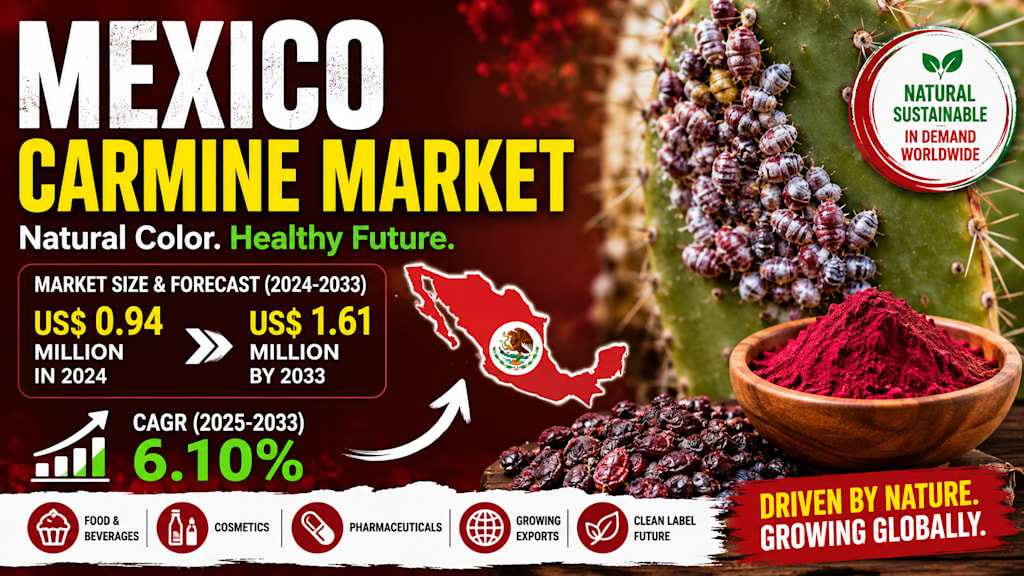
Mexico, recognized historically as one of the world's leading producers of cochineal insects, is witnessing growing opportunities in the carmine industry. According to Renub Research, the Mexico Carmine Market is projected to grow from US$ 0.94 million in 2024 to US$ 1.61 million by 2033, expanding at a CAGR of 6.10% during 2025–2033. This growth reflects rising demand for natural coloring agents across multiple industries and increasing restrictions on synthetic dyes worldwide.
As sustainability, transparency, and clean-label trends continue to influence purchasing decisions, Mexico's position in the global carmine value chain is expected to strengthen considerably over the coming decade.
Understanding Carmine and Its Importance
Carmine is a natural red pigment derived from carminic acid extracted from the cochineal insect, scientifically known as Dactylopius coccus. These insects are traditionally cultivated on prickly pear cactus plants and have been used for centuries as a source of vibrant red color.
Unlike synthetic colorants, carmine provides excellent stability against heat, oxidation, and light exposure. This makes it highly valuable in applications requiring long-lasting color performance.
Today, carmine is widely used in:
Yogurts and dairy products
Confectionery and bakery products
Fruit-based beverages
Pharmaceuticals
Lipsticks and cosmetic products
Personal care formulations
Specialty food products
The growing shift toward naturally sourced ingredients has significantly increased the relevance of carmine in modern manufacturing processes.
Why Mexico Holds a Strategic Position
Mexico possesses several advantages that make it a major contributor to global carmine production.
The country's favorable climate supports the cultivation of prickly pear cacti, which serve as host plants for cochineal insects. In addition, traditional knowledge of cochineal farming has been preserved across generations, enabling consistent production quality.
As global buyers search for reliable sources of natural colorants, Mexico's established ecosystem provides a strong foundation for industry expansion. The country's ability to combine traditional agricultural expertise with modern processing technologies creates a competitive advantage in international markets.
Furthermore, growing exports to North America, Europe, and Asia are helping domestic producers access new revenue streams and expand their market reach.
Rising Demand for Natural Ingredients Driving Market Growth
One of the most influential factors supporting market growth is the increasing preference for natural ingredients among consumers.
Over the last decade, health-conscious buyers have become more attentive to ingredient labels. Artificial additives are increasingly scrutinized due to concerns regarding their potential health impacts. Consequently, manufacturers are actively reformulating products to align with clean-label trends.
Natural colorants such as carmine offer manufacturers an effective solution to replace synthetic alternatives while maintaining product appeal and visual quality.
Food manufacturers particularly benefit from carmine's stability and vibrant appearance, making it suitable for products requiring attractive red coloration without artificial additives.
As consumers continue demanding transparency and simplicity in ingredient lists, the role of natural colorants is expected to expand further.
Expanding Applications Across Multiple Industries
Although food and beverage applications remain the largest segment, the use of carmine is expanding rapidly across various sectors.
Cosmetics Industry
The cosmetics sector represents one of the fastest-growing opportunities for carmine suppliers.
Beauty brands are increasingly promoting products formulated with naturally derived ingredients. Carmine's rich pigmentation and safety profile make it a preferred choice for:
Lipsticks
Blushes
Eye shadows
Facial powders
Premium beauty products
Consumers seeking environmentally conscious and sustainable cosmetic products are encouraging manufacturers to adopt natural pigments wherever possible.
Pharmaceutical Industry
Pharmaceutical companies utilize carmine for coloring:
Tablets
Capsules
Syrups
Nutritional supplements
The pharmaceutical sector values carmine for its stability and consistency, making it suitable for a wide variety of formulations.
Specialty Foods
Artisanal food producers increasingly rely on natural colorants to enhance product appeal while maintaining clean-label standards.
Premium confectionery, gourmet beverages, and specialty dairy products frequently incorporate carmine to achieve attractive visual presentation without synthetic ingredients.
Regulatory Pressure on Synthetic Dyes Creates New Opportunities
Government regulations worldwide are becoming increasingly strict regarding the use of artificial food colorants.
Several synthetic dyes have faced heightened scrutiny due to potential links to health concerns. Regulatory agencies across various regions are encouraging manufacturers to adopt safer alternatives and improve ingredient transparency.
These developments are creating substantial opportunities for natural colorants such as carmine.
As food manufacturers seek compliant and consumer-friendly ingredients, demand for naturally sourced red pigments continues to rise.
Mexico's long-standing expertise in cochineal cultivation positions the country favorably to benefit from these regulatory shifts.
Sustainability Trends Favor Natural Colorants
Environmental sustainability is another major factor contributing to market expansion.
Consumers are increasingly evaluating products based on their environmental footprint. Natural ingredients often enjoy a more favorable perception than synthetic alternatives because they originate from renewable biological sources.
The cochineal cultivation process aligns well with sustainable agricultural practices when managed responsibly. This characteristic enhances carmine's appeal among manufacturers seeking to improve sustainability credentials and satisfy environmentally conscious consumers.
As corporate sustainability initiatives become more prominent, natural colorants are expected to play a larger role in product development strategies.
Export Opportunities Continue to Expand
International demand represents one of the most attractive growth avenues for Mexico's carmine producers.
Several regions are experiencing increased adoption of natural food and cosmetic ingredients, including:
North America
Western Europe
Japan
South Korea
Southeast Asia
These markets often prioritize ingredient transparency and product safety, making natural colorants highly desirable.
Mexico's geographical proximity to the United States further enhances export competitiveness by reducing logistics costs and improving supply chain efficiency.
Growing international recognition of Mexican carmine quality is expected to support continued export growth through 2033.
Challenges Facing the Mexico Carmine Market
Despite promising growth prospects, the industry also faces several challenges.
Labor-Intensive Production Process
Producing carmine requires extensive manual labor throughout multiple stages:
Cochineal cultivation
Insect harvesting
Drying
Extraction
Processing
These activities are difficult to automate fully, increasing production costs compared with synthetic alternatives.
As labor expenses rise, producers may face pressure on profitability unless productivity improvements are achieved.
Supply Constraints
The availability of cochineal insects depends heavily on environmental conditions and agricultural practices.
Weather-related disruptions such as droughts, pest outbreaks, and changing climate patterns can impact production volumes.
Because supply remains closely tied to biological cultivation cycles, maintaining consistent output can be challenging during adverse conditions.
Price Volatility
Market prices can fluctuate due to:
Weather events
Production shortages
Labor availability
International demand variations
Such volatility creates uncertainty for both suppliers and buyers, making long-term planning more difficult.
Manufacturers that depend heavily on carmine may face challenges managing procurement budgets when market conditions become unstable.
Key Market Segments
The Mexico Carmine Market serves a diverse range of applications.
By Application
Bakery & Confectionery
Beverages
Dairy & Frozen Products
Meat Products
Fruits & Vegetables
Oil & Fat
Cosmetics
Other Food Products
By Form
Liquid
Powder
Crystal
By End User
Food Processing Companies
Beverage Industry
Catering Industry
Cosmetics and Pharmaceutical Industry
The diversity of these applications reduces dependence on any single sector and contributes to long-term market resilience.
10 Recent Developments and Strategic Activities of Major Companies
1. Clariant AG
Clariant continues expanding its portfolio of natural and sustainable ingredients, supporting increased adoption of naturally sourced color solutions across food and personal care markets.
2. Clariant AG
The company has strengthened sustainability initiatives focused on responsible sourcing and environmentally friendly manufacturing practices.
3. Naturex (Givaudan)
Naturex, under Givaudan, continues investing in natural ingredient innovation to meet growing demand for clean-label products globally.
4. Givaudan
Givaudan has expanded research efforts focused on natural colors and botanical ingredient solutions for food and beverage manufacturers.
5. Sensient Technologies Corporation
Sensient has increased investments in natural color technologies to help brands replace synthetic additives with naturally sourced alternatives.
6. Sensient Technologies Corporation
The company continues expanding its global manufacturing and technical support capabilities for natural color customers.
7. The Hershey Company
Hershey remains focused on ingredient transparency and cleaner product formulations, creating additional opportunities for natural color suppliers.
8. Biocon
Biocon continues advancing specialty ingredient capabilities and exploring sustainable sourcing opportunities within broader ingredient markets.
9. Amerilure
Amerilure has expanded its focus on natural color solutions to serve evolving consumer preferences for clean-label products.
10. DDW Color House
DDW Color House continues developing innovative natural coloring systems designed to help manufacturers transition away from synthetic dyes.
Future Outlook
The future of Mexico's carmine industry appears highly promising.
The convergence of multiple growth drivers—including consumer demand for natural ingredients, regulatory restrictions on synthetic dyes, expanding cosmetic applications, and rising international trade opportunities—creates a favorable environment for sustained market expansion.
Manufacturers capable of improving production efficiency, ensuring supply stability, and meeting evolving quality standards will be best positioned to capitalize on future growth opportunities.
As global industries continue transitioning toward cleaner, more sustainable formulations, Mexico's expertise in cochineal cultivation and carmine production is likely to become increasingly valuable.
Final Thoughts
Mexico's carmine market represents a compelling example of how traditional agricultural practices can align with modern consumer trends. The increasing preference for natural, sustainable, and transparent ingredients is creating new opportunities for producers while reinforcing the importance of naturally derived colorants.
With the market forecast to grow from US$ 0.94 million in 2024 to US$ 1.61 million by 2033 at a CAGR of 6.10%, Mexico is positioned to remain an important player in the global natural colorants industry. Companies that invest in innovation, sustainability, and supply chain resilience will likely benefit most from this evolving market landscape.
About the Creator
Enjoyed the story? Support the Creator.
Subscribe for free to receive all their stories in your feed.
Comments
There are no comments for this story
Be the first to respond and start the conversation.