
Mexico Car Leasing Market Size, Share & Growth 2034
The Mexico car leasing market size was valued at USD 9,903.50 Million in 2025 and is projected to reach USD 15,416.33 Million by 2034, growing at a compound annual growth rate of 5.04% from 2026-2034.

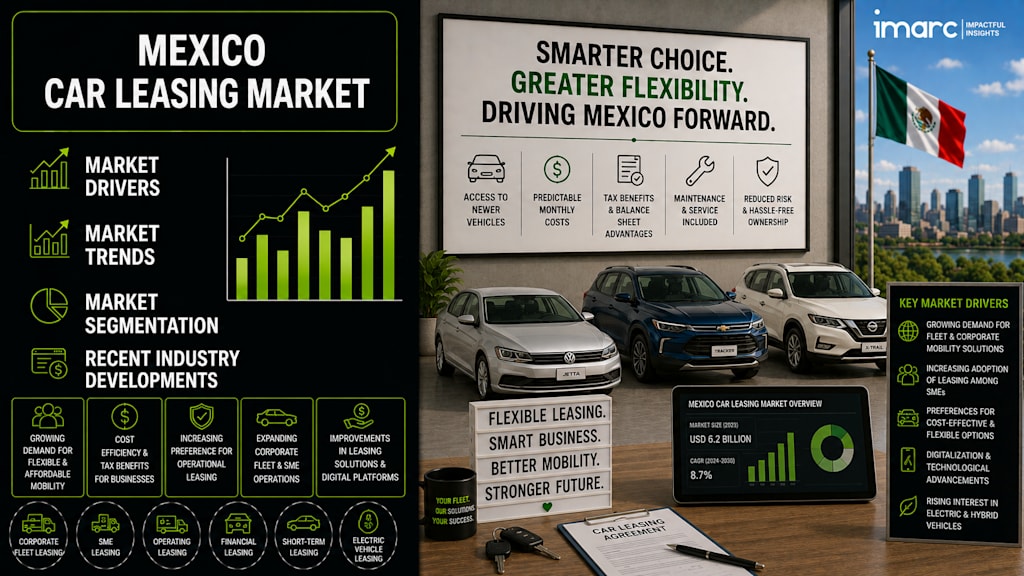
Mexico Car Leasing Market Size, Growth, and Forecast (2026–2034)
The way people access and use vehicles is changing rapidly. While vehicle ownership has traditionally been the preferred choice for many consumers and businesses, leasing is becoming an increasingly attractive alternative. Flexibility, lower upfront costs, and access to newer vehicle models are encouraging more individuals and organizations to consider leasing instead of purchasing.
In 2026, the car leasing industry in Mexico continues to gain momentum as consumers look for convenient transportation solutions and businesses seek efficient fleet management strategies. The shift toward flexible mobility options is helping reshape the country's automotive landscape.
The Mexico car leasing market was valued at USD 9,903.50 Million in 2025 and is projected to reach USD 15,416.33 Million by 2034, growing at a compound annual growth rate (CAGR) of 5.04% during 2026–2034. This steady growth highlights the increasing acceptance of leasing as a practical and financially attractive mobility solution.
Request a Sample Report with Latest 2026 Data & Forecasts:
Understanding the Appeal of Car Leasing
Car leasing allows customers to use a vehicle for a fixed period in exchange for monthly payments, often without the long-term commitment associated with ownership.
For many individuals, leasing offers the opportunity to drive newer vehicles equipped with modern technology and safety features while avoiding significant upfront investments.
Businesses also benefit from leasing because it enables them to maintain updated fleets without the complexities of vehicle ownership, maintenance management, and asset depreciation.
As financial flexibility becomes increasingly important, leasing continues to attract a broader customer base.
Key Trends Shaping the Mexico Car Leasing Market
Several important trends are influencing market development:
• Growing preference for flexible vehicle usage models
• Rising demand for corporate and commercial fleet leasing
• Increasing adoption of digital leasing platforms
• Expansion of electric and hybrid vehicle leasing options
• Greater focus on cost-efficient transportation solutions
These trends reflect changing consumer expectations and evolving mobility needs.
Businesses Are Driving Leasing Demand
One of the major contributors to market growth is the increasing demand from businesses.
Organizations across industries rely on vehicles for sales activities, logistics operations, service delivery, and employee transportation. Leasing provides companies with a predictable cost structure and access to modern vehicles without significant capital expenditures.
This flexibility allows businesses to allocate resources toward core operations rather than vehicle ownership.
As economic activity continues expanding throughout 2026–2034, commercial leasing demand is expected to remain strong.
Digital Transformation Is Simplifying Leasing
Technology is playing a growing role in the leasing industry.
Consumers can now compare leasing plans, submit applications, review contracts, and manage payments through digital platforms. These online services have simplified the leasing process and improved customer experiences.
Artificial intelligence and data analytics are also helping providers assess customer needs, streamline approvals, and offer more personalized leasing solutions.
Digital innovation is making leasing more accessible and convenient for both businesses and individual consumers.
Electric Vehicles Are Creating New Opportunities
The global shift toward sustainable transportation is influencing the leasing market as well.
Electric and hybrid vehicles are becoming increasingly attractive to consumers seeking environmentally responsible mobility solutions. Leasing offers an accessible way for drivers to experience new vehicle technologies without committing to long-term ownership.
As charging infrastructure continues improving and awareness of sustainable transportation grows, leasing providers are expected to expand their electric vehicle offerings.
This trend could become an important growth driver during the 2026–2034 period.
Consumer Preferences Continue to Evolve
Today's consumers often prioritize flexibility and convenience over ownership.
Many drivers prefer having access to the latest vehicle models, advanced safety technologies, and enhanced connectivity features without worrying about long-term depreciation.
Leasing also provides predictable monthly expenses, which can help individuals manage budgets more effectively.
Younger generations, in particular, are showing greater interest in flexible mobility services that align with changing lifestyles and urban living patterns.
Investment Opportunities in the Market
The expanding car leasing industry creates attractive opportunities for investors and businesses.
Companies are investing in:
• Digital leasing platforms
• Fleet management technologies
• Electric vehicle leasing programs
• Customer experience enhancements
• Connected vehicle solutions
The increasing integration of technology and mobility services is creating new revenue streams and growth opportunities across the automotive sector.
Partnerships between automakers, financial institutions, and mobility providers are also accelerating innovation.
Challenges Facing the Industry
Despite strong growth prospects, the market faces several challenges.
Economic fluctuations can influence consumer spending and vehicle demand. Rising interest rates may also affect financing costs associated with leasing programs.
Vehicle supply chain disruptions and inventory constraints can impact availability and pricing.
Additionally, leasing providers must continuously adapt to changing regulations, technological advancements, and evolving customer expectations.
Successfully navigating these challenges will be important for long-term market growth.
Future Outlook (2026–2034)
Looking ahead, the Mexico car leasing market is expected to continue its steady expansion.
Between 2026 and 2034, demand for flexible transportation solutions, digital leasing services, and sustainable vehicle options is likely to increase. Businesses and consumers will continue seeking mobility solutions that offer convenience, affordability, and access to modern technologies.
Future developments may include subscription-based vehicle models, enhanced digital experiences, expanded electric vehicle fleets, and more personalized leasing packages.
These innovations are expected to strengthen the role of leasing within Mexico's evolving mobility ecosystem.
Conclusion
The Mexico car leasing market is experiencing steady growth as changing consumer preferences, business requirements, and technological advancements reshape the transportation sector. Supported by increasing demand for flexibility, cost efficiency, and access to modern vehicles, the industry is well positioned for continued expansion.
Although challenges such as economic uncertainty and supply chain pressures remain, ongoing innovation and investment are expected to support long-term growth. As mobility preferences continue evolving throughout 2026–2034, car leasing will play an increasingly important role in how individuals and businesses access transportation.
About the Creator
Jackson Watson
I'm a market research analyst at Imarc group company delivering data-driven insights, industry analysis, and customized research solutions. We support businesses with market sizing, competitive analysis, and strategic decision-making.
Enjoyed the story? Support the Creator.
Subscribe for free to receive all their stories in your feed.
Comments
There are no comments for this story
Be the first to respond and start the conversation.