
Medical Devices Cuffs Market Set for Strong Growth Amid Rising Hypertension Cases and Expansion of Home Healthcare
Increasing Demand for Patient Monitoring Solutions is Driving the Global Medical Devices Cuffs Industry Toward USD 1.23 Billion by 2033

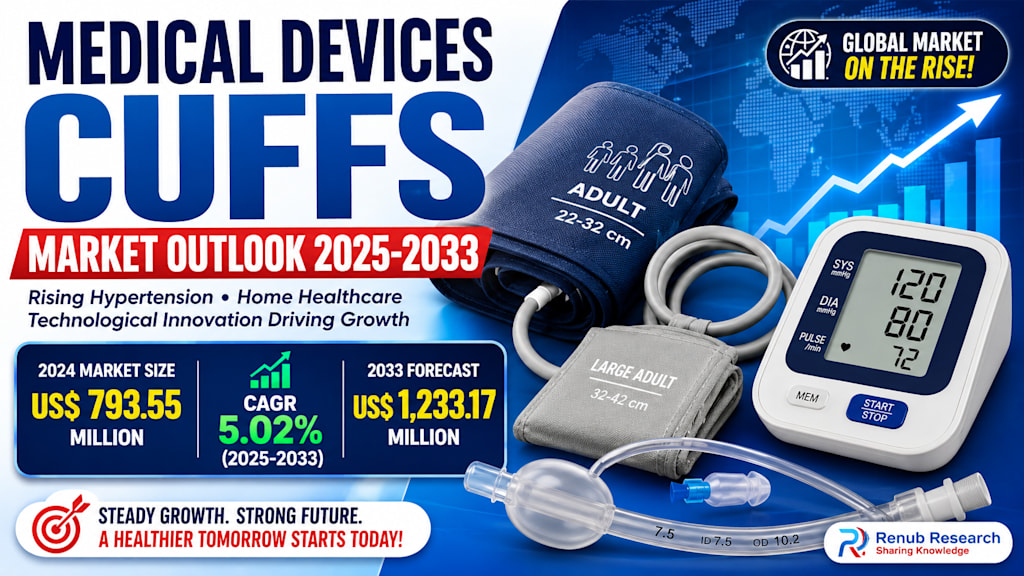
The global medical devices cuffs market is entering a period of consistent and sustainable growth as healthcare systems worldwide increasingly prioritize preventive monitoring, chronic disease management, and remote patient care. According to Renub Research, the global medical devices cuffs market is projected to rise from US$ 793.55 million in 2024 to US$ 1,233.17 million by 2033, expanding at a CAGR of 5.02% during the forecast period from 2025 to 2033.
Medical device cuffs have become indispensable components across healthcare settings, especially in blood pressure monitoring, respiratory care, and critical care procedures. These devices include blood pressure cuffs, cuffed endotracheal tubes, and tracheostomy tubes, all of which play a major role in patient monitoring and treatment management. As chronic diseases continue to rise globally, the demand for accurate, reliable, and technologically advanced cuff systems is increasing rapidly.
The market’s growth is also being supported by rising awareness about cardiovascular health, the growing elderly population, and technological innovations that are making medical cuffs smarter, more connected, and easier to use at home.
Rising Burden of Hypertension and Cardiovascular Diseases Fuels Demand
One of the primary growth drivers for the medical devices cuffs market is the increasing prevalence of hypertension and cardiovascular diseases worldwide. High blood pressure remains one of the leading causes of premature death globally, and healthcare professionals continue to emphasize regular monitoring for early diagnosis and disease management.
According to the World Health Organization (WHO), nearly 1.28 billion adults globally suffer from hypertension. In addition, the Centers for Disease Control and Prevention (CDC) reported that cardiovascular disease remains one of the top causes of mortality in the United States, with heart disease responsible for hundreds of thousands of deaths every year.
As healthcare providers focus more heavily on preventive monitoring, blood pressure cuffs have become essential tools not only in hospitals and clinics but also in home healthcare environments. Digital blood pressure monitors equipped with advanced cuff systems are enabling patients to monitor their health independently, reducing hospital visits while improving long-term disease management.
The demand is particularly high among aging populations, where hypertension prevalence increases significantly with age. Elderly individuals often require frequent blood pressure monitoring, creating sustained demand for both reusable and disposable cuff products.
Home Healthcare Revolution Accelerating Market Growth
The rapid expansion of home healthcare services is transforming the medical devices cuffs industry. Patients increasingly prefer monitoring chronic conditions from the comfort of their homes rather than relying solely on hospital-based care.
This shift has significantly increased demand for portable, lightweight, and user-friendly cuff devices. Manufacturers are now developing devices that combine accuracy with simplicity, ensuring that even non-medical users can operate them effectively.
Remote patient monitoring has also become a major trend following the digital transformation of healthcare systems. Wireless-enabled blood pressure cuffs can now sync data directly with smartphones, healthcare apps, and physician dashboards. This real-time monitoring capability helps doctors track patient conditions remotely while encouraging better patient compliance.
Home healthcare also reduces overall treatment costs, making it attractive for healthcare providers, insurers, and governments aiming to optimize healthcare spending. As chronic disease cases continue to rise, home-based monitoring solutions are expected to remain one of the strongest long-term growth catalysts for the market.
Technological Advancements Reshaping Medical Device Cuffs
Innovation remains at the center of the medical devices cuffs industry. Manufacturers are increasingly integrating digital technologies, wireless communication, artificial intelligence, and smart sensors into modern cuff systems.
Today’s advanced blood pressure cuffs offer features such as:
Bluetooth and Wi-Fi connectivity
Real-time health tracking
Mobile application integration
Automated irregular heartbeat detection
AI-powered analytics
Cloud-based patient data storage
These innovations improve diagnostic accuracy while also enhancing convenience for both healthcare professionals and patients.
Smart cuff systems are becoming especially important in telemedicine and remote care applications. As healthcare becomes increasingly digitized, connected monitoring devices are playing a larger role in chronic disease management.
The introduction of AI-powered blood pressure monitors capable of detecting atrial fibrillation (AFib) represents another major advancement. Such innovations are helping healthcare providers identify serious cardiovascular risks earlier than ever before.
Aging Population Continues to Support Long-Term Market Expansion
Population aging remains a critical factor driving growth across the medical devices cuffs market. Older adults are significantly more vulnerable to chronic diseases including hypertension, cardiovascular disorders, and respiratory complications.
Countries such as Japan, the United States, Germany, and the United Kingdom are witnessing rapidly aging populations, increasing the need for long-term patient monitoring and respiratory support solutions.
Japan, in particular, represents a strong growth market due to its exceptionally large elderly population. The country continues to invest heavily in advanced healthcare technologies designed to improve elderly care and disease monitoring.
As life expectancy rises globally, healthcare systems will continue to require dependable medical cuff solutions capable of supporting long-term disease management and routine monitoring.
Increased Health Awareness Encouraging Preventive Monitoring
Health awareness campaigns and public education initiatives are contributing significantly to the expansion of the medical devices cuffs market. More consumers now understand the importance of monitoring blood pressure and cardiovascular health before severe complications occur.
Healthcare organizations, governments, and nonprofit groups worldwide are promoting routine health screenings and preventive care. This has encouraged millions of consumers to purchase personal monitoring devices for home use.
The rise of digital health content, online medical consultations, and wearable health technologies has also strengthened public interest in proactive healthcare management. Consumers are becoming more engaged in tracking their own health metrics, boosting demand for reliable medical monitoring equipment.
Emerging Economies Present Significant Opportunities
Emerging markets across Asia-Pacific, Latin America, and the Middle East are creating substantial opportunities for medical device cuff manufacturers. Healthcare infrastructure improvements, rising disposable incomes, and expanding insurance coverage are increasing access to modern medical technologies.
Countries such as India, China, Indonesia, Brazil, and the United Arab Emirates are investing heavily in healthcare modernization. Hospitals and clinics in these regions are increasingly adopting advanced patient monitoring equipment to improve clinical outcomes.
Additionally, telemedicine growth in rural and underserved areas is accelerating demand for portable diagnostic devices, including blood pressure cuffs and respiratory care products.
As healthcare accessibility improves, emerging economies are expected to become major contributors to future market growth.
Challenges Related to Affordability and Awareness
Despite strong growth prospects, the medical devices cuffs market still faces several important challenges.
One major concern is affordability. Advanced digital and wireless cuff systems can be expensive, particularly for low-income populations and small healthcare facilities. In developing countries, high device costs may limit widespread adoption.
Insurance coverage for home healthcare monitoring devices also varies significantly between regions, creating financial barriers for many patients.
Another challenge is limited awareness in underserved and rural communities. Many individuals remain unaware of the importance of routine blood pressure monitoring or do not fully understand how to use medical devices correctly.
Healthcare organizations and governments will need to invest in educational campaigns and affordable healthcare programs to overcome these obstacles and expand device accessibility globally.
Regional Insights Highlight Strong Global Demand
United States
The United States remains one of the largest markets for medical devices cuffs due to its advanced healthcare infrastructure, high chronic disease burden, and growing adoption of home healthcare technologies.
The increasing prevalence of hypertension and cardiovascular disease continues to drive strong demand for blood pressure monitoring equipment. The country’s strong digital health ecosystem is also supporting rapid adoption of smart cuff systems integrated with telehealth platforms.
United Kingdom
The United Kingdom market is benefiting from strong public healthcare initiatives and increasing focus on preventive medicine. The National Health Service (NHS) actively supports routine blood pressure monitoring and digital healthcare integration.
The rising number of undiagnosed hypertension cases has further increased the importance of accessible monitoring solutions across the country.
Japan
Japan’s aging society makes it one of the most important markets for medical devices cuffs. The country’s emphasis on preventive healthcare and advanced medical technologies continues to support product innovation and adoption.
United Arab Emirates
The UAE healthcare sector is rapidly expanding, driven by government healthcare investments, rising chronic disease cases, and increasing adoption of modern healthcare technologies. Hospitals and clinics across the country are increasingly implementing advanced patient monitoring systems.
Recent Developments in the Medical Devices Cuffs Industry
The market has witnessed several important developments aimed at improving patient monitoring and healthcare connectivity.
In February 2025, AD Medical introduced enhanced home blood pressure monitors featuring advanced connectivity and improved measurement precision.
In November 2024, Omron Healthcare Inc. received FDA De Novo authorization for AI-powered blood pressure monitors capable of AFib detection.
GE Healthcare continues expanding its patient monitoring product portfolio through digital healthcare integration.
Cardinal Health is focusing on expanding disposable medical consumables and monitoring accessories.
Teleflex Incorporated continues investing in respiratory care product advancements.
Smiths Medical is strengthening its critical care monitoring solutions globally.
Cook Medical continues expanding minimally invasive respiratory care technologies.
ConvaTec Inc. is increasing innovation in patient care and monitoring solutions.
SunTech Medical Inc. continues advancing ambulatory blood pressure monitoring systems.
Welch Allyn Inc. remains focused on integrated diagnostic monitoring solutions.
Competitive Landscape Remains Highly Dynamic
The global medical devices cuffs market features a competitive landscape characterized by technological innovation, strategic partnerships, and continuous product development.
Leading companies are investing heavily in research and development to improve device accuracy, connectivity, comfort, and portability. The integration of AI, cloud technology, and wireless communication is expected to remain a major competitive differentiator over the coming years.
Manufacturers are also focusing on expanding their presence in emerging markets where healthcare modernization initiatives are accelerating rapidly.
Final Thoughts
The medical devices cuffs market is entering a promising growth phase supported by rising chronic disease prevalence, increasing health awareness, expanding home healthcare adoption, and continuous technological innovation.
As healthcare systems shift toward preventive and remote patient monitoring models, demand for advanced cuff systems will continue to rise globally. Smart monitoring technologies, AI integration, and telemedicine expansion are expected to redefine how patient monitoring is conducted over the next decade.
With strong growth opportunities across developed and emerging markets alike, the medical devices cuffs industry is well-positioned to play an increasingly important role in the future of global healthcare.
About the Creator
Enjoyed the story? Support the Creator.
Subscribe for free to receive all their stories in your feed.
Comments
There are no comments for this story
Be the first to respond and start the conversation.