
Meal Kit Market Set to Triple by 2034 as Convenience, Health Trends, and Digital Commerce Redefine Home Cooking
Rising demand for time-saving meal solutions, personalized nutrition, and online food delivery services is fueling rapid expansion across the global meal kit industry.

The way people prepare meals at home is undergoing a remarkable transformation. Traditional grocery shopping and lengthy meal planning routines are increasingly being replaced by digital food solutions designed to save time, reduce waste, and simplify everyday cooking.
At the center of this shift is the rapidly growing meal kit industry.
Meal kits provide consumers with pre-portioned ingredients and easy-to-follow recipes delivered directly to their homes, allowing them to enjoy fresh, home-cooked meals without the hassle of shopping, measuring ingredients, or planning menus. What began as a niche subscription service has evolved into a global industry serving millions of households across multiple demographics and dietary preferences.
Changing lifestyles, growing health awareness, rising urbanization, and the continued expansion of e-commerce are driving unprecedented demand for these convenient food solutions. As consumers increasingly seek a balance between convenience and nutrition, meal kit providers are rapidly innovating to meet evolving expectations.
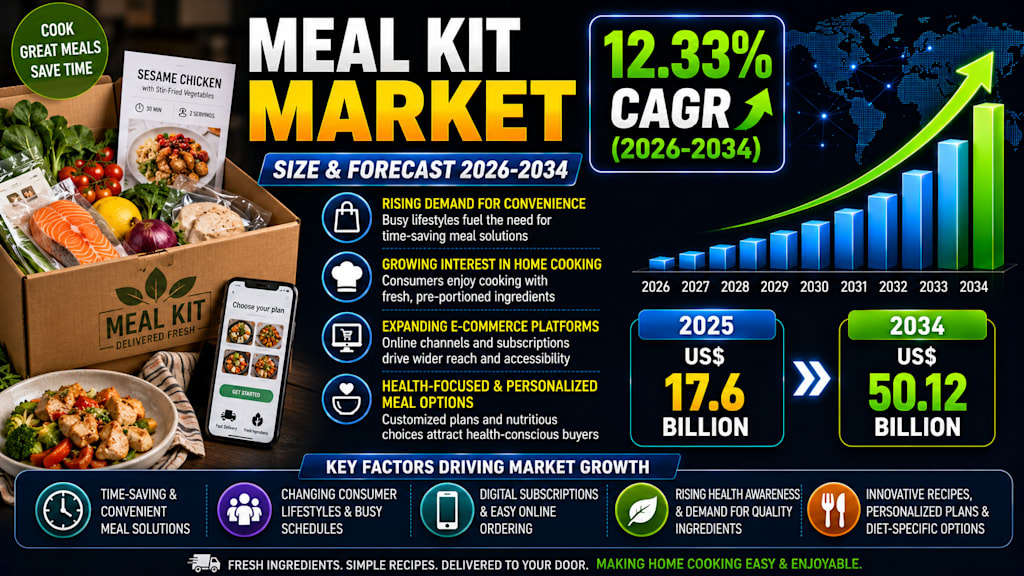
According to industry forecasts, the global Meal Kit Market is expected to grow from US$17.6 billion in 2025 to US$50.12 billion by 2034, representing a strong compound annual growth rate (CAGR) of 12.33% between 2026 and 2034. This growth reflects rising consumer interest in convenient home cooking, personalized nutrition, and digital food delivery services.
Understanding the Meal Kit Revolution
Meal kits are subscription-based or on-demand food services that deliver pre-measured ingredients along with detailed cooking instructions directly to consumers.
Typical meal kits contain:
Fresh vegetables
Proteins
Sauces
Seasonings
Step-by-step recipes
Unlike traditional takeout or restaurant delivery, meal kits still allow consumers to participate in the cooking process while eliminating many of the time-consuming aspects of meal preparation.
Meal kits appeal to a broad range of consumers because they offer:
- Reduced grocery shopping time
- Simplified meal planning
- Controlled portion sizes
- Less food waste
- Opportunities to learn new recipes
- Convenient access to diverse cuisines
Providers increasingly cater to specific dietary preferences, including vegetarian, vegan, keto, gluten-free, low-calorie, and high-protein lifestyles.
As consumers continue prioritizing convenience without sacrificing nutritional quality, meal kits have become a compelling alternative to both restaurant dining and traditional grocery shopping.
Convenience Is Driving Market Growth
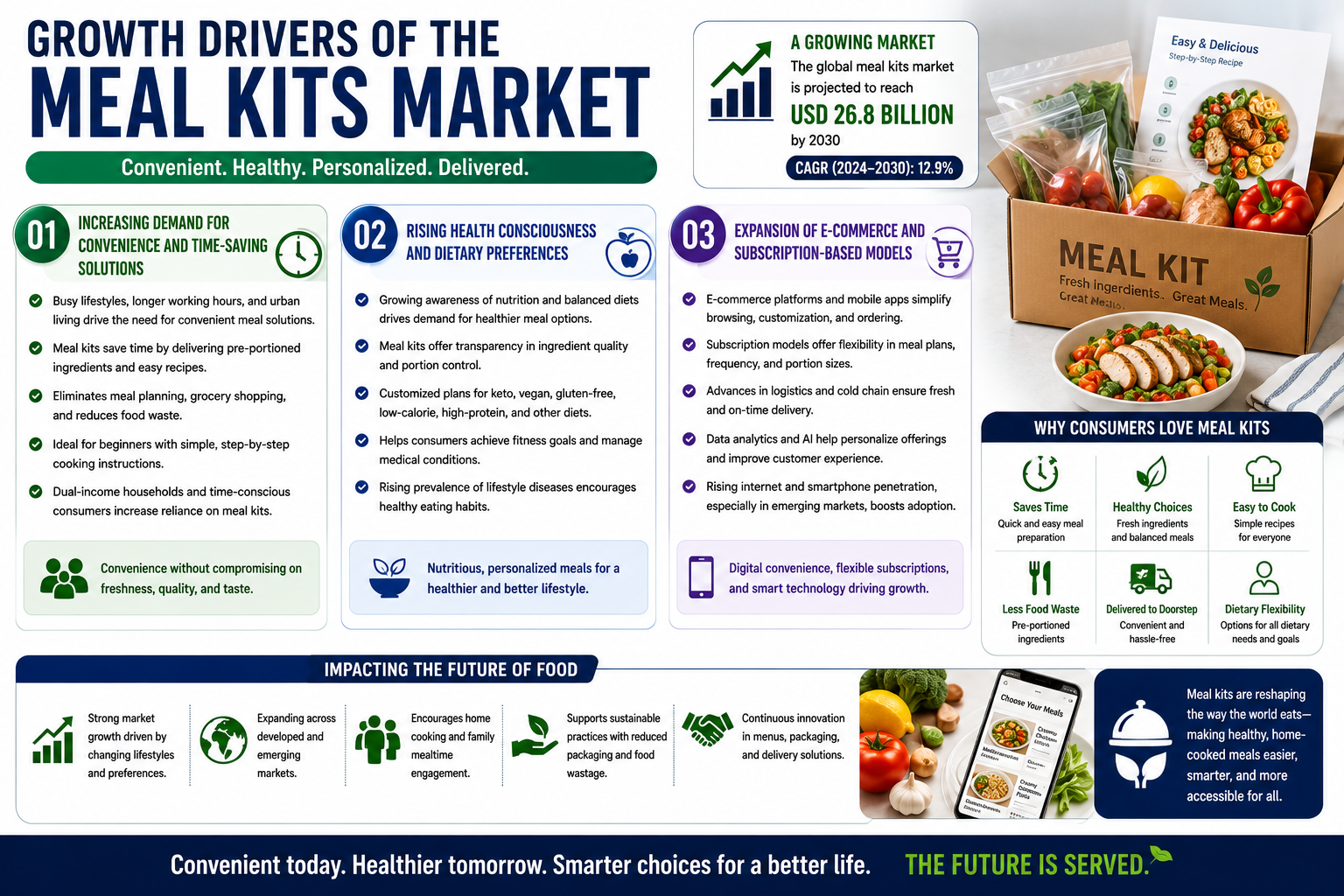
One of the strongest factors fueling market expansion is the growing demand for convenience.
Modern lifestyles often leave little time for meal planning, grocery shopping, and extensive food preparation. Long work hours, urban living, commuting demands, and dual-income households have created strong demand for solutions that simplify daily routines.
Meal kits address these challenges by delivering everything required for meal preparation directly to consumers' homes.
Instead of spending time:
- Creating shopping lists
- Visiting supermarkets
- Measuring ingredients
- Planning weekly meals
Consumers receive ready-to-cook solutions designed for efficiency and simplicity.
The appeal is especially strong among professionals, young families, students, and individuals seeking healthier alternatives to restaurant meals and fast food.
As time becomes an increasingly valuable resource, convenience-focused food solutions are expected to remain a major growth driver for the meal kit industry.
Health-Conscious Consumers Are Embracing Meal Kits
Health awareness has become another powerful catalyst for market growth.
Consumers today are paying closer attention to nutrition, ingredient quality, calorie intake, and dietary balance. Many are actively seeking healthier alternatives to processed foods and restaurant meals.
Meal kit providers have responded by offering specialized plans tailored to various health and wellness goals, including:
- Weight management
- High-protein diets
- Low-carbohydrate plans
- Vegetarian lifestyles
- Vegan nutrition
- Gluten-free eating
- Fitness-focused meal programs
These personalized offerings help consumers maintain greater control over what they eat while simplifying meal preparation.
The increasing prevalence of obesity, diabetes, cardiovascular disease, and other lifestyle-related conditions has further encouraged consumers to adopt healthier eating habits.
By combining convenience with nutritional transparency, meal kits have become an attractive option for health-conscious households worldwide.
E-Commerce Continues to Expand Market Reach
The rapid growth of digital commerce has significantly accelerated meal kit adoption.
Consumers can easily browse menus, customize meal selections, manage subscriptions, and schedule deliveries through websites and mobile applications. This digital convenience has become one of the industry's defining advantages.
Subscription-based models offer flexibility by allowing customers to select:
- Delivery frequency
- Portion sizes
- Dietary preferences
- Number of meals per week
Companies are increasingly leveraging technology and data analytics to personalize recommendations, improve customer experiences, and optimize inventory management.
Advances in logistics and cold-chain infrastructure have further strengthened the industry's ability to deliver fresh ingredients efficiently and safely.
As smartphone usage and internet penetration continue rising globally, particularly in emerging markets, online meal kit services are expected to reach broader consumer audiences.
Major Companies Continue Investing in Innovation
Competition within the meal kit industry remains intense, driving continuous innovation among market leaders.
One of the most notable developments came in August 2025 when HelloFresh introduced its "ReFresh" menu expansion, increasing weekly offerings to more than 100 recipes and significantly expanding seafood options.
Meanwhile, Blue Apron launched a major relaunch initiative that included:
- Traditional meal kits
- Ready-to-heat meals
- Assemble-and-bake kits
- Expanded menu options
- Flexible purchasing models without subscriptions
The company later expanded offerings beyond 100 customizable meals while introducing greater consumer flexibility.
Additional innovations include:
- Quick-prep meal kits
- High-protein menus
- Eco-friendly packaging
- Retail distribution expansion
- Ready-made meal offerings
Providers are increasingly focused on convenience, customization, sustainability, and affordability to maintain competitive advantages.
Heat-and-Eat Meals Are Becoming a Fast-Growing Segment
One of the fastest-growing categories within the meal kit market is heat-and-eat meals.
Unlike traditional meal kits that require active cooking, these products arrive fully prepared and only require reheating before consumption.
Heat-and-eat meals appeal particularly to:
- Busy professionals
- Students
- Seniors
- Consumers with limited cooking experience
- Time-constrained households
Recent expansions illustrate growing demand.
In 2025, Home Chef expanded its Heat & Eat product line through retail distribution channels, making ready-made meals more accessible to consumers seeking maximum convenience.
Advancements in food preservation, packaging technologies, and cold-chain logistics continue improving product quality and freshness.
As convenience becomes an increasingly important purchasing factor, heat-and-eat products are expected to remain among the fastest-growing meal kit categories.
Vegetarian Meal Kits Continue Gaining Momentum
The vegetarian meal kit segment is experiencing particularly strong growth.
Increasing awareness of environmental sustainability, animal welfare, and plant-based nutrition has encouraged many consumers to reduce meat consumption. Meal kit providers are responding by introducing innovative vegetarian and vegan offerings that appeal to both dedicated vegetarians and flexible eaters.
Popular ingredients include:
- Plant-based proteins
- Legumes
- Whole grains
- Fresh vegetables
- Organic ingredients
Many companies now offer specialized vegetarian meal plans that emphasize nutrition, flavor diversity, and culinary creativity.
Growing support for plant-based diets from healthcare organizations and environmental advocates is expected to further strengthen demand.
Individual Consumers Drive New Opportunities
The rise of single-person households is creating important opportunities within the meal kit industry.
Individual meal kits are specifically designed for consumers living alone and offer single-serving portions that minimize food waste and simplify meal preparation.
Target audiences include:
- Young professionals
- Students
- Urban residents
- Remote workers
- Seniors
These consumers often value convenience, portion control, and flexibility.
The growth of remote work has also increased meal preparation at home, creating additional demand for individualized meal solutions.
As solo living becomes more common globally, meal kit providers are increasingly tailoring products and marketing strategies toward this demographic.
Sustainability Is Becoming a Competitive Priority
Environmental concerns are influencing purchasing decisions across many industries, including meal kits.
While meal kits help reduce food waste through precise ingredient portioning, packaging waste remains a significant challenge. Individual ingredient packaging often results in increased plastic and insulation use.
To address these concerns, companies are investing in:
- Recyclable materials
- Compostable packaging
- Reduced plastic usage
- Sustainable sourcing
- Carbon footprint reduction initiatives
For example, HelloFresh introduced enhanced eco-friendly packaging initiatives during 2025 as part of broader sustainability efforts.
As consumers become more environmentally conscious, sustainability initiatives are expected to play an increasingly important role in purchasing decisions.
Online Channels Continue Leading Distribution
Online distribution remains the dominant channel within the meal kit industry.
Digital platforms offer several advantages:
- Personalized recommendations
- Flexible subscription management
- Convenient ordering
- Automated deliveries
- Direct customer engagement
Companies are increasingly using artificial intelligence and customer data analytics to improve retention and optimize menu offerings.
Social media marketing, influencer partnerships, and digital advertising campaigns further support customer acquisition efforts.
The continued growth of e-commerce ecosystems worldwide ensures that online channels will remain a primary driver of industry expansion.
Regional Markets Reveal Strong Global Potential
United States
The United States remains one of the world's most mature meal kit markets.
Strong demand for convenience, growing health awareness, and widespread adoption of subscription services have supported rapid growth. Major brands such as HelloFresh and Blue Apron continue expanding product offerings and customer reach.
Belgium
Belgium's market is expanding steadily as consumers increasingly seek healthier and more convenient food options. Growing interest in sustainable consumption and home cooking continues supporting adoption.
China
China's rapidly urbanizing population is creating significant opportunities for meal kit providers. Busy lifestyles among younger consumers and rising interest in healthy eating habits are contributing to strong market growth.
United Arab Emirates
The UAE market is benefiting from rising disposable incomes, expanding e-commerce adoption, and increasing demand for health-focused meal solutions. International and local providers continue introducing specialized meal plans to meet diverse consumer preferences.
Challenges Still Affect Market Expansion
Despite strong growth prospects, the meal kit industry faces several challenges.
Premium Pricing
Meal kits often cost more than traditional grocery shopping because prices include packaging, logistics, and service fees. This can limit adoption among budget-conscious consumers.
Customer Retention
Subscription fatigue and competition from grocery delivery services, restaurants, and ready-made meals create ongoing customer retention challenges.
Packaging Waste
Environmental concerns remain a major issue, particularly among sustainability-focused consumers. Companies must continue investing in eco-friendly solutions while maintaining product quality and freshness.
Successfully addressing these challenges will be critical for sustaining long-term growth.
Looking Ahead
The future of the meal kit market appears exceptionally promising.
Changing lifestyles, growing demand for convenience, increasing health consciousness, and continuous digital innovation are creating favorable conditions for sustained expansion. The industry's evolution beyond traditional meal kits toward ready-to-eat meals, personalized nutrition, and flexible purchasing models is broadening its appeal to a wider consumer base.
With the market projected to grow from US$17.6 billion in 2025 to US$50.12 billion by 2034, meal kits are poised to become an increasingly important component of the global food ecosystem.
Final Thoughts
The meal kit industry represents far more than a convenient way to prepare dinner. It reflects broader changes in consumer behavior, including growing demand for personalization, digital convenience, healthier eating habits, and sustainable food solutions.
As technology continues reshaping the food industry and consumers seek smarter ways to balance busy lives with nutritional goals, meal kits are likely to play an increasingly important role in how households plan, prepare, and enjoy meals.
For consumers, food companies, and investors alike, the meal kit market offers a compelling example of how innovation can transform everyday routines while creating significant opportunities within the global food and beverage industry.
About the Creator
Enjoyed the story? Support the Creator.
Subscribe for free to receive all their stories in your feed.
Comments
There are no comments for this story
Be the first to respond and start the conversation.