
Master Risk Management for Crypto Prop Firm Trading
A Comprehensive Guide to Long-Term Profitability


True crypto prop success is built in the silence of drawdown limits and the precision of a limit order. Risk management is the art of turning chaotic market volatility into a high probability yield generator. When trading firm capital, vanity metrics vanish; the only reality is disciplined survival. Proactive risk management optimizes every elite crypto prop firm journey.
The Survival Imperative in Crypto Trading
In my years of analyzing prop firm drawdowns, I've noticed a clear pattern. In the world of cryptocurrency, the narrative is almost always dominated by the "to the moon" mentality, tales of overnight millionaires, viral Memecoins, and the allure of parabolic charts. But if you strip away the hype and step onto the trading floor of a serious proprietary trading firm, you’ll find a different conversation entirely. Here, the focus isn't on how much you could make; it is obsessively focused on how much you can avoid losing, which is why mastering risk management in a crypto prop firm is the true foundation of long-term profitability.
Beyond the Hype: The "Rusted Lock" to Consistent Payouts
Most traders enter the market viewing risk management as an optional layer a feature to turn on once they feel they’ve mastered the art of prediction. This is the single biggest misconception in finance. Risk management is not an add-on; it is the infrastructure of success. Think of it as the "rusted lock" on a vault: once you master the mechanics of protecting your downside, you finally gain access to the wealth-building potential on the other side.
In volatile markets like Bitcoin or Ethereum, trading without a risk plan is not strategy; it is simply accelerated gambling. The survival imperative dictates that your primary objective is not to win every trade, but to stay in the game. If you lose 50% of your account, you need a 100% gain just to get back to break-even. Protect your capital with the intensity of a pro.

The Prop Trading Model: Capital Protection as Your Primary Asset
When you trade as an individual, a blow-up is a personal tragedy. When you trade in a professional prop firm environment, capital protection is a professional mandate. You aren't just trading your own money; you are managing a firm's allocation. This shifts the psychology from making a quick buck to "generating sustainable, risk-adjusted returns."
Stop viewing your account balance as spending money. View it as your business capital. Just as a bakery needs to manage the cost of flour and electricity, you must manage the cost of being wrong. Every stop-loss hit is simply the overhead expense of running your trading business.
Consider two traders. Trader A goes "all-in" on a high-leverage setup based on a tweet. They might win once, but the market's first flash crash wipes them out. Trader B calculates position size based on a 1% risk-per-trade model. Even with a string of losses, Trader B is still solvent, waiting for the market to turn in their favor. Trader A is finished; Trader B is still in the game.
Setting the Stage: From Gambling to Professionalism
Transitioning from a retail mindset to a professional, data-driven approach requires a total reset. It’s about replacing "gut feelings" with systematic logic.
Step-by-Step Logic for the Professional Mindset:
- Accept Uncertainty: Acknowledge that the market can do anything at any time. Your job is not to predict the future, but to react to the present.
- Define Your Risk: Before clicking buy, know exactly what a loss looks like in dollar terms. If you don't know your exit, you haven't entered a trade you've entered a trap.
- Execute the System: Consistency doesn't come from being right; it comes from executing your risk-management protocol the same way, every single time, regardless of market volatility.
By embracing this survival imperative, you stop reacting to market chaos and start exploiting it. The journey toward becoming a top-tier prop trader starts here, with the understanding that survival is the foundation upon which your profit is built.

The Math of Sustainability (Your Trading Hardware)
In professional trading, risk isn't a vague concept; it is a calculated statistic. The moment you stop treating your trades as bets and start viewing them as data inputs into a probability model, you cross the threshold from retail gambler to institutional trader. The math of sustainability is your hardware it is the underlying system that allows you to weather inevitable market drawdowns without losing your edge.
The Win-Rate Fallacy: Why Being Right is Overrated
One of the most persistent myths in crypto trading is the pursuit of a high win rate. Many novices believe that to be successful, they must win 70%, 80%, or 90% of their trades. In reality, chasing a high win rate is often a trap. When a trader is obsessed with being right, they frequently fall into the psychological pitfall of cutting winning trades short (taking small profits to secure the win) and letting losing trades run (hoping the market will turn around so they don't have to record a loss).
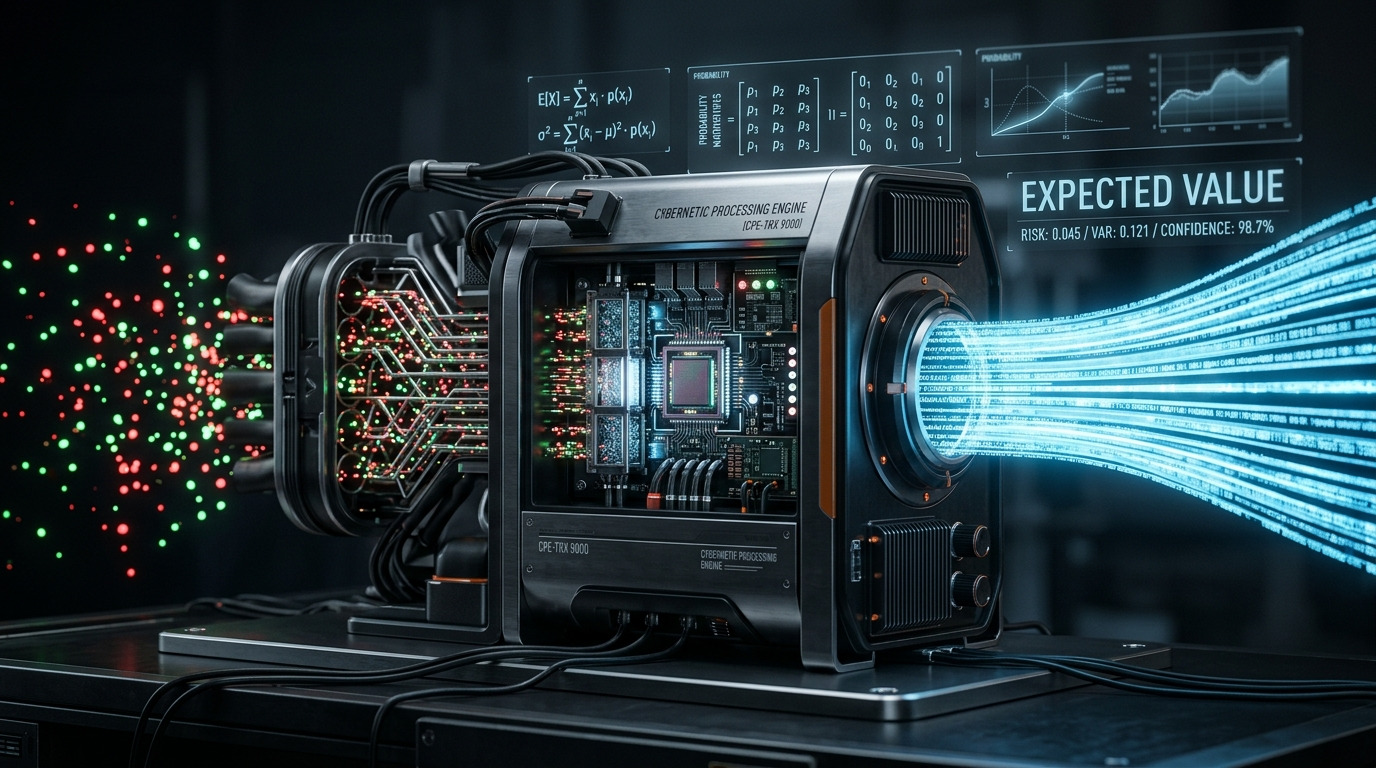
The cold, hard truth? You do not need to be right to be wealthy. Professional traders prioritize Expected Value (EV) over accuracy.
Position Sizing: Replacing Gut Feelings with Formulas
The most dangerous question a trader can ask is: "How much do I feel like putting on this trade?" Your position size should never be the result of intuition; it should be the output of a deterministic formula.
Step-by-Step Position Sizing:
- Define your Account Equity: Know your total available capital.
- Determine Risk %: Decide the maximum % of your account you are willing to lose on this specific trade (Typically 0.5% to 2% for pros).
- Identify Stop Loss Distance: Determine the price level where your trade thesis is invalidated.
- Calculate: (Account Size × Risk %) ÷ Stop Loss Distance = Position Size.
Using manual calculators can lead to fat-finger errors during high-volatility events. Use tools like the visual position sizers integrated into platforms like CPX. These tools allow you to drag your stop-loss on the chart and automatically calculate the precise position size, ensuring your risk is locked in before the order is placed.
The Evolution of Risk Management Tools
In the high-speed environment of crypto markets, the gap between seeing a trade and executing it is where most catastrophic errors occur. For decades, retail traders relied on legacy platforms like MetaTrader (MT4/MT5), which require manual input of prices, stop-loss levels, and lot sizes. While these tools were revolutionary for their time, they are fundamentally mismatched for the modern, high-volatility crypto landscape. Manual entry under pressure is not just slow it is a significant risk factor.
The Dangers of Legacy Manual Entry
When the market is storming (experiencing high volatility), your cognitive load spikes. You are monitoring price action, tracking news, and trying to calculate your risk, all while the ticker is screaming downward. This is when the fat-finger error occurs. Typing in a stop-loss price of 52,000 instead of 53,000 might seem like a minor typo, but in a levered crypto position, that difference can mean the difference between a controlled exit and a massive, unexpected loss.
Manual entry forces you to rely on two separate systems: your brain calculating risk and your keyboard inputting data. This cognitive disconnect creates a lag that often results in slippage or missed opportunities.
The Visual Advantage: Why Intuition Matters
Modern prop trading platforms, such as the CPX environment, have shifted toward Visual Execution. By integrating platforms like TradingView natively into the trading interface, the "calculator" and the "execution" become one.
Visual execution transforms risk management from an abstract calculation into a tangible reality. When you can literally drag your stop-loss and take-profit lines on the chart, the risk is no longer a number in a text box it is a visual barrier on the screen.
As you drag your stop-loss line, the interface updates your projected dollar risk in real-time. This provides an instant "stop" signal to your brain if the risk amount exceeds your daily drawdown limit.
By seeing your stop-loss relative to market structure (like fair value gaps or support levels) rather than just a price number, you make decisions based on market context rather than emotional panic.
How Visual Execution Saves Your Account
To use visual execution effectively, follow this workflow to ensure your risk is locked before you commit capital:
- Analyze Structure: Identify your entry, stop, and target levels directly on the TradingView chart.
- Drag and Adjust: Drag your "Stop-Loss" line to the point of invalidation based on your technical setup.
- Read the Risk: Look at the real-time dollar risk display on the platform. If it says $200 and your risk budget for this trade is $150, drag the line closer to the entry until the number matches your limit.
- Confirm and Execute: With the visual risk confirmed, click to execute. The software translates your visual adjustments into precise order parameters automatically.
Treat your screen like a dashboard. If you cannot see your "Risk-per-Trade" or "Total Exposure" visually on your chart while you are making adjustments, you are flying blind. Always ensure your interface is configured to show the "Dollar Impact" of every stop-loss move.
Key Takeaways for the Visual Trader:
- Reduce Cognitive Load: By removing the need for manual calculations during high-volatility events, you free up mental bandwidth to focus on market direction.
- Eliminate Human Error: Visual tools drastically reduce the chance of input errors, ensuring your actual risk aligns with your strategy.
- Master Your Environment: Platforms that allow native TradingView integration enable you to react to the market at the speed of the market, turning visual intuition into a competitive edge.
Market Mechanics: Executing with Precision
Even the best strategy fails if you cannot execute it correctly. In crypto, where volatility is constant and liquidity can vanish in milliseconds, the "how" of your trade execution is just as critical as the "what." Executing with precision means understanding the fundamental mechanics of order types and avoiding the traps that lead to unnecessary losses.

Stop Loss vs. Stop Limit: Choosing Your Emergency Exit
Every trader needs a kill switch. In crypto prop trading, this usually comes down to a choice between a Stop Market order (often just called a Stop Loss) and a Stop Limit order.
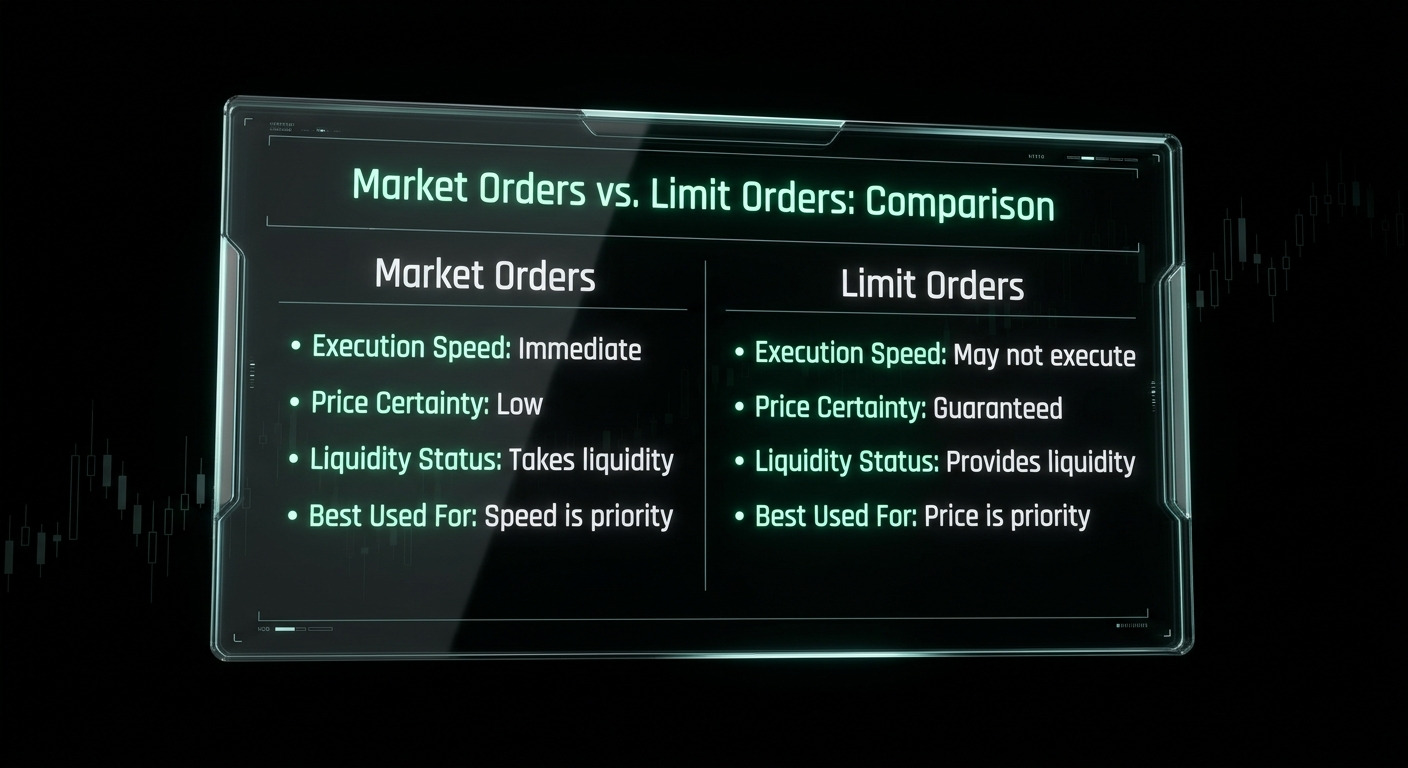
- Stop Market (The Emergency Exit): This converts your order into a market order the instant your trigger price is hit. It guarantees you will get out of the position, but it does not guarantee the price. In a flash crash, you might get filled at a price much worse than your trigger.
- Stop Limit (The Controlled Exit): This places a limit order on the book only after your trigger price is reached. It gives you total control over the price you receive, but it carries a significant risk: the gap risk. If the market crashes violently and moves past your limit price before your order is filled, you will be left holding a losing position while the market continues to drop.
In the highly liquid markets of Bitcoin (BTC) or Ethereum (ETH), a Stop Market order is generally preferred for risk management because it prioritizes exiting the trade over getting the perfect price. When the house is on fire, you want to get out, not negotiate the price of the exit.
The Slippage Trap: Why Market Orders Destroy Your Edge
Slippage is the "hidden tax" of trading. It is the difference between the price you expect to pay and the price you actually receive when your order is filled. If you use Market Orders during periods of high volatility like during a major news event or a CPI print you are essentially telling the exchange, "I will take whatever price is available right now."
In the crypto space, order books can thin out in seconds. If you place a large market order during these storms, you might get filled across several levels of the order book, resulting in a much worse average entry or exit price than you intended. This ruins your Risk-to-Reward (R:R) calculations instantly.
Mastering Limit Orders: Letting the Market Come to You
Professional traders rarely use market orders. Instead, they favor Limit Orders. By placing a limit order, you are providing liquidity to the market rather than taking it, which often results in better fills and zero "market impact."
Step by Step Precision Execution:
- Analyze the Order Book: Look at the depth of the market. If you are entering a trade, look for "clusters" of liquidity where your entry will be well-supported.
- Place the Limit Order: Set your entry point at a specific price level.
- Wait for the Fill: Let the market come to you. If the price never hits your level, you haven't lost money you've simply avoided a trade that didn't meet your criteria.
- Manage the Risk: Use a conditional order if your platform supports it, where your Stop Loss is attached to your Limit Order upon entry.
Identifying Correlated Assets: The Illusion of Diversification
In traditional equity markets, you diversify by holding stocks from different sectors tech, energy, healthcare, etc. In crypto, this logic often fails. The crypto market is hyper-coupled, primarily to the price action of Bitcoin (BTC).
If you are "long" Bitcoin, Ethereum (ETH), and Solana (SOL) simultaneously, you are not diversified. You are, in effect, tripling your exposure to the exact same directional move. When Bitcoin dumps, altcoins rarely act as a hedge; they usually suffer deeper drawdowns due to lower liquidity. This is correlated risk. You believe you have spread your capital across three different assets, but the math shows you have concentrated your risk in one single "crypto market" basket.
Before opening a new position, check the correlation coefficient between your current holdings and the asset you’re about to trade. If the correlation is above 0.8, you aren’t diversifying you are stacking leverage.

The Tsunami Effect: When Everything Crashes at Once
When a market correction hits, the "Tsunami Effect" takes hold. Because your assets are correlated, they don't stop you out one by one; they hit your stop-losses in a rapid-fire sequence. This creates a cascading impact on your total account equity.
If you have five correlated positions, a 5% drop in the overall market might trigger all five stop-losses within minutes. Your account equity drops instantly, perhaps even breaching your firm’s daily or total drawdown limit before you have a chance to adjust or hedge. This is the difference between a bad day and a failed prop firm evaluation.
Advanced Risk Management Control Strategies
Risk management is often misunderstood as a passive act setting a stop-loss and walking away. However, for the elite prop trader, risk management is a dynamic, active process. Once you have mastered the basics of position sizing and limit orders, you must graduate to advanced control strategies that allow you to navigate extreme volatility without being forced to close your positions prematurely.
Hedging 101: Neutralizing Volatility Without Closing
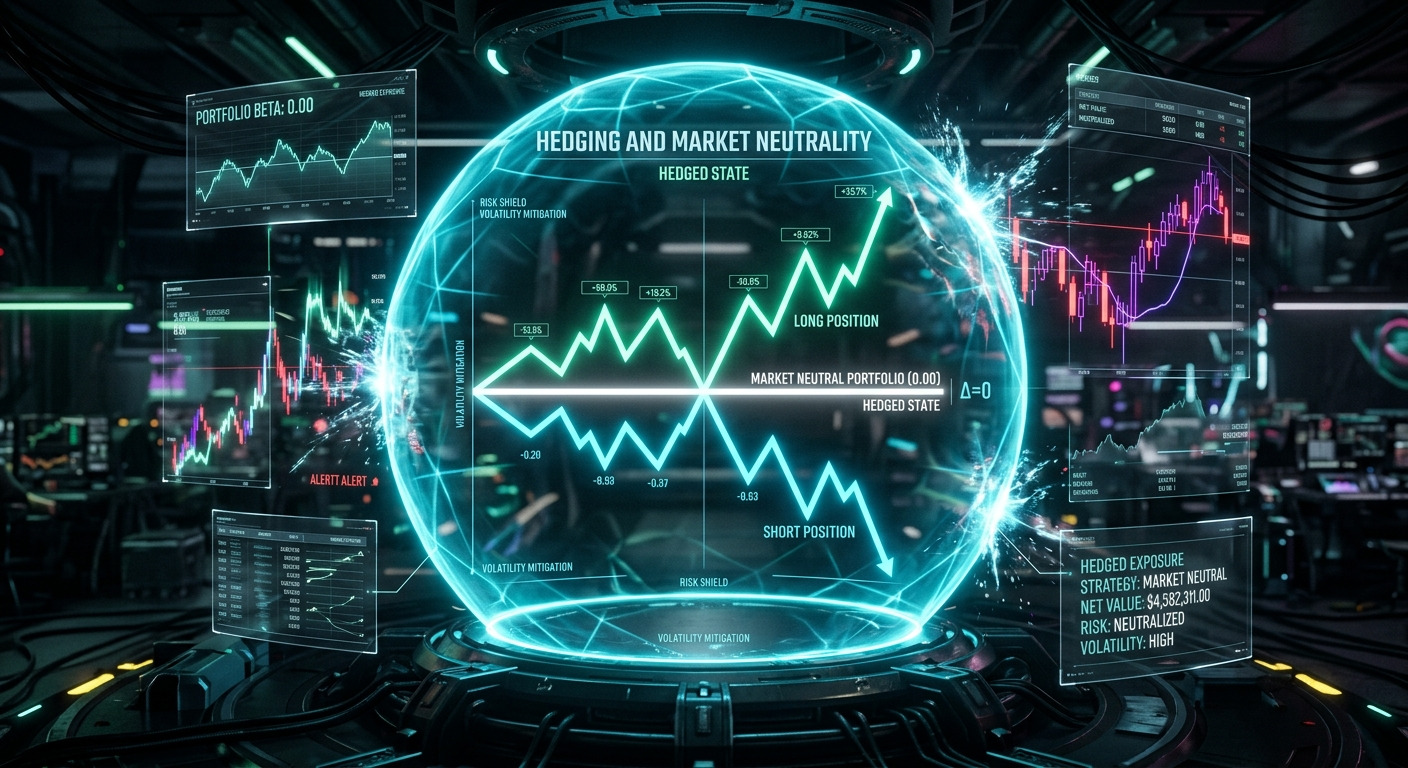
In crypto trading, a stop-loss is an "emergency exit" that closes a position and locks in a loss. But what if you still believe in your long-term thesis, yet the short-term market environment is turning toxic? This is where Hedging comes into play.
Hedging involves opening an offsetting position to neutralize the impact of market swings. Imagine you are holding a long position in Bitcoin, but a major macroeconomic news event is approaching that could trigger a temporary sell-off. Instead of closing your long and losing your position entry, you could open a short position on a perpetual futures contract of equal value.
The Result: Your portfolio becomes "market neutral." If Bitcoin drops, the gains on your short hedge offset the losses on your long position.
The Benefit: You don't have to scramble to re-enter the market after the volatility subsides. Once the news passes, you simply close the hedge and continue holding your original long.
Hedging is an advanced tool. Only use it when you have a clear understanding of the correlation between the assets you are holding and the ones you are using to hedge. Miscalculating your hedge ratio can double your risk instead of neutralizing it.

Managing Unrealized Gains as a Buffer
As your trade moves into profit, your unrealized gains expand your account equity. Many traders treat these gains as "money in the bank" and immediately increase their position size. This is a trap that often leads to over-leveraging.
Instead, treat your unrealized gains as a safety buffer. This breathing room allows you to be more patient with your remaining positions. Because your account balance has grown, a temporary retracement won't threaten your drawdown limits.
Key Takeaways for Advanced Risk Control:
- Hedging is for Preservation, Not Profit: Use hedging to survive volatility, not to add extra layers of complexity that distract from your primary trade.
- Respect Market Noise: Moving to breakeven too fast is a psychological shortcut to feel safe, but it often sacrifices good trades. Base your move on market structure, not emotion.
- Equity is a Cushion: Use your growing account equity to provide the mental and financial "breathing room" needed to hold winning trades to their full targets.
By implementing these advanced control strategies, you shift from a defensive trader who is always worried about getting stopped out, to an offensive trader who dictates how the market risk affects their account.
Managing Emotional Tilt When the Market Turns
Tilt is a term borrowed from professional poker, describing a state of emotional frustration where a player abandons their strategy to chase losses or over-leverage in an attempt to get even. In crypto, where a single asset can drop 10% in minutes, the temptation to "revenge trade" is immense.
The Shutdown Sequence: When you feel your heart rate increase or your breath shorten during a losing streak, you are in the "Red Zone." Your ability to make rational decisions is physiologically compromised. Implement a hard-coded "Shutdown Sequence":
- Immediate Step-Away: Close your trading terminal the moment you hit a predetermined daily loss limit. Do not argue with yourself.
- No Exceptions: Whether or not you "see a setup" forming, you must stay away from the charts for at least 60 minutes.
- Physical Reset: Drink water, walk away from the screens, and remove the visual stimuli. Only return when your resting heart rate returns to normal.

The 200-Hour Cycle: Tracking Performance vs. Professional Output
Professional prop trading is not a sprint; it is a job. Treat your trading performance with the same rigor a data analyst or developer treats their work cycle. Many elite traders operate on 28-day work cycles, targeting specific output levels (e.g., 200 hours of active market observation and execution).
By tracking your hours and performance, you remove the randomness from your results. If you are logging 200 hours a month, you aren't just trading you are practicing a craft.
Actionable Step: Maintain a trading journal that logs not just your P&L, but your adherence to the plan. Did you take a trade outside of your setup? Did you move your stop-loss early? If you consistently execute your plan, the profits will naturally follow as a byproduct of your process.
Building Your Strategic Roadmap
The journey to becoming a professional in the crypto prop trading space is not defined by your ability to pick winners; it is defined by your ability to manage losers. Throughout this guide, we have dismantled the myths of "gut-feeling" trading and replaced them with a rigorous, data-driven framework. You now understand that risk management is not a defensive afterthought it is the very infrastructure of your business.
The market is a mirror; it reflects your discipline, your patience, and your emotional stability. If you approach it with chaos, it will return chaos in the form of drawdown and liquidation. If you approach it with a strategic roadmap, it will reward you with consistency.

Your 3-Step Strategic Roadmap
You don't need to change everything overnight. In fact, sustainable success is built on incremental improvement. To transition from theory to practice, implement the following roadmap immediately:
- The Pre-Flight Checklist: Before you place a single order, your Strategic Roadmap must include a mandatory pre-trade check. Does this trade align with my portfolio correlation rules? Is my position size calculated via a tool (not an estimate)? Is my stop-loss based on market structure rather than an arbitrary price? If the answer to any of these is "no," the trade does not exist.
- The Weekly Performance Audit: Every Friday, stop trading. Review your performance not by your P&L, but by your adherence to your rules. Did you experience "tilt"? Did you violate your risk-per-trade limit? A trade that follows the rules but results in a loss is a "good trade." A trade that breaks the rules but results in a profit is a "failed trade" that needs immediate correction.
- The Compounding Discipline: As your account grows, do not increase your risk-per-trade percentage. Instead, scale your position size proportionally to your equity. This is how you compound discipline into wealth. You are not trying to get rich in a week; you are building a career that lasts for years.
Crypto proprietary trading is a high-performance profession. It requires the precision of a data analyst, the discipline of a soldier, and the patience of a strategist. By moving away from the "gambler's mindset" and embracing the mathematics of sustainability, you position yourself in the top 1% of traders who don't just survive the volatility they capitalize on it.
Disclaimer: This content is for educational purposes and does not represent financial advice. Please do your own research.
For a deeper dive into these risk management strategies, read the full guide on CoinProp.
About the Creator
Sophie
Trader focused on Price Action & Order Flow.
Into crypto, fast execution, controlled risk, and quality setups.
Passing funded accounts and refining my trading every day.
Enjoyed the story? Support the Creator.
Subscribe for free to receive all their stories in your feed.
Comments