
Managing Diabetes in a Digital Age: How Advanced Medical Devices Are Transforming Care Across the United States
Continuous glucose monitoring, smart insulin delivery systems, and connected healthcare technologies are changing the way millions of Americans manage diabetes.

Diabetes remains one of the most significant public health challenges facing the United States. Affecting millions of Americans across all age groups, the condition requires continuous monitoring, lifestyle adjustments, and long-term management to prevent serious complications. For decades, managing diabetes often meant frequent finger-prick testing, manual insulin injections, and constant vigilance. Today, however, technology is transforming that experience.
Modern diabetes devices are making it easier for patients to monitor blood glucose levels, administer insulin accurately, and make informed health decisions in real time. From continuous glucose monitoring systems and smart insulin pens to automated insulin pumps and mobile health applications, innovation is reshaping diabetes care in ways that were unimaginable just a few years ago.
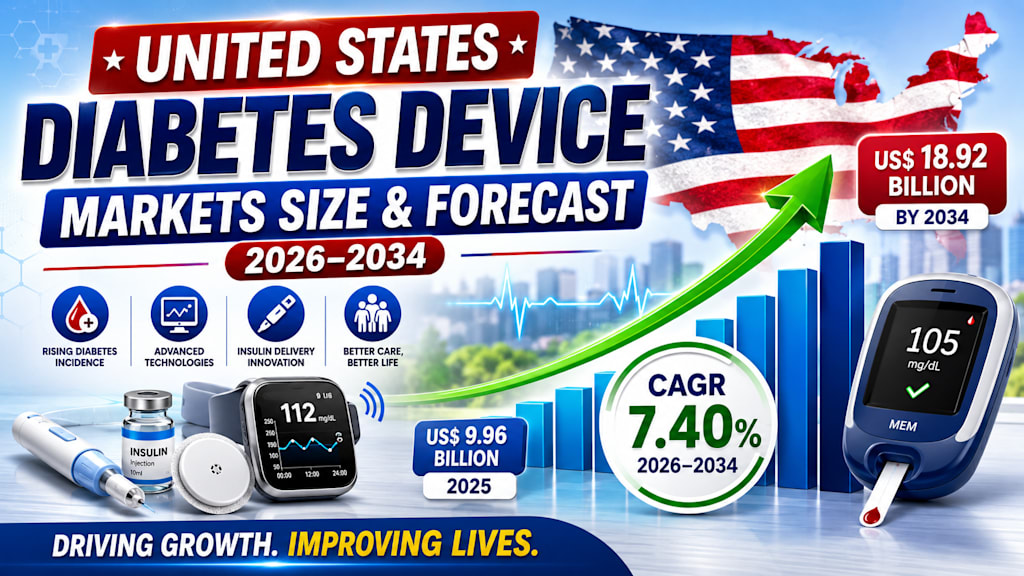
According to Renub Research, the United States Diabetes Devices Market is expected to grow from US$9.96 billion in 2025 to US$18.92 billion by 2034, registering a compound annual growth rate (CAGR) of 7.40% between 2026 and 2034. This growth is being fueled by rising diabetes prevalence, increasing adoption of continuous glucose monitoring technologies, growing demand for insulin delivery systems, and rapid advancements in digital healthcare solutions.
As healthcare increasingly embraces technology-driven solutions, diabetes devices are becoming essential tools for improving patient outcomes and quality of life.
Diabetes Continues to Affect Millions of Americans
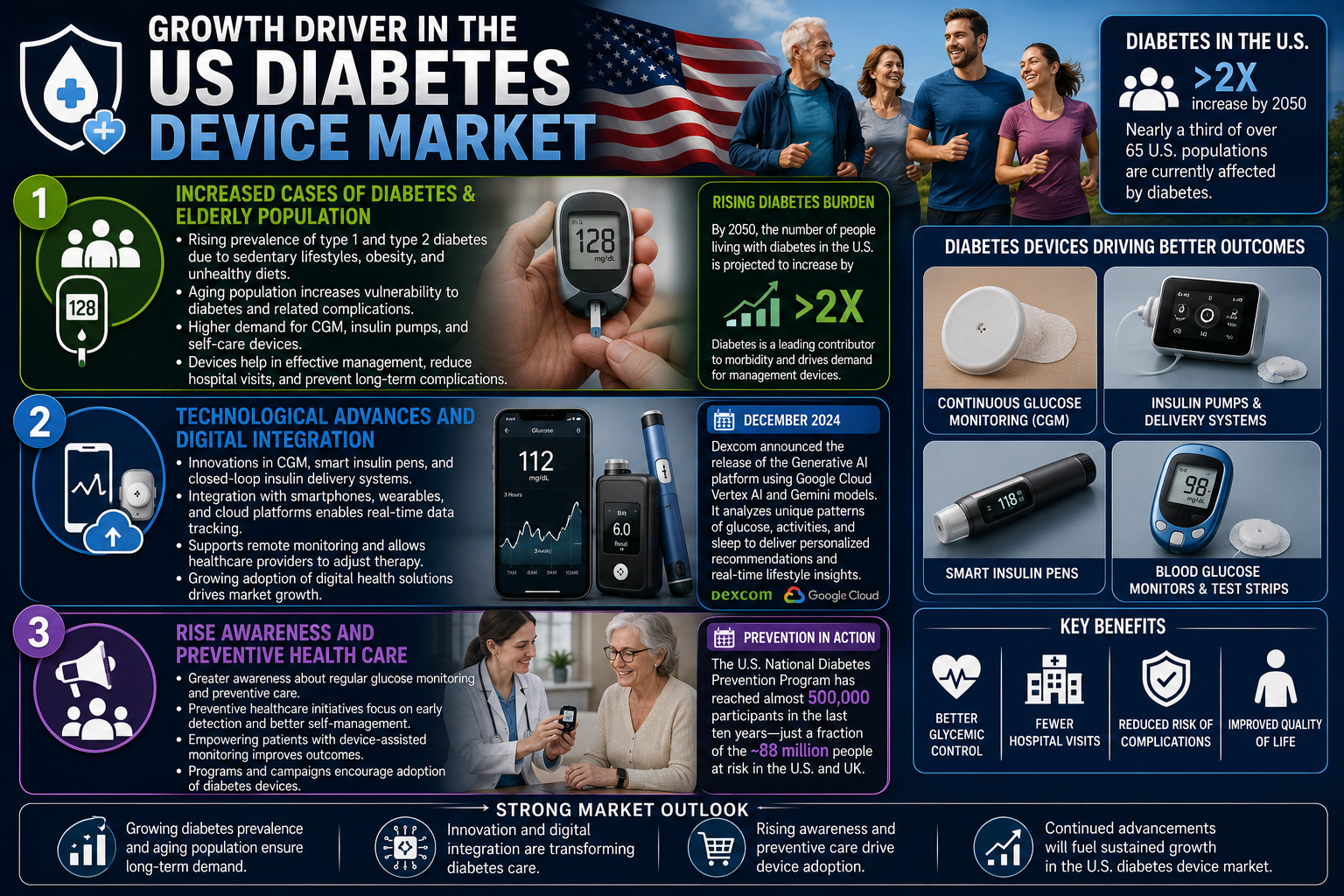
The growing prevalence of diabetes remains one of the most important factors driving demand for diabetes management devices.
Lifestyle changes, increasing obesity rates, sedentary habits, and aging populations have contributed to rising diabetes diagnoses across the United States. Both Type 1 and Type 2 diabetes require ongoing management, making effective monitoring and treatment critical for maintaining long-term health.
Healthcare professionals increasingly emphasize the importance of early intervention and continuous disease management. Poorly controlled diabetes can lead to serious complications, including cardiovascular disease, kidney damage, nerve disorders, and vision problems.
As the number of Americans living with diabetes continues to rise, so does the need for technologies that simplify disease management and support better health outcomes.
The growing diabetic population creates a consistent demand for innovative devices capable of helping patients monitor and manage their condition more effectively.
Continuous Glucose Monitoring Is Revolutionizing Care
One of the most significant innovations in diabetes management is the widespread adoption of continuous glucose monitoring systems, commonly known as CGMs.
Unlike traditional glucose meters that provide readings only when users perform a test, CGMs continuously monitor glucose levels throughout the day and night. Small sensors placed on the body collect glucose data and transmit information to smartphones, receivers, or connected devices.
This real-time visibility allows patients to understand how food, exercise, medication, stress, and other factors influence blood sugar levels. Alerts can notify users when glucose levels become dangerously high or low, helping prevent serious complications.
The convenience and accuracy offered by CGMs have made them increasingly popular among both healthcare professionals and patients. Individuals with Type 1 diabetes have been among the earliest adopters, but usage is growing rapidly among insulin-dependent Type 2 diabetes patients as well.
As technology continues improving, continuous monitoring is becoming one of the most important components of modern diabetes care.
Smart Insulin Delivery Systems Improve Precision
Insulin delivery technologies have also undergone significant transformation.
Traditional insulin injections remain widely used, but newer devices offer greater convenience, accuracy, and flexibility. Insulin pens, smart pens, and automated insulin pumps allow patients to manage treatment more efficiently while reducing the complexity associated with diabetes care.
Smart insulin pens can record dosage information, track administration history, and connect with mobile applications that provide reminders and insights. These features help patients maintain better treatment adherence while reducing the risk of missed or incorrect doses.
Insulin pumps deliver insulin continuously throughout the day, providing a more consistent approach to glucose management. Advanced systems can adjust insulin delivery based on real-time glucose readings, reducing the burden of manual calculations and improving overall control.
The combination of convenience and precision has contributed significantly to the growing popularity of modern insulin delivery solutions.
Digital Health Is Changing Diabetes Management
The integration of digital technology into healthcare has accelerated innovation across the diabetes device market.
Modern devices increasingly connect to smartphones, cloud platforms, wearable technologies, and remote monitoring systems. This connectivity enables patients and healthcare providers to access valuable data anytime and anywhere.
Mobile applications allow users to track glucose levels, insulin usage, physical activity, dietary habits, and other health metrics. Healthcare professionals can review patient data remotely and make informed treatment adjustments without requiring frequent in-person visits.
Telehealth services have further enhanced the value of connected diabetes devices. Patients can share information directly with providers, receive guidance remotely, and maintain more consistent engagement with their care plans.
As digital healthcare ecosystems continue expanding, connected diabetes devices are becoming central to personalized and proactive disease management.
Preventive Healthcare Is Encouraging Adoption
Growing awareness of preventive healthcare is another important factor driving market growth.
Consumers are increasingly interested in managing health conditions proactively rather than reacting to complications after they occur. Diabetes management devices support this approach by providing continuous insights that help users make informed decisions regarding nutrition, exercise, medication, and lifestyle choices.
Healthcare organizations and public health initiatives continue promoting early detection and disease management strategies. These efforts encourage greater use of monitoring technologies that can improve patient outcomes while reducing healthcare costs associated with complications.
Patients who actively monitor their condition often experience better long-term health results, making diabetes devices valuable tools within broader preventive healthcare strategies.
As healthcare systems place greater emphasis on prevention, demand for advanced diabetes management technologies is expected to increase further.
Self-Monitoring Devices Continue to Play an Important Role
While advanced technologies attract considerable attention, traditional self-monitoring of blood glucose devices remain essential components of diabetes care.
Blood glucose meters, test strips, and lancets continue serving millions of patients across the United States. These devices provide a cost-effective and accessible solution for monitoring blood sugar levels, particularly among individuals who may not require continuous monitoring.
Many patients continue relying on self-monitoring devices because they are familiar, affordable, and widely available through pharmacies and healthcare providers.
Although growth in this segment may be slower compared to newer technologies, self-monitoring products remain a critical part of the overall diabetes device ecosystem.
Their continued relevance demonstrates that innovation in healthcare often involves improving existing solutions alongside introducing new technologies.
Insulin Pumps Are Becoming More Sophisticated
The insulin pump segment is among the most technologically advanced areas of the diabetes device market.
Modern insulin pumps provide continuous subcutaneous insulin delivery, helping patients maintain more stable glucose levels throughout the day. Compared to multiple daily injections, pumps offer greater flexibility and convenience for many users.
Recent innovations have focused on creating automated insulin delivery systems that work alongside continuous glucose monitoring technologies. These systems can adjust insulin administration automatically based on real-time glucose data, reducing the need for constant user intervention.
Often referred to as closed-loop or artificial pancreas systems, these technologies represent one of the most exciting developments in diabetes care.
As performance and usability continue improving, insulin pumps are expected to attract increasing numbers of patients seeking advanced treatment options.
Cost and Accessibility Remain Challenges
Despite significant technological progress, several challenges continue affecting the diabetes device market.
One of the most important concerns is cost. Advanced technologies such as continuous glucose monitoring systems and insulin pumps often require substantial financial investment. Even with insurance coverage, out-of-pocket expenses can create barriers for some patients.
Differences in reimbursement policies and healthcare coverage can further complicate access. Patients may face varying levels of support depending on their insurance plans and geographic location.
Improving affordability and accessibility remains a priority for manufacturers, healthcare providers, and policymakers seeking to expand the benefits of advanced diabetes management technologies.
Addressing these challenges will be critical for ensuring broader adoption across diverse patient populations.
User Experience Matters More Than Ever
Technology adoption depends not only on innovation but also on usability.
Some patients, particularly older adults or individuals less familiar with digital technologies, may find advanced devices difficult to operate. Device setup, calibration, software updates, and connectivity issues can sometimes create frustration.
Manufacturers are responding by focusing on simpler interfaces, improved training resources, and more intuitive designs. User-friendly products help improve adherence and increase confidence among patients.
As device complexity decreases and educational support improves, adoption rates are likely to continue rising.
Successful products will be those that combine advanced functionality with ease of use.
Regional Markets Drive Industry Growth
Several states play particularly important roles within the U.S. diabetes devices market.
California remains one of the largest and most technologically advanced markets due to its strong healthcare infrastructure, emphasis on preventive care, and reputation for innovation. The state's healthcare providers are often early adopters of new diabetes management technologies.
Texas benefits from a large diabetic population and expanding healthcare access, creating substantial demand for monitoring and insulin delivery devices. Both urban and rural communities contribute to market growth.
New York's sophisticated healthcare network supports widespread adoption of advanced diabetes technologies across hospitals, specialty clinics, and outpatient settings.
Washington continues attracting attention through its focus on digital health, preventive medicine, and patient-centered care models.
These regional markets often influence broader national trends within the diabetes device industry.
The Future of Diabetes Management
The future of diabetes care is becoming increasingly connected, automated, and personalized.
Artificial intelligence, predictive analytics, wearable technologies, and remote monitoring solutions are expected to play larger roles in helping patients manage their condition. Future systems may provide even greater automation, reducing the daily burden associated with diabetes management.
Integration between glucose monitoring devices, insulin delivery systems, and healthcare platforms will continue improving. Patients will benefit from more comprehensive insights, faster treatment adjustments, and better long-term outcomes.
As technology evolves, diabetes care will likely become more proactive rather than reactive, empowering individuals to manage their health with greater confidence and precision.
Final Thoughts
The United States diabetes devices market is experiencing significant growth driven by rising diabetes prevalence, technological innovation, and increasing emphasis on preventive healthcare.
With the market projected to grow from US$9.96 billion in 2025 to US$18.92 billion by 2034, advanced monitoring and insulin delivery technologies are becoming essential tools for millions of Americans living with diabetes. Continuous glucose monitoring systems, smart insulin devices, connected healthcare platforms, and automated treatment solutions are transforming the patient experience and improving health outcomes.
While challenges related to cost, accessibility, and user adoption remain, ongoing innovation continues creating new opportunities for better disease management. As healthcare becomes increasingly digital and personalized, diabetes devices will play an even greater role in helping patients live healthier, more independent lives.
The future of diabetes care is no longer defined solely by treatment. It is increasingly defined by technology, empowerment, and the ability to manage health in real time.
About the Creator
Enjoyed the story? Support the Creator.
Subscribe for free to receive all their stories in your feed.
Comments
There are no comments for this story
Be the first to respond and start the conversation.