
Luckin’s Real Business Is Not Coffee
The chain is turning nearly 40,000 stores into all-day beverage counters, and that changes what a coffee brand is for.
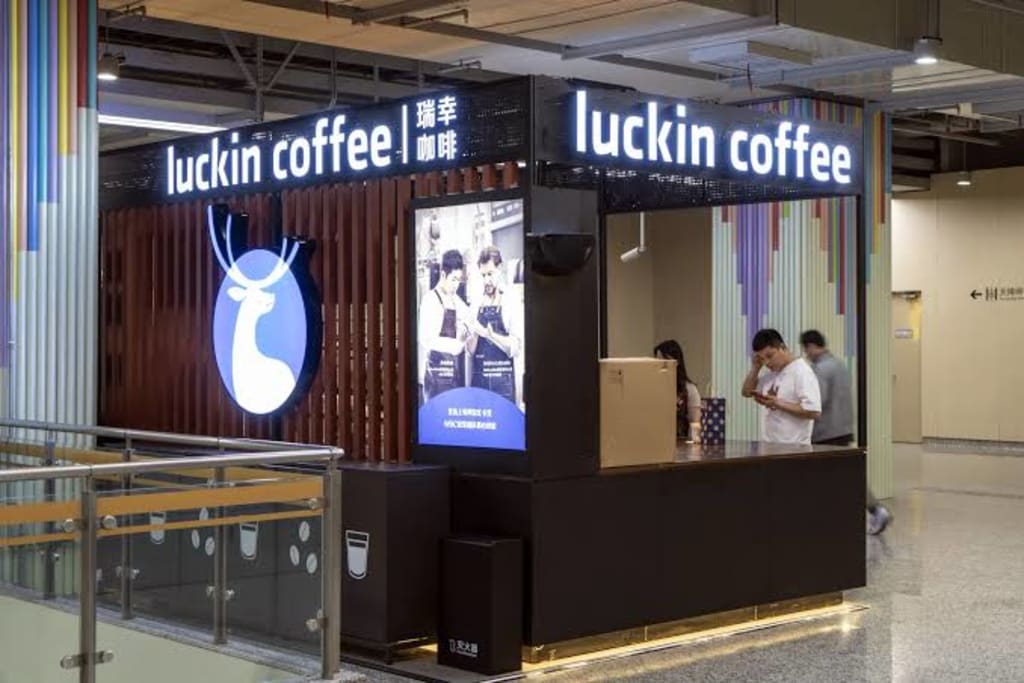
Luckin no longer wants its menu to be mostly coffee.
Since 2026, its ordering page has filled with light milk tea, fruit tea, iced milk, fruit-and-vegetable tea, yogurt drinks, pearl milk tea, and cassava-peach gum stewed milk. These drinks now sit beside Americanos, lattes, and flat whites. The company that once used a coconut latte to teach China to drink coffee is now using milk tea and sweet soups to redefine itself.
That looks like drift. It is a response to a math problem.
Growth Is Still Strong, but Stores Are Under Pressure
Luckin’s third-quarter 2026 results still look strong. Revenue rose 17%, operating profit rose 55.1%, average monthly transacting customers reached 123 million, and total stores reached 38,909. Scale and profit improved at the same time.
Same-store sales tell a different story. At self-operated stores, year-on-year same-store sales fell 0.1%, 5.3%, and 11.1% in the first three quarters of 2026. The decline widened each quarter.
Luckin says delivery subsidies in the same period of 2025 raised the comparison base. That explains part of the drop. It does not answer the longer question. As stores get denser, where does growth come from?
Luckin added nearly 10,000 stores in the past year and is close to 40,000. Scale was once the sharpest tool in Chinese chain coffee. When store openings start cannibalizing one another, store-level output becomes the harder test. Mixue Bingcheng faced the same pressure when it crossed 40,000 stores. Dense networks divide demand.
Luckin has to make existing stores sell more cups, cover more hours, and absorb more occasions. Coffee alone cannot do that. Coffee has clear use cases: the morning commute, the afternoon slump, overtime. Caffeine also limits frequency. For most office workers, two cups a day is enough. Luckin can make coffee faster, cheaper, and more consistent. It cannot easily create demand for something sweet at 3 p.m. or something chewy at night.
Non-coffee drinks fill those gaps. The numbers are not marginal. In 2025, non-coffee drinks accounted for more than 20% of Luckin’s cup volume. By the end of May 2026, cumulative sales of non-coffee products passed RMB 20 billion. Qingqing Jasmine sold more than 400 million cups. Featherlight Fruit-and-Vegetable Tea sold more than 100 million cups. The Thai milk tea series launched in August 2026 sold more than 13 million cups in its first week.
Luckin is not dabbling in milk tea. It is turning a coffee pickup store into an all-day drink counter.
Copy Validated Categories, Then Scale Them
Luckin’s non-coffee menu has few new categories. Light milk tea was validated by Chagee. Fruit-and-vegetable tea was popularized by Heytea and others. Pearl milk tea and cassava-peach gum stewed milk are decades-old businesses. Pearls and cassava have moved through countless milk tea shops and sweet-soup stalls.
Luckin did not invent these products. It copied them into its stores. That looks opportunistic. It is also how Luckin built its coffee business. Starbucks spent nearly 20 years teaching Chinese consumers about freshly ground coffee. Luckin skipped that education. It used pickup stores, digital ordering, and low prices to open the mass coffee market. It absorbed demand someone else had created.
Luckin applied the same playbook to non-coffee drinks in 2024. Chagee turned jasmine light milk tea into a hit with “Boya Juexian” in 2023. In August 2024, Luckin launched “Qingqing Jasmine.” Light milk tea needs no fresh-cut fruit and little prep. It fits Luckin’s pickup-store model. Luckin used its store network and dairy supply chain, bought at scale, and priced the drink at RMB 9.9. That undercut Chagee’s RMB 16 to 17 range. Qingqing Jasmine sold more than 44 million cups in its first month.
Imitation is common in food and beverage. Luckin’s advantage is turning validated categories into large-scale products. Two capabilities explain that.
The first is a data-driven hit pipeline and the scale of nearly 40,000 stores. Luckin tests demand, runs quantitative taste panels, locks in supply-chain prices, and concentrates marketing. When a category shows broad demand and repeat purchase, Luckin can plug it into its network and scale it quickly.
The second is standardization of complex categories. For pearl milk tea, launched in October 2026, Luckin did not copy the traditional method of boiling raw tapioca pearls. It uses frozen cooked pearls and reheats them in a standardized water bath. The core reheating step takes 11 to 13 minutes. That is still faster and simpler than boiling and steaming raw pearls. The change is not the pearl. It is the handoff between a complex topping and store operations. Pre-prepared ingredients, advance prep, and standard steps turn work that depended on manual experience into repeatable store actions. That lets Luckin deliver topped milk tea and Chinese sweet soups at scale.
Tea and Coffee Are Now One Market
Luckin’s move is not isolated. Mass coffee is under pressure. Cotti Coffee has slowed store openings. Some franchisees are losing money as subsidies shrink, and closures have risen. Lucky Cup said in July 2026 that it would cap new stores at 2,000 for the year and 1,000 in the second half. The line between coffee and tea drinks is collapsing.
A count of the top 100 tea brands by store number found that 69% also sell freshly made coffee. Mixue Bingcheng incubated Lucky Cup. Heytea, Nayuki, and CoCo are testing coffee through existing menus or stores. Coffee and tea now compete for the same daily drink budget. For most consumers, a RMB 10 drink that is consistent and two minutes away matters more than category. Channels and efficiency beat category labels.
Retail has a precedent. 7-Eleven launched Seven Café in 2013. It did not sell coffee culture. It sold coffee at 100 yen through a dense store network. Annual sales reached 1 billion cups within four years. Convenience stores do not bet on one product. They use dense outlets and broad shelves to capture immediate demand all day. Turnover and efficiency matter more than any single item.
Luckin is one of the most active practitioners of that model in China. Light milk tea, fruit-and-vegetable tea, pearl milk tea, and stewed milk let it fill afternoon and evening slots without adding rent or labor. The same pickup store can serve more of the day. Luckin does not need to prove craftsmanship in one category. It needs a cheap, consistent drink on the menu whenever someone wants refreshment, thirst relief, or a snack.
The difference is that a convenience store sells packaged goods. Luckin sells drinks that staff must mix and control for temperature and time. That makes the model more attractive and harder to run.
Adding Is Easy, and That Is the Risk
The convenience-store model has clear risks.
More ingredients, sauce packets, and refrigerated items make store operations harder. Luckin must keep cup throughput at tens of seconds and hold waste low. Coffee is highly standardized. Milk tea toppings, fruit-and-vegetable tea, and stewed milk add prep, preservation, reheating, and cleaning. The front of the store looks like a convenience store. The back looks more like a food factory.
Non-coffee drinks also have to expand the pie. If they only replace coffee orders, they do not improve the store model. They need new customers, new time slots, and new frequency. Otherwise Luckin is moving demand from one part of the menu to another.
Adding is easier than subtracting. It is also more dangerous. A larger menu gives customers more choice. It also raises supply-chain, store-operation, and brand complexity. Luckin is steering nearly 40,000 stores into a multi-category fight. It has to defend coffee, make non-coffee growth real, and protect store efficiency.
New products alone will not answer those questions.
Coffee Is the Entrance
Luckin looks less like a coffee company than it did five years ago. That is not a drift from the business. It is an upgrade of the business. Coffee builds the habit and defends the base. Non-coffee fills occasions and adds growth. Together they turn nearly 40,000 stores into an instant-retail network for daily drinks.
The ambition is not to be a more professional coffee company. It is to be the convenience store of China’s freshly made beverage market.
But convenience stores win on efficiency, turnover, low waste, and profit per shelf. Luckin can add menu items. It cannot add hours to the day or space to the store. The hard part is keeping the model efficient as the menu grows.
Coffee is the entrance. The all-day beverage counter is the business. The test has just started.
About the Creator
Jin
Writer of reamstories
https://reamstories.com/jin
Enjoyed the story? Support the Creator.
Subscribe for free to receive all their stories in your feed. You could also become a paid subscriber, letting them know you appreciate their work.
Comments
There are no comments for this story
Be the first to respond and start the conversation.