
Long-Term, Reliable, and Empowering: Why Intrauterine Devices Are Gaining Popularity Worldwide
Growing awareness of reproductive health, improved access to family planning services, and advances in contraceptive technology are driving the global rise of intrauterine devices.

In recent years, conversations around reproductive health and family planning have become increasingly important across the globe. Women today have access to more contraceptive choices than ever before, enabling them to make informed decisions that align with their health goals, lifestyles, and future plans. Among the many available options, intrauterine devices (IUDs) have emerged as one of the most trusted and effective forms of long-term contraception.
Known for their reliability, convenience, and long-lasting effectiveness, IUDs have become a preferred choice for millions of women worldwide. Unlike daily pills or short-term contraceptive methods that require regular attention, IUDs provide years of pregnancy prevention through a single procedure. This combination of effectiveness and convenience has helped fuel growing demand across both developed and emerging healthcare markets.
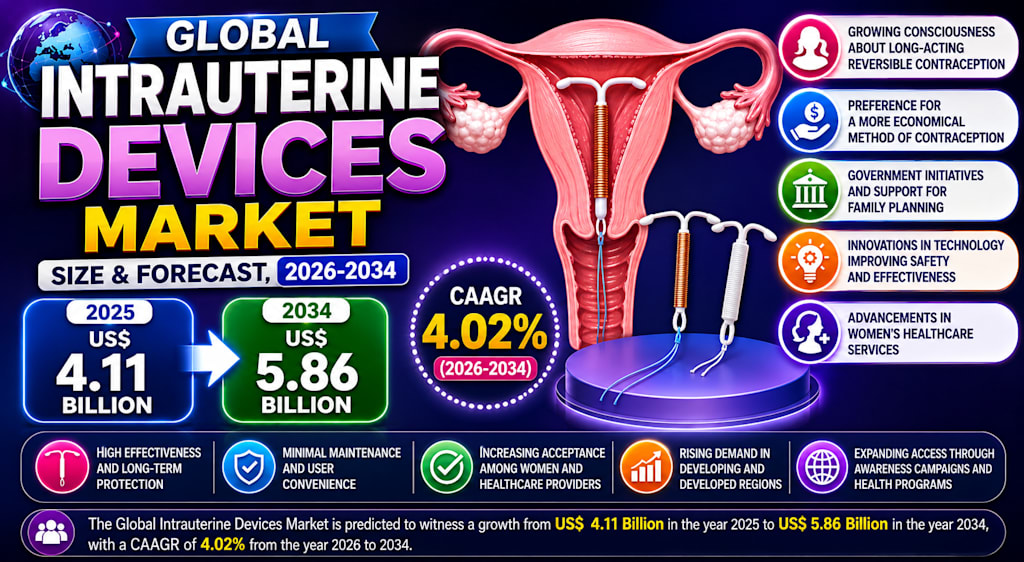
According to Renub Research, the Global Intrauterine Devices Market is expected to grow from US$4.11 billion in 2025 to US$5.86 billion by 2034, expanding at a compound annual growth rate (CAGR) of 4.02% between 2026 and 2034. Growing awareness of long-acting reversible contraception, government-supported family planning initiatives, technological innovation, and improved access to women's healthcare services are among the key factors driving market expansion.
As healthcare systems continue prioritizing women's reproductive health, intrauterine devices are becoming an increasingly important part of global family planning strategies.
Understanding Intrauterine Devices
An intrauterine device is a small, T-shaped contraceptive device inserted into the uterus by a trained healthcare professional. Once placed, the device provides highly effective protection against pregnancy for several years, depending on the type used.
IUDs belong to a category known as long-acting reversible contraceptives (LARCs), which are recognized for their high effectiveness and ease of use. Unlike permanent sterilization procedures, fertility typically returns quickly after the device is removed.
There are two primary categories of intrauterine devices. Hormonal IUDs release a small amount of progestin, which thickens cervical mucus and helps prevent fertilization. Copper IUDs, meanwhile, utilize the natural spermicidal properties of copper to prevent pregnancy without the use of hormones.
Both options offer highly effective protection and have become widely accepted by healthcare providers and patients around the world.
The Growing Appeal of Long-Acting Contraception
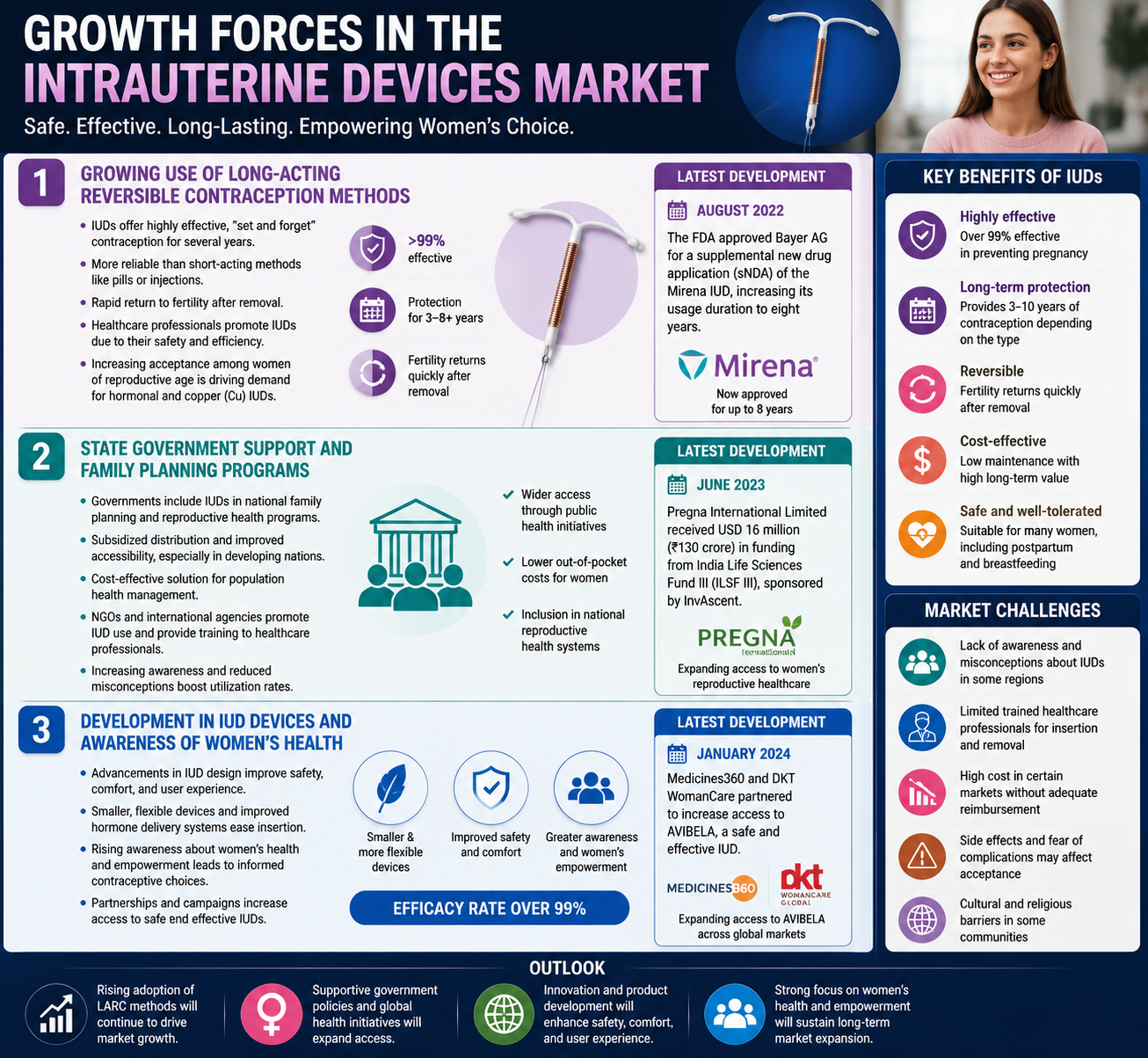
One of the most significant factors driving the popularity of IUDs is the increasing preference for long-acting reversible contraception.
Many women seek contraceptive methods that provide reliable protection without requiring daily, weekly, or monthly maintenance. Traditional options such as oral contraceptive pills depend heavily on consistent use, which can sometimes lead to reduced effectiveness if doses are missed.
IUDs eliminate many of these concerns by offering years of continuous protection following a single insertion procedure. This "set-it-and-forget-it" approach appeals to women who want dependable contraception without frequent intervention.
Healthcare professionals also frequently recommend IUDs because of their exceptional effectiveness rates and long-term convenience. The ability to prevent pregnancy while allowing rapid return to fertility after removal further contributes to their growing popularity.
As awareness of long-acting contraceptive options increases, more women are choosing IUDs as part of their reproductive healthcare plans.
Government Programs Are Supporting Adoption
Government-backed family planning initiatives have played a major role in expanding access to intrauterine devices worldwide.
Many countries view family planning as a critical component of public health and economic development. As a result, healthcare systems increasingly promote long-acting contraceptive methods due to their effectiveness and cost efficiency.
Subsidized healthcare programs, public awareness campaigns, and reproductive health services have helped make IUDs more accessible, particularly in developing nations. International organizations and non-governmental groups also support efforts to improve access to modern contraceptive technologies.
Training programs for healthcare providers have helped address misconceptions while improving the quality of contraceptive counseling and services.
These initiatives are empowering women with greater reproductive choice while supporting broader public health objectives. As government support continues expanding, IUD adoption rates are expected to rise further.
Advances in Technology Are Improving User Experience
Modern IUDs are significantly more advanced than earlier generations of contraceptive devices.
Manufacturers continue investing in research and development to improve comfort, safety, and overall user experience. Newer devices feature more flexible materials, smaller designs, and improved hormone delivery systems that enhance effectiveness while minimizing discomfort.
Technological improvements have made insertion procedures easier and reduced concerns associated with earlier generations of products. Enhanced designs also support broader patient eligibility, making IUDs suitable for a wider range of women.
Healthcare providers increasingly view modern IUDs as safe and reliable options capable of addressing diverse reproductive healthcare needs.
These advancements are helping overcome historical concerns and encouraging greater acceptance among both patients and clinicians.
Women's Health Awareness Is Driving Demand
Growing awareness of women's health issues is another important factor supporting market growth.
Women today have greater access to health information and educational resources than ever before. Increased understanding of reproductive health empowers individuals to make informed decisions regarding contraception and family planning.
Discussions surrounding reproductive rights, healthcare access, and women's empowerment have further elevated interest in effective contraceptive solutions. Many women are actively exploring options that offer both convenience and long-term protection.
Healthcare providers, advocacy organizations, and educational campaigns continue encouraging informed decision-making by providing accurate information regarding contraceptive choices.
As awareness continues growing globally, demand for effective and flexible reproductive health solutions is expected to increase.
Hormonal IUDs Continue Gaining Popularity
The hormonal intrauterine device segment represents one of the fastest-growing areas within the market.
In addition to preventing pregnancy, hormonal IUDs offer several therapeutic benefits. Many women use these devices to manage heavy menstrual bleeding, painful periods, and certain gynecological conditions.
By releasing low doses of progestin directly into the uterus, hormonal IUDs provide highly effective contraception while often reducing menstrual symptoms. For many patients, this dual benefit makes hormonal devices particularly attractive.
Healthcare providers frequently recommend hormonal IUDs because they offer both contraceptive and medical advantages. This combination has helped drive increasing adoption worldwide.
As awareness of these benefits expands, hormonal IUDs are expected to remain a major contributor to market growth.
Copper IUDs Offer a Hormone-Free Alternative
Copper IUDs continue to play a vital role in the contraceptive landscape.
Unlike hormonal options, copper IUDs provide pregnancy prevention without altering hormone levels. This makes them particularly appealing to women who prefer non-hormonal contraceptive methods.
Copper devices are also known for their exceptional longevity, with some models providing protection for up to ten years. Their long lifespan contributes to strong cost-effectiveness over time.
Another advantage is their ability to serve as emergency contraception when inserted within a specific timeframe after unprotected intercourse.
As more women seek personalized contraceptive solutions, copper IUDs remain an important option within the broader market.
Hospitals and Specialized Clinics Drive Access
Healthcare facilities play a critical role in supporting IUD adoption.
Hospitals remain key providers of insertion and removal procedures, particularly for first-time users and individuals requiring specialized care. Many family planning programs are integrated directly into hospital-based reproductive health services.
Gynecology clinics have also become major centers for contraceptive counseling and women's healthcare. These facilities provide personalized guidance, follow-up support, and ongoing reproductive health services.
Specialized clinics often focus on preventive care and patient education, helping women understand available options and select methods best suited to their needs.
The continued expansion of healthcare infrastructure is expected to improve accessibility and support future market growth.
Challenges Still Affect Market Expansion
Despite their proven effectiveness, intrauterine devices face several challenges.
Misconceptions regarding safety, fertility, and side effects continue influencing perceptions in certain regions. Some women may have concerns about insertion procedures, discomfort, or potential complications.
Cultural and social attitudes toward contraception can also affect adoption rates. In some communities, discussions surrounding reproductive health remain limited, reducing awareness of available options.
Access to trained healthcare professionals presents another challenge, particularly in underserved areas. Because insertion and removal require specialized training, availability of qualified providers directly impacts adoption rates.
Addressing these barriers through education, healthcare investment, and awareness initiatives will be critical for sustaining long-term market growth.
Regional Markets Continue Expanding
Several countries are driving significant growth within the global IUD market.
The United States remains one of the largest markets due to high awareness of long-acting reversible contraception, strong healthcare infrastructure, and broad acceptance among healthcare providers and patients. Continuous innovation and patient education initiatives continue supporting adoption.
The United Kingdom benefits from strong public healthcare support and government-funded reproductive health services. Access to affordable contraceptive options through national healthcare programs contributes to widespread use.
India continues experiencing steady growth through government-backed family planning programs and expanding healthcare access. Copper IUDs remain particularly popular due to affordability and public-sector support.
Saudi Arabia is emerging as a growing market as investments in women's healthcare services and reproductive health awareness continue expanding.
These regional trends demonstrate the global relevance of intrauterine devices across diverse healthcare environments.
The Future of Reproductive Healthcare
The future of the intrauterine devices market appears promising as healthcare systems increasingly emphasize preventive care, reproductive health, and patient empowerment.
Technological innovation will likely continue improving device design, comfort, and effectiveness. Expanded healthcare access and educational initiatives will further support adoption, particularly in emerging markets.
Healthcare providers are expected to continue promoting long-acting reversible contraception as an effective strategy for family planning and reproductive health management.
As women seek greater flexibility, convenience, and control over reproductive decisions, demand for reliable contraceptive solutions is expected to remain strong.
Final Thoughts
Intrauterine devices have become one of the most effective and widely trusted forms of long-term contraception available today. Their combination of reliability, convenience, affordability, and reversibility has made them a preferred option for millions of women around the world.
With the global market projected to grow from US$4.11 billion in 2025 to US$5.86 billion by 2034, continued expansion will be supported by rising awareness of reproductive health, growing acceptance of long-acting contraceptive methods, government-backed family planning initiatives, and ongoing technological innovation.
While challenges related to access, education, and cultural perceptions remain, the future of the market remains positive. As healthcare systems continue prioritizing women's health and empowerment, intrauterine devices will play an increasingly important role in helping women make informed and confident reproductive choices.
The story of modern contraception is ultimately about freedom, choice, and access—and intrauterine devices are becoming a central part of that story worldwide.
About the Creator
Enjoyed the story? Support the Creator.
Subscribe for free to receive all their stories in your feed.
Comments
There are no comments for this story
Be the first to respond and start the conversation.