
Lipids Market Expands Rapidly as Functional Nutrition and Sustainable Innovation Drive Global Demand
Growing awareness of healthy fats, increasing use in pharmaceuticals and nutraceuticals, and advances in sustainable lipid production are reshaping the future of the global lipids industry.

The global conversation around nutrition has changed dramatically over the last decade. Once viewed with caution, fats are now increasingly recognized as essential nutrients that play critical roles in human health, cognitive function, energy metabolism, and overall well-being. As scientific understanding of healthy fats continues to evolve, consumers are becoming more selective about the types of lipids they consume and the benefits they provide.
This shift has transformed the global lipids industry into one of the most dynamic segments within food, nutrition, pharmaceuticals, cosmetics, and biotechnology. From omega-3 supplements and functional foods to pharmaceutical delivery systems and sustainable bio-based products, lipids are becoming increasingly important across multiple industries.
As demand for healthier lifestyles, preventive healthcare, and environmentally responsible products continues growing, the lipids market is positioned for substantial expansion in the years ahead.
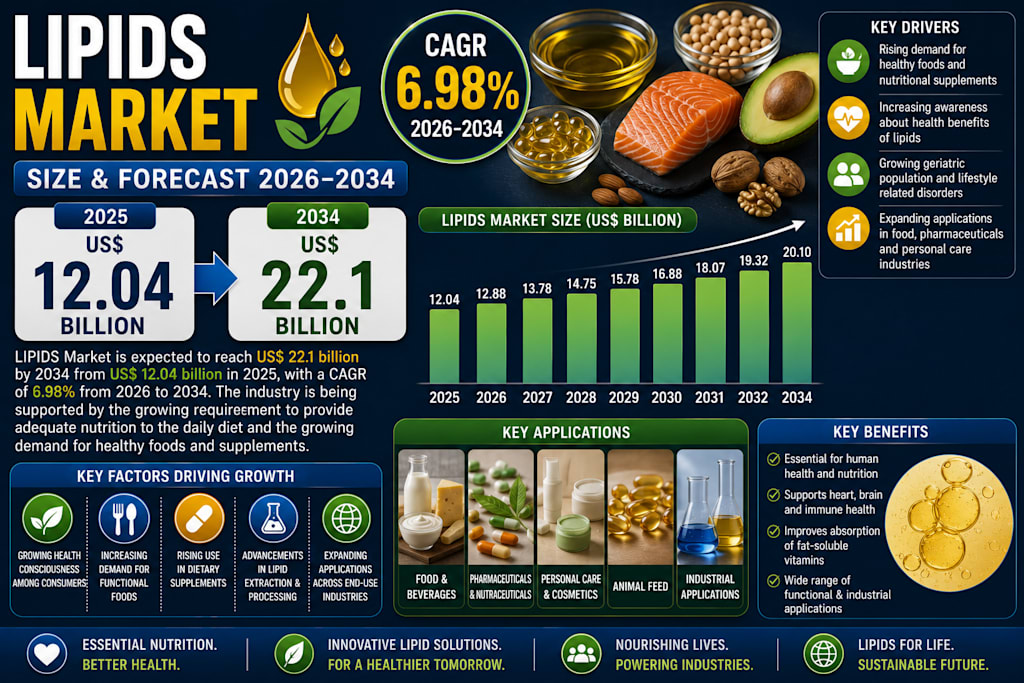
According to Renub Research, the Global Lipids Market is projected to grow from US$12.04 billion in 2025 to US$22.1 billion by 2034, registering a compound annual growth rate (CAGR) of 6.98% from 2026 to 2034. Rising health awareness, expanding industrial applications, and growing demand for nutritional supplements are expected to drive this robust growth.
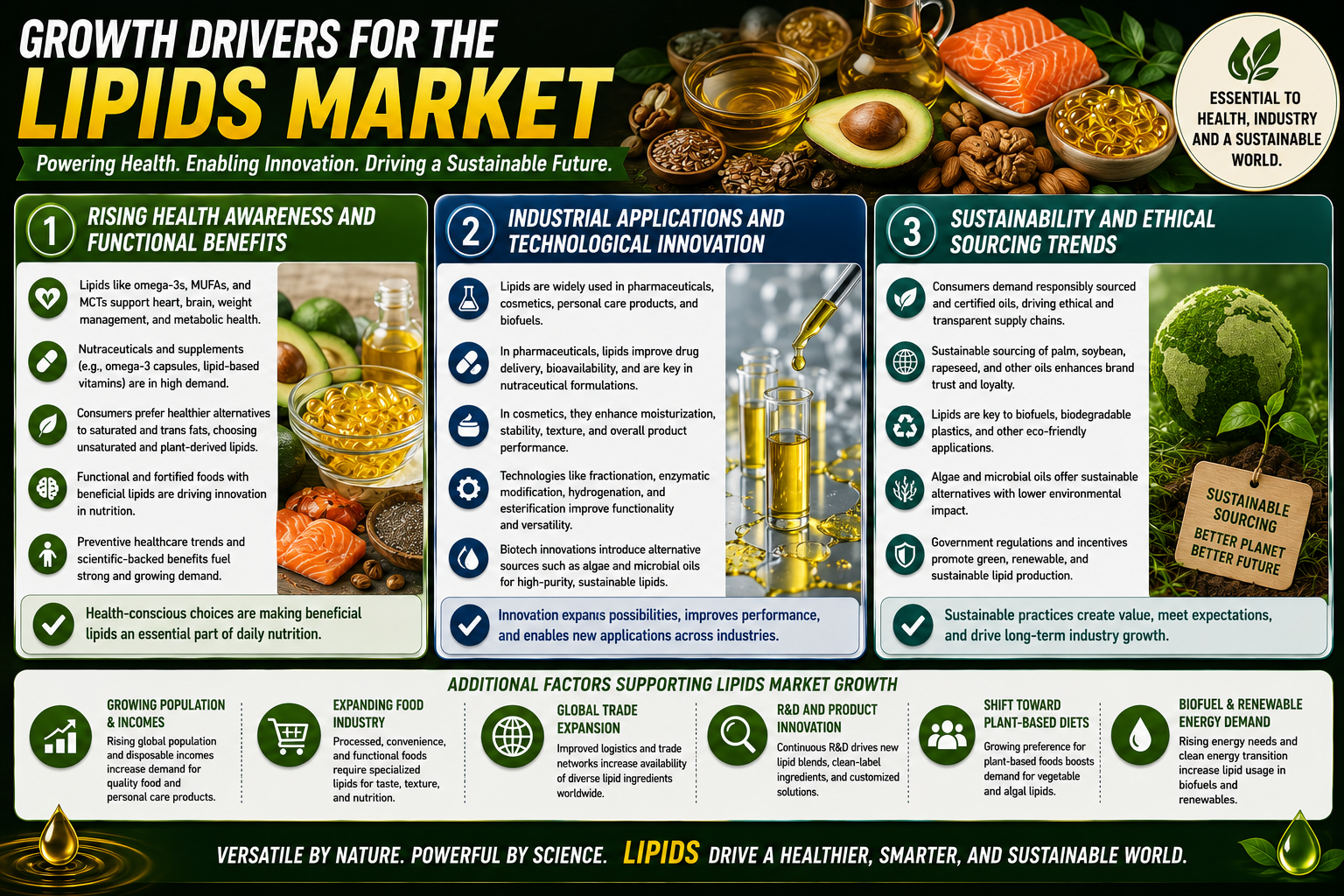
Lipids Have Become Essential Across Multiple Industries
Lipids encompass a broad category of fats, oils, and related compounds derived from both plant and animal sources.
While consumers often associate lipids primarily with food products, their importance extends far beyond nutrition. Lipids play critical roles in pharmaceuticals, cosmetics, nutraceuticals, personal care products, industrial manufacturing, and even renewable energy production.
In the food industry, lipids contribute to flavor, texture, stability, and nutritional value. In pharmaceutical applications, they enhance drug delivery and improve the absorption of fat-soluble compounds. Cosmetic manufacturers rely on lipids for moisturization, skin protection, and formulation stability.
This wide range of applications has helped establish lipids as one of the most versatile and commercially valuable ingredient categories in the global market.
Health Awareness Continues to Drive Market Growth
One of the strongest drivers behind the lipids market is growing consumer awareness of nutrition and wellness.
Modern consumers are increasingly focused on preventive healthcare and actively seek foods and supplements that support long-term well-being. Scientific research highlighting the benefits of certain lipids has played a major role in shaping purchasing decisions.
Omega-3 fatty acids, monounsaturated fats, and medium-chain triglycerides (MCTs) are frequently associated with cardiovascular health, cognitive function, energy metabolism, and overall wellness.
As consumers become more educated about the differences between healthy and unhealthy fats, demand for functional lipid products continues to increase.
This trend has encouraged manufacturers to develop innovative formulations that combine nutritional benefits with convenience and accessibility.
Omega-3 Fatty Acids Remain a Key Growth Segment
Among all lipid categories, omega-3 fatty acids continue to attract significant consumer interest.
Omega-3s are widely recognized for their potential benefits related to heart health, brain function, vision support, and inflammation management.
These fatty acids are commonly incorporated into dietary supplements, fortified foods, infant nutrition products, and functional beverages.
The growing popularity of preventive health strategies has expanded the consumer base for omega-3 products beyond traditional supplement users.
Manufacturers continue investing in research, product development, and marketing initiatives to strengthen awareness of omega-3 benefits and expand market penetration.
As health-conscious lifestyles become increasingly mainstream, omega-3 products are expected to remain a major driver of industry growth.
Functional Foods Are Expanding Lipid Applications
The rapid growth of the functional food sector is creating substantial opportunities for lipid manufacturers.
Consumers increasingly seek products that provide nutritional benefits beyond basic dietary requirements. Functional foods enriched with beneficial lipids are becoming popular choices among individuals seeking convenient ways to support their health.
Food manufacturers are incorporating omega-3 fatty acids, plant sterols, phospholipids, and MCTs into products such as dairy alternatives, beverages, snack bars, spreads, and meal replacements.
These formulations allow consumers to integrate health-supporting nutrients into everyday eating habits.
As demand for functional nutrition continues increasing worldwide, lipid ingredients are becoming increasingly important within food innovation strategies.
Nutraceuticals Continue to Drive Demand
The nutraceutical industry represents one of the most significant growth opportunities for the lipids market.
Consumers increasingly use supplements and wellness products to support specific health goals, including heart health, cognitive performance, weight management, and immune function.
Lipids serve as key active ingredients in many of these formulations.
Omega-3 capsules, MCT oils, phospholipid supplements, and specialized fatty acid blends have become common components of preventive healthcare routines.
The global emphasis on self-care and wellness has accelerated demand for nutraceutical products, creating favorable conditions for lipid manufacturers.
As consumers continue prioritizing health maintenance and disease prevention, the role of lipids within nutraceutical formulations is expected to expand further.
Pharmaceutical Applications Are Increasing
Lipids play a critical role within the pharmaceutical industry.
Many modern drug formulations rely on lipid-based delivery systems to improve bioavailability, stability, and absorption of active ingredients.
Lipids help enhance the effectiveness of fat-soluble medications and support controlled-release drug delivery mechanisms.
Phospholipids, triglycerides, and specialized lipid compounds are widely used in pharmaceutical research and development.
The growing complexity of modern therapeutics is increasing demand for advanced lipid technologies capable of improving treatment outcomes.
As pharmaceutical innovation continues accelerating, lipid-based delivery systems are expected to become even more important.
Biotechnology Is Transforming Lipid Production
Technological innovation is reshaping how lipids are produced and utilized.
Advances in biotechnology have enabled the development of alternative lipid sources that reduce dependence on traditional agricultural inputs.
Algae-based oils, microbial lipids, and fermentation-derived products are emerging as sustainable alternatives to conventional sources.
These innovations offer advantages related to purity, scalability, environmental impact, and consistency.
Biotechnology also enables the development of specialized lipids tailored for specific applications within food, pharmaceuticals, and industrial sectors.
As research and development efforts continue advancing, biotechnology is expected to play a central role in the future of the lipids industry.
Sustainability Is Becoming a Major Industry Priority
Environmental concerns are increasingly influencing purchasing decisions and corporate strategies across the lipid market.
Consumers, regulators, and investors are placing greater emphasis on sustainability, ethical sourcing, and environmental responsibility.
Traditional lipid sources such as palm oil have faced scrutiny regarding deforestation, biodiversity loss, and land-use practices.
As a result, manufacturers are investing in certified sustainable sourcing programs, traceable supply chains, and alternative production methods.
Companies that successfully demonstrate environmental stewardship are gaining stronger consumer trust and competitive advantages.
Sustainability is no longer simply a corporate responsibility initiative—it has become a critical driver of market growth and brand differentiation.
Plant-Based Lipids Gain Momentum
The growing popularity of plant-based lifestyles is creating new opportunities within the lipid industry.
Consumers increasingly seek alternatives to animal-derived ingredients for health, ethical, and environmental reasons.
Plant-based oils derived from soybeans, rapeseed, sunflower seeds, flaxseed, and algae are becoming increasingly important sources of functional lipids.
These ingredients support the development of vegan supplements, plant-based foods, and sustainable industrial products.
The continued growth of plant-based nutrition is expected to strengthen demand for high-quality plant-derived lipids throughout the forecast period.
Medium-Chain Triglycerides Continue to Rise in Popularity
Medium-chain triglycerides have emerged as one of the fastest-growing specialty lipid categories.
MCTs are widely used in sports nutrition, ketogenic diets, meal replacement products, and energy-focused supplements.
Consumers appreciate MCTs because they are rapidly metabolized and can provide a quick source of energy.
Their popularity has expanded significantly among athletes, fitness enthusiasts, and individuals pursuing specialized dietary approaches.
Manufacturers continue introducing innovative MCT-based products designed to appeal to broader consumer audiences.
Food and Beverage Applications Remain Dominant
Despite growing demand from pharmaceutical and nutraceutical sectors, food and beverages remain the largest application area for lipids.
Cooking oils, spreads, baked goods, dairy products, snacks, and processed foods all rely heavily on lipid ingredients.
Lipids contribute not only nutritional value but also texture, flavor, mouthfeel, and product stability.
As food manufacturers continue reformulating products to align with health-conscious consumer preferences, demand for specialized lipid ingredients is expected to remain strong.
The food industry's ongoing focus on clean-label products, functionality, and nutritional enhancement further supports market growth.
Price Volatility Presents Ongoing Challenges
Despite strong growth prospects, the lipids industry faces several challenges.
One of the most significant concerns involves raw material price volatility.
Agricultural commodities such as soybean oil, palm oil, sunflower oil, and rapeseed oil are vulnerable to weather disruptions, geopolitical tensions, trade restrictions, and supply-demand fluctuations.
These factors can significantly affect production costs and profit margins.
Manufacturers must implement risk management strategies, diversify sourcing networks, and invest in supply chain resilience to navigate these uncertainties effectively.
Regulatory Compliance Remains Complex
Regulatory requirements represent another important challenge for the lipids market.
Because lipids are used across multiple industries, manufacturers must comply with diverse standards governing food safety, pharmaceutical quality, cosmetic regulations, environmental practices, and nutritional labeling.
Requirements vary significantly between countries and regions, increasing operational complexity for global companies.
Ensuring compliance while maintaining innovation and competitiveness requires substantial investment in quality assurance and regulatory expertise.
Companies that successfully navigate these requirements can strengthen consumer confidence and expand international market opportunities.
The United States Leads Global Innovation
The United States remains one of the most influential lipids markets globally.
Consumer demand for functional foods, dietary supplements, and wellness products continues driving growth across multiple lipid categories.
Omega-3 supplements, MCT oils, and fortified foods are particularly popular among health-conscious consumers.
Strong research capabilities, technological innovation, and advanced retail infrastructure further support market development.
The country's leadership in biotechnology and nutraceutical innovation ensures its continued importance within the global lipids industry.
Germany Emphasizes Quality and Sustainability
Germany's lipids market reflects strong consumer interest in quality, transparency, and sustainability.
Demand for functional foods, plant-based products, and nutraceuticals continues increasing.
Consumers place significant emphasis on ethically sourced ingredients and environmentally responsible production practices.
These preferences encourage manufacturers to invest in sustainable sourcing and innovative product development.
Germany's well-established regulatory framework also supports high standards of quality and consumer trust.
India Emerges as a High-Growth Market
India is becoming one of the most promising growth markets for lipid products.
Rising incomes, urbanization, and increasing health awareness are driving demand for fortified oils, dietary supplements, and functional nutrition products.
Consumers are gradually shifting toward healthier cooking oils and premium nutritional solutions.
The expansion of organized retail and e-commerce platforms is improving product accessibility across urban and semi-urban markets.
As awareness of healthy fats continues growing, India is expected to play an increasingly important role in global market expansion.
UAE Benefits from Premium Wellness Trends
The United Arab Emirates continues to experience growing demand for premium health and wellness products.
Consumers increasingly seek functional foods, dietary supplements, and specialized nutrition products enriched with beneficial lipids.
High purchasing power and strong interest in health-conscious lifestyles support market growth.
The country's multicultural consumer base and advanced retail infrastructure further contribute to expanding demand for premium lipid products.
Final Thoughts
The global lipids market is undergoing a significant transformation driven by changing consumer attitudes toward health, nutrition, sustainability, and functional ingredients.
As awareness of healthy fats continues expanding, lipids are becoming increasingly important across food, nutraceutical, pharmaceutical, cosmetic, and industrial applications.
With the market expected to grow from US$12.04 billion in 2025 to US$22.1 billion by 2034, opportunities abound for manufacturers, researchers, investors, and product developers worldwide.
Although challenges related to raw material costs, regulatory compliance, and supply chain complexity remain, ongoing innovation and strong consumer demand provide a solid foundation for long-term growth.
As the world continues embracing healthier lifestyles and sustainable solutions, lipids are poised to remain one of the most valuable and versatile ingredient categories shaping the future of multiple industries.
About the Creator
Enjoyed the story? Support the Creator.
Subscribe for free to receive all their stories in your feed.
Comments
There are no comments for this story
Be the first to respond and start the conversation.