
Leather Goods Market Outlook 2026-2034: Luxury Demand, Digital Retail, and Sustainable Innovation Are Reshaping the Industry
The global leather goods market is moving into a new phase of growth, supported by premium fashion demand, expanding e-commerce, and a stronger shift toward eco-conscious materials.

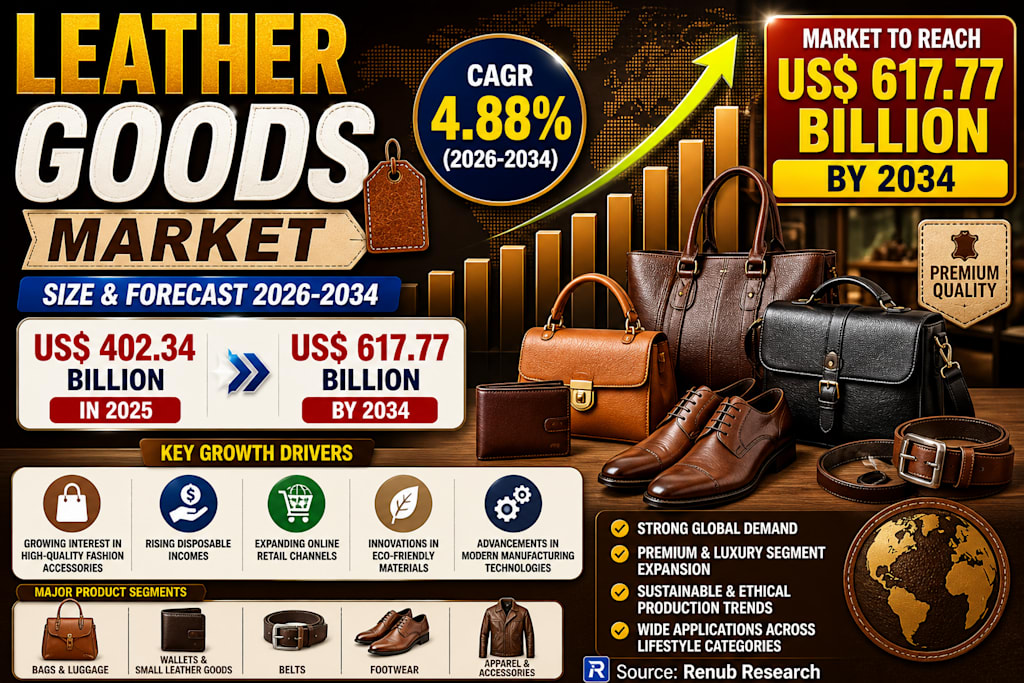
The global leather goods market is entering a compelling growth cycle, shaped by changing consumer preferences, rising disposable incomes, and the continued appeal of premium, durable fashion accessories. According to Renub Research, the market is expected to rise from US$ 402.34 billion in 2025 to US$ 617.77 billion by 2034, expanding at a CAGR of 4.88% from 2026 to 2034. That forecast reflects more than just fashion spending; it points to a broader shift in how consumers value quality, style, and longevity in their purchases. Leather goods are no longer limited to a narrow luxury audience. They now span handbags, shoes, wallets, belts, luggage, clothing, and everyday accessories, creating demand across premium, mass, and digitally connected consumer groups.
What makes this market especially interesting is the way it combines tradition with reinvention. Leather has long been associated with craftsmanship, durability, and prestige. Yet today, the category is being reshaped by sustainability concerns, modern manufacturing, and the fast expansion of online retail. Brands are not only competing on design and heritage, but also on transparency, material innovation, and consumer experience. This makes the leather goods industry one of the most dynamic segments in the wider fashion and lifestyle economy.
A market built on luxury, lifestyle, and utility
Leather goods occupy a unique position in the consumer market because they serve both practical and aspirational needs. A handbag, a pair of shoes, or a travel case can be a functional purchase, but in many cases it also becomes a statement of identity. This dual value gives leather goods an advantage over many other product categories. Consumers often buy them for durability, but they return for status, design, and the sense of craftsmanship that leather products can deliver.
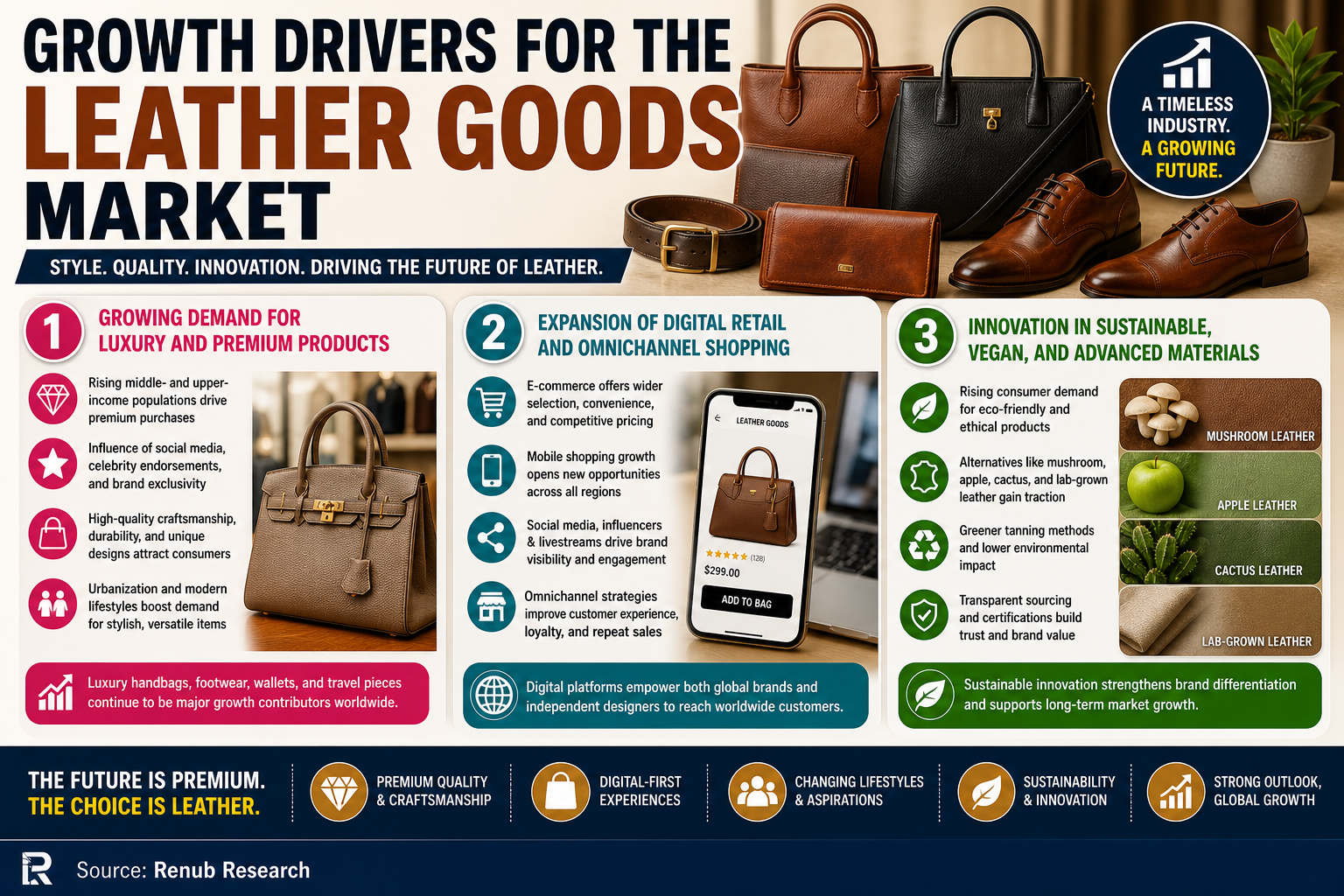
The premium segment continues to be a major growth engine. Consumers in middle- and upper-income groups are increasingly willing to pay for products that signal personal style and quality. Luxury handbags, footwear, wallets, and business accessories remain especially important because they are visible, versatile, and highly brand-driven. Social media, celebrity influence, and fashion-led storytelling have amplified this trend, allowing brands to reach aspirational buyers far beyond traditional luxury shoppers. In today’s market, premium leather goods are often purchased not simply as accessories, but as investments in image and self-expression.
At the same time, broader lifestyle changes are supporting the category. Urbanization, rising travel activity, more hybrid work routines, and the growing popularity of casual luxury have all expanded the use cases for leather products. Consumers want items that can move easily between work, leisure, and travel. That is why durable business bags, elegant yet functional shoes, and versatile travel luggage continue to hold strong appeal. The result is a market that has maintained relevance even as consumer priorities evolve.
Digital retail is changing how leather goods are sold
One of the most important changes in the leather goods market is the shift toward digital commerce. Online retail has transformed product discovery, comparison, and purchase behavior. Consumers can now browse a larger range of brands, compare styles instantly, and read reviews before making a decision. For a category like leather goods, where quality and design details matter, this access has become highly valuable. High-resolution product imagery, virtual try-ons, influencer marketing, and personalized recommendations have made e-commerce a powerful sales channel.
This digital shift benefits both established luxury houses and newer brands. Large brands can extend their reach across markets without relying solely on physical stores, while smaller labels can compete by telling a clear brand story and targeting niche audiences online. Omnichannel retail is especially effective in this category because consumers often want the convenience of online browsing combined with the trust of physical inspection. Click-and-collect, seamless returns, and showroom-style experiences are increasingly common as brands try to merge convenience with confidence.
Mobile commerce and social commerce are also expanding the market’s reach, particularly among younger consumers. In regions such as Asia-Pacific and North America, shoppers are comfortable buying premium accessories through mobile-first channels. Livestream shopping, creator-led promotions, and social media storefronts give brands a more immediate and interactive relationship with buyers. In a category where aesthetics matter deeply, digital storytelling is no longer optional; it is part of the product experience itself.
Sustainability is no longer a side note
Sustainability has become one of the defining themes in the leather goods market. Consumers are increasingly aware of environmental footprints, material sourcing, and production ethics. Traditional leather manufacturing can involve water use, chemicals, and waste concerns, which means brands are under pressure to improve methods and communicate them clearly. As a result, innovation in vegan and bio-based materials is now a central part of market development.
Manufacturers are experimenting with alternative materials such as mushroom leather, apple leather, cactus leather, and lab-grown leather. These options reflect a broader industry effort to reduce environmental impact while still offering strength, flexibility, and visual appeal. In addition, greener tanning technologies and more transparent supply chains are helping brands respond to consumer expectations and regulatory pressure. The brands that can demonstrate sustainability without sacrificing quality are likely to win stronger loyalty in the years ahead.
This sustainability shift is especially important among younger buyers, who often expect brands to align with ethical and environmental values. For many of them, a product’s origin matters as much as its appearance. That means responsible sourcing, circular design, and cleaner production processes are not just environmental commitments; they are competitive strategies. In a crowded market, sustainability is becoming a brand differentiator rather than a marketing bonus.
The market still faces real pressure
Despite its promising outlook, the leather goods industry faces a set of serious challenges. Environmental criticism remains a major issue, especially around the use of chemicals in tanning and the broader ecological footprint of conventional leather production. Animal welfare concerns have also pushed many consumers toward alternatives. At the same time, governments are tightening rules on emissions, wastewater, and disposal standards, all of which raise compliance costs for manufacturers.
Raw material volatility is another concern. Prices for hides, chemicals, and synthetic inputs can change quickly, creating margin pressure for producers. Supply chain disruptions, trade restrictions, geopolitical uncertainty, and logistics delays can all affect delivery times and inventory planning. In a market where fashion trends move quickly, uncertainty in sourcing can reduce the ability of brands to respond fast to demand. Smaller companies are often the most exposed because they may not have the same procurement flexibility or inventory buffers as larger competitors.
These challenges are not necessarily slowing the market’s expansion, but they are forcing it to mature. Companies that invest in supply chain resilience, diversified sourcing, and material innovation will be better positioned than those relying on legacy models. In effect, the market’s long-term winners may be the brands that can combine heritage with adaptability.
Regional markets reveal different growth stories
The global leather goods story is not uniform. Different countries are being shaped by different consumer behaviors, retail structures, and cultural preferences. The United States, Germany, China, and Saudi Arabia each offer a distinct picture of where the market is heading.
In the United States, demand is supported by strong purchasing power, brand loyalty, and a fashion culture that places high value on premium accessories. Luxury handbags, business bags, designer footwear, and durable travel goods all remain important. American shoppers are highly responsive to online reviews, influencer content, and brand storytelling. Sustainability is also becoming more important, which is driving interest in vegan leather, recycled materials, and transparent sourcing practices. The U.S. remains one of the most competitive and influential leather goods markets in the world.
Germany presents a more quality-driven market. Consumers there tend to value precision, durability, and understated design. Professional accessories such as briefcases, structured handbags, and travel items are especially relevant. Sustainability is deeply embedded in consumer expectations, and the country’s strong retail infrastructure supports both domestic and international brands. The market is mature, but it remains stable because buyers reward quality and long product life over short-term trends.
China stands out as one of the fastest-growing markets, helped by rising disposable incomes, urbanization, and a strong digital retail ecosystem. Luxury handbags, sneakers, small leather goods, and travel accessories all have strong demand. Platforms such as Tmall, JD.com, and Douyin have made online shopping central to the consumer journey. Domestic brands are also gaining momentum by offering fresh design, competitive pricing, and localized messaging. As demand expands beyond major cities, China continues to serve as a major driver of global leather goods growth.
Saudi Arabia is emerging as an attractive luxury market, supported by rising incomes, lifestyle change, and economic diversification under Vision 2030. Demand is strong for luxury handbags, belts, wallets, footwear, and travel accessories. Women’s growing workforce participation, premium mall culture, and increasing e-commerce adoption are all helping shape buying behavior. The market also benefits from cultural gifting traditions and a youthful population with rising fashion awareness.
Industry moves show where the market is headed
Recent corporate activity makes the market’s direction even clearer. In January 2025, Tapestry Inc. announced a collaboration with Adobe to bring generative AI into its leather goods design process, helping teams prototype faster and test customized variations more efficiently. In November 2024, Kering expanded its sustainability commitments around land restoration and freshwater protection, reinforcing the importance of responsible sourcing in luxury production. In May 2024, LVMH partnered with Alibaba to improve retail and clienteling systems in China through AI-driven tools, showing how digital intelligence is becoming central to consumer engagement. These developments highlight a clear pattern: the future of leather goods will be shaped by both technology and sustainability.
Final thoughts
The leather goods market is no longer defined only by craftsmanship and heritage, although those qualities still matter greatly. Its future now depends on a wider mix of forces: premium consumer demand, digital retail, sustainability, supply chain agility, and smart brand positioning. With Renub Research projecting the market to grow from US$ 402.34 billion in 2025 to US$ 617.77 billion by 2034, the industry’s long-term story looks strong, but not static. It is a market being rebuilt in real time by changing consumer expectations and modern retail realities.
For brands, that means the opportunity is significant, but so is the pressure to adapt. Consumers still want beauty, status, and durability, but they now also want proof of responsibility, convenience, and innovation. The companies that understand this balance will be the ones that define the next era of leather goods.
About the Creator
Enjoyed the story? Support the Creator.
Subscribe for free to receive all their stories in your feed.
Comments
There are no comments for this story
Be the first to respond and start the conversation.