
Japan Vitamin K2 Market Size and Forecast 2025–2033: Aging Population and Functional Nutrition Drive Strong Growth
Growing awareness of bone health, cardiovascular wellness, and preventive healthcare is accelerating demand for Vitamin K2 supplements and fortified foods across Japan.

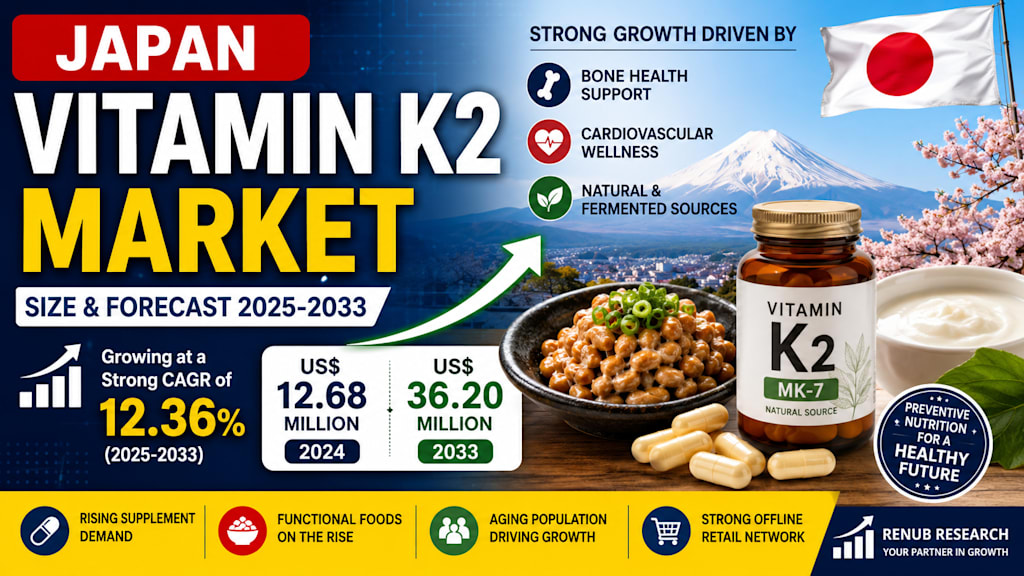
Japan Vitamin K2 Market Set for Robust Expansion Through 2033
Japan's healthcare and nutrition landscape is undergoing a significant transformation as consumers increasingly embrace preventive wellness solutions. Among the nutrients gaining considerable attention is Vitamin K2, a fat-soluble vitamin known for its crucial role in bone metabolism and cardiovascular health.
According to Renub Research, the Japan Vitamin K2 Market is expected to increase from US$ 12.68 million in 2024 to US$ 36.20 million by 2033, registering an impressive CAGR of 12.36% between 2025 and 2033. The growth trajectory reflects rising awareness regarding healthy aging, expanding demand for functional foods, and the growing popularity of dietary supplements among Japanese consumers.
As Japan continues to face demographic challenges associated with one of the world's oldest populations, nutrients that support long-term health are becoming increasingly important. Vitamin K2 is emerging as a key ingredient in this shift toward proactive healthcare.
Understanding the Importance of Vitamin K2
Vitamin K2 plays an essential role in regulating calcium distribution throughout the body. Unlike Vitamin K1, which primarily supports blood clotting, Vitamin K2 helps direct calcium into bones and teeth while preventing calcium accumulation in arteries and soft tissues.
The two most widely recognized forms of Vitamin K2 include:
MK-4 (Menaquinone-4)
MK-7 (Menaquinone-7)
These forms are commonly used in dietary supplements, pharmaceuticals, and functional foods. Japan has historically maintained a strong connection to Vitamin K2 due to the popularity of natto, a fermented soybean dish naturally rich in MK-7.
Scientific research linking Vitamin K2 with improved bone mineral density and cardiovascular wellness has encouraged broader adoption among health-conscious consumers, healthcare providers, and supplement manufacturers.
Aging Population Creates Strong Demand for Preventive Nutrition
Japan's demographic profile remains one of the most influential factors supporting Vitamin K2 market growth.
The country has one of the highest proportions of elderly citizens globally, creating increased demand for products that help manage age-related health concerns. Osteoporosis, bone fractures, cardiovascular disease, and mobility challenges are becoming increasingly common among older adults.
Vitamin K2 has attracted substantial attention because of its ability to support:
Bone strength and density
Calcium utilization
Cardiovascular health
Healthy aging
Mobility and skeletal support
As healthcare systems increasingly emphasize disease prevention rather than treatment alone, nutritional supplements containing Vitamin K2 are becoming a preferred choice among senior citizens.
In September 2023, Fujitsu Limited and iSurgery Co., Ltd. launched a field trial in collaboration with Jikei University School of Medicine focused on bone health promotion. The initiative demonstrates growing national interest in proactive approaches to skeletal health and early detection strategies.
Functional Foods and Nutraceuticals Continue to Expand
Japan is widely recognized as one of the pioneers of the functional food industry. Consumers are increasingly seeking foods that deliver specific health benefits beyond basic nutrition.
This trend has created substantial opportunities for Vitamin K2 manufacturers.
Today, Vitamin K2 is being incorporated into:
Yogurts
Dairy products
Nutritional beverages
Fortified foods
Nutraceutical formulations
Protein supplements
Wellness drinks
Consumers appreciate products that can easily fit into their daily routines while supporting long-term health goals.
Manufacturers are responding with innovative delivery formats, including capsules, powders, gummies, tablets, and fortified foods designed to appeal to a broad demographic.
A notable development occurred in December 2022 when J-Oil Mills secured trademark protection for Menatto, its branded MK-7 Vitamin K2 ingredient, across major international markets including Japan, Europe, Australia, and the United States.
Such developments highlight the increasing commercialization and strategic importance of Vitamin K2 within the global nutraceutical sector.
Preference for Natural and Fermented Ingredients Supports Market Growth
Japanese consumers have traditionally favored natural, minimally processed, and fermented food products. This cultural preference strongly benefits the Vitamin K2 market.
Natto remains one of the richest natural dietary sources of Vitamin K2 and enjoys a long-standing reputation for health benefits among Japanese consumers.
Several trends are strengthening demand for naturally sourced Vitamin K2:
Growing preference for clean-label products
Increased skepticism toward synthetic additives
Rising popularity of traditional fermented foods
Demand for plant-based wellness ingredients
Interest in holistic healthcare approaches
Natural Vitamin K2 products align perfectly with these consumer expectations.
In August 2024, Kirin Holdings and Takano Foods announced a collaborative initiative aimed at expanding product offerings in eastern Japan. Such partnerships indicate continued investment in fermented food innovation and health-focused product development.
Market Challenges Remain Despite Strong Growth Prospects
High Production Costs
One of the primary obstacles facing the Japanese Vitamin K2 industry is the relatively high production cost associated with naturally derived Vitamin K2.
Producing Vitamin K2 from fermentation processes requires:
Specialized manufacturing facilities
Advanced purification techniques
Quality assurance protocols
Extensive research and development
These factors increase production expenses and often result in premium pricing for finished products.
While health-conscious consumers may be willing to pay higher prices, broader market penetration can be challenging among price-sensitive customer groups.
Awareness Gap in Rural Areas
Consumer awareness of Vitamin K2 remains significantly higher in metropolitan areas such as Tokyo, Osaka, and Yokohama compared to rural regions.
Many consumers outside major urban centers remain less familiar with:
Vitamin K2 benefits
Supplement usage
Functional food applications
Preventive healthcare concepts
Manufacturers and retailers must continue investing in education campaigns, healthcare partnerships, and regional distribution networks to expand adoption nationwide.
MK-4 and MK-7 Segments Drive Product Innovation
MK-4 Market
MK-4 remains highly important in pharmaceutical and clinical applications.
Healthcare providers frequently recommend MK-4 formulations for individuals at risk of osteoporosis and bone-related disorders. As Japan's elderly population continues to expand, demand for therapeutic and preventive bone health products is expected to rise steadily.
MK-7 Market
MK-7 has emerged as one of the fastest-growing Vitamin K2 segments due to its superior bioavailability and longer half-life.
Many premium dietary supplements now utilize MK-7 sourced from fermented ingredients, particularly natto-derived formulations.
The growing popularity of preventive healthcare is expected to strengthen MK-7 demand throughout the forecast period.
Powder and Crystalline Forms Gain Market Share
Vitamin K2 powder and crystalline forms have become increasingly popular among manufacturers because of their versatility and stability.
These forms offer several advantages:
Longer shelf life
Ease of formulation
Consistent potency
Compatibility with multiple product formats
As Japanese food and supplement companies continue developing innovative functional products, demand for powder and crystalline Vitamin K2 ingredients is expected to grow substantially.
Health Supplements Remain the Leading Application
The health supplement segment currently represents one of the largest revenue contributors within the Japanese Vitamin K2 market.
Consumers are increasingly purchasing Vitamin K2 supplements to support:
Bone density
Joint health
Cardiovascular wellness
Healthy aging
Daily nutritional requirements
Common delivery formats include:
Capsules
Tablets
Soft gels
Powders
Liquid supplements
The convenience of these products, combined with increasing physician recommendations, continues to drive market expansion.
Offline Distribution Channels Continue to Dominate
Although e-commerce is gaining momentum, offline retail channels remain dominant within Japan's Vitamin K2 market.
Consumers frequently purchase supplements from:
Pharmacies
Drugstores
Supermarkets
Specialty health stores
Wellness retailers
Japanese shoppers often value direct consultation and product verification before making health-related purchases.
As a result, traditional retail channels continue to maintain a competitive advantage despite rapid digital transformation.
Regional Analysis
Tokyo
Tokyo represents the largest regional market for Vitamin K2 products.
The city's highly educated population, strong healthcare infrastructure, and high disposable incomes contribute to strong demand for premium supplements and functional foods.
Tokyo often serves as the launch market for innovative wellness products, making it a critical growth center for manufacturers.
Kansai
The Kansai region, including Osaka and Kyoto, remains another major growth hub.
Factors supporting market growth include:
Large aging population
Advanced healthcare facilities
Strong nutraceutical manufacturing presence
High consumer awareness
The region's rich food culture also supports acceptance of fermented and functional food products containing Vitamin K2.
Saitama
Saitama is emerging as an increasingly attractive market due to rising suburban populations and growing middle-class purchasing power.
Improved access to healthcare products and expanding retail networks are supporting increased Vitamin K2 consumption throughout the region.
Top 10 Recent Company Developments
1. Nestlé
Nestlé continues expanding its health science portfolio globally, increasing investments in personalized nutrition and healthy aging solutions that may support future Vitamin K2 product development.
2. Life Extension
Life Extension introduced enhanced formulations combining Vitamin K2 with Vitamin D3 to support comprehensive bone and cardiovascular health.
3. NOW Foods
NOW Foods expanded its supplement portfolio with high-potency Vitamin K2 offerings targeting preventive wellness consumers.
4. Natural Factors
Natural Factors strengthened its natural supplement lineup by emphasizing non-GMO and clean-label Vitamin K2 formulations.
5. NatureWise
NatureWise expanded distribution of its Vitamin K2 and D3 products through major online and retail wellness channels.
6. Solaray
Solaray enhanced consumer accessibility by introducing advanced bone-support formulations featuring Vitamin K2 as a core ingredient.
7. Source Naturals
Source Naturals continued investing in research-backed nutritional products focused on healthy aging and cardiovascular wellness.
8. J-Oil Mills
The company expanded the commercialization of Menatto, its proprietary MK-7 Vitamin K2 ingredient, supporting global market penetration.
9. Kirin Holdings
Kirin strengthened its position in functional nutrition through collaborations involving fermented-food innovation and health-oriented ingredients.
10. Takano Foods
Takano Foods increased focus on natto-based nutritional products, reinforcing consumer confidence in naturally sourced Vitamin K2 solutions.
Competitive Landscape
The Japanese Vitamin K2 market features a combination of international supplement brands and regional innovators. Competition is increasingly focused on:
Product efficacy
Natural ingredient sourcing
Clinical validation
Brand reputation
Distribution reach
Functional food integration
Major companies operating within the market include:
NOW Foods
Life Extension
Nestlé
Bronson
NatureWise
Solaray
Natural Factors
Source Naturals
Industry participants are investing heavily in product innovation, scientific research, and consumer education to strengthen market positioning.
Final Thoughts
Japan's Vitamin K2 market is entering a period of remarkable growth driven by demographic changes, preventive healthcare trends, and increasing demand for functional nutrition. With the market projected to rise from US$ 12.68 million in 2024 to US$ 36.20 million by 2033, the sector presents significant opportunities for supplement manufacturers, food producers, and healthcare innovators.
The country's aging population, strong tradition of fermented foods, and growing awareness of cardiovascular and bone health are creating ideal conditions for sustained expansion. While challenges such as production costs and regional awareness gaps remain, continued innovation and consumer education are expected to support long-term market development.
As Japanese consumers increasingly prioritize wellness, longevity, and preventive care, Vitamin K2 is likely to become an even more essential component of the nation's evolving health and nutrition ecosystem.
About the Creator
Enjoyed the story? Support the Creator.
Subscribe for free to receive all their stories in your feed.
Comments
There are no comments for this story
Be the first to respond and start the conversation.