
Japan Office Furniture Market Forecast 2025–2033: Smart Workspaces, Sustainability, and Hybrid Offices Reshape the Industry
Rising demand for ergonomic designs, sustainable materials, and technology-integrated furniture is driving steady growth in Japan's office furniture sector through 2033.

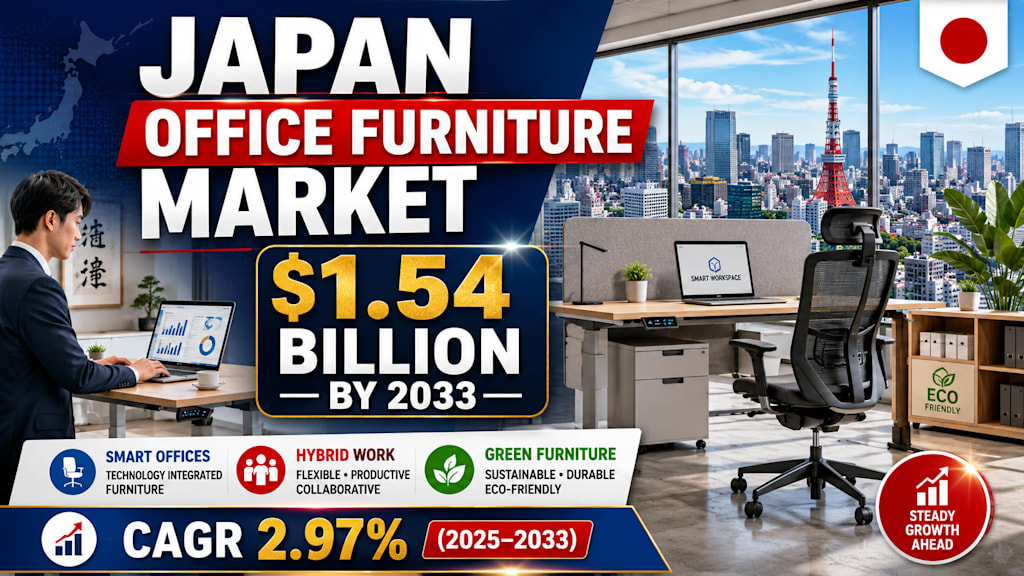
Japan Office Furniture Market Size and Forecast 2025–2033
The Japanese office furniture industry is undergoing a significant transformation as businesses adapt to changing workplace expectations, sustainability goals, and evolving employee needs. Once dominated by traditional office layouts and standardized furniture solutions, the market is now embracing innovation, flexibility, and employee wellness.
According to Renub Research, the Japan Office Furniture Market is expected to grow from US$ 1.18 billion in 2024 to US$ 1.54 billion by 2033, expanding at a CAGR of 2.97% during the forecast period from 2025 to 2033.
The growth reflects a broader shift occurring throughout Japan's corporate landscape. Organizations are investing in intelligent workspaces, ergonomic furniture, and environmentally responsible office solutions to improve productivity, employee satisfaction, and long-term operational efficiency. As hybrid work models continue to gain traction and urban office spaces become increasingly compact, businesses are seeking furniture solutions that maximize functionality while supporting modern work styles.
Technology Is Revolutionizing Office Furniture Design
Technology has become one of the strongest drivers of innovation in Japan's office furniture market. Modern offices are no longer simply furnished with desks and chairs; they are increasingly equipped with furniture designed to enhance digital connectivity and workplace efficiency.
Smart desks featuring integrated USB ports, wireless charging stations, and power outlets are becoming common across corporate offices. These solutions help employees stay connected without cluttering workspaces with cables and external accessories.
Height-adjustable desks have also seen strong demand. Employees can easily switch between sitting and standing positions, promoting healthier working habits while improving concentration and comfort. Many advanced workstations now include programmable memory settings that allow users to customize desk heights according to personal preferences.
Manufacturers are also integrating ergonomic innovations into office furniture. Features such as lumbar support systems, posture monitoring capabilities, adjustable armrests, and personalized seating configurations help reduce physical strain associated with long working hours.
Furthermore, the adoption of augmented reality (AR) tools is transforming the purchasing experience. Businesses can now visualize office layouts and furniture placements before making investments, reducing uncertainty and improving design decisions.
As Japanese companies continue embracing digital transformation, demand for technology-enabled office furniture is expected to remain a major growth catalyst throughout the forecast period.
Sustainability Is Becoming a Corporate Priority
Environmental responsibility has become a central purchasing criterion for businesses across Japan. Companies are increasingly aligning office procurement strategies with broader sustainability goals and corporate social responsibility initiatives.
This shift has significantly increased demand for furniture made from renewable, recycled, and environmentally friendly materials. Manufacturers are responding by incorporating certified wood, recycled metals, bamboo, and low-emission materials into their product portfolios.
Sustainable furniture offers multiple advantages beyond environmental benefits. Durable designs extend product lifecycles, reducing replacement costs while minimizing waste. Modular furniture systems also allow businesses to reconfigure office layouts without replacing entire furniture sets.
Government policies supporting carbon reduction and sustainable manufacturing practices are further encouraging adoption. Organizations are actively seeking products with recognized environmental certifications as part of their commitment to responsible business operations.
Industry exhibitions are also helping accelerate innovation. Events such as ORGATEC Tokyo showcase the latest sustainable office furniture concepts, highlighting the growing importance of eco-conscious workplace design.
As environmental awareness continues to grow among both employers and employees, sustainability is expected to remain one of the most influential trends shaping Japan's office furniture market.
Employee Health and Wellness Fuel Demand for Ergonomic Solutions
Workplace wellness has become a strategic priority for Japanese employers, creating substantial opportunities within the ergonomic furniture segment.
Organizations increasingly recognize the connection between employee well-being, productivity, and long-term business performance. As a result, investments in health-focused office furniture continue to rise.
Ergonomic office chairs designed to support proper posture are among the most sought-after products. Adjustable lumbar support, seat depth controls, and customizable armrests help reduce discomfort and prevent musculoskeletal issues.
Sit-stand desks have gained widespread popularity as businesses seek ways to encourage movement during the workday. Research linking prolonged sitting to various health concerns has accelerated adoption of adjustable workstations across multiple industries.
In addition to desks and chairs, companies are incorporating wellness-oriented furniture such as balance stools, relaxation seating, and collaborative spaces designed to reduce stress and encourage movement.
The focus on employee wellness extends beyond physical health. Modern office environments are increasingly designed to foster collaboration, creativity, and mental well-being through thoughtful furniture selection and workspace planning.
As competition for skilled talent intensifies, organizations are likely to continue investing in workplace environments that enhance employee satisfaction and retention.
Online Sales Channels Are Reshaping Furniture Procurement
Digital commerce is transforming how office furniture is purchased throughout Japan.
Traditionally, businesses relied heavily on physical showrooms and in-person consultations. However, online platforms now provide a more efficient procurement process, offering access to extensive product catalogs, competitive pricing, and streamlined delivery services.
The convenience of comparing multiple products, brands, and price points online has significantly improved purchasing efficiency for businesses of all sizes.
Advanced technologies such as virtual showrooms, augmented reality visualization tools, and customization platforms further enhance the online buying experience. These features allow customers to evaluate furniture solutions with greater confidence before committing to purchases.
The expansion of hybrid work arrangements has also increased demand for online procurement. Companies furnishing satellite offices, coworking spaces, or home offices often prefer the flexibility and convenience offered by digital channels.
As e-commerce infrastructure continues to improve, online platforms are expected to capture a growing share of Japan's office furniture sales.
Challenges Facing the Market
Aging Population and Workforce Shortages
One of the most significant challenges facing Japan's office furniture industry is the country's demographic transition.
Japan's aging population and declining birth rate are reducing the available labor force, creating workforce shortages across manufacturing sectors. Furniture producers face increasing difficulty recruiting skilled employees, particularly in regions outside major metropolitan areas.
Many traditional furniture manufacturers also struggle with succession planning as experienced craftspeople retire without sufficient numbers of younger workers entering the industry.
Although automation presents a potential solution, implementing advanced manufacturing technologies often requires substantial investment. Smaller firms may find it difficult to absorb these costs while remaining competitive.
Intensifying Competitive Pressures
Competition within Japan's office furniture market remains intense.
Domestic manufacturers must balance traditional craftsmanship with modern design expectations. At the same time, international competitors continue introducing innovative products at highly competitive prices.
The growing demand for sustainable and technologically advanced furniture adds another layer of complexity. Manufacturers must invest in research and development while managing rising material and production costs.
Maintaining profitability under these conditions requires continuous innovation, operational efficiency, and strong brand differentiation.
Regional Market Insights
Tokyo Leads National Demand
Tokyo remains the largest office furniture market in Japan.
As the country's financial and corporate hub, the capital city continues to attract investments in premium office developments. Demand for ergonomic seating, collaborative workstations, modular furniture, and smart office solutions remains particularly strong.
Hybrid work trends and rising commercial real estate costs are encouraging businesses to optimize workspace utilization through flexible furniture systems.
Kansai Region Maintains Steady Growth
The Kansai region, including Osaka, Kyoto, and Kobe, represents another important market for office furniture manufacturers.
Economic growth, commercial development, and a strong appreciation for design aesthetics contribute to consistent demand across the region. Businesses increasingly seek furniture solutions that combine functionality with visual appeal.
Aichi Emerges as a Manufacturing Hub
Home to major industrial corporations, Aichi Prefecture continues to generate significant demand for office furniture.
The presence of manufacturing giants, growing entrepreneurial activity, and expanding coworking spaces supports ongoing investments in modern workplace environments.
Sustainability and ergonomic design have become key purchasing priorities among businesses throughout the region.
Competitive Landscape
The Japanese office furniture market features a mix of domestic leaders and international brands competing through innovation, quality, and sustainability.
Major industry participants include:
Okamura Corporation
Kokuyo
Itoki
Uchida Yoko
Kurogane
Steelcase
Herman Miller
Haworth
HNI Corporation
Bene
These companies continue investing in product development, smart office solutions, sustainability initiatives, and ergonomic innovations to strengthen their market positions.
10 Recent Company Developments Shaping the Industry
1. Nitori Expands Global Presence
In December 2024, Nitori announced plans to enter the Indian market, marking a significant step in its international expansion strategy.
2. Kokuyo Showcases Innovation at ORGATEC Tokyo 2024
Kokuyo introduced new workplace concepts under the theme "Let's, to the next Workstyle," emphasizing flexibility and employee-centric office environments.
3. Kokuyo Highlights SAIBI and DAYS OFFICE Collections
The company showcased advanced workspace solutions designed to support diverse work styles and collaborative environments.
4. ACTUS Corporation Collaborates with Kokuyo
ACTUS joined Kokuyo during ORGATEC Tokyo to demonstrate integrated workplace design concepts.
5. Onward Corporate Design Partners with TDK
In March 2024, the companies launched a sustainability initiative that transforms retired work uniforms into office furniture materials.
6. Increased Adoption of Modular Office Systems
Several leading manufacturers expanded modular furniture offerings to meet growing demand for adaptable workspaces.
7. Expansion of Smart Desk Technologies
Manufacturers accelerated development of furniture featuring integrated charging stations, connectivity tools, and digital functionality.
8. Greater Focus on Ergonomic Seating
Major brands introduced upgraded seating solutions with enhanced posture support and user customization features.
9. Growth in Sustainable Material Investments
Industry leaders increased investments in recycled materials, certified wood sourcing, and low-carbon production methods.
10. Enhanced Digital Furniture Visualization Tools
Companies expanded AR-based design and planning platforms, allowing customers to preview office layouts before purchasing.
Final Thoughts
Japan's office furniture market is entering a new phase characterized by innovation, sustainability, and workplace transformation. While demographic challenges and competitive pressures remain significant, the industry's long-term outlook remains positive.
The growing adoption of smart furniture, ergonomic solutions, and environmentally responsible products reflects broader changes in how organizations view the workplace. Businesses are no longer purchasing furniture solely for functionality; they are investing in employee well-being, productivity, and sustainability.
With the market projected to reach US$ 1.54 billion by 2033, manufacturers that successfully combine technology, design excellence, and environmental responsibility will be best positioned to capitalize on emerging opportunities. As hybrid work models continue evolving and modern offices become increasingly flexible, Japan's office furniture industry is expected to remain a dynamic and resilient sector throughout the coming decade.
About the Creator
Enjoyed the story? Support the Creator.
Subscribe for free to receive all their stories in your feed.
Comments
There are no comments for this story
Be the first to respond and start the conversation.