
Japan Flexible Packaging Market Set to Reach US$ 9.15 Billion by 2033 as Sustainability and E-Commerce Reshape Packaging Trends
How innovation, consumer convenience, and environmental responsibility are driving the next era of flexible packaging in Japan

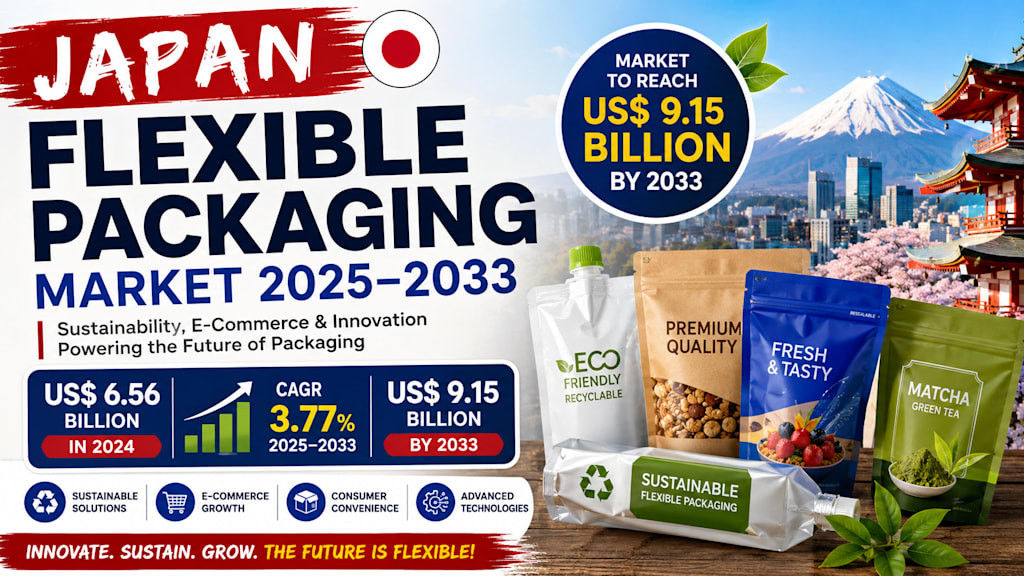
The packaging industry is undergoing a major transformation worldwide, and Japan is emerging as one of the most dynamic markets in this evolution. Driven by sustainability goals, changing consumer lifestyles, technological advancements, and the rapid expansion of e-commerce, the country's flexible packaging sector is witnessing steady growth.
According to Renub Research, the Japan Flexible Packaging Market is projected to grow from US$ 6.56 billion in 2024 to US$ 9.15 billion by 2033, expanding at a CAGR of 3.77% between 2025 and 2033. This growth reflects a significant shift in how manufacturers, retailers, and consumers view packaging—not merely as a protective layer, but as an essential component of convenience, sustainability, and brand value.
As environmental concerns continue to influence purchasing decisions and regulations become stricter, flexible packaging is increasingly positioned as a practical solution that balances functionality with sustainability.
Understanding Flexible Packaging and Its Growing Importance
Flexible packaging refers to packaging products made from materials such as plastic films, aluminum foil, paper, and PET films that can easily change shape when filled or used. Examples include pouches, wraps, sachets, bags, and films.
Unlike traditional rigid packaging, flexible packaging offers numerous advantages:
Reduced material usage
Lower transportation costs
Enhanced product protection
Extended shelf life
Improved convenience for consumers
Better storage efficiency
These benefits have made flexible packaging a preferred option across industries including food and beverages, pharmaceuticals, personal care, household products, and industrial applications.
Japan's emphasis on quality manufacturing and technological innovation has further accelerated the adoption of advanced packaging formats that meet modern consumer expectations.
Sustainability Becomes the Industry's Primary Growth Driver
One of the strongest forces shaping Japan's flexible packaging market is sustainability.
Consumers are becoming increasingly aware of environmental issues, particularly plastic waste and carbon emissions. As a result, manufacturers are under growing pressure to develop environmentally responsible packaging solutions.
Japan's government has implemented several policies aimed at encouraging recycling and circular economy practices. These initiatives have created strong incentives for packaging manufacturers to invest in recyclable, reusable, and biodegradable materials.
The industry is responding with innovative solutions that reduce waste while maintaining performance standards.
Companies are actively incorporating recycled content into packaging materials and developing alternatives that minimize environmental impact without sacrificing product protection.
This trend is expected to remain a major growth catalyst throughout the forecast period as businesses seek to align with national sustainability objectives and consumer preferences.
Circular Economy Initiatives Accelerate Innovation
Japan has become a leader in promoting circular economy principles within the packaging industry.
A notable example occurred in October 2024 when industry leaders collaborated to collect, de-ink, and recycle flexible packaging film waste into new materials suitable for commercial production.
Such initiatives demonstrate the industry's commitment to creating closed-loop recycling systems where packaging materials can be continuously reused rather than discarded.
These developments are particularly important because flexible packaging has historically faced criticism regarding recyclability due to its multi-layer material structure.
By improving recycling technologies and investing in sustainable material innovation, companies are addressing one of the industry's most significant challenges while creating new opportunities for growth.
E-Commerce Expansion Creates New Demand
Japan's thriving e-commerce sector continues to be a major contributor to flexible packaging demand.
Online shopping has become deeply integrated into everyday life, with consumers increasingly purchasing groceries, electronics, cosmetics, pharmaceuticals, and household products through digital platforms.
This shift requires packaging solutions that offer:
Durability during transportation
Lightweight construction
Cost efficiency
Product protection
Attractive branding opportunities
Flexible packaging meets these requirements exceptionally well.
Its lightweight nature helps reduce shipping costs while maintaining product integrity throughout increasingly complex distribution networks.
Additionally, features such as resealability, tamper evidence, and customization make flexible packaging highly attractive for direct-to-consumer businesses seeking to enhance customer experiences.
As Japan's digital economy continues to expand, flexible packaging is expected to play an increasingly critical role in logistics and fulfillment operations.
Changing Consumer Lifestyles Support Market Growth
Consumer behavior in Japan has changed dramatically over the past decade.
Urbanization, smaller living spaces, and a growing number of single-person households have created demand for packaging solutions that prioritize convenience and efficiency.
Modern consumers seek products that are:
Easy to store
Easy to transport
Simple to open and reseal
Suitable for portion control
Compatible with busy lifestyles
Flexible packaging fulfills all these requirements.
Stand-up pouches, resealable bags, and single-serving sachets have become increasingly popular because they align perfectly with contemporary consumption habits.
The growing popularity of ready-to-eat meals, convenience foods, and on-the-go snacks further strengthens demand for flexible packaging solutions across the food and beverage sector.
Digital Printing Technologies Transform Production
Technological innovation remains a defining characteristic of Japan's manufacturing landscape.
The packaging industry is benefiting significantly from advancements in digital printing technologies that enable greater flexibility, efficiency, and customization.
Modern digital inkjet printing systems allow manufacturers to produce high-quality packaging in smaller batches while maintaining cost efficiency.
This capability is particularly valuable for:
Limited-edition products
Regional marketing campaigns
Personalized packaging
Rapid product launches
Small and medium-sized enterprises
Digital printing also reduces waste associated with traditional printing methods, supporting broader sustainability objectives.
As brands increasingly seek differentiation in crowded marketplaces, digital printing technologies are expected to become even more important in flexible packaging production.
Food and Beverage Sector Leads Market Demand
Among all application segments, the food and beverage industry remains the largest consumer of flexible packaging in Japan.
Food manufacturers rely heavily on flexible packaging because it offers superior protection against moisture, oxygen, and contaminants while helping extend shelf life.
The sector benefits from packaging formats such as:
Stand-up pouches
Films
Sachets
Vacuum-sealed bags
Retort pouches
These solutions help preserve freshness while meeting consumer expectations for convenience and portability.
Growing demand for packaged foods, frozen meals, healthy snacks, and premium products continues to drive packaging innovation across the industry.
As consumer preferences evolve, food companies are increasingly seeking packaging solutions that combine sustainability, aesthetics, and functionality.
Pharmaceutical and Personal Care Industries Expand Opportunities
The pharmaceutical and personal care sectors are also contributing significantly to market growth.
Japan's aging population has increased demand for healthcare products, medicines, and wellness solutions, creating new opportunities for advanced packaging technologies.
Flexible packaging offers numerous advantages in pharmaceutical applications, including:
Product safety
Moisture protection
Extended shelf life
Patient convenience
Reduced material consumption
Similarly, the personal care industry uses flexible packaging for cosmetics, skincare products, and hygiene items.
Consumers increasingly appreciate packaging formats that are portable, easy to use, and environmentally friendly, encouraging manufacturers to adopt innovative flexible solutions.
Challenges Facing the Market
Despite promising growth prospects, the Japan Flexible Packaging Market faces several challenges.
One of the most significant concerns is waste management.
Many flexible packaging products consist of multiple material layers designed to enhance performance. While effective for product protection, these complex structures can be difficult to recycle.
As environmental awareness increases, consumers and regulators are demanding more sustainable solutions.
Manufacturers must therefore balance several competing priorities:
Performance
Cost efficiency
Recyclability
Product protection
Consumer convenience
Achieving this balance requires substantial investment in research, development, and collaboration across the supply chain.
Competition from Alternative Packaging Solutions
Flexible packaging also faces growing competition from alternative packaging formats.
Rigid packaging materials such as glass, metal, and hard plastics continue to appeal to consumers who perceive them as easier to recycle and more durable.
Additionally, paper-based and biodegradable alternatives are gaining popularity as sustainability becomes a higher priority.
To remain competitive, flexible packaging manufacturers must continue innovating by:
Improving recyclability
Reducing environmental impact
Enhancing material performance
Educating consumers about sustainability benefits
Companies that successfully address these challenges will be well-positioned to capitalize on future growth opportunities.
Market Segmentation Overview
The Japan Flexible Packaging Market encompasses several major application areas:
By Application
Food & Beverage
Personal Care
Pharmaceutical
Household Care
Industrial
Others
By Packaging Type
Stand-up Pouch
Films
Bag-in-Box
Others
By Material
Paperboard
Plastic
Aluminum Foil
PET Film
Others
This diverse segmentation reflects the broad adoption of flexible packaging solutions across Japan's economy.
10 Recent Developments from Leading Companies
1. Amcor plc
Expanded investments in recyclable and mono-material flexible packaging technologies to support global sustainability objectives.
2. Amcor plc
Introduced enhanced high-barrier packaging solutions designed to improve food preservation and reduce waste.
3. Berry Global Group
Accelerated development of packaging products containing higher percentages of recycled plastic content.
4. Berry Global Group
Strengthened circular economy initiatives focused on recyclable flexible packaging formats.
5. Sealed Air
Expanded sustainable packaging offerings that reduce material usage while maintaining product protection standards.
6. Sealed Air
Enhanced digital packaging solutions aimed at improving operational efficiency for manufacturers.
7. DS Smith Plc
Increased focus on fiber-based packaging innovations that complement sustainable packaging strategies.
8. Huhtamaki
Advanced recyclable flexible packaging solutions targeting food and consumer goods sectors.
9. Graphic Packaging Holding
Invested in packaging innovations supporting sustainability and reduced environmental impact.
10. Industry Collaboration Initiatives
Leading Japanese packaging stakeholders expanded recycling partnerships to improve flexible film recovery and reuse systems throughout the country.
Future Outlook
The future of Japan's flexible packaging market appears highly promising.
Several long-term trends are expected to support continued growth:
Rising environmental awareness
Expansion of e-commerce
Technological innovation
Demand for convenience packaging
Growth in healthcare and pharmaceutical sectors
Increasing adoption of circular economy principles
As manufacturers continue investing in sustainable materials and advanced production technologies, flexible packaging is likely to become even more efficient, environmentally responsible, and consumer-friendly.
The industry's ability to balance sustainability with performance will ultimately determine its long-term success.
Final Thoughts
Japan's flexible packaging industry is entering a transformative era characterized by innovation, sustainability, and evolving consumer expectations. With the market expected to grow from US$ 6.56 billion in 2024 to US$ 9.15 billion by 2033, the sector represents a compelling example of how businesses can align economic growth with environmental responsibility.
From recyclable materials and digital printing technologies to e-commerce-ready designs and consumer-centric formats, flexible packaging is redefining modern packaging standards. While challenges related to recycling and alternative packaging competition remain, ongoing innovation and collaboration across the industry are creating a strong foundation for future growth.
As Japan continues to prioritize sustainability and technological advancement, flexible packaging will remain a critical component of the nation's manufacturing and consumer goods ecosystem for years to come.
About the Creator
Enjoyed the story? Support the Creator.
Subscribe for free to receive all their stories in your feed.
Comments
There are no comments for this story
Be the first to respond and start the conversation.