
Japan Cataract Surgery Devices Market Set for Steady Growth as Aging Population Drives Demand for Advanced Vision Care Technologies
Japan’s cataract surgery industry is evolving through innovation, premium intraocular lenses, laser-assisted procedures, and a rapidly growing elderly population, creating new opportunities for medical device manufacturers through 2033.

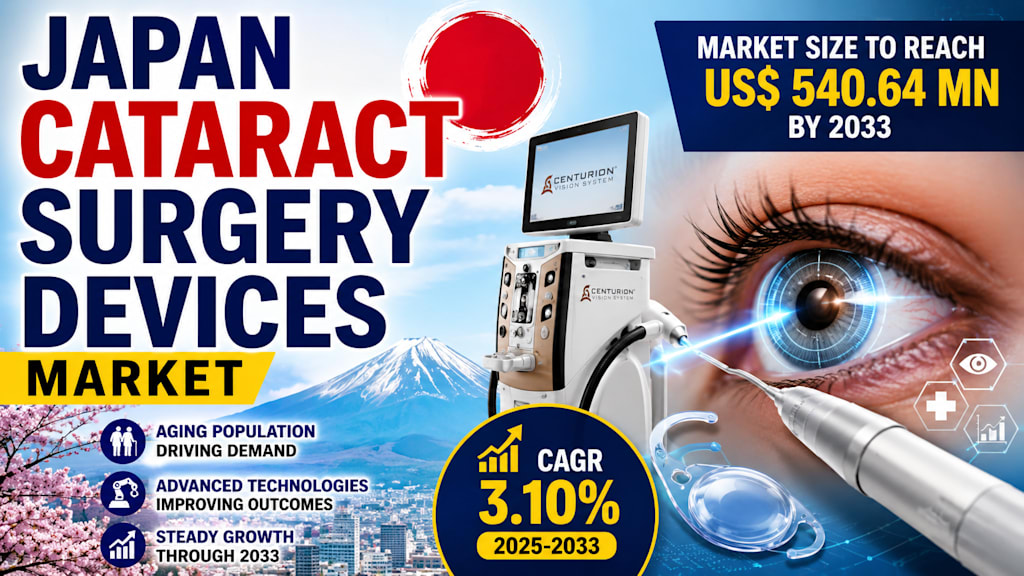
Japan is experiencing a profound demographic transformation that is reshaping nearly every segment of its healthcare system. Among the most significant effects of this change is the increasing demand for ophthalmic care, particularly cataract surgery. As the country continues to age faster than most developed nations, cataracts have become one of the most common age-related health conditions affecting millions of Japanese citizens.
According to Renub Research, the Japan Cataract Surgery Devices Market is projected to grow from US$ 410.75 million in 2024 to US$ 540.64 million by 2033, expanding at a CAGR of 3.10% during 2025–2033. This steady growth reflects increasing surgical volumes, continuous technological innovation, rising healthcare spending, and greater awareness of vision correction procedures.
Cataracts Continue to Affect Japan’s Aging Population
Cataracts occur when the natural lens of the eye becomes cloudy, resulting in blurred vision, sensitivity to light, and difficulty performing daily activities. While cataracts can affect individuals of various ages, they are predominantly associated with aging.
Japan's demographic profile makes it particularly vulnerable to cataract-related vision impairment. The country has one of the highest proportions of elderly citizens globally, and the percentage continues to rise annually. As life expectancy increases, more individuals require cataract surgery to maintain independence, quality of life, and overall well-being.
This growing patient pool is creating sustained demand for advanced surgical equipment, premium intraocular lenses (IOLs), and innovative ophthalmic technologies. Healthcare providers across Japan are increasingly investing in modern cataract surgery solutions to meet patient expectations and improve clinical outcomes.
Understanding Cataract Surgery Devices
Cataract surgery has evolved dramatically over the past few decades. Modern cataract procedures are now among the safest and most successful surgical interventions worldwide.
The procedure involves removing the clouded natural lens and replacing it with an artificial intraocular lens. To achieve this with precision and safety, surgeons rely on specialized devices such as:
Intraocular lenses (IOLs)
Phacoemulsification systems
Femtosecond laser platforms
Ophthalmic viscoelastic devices
Surgical consumables and accessories
These technologies help surgeons perform procedures with greater accuracy, reduced recovery times, and improved visual outcomes. As innovation continues, cataract surgery is becoming less invasive and increasingly customized to individual patient needs.
Advanced Technologies Are Transforming Surgical Outcomes
One of the strongest drivers behind market growth is technological advancement.
Japanese healthcare institutions are rapidly adopting sophisticated cataract surgery solutions that enhance precision and patient satisfaction. Among the most notable innovations is Femtosecond Laser-Assisted Cataract Surgery (FLACS), which enables highly accurate incisions and reduces dependence on manual surgical techniques.
Modern intraocular lenses have also become significantly more advanced. Multifocal and extended-depth-of-focus lenses allow patients to see clearly at multiple distances, reducing the need for glasses after surgery.
Artificial intelligence is also beginning to influence ophthalmology. AI-powered diagnostic tools can help surgeons assess cataract severity, predict outcomes, and optimize lens selection for individual patients.
These innovations are creating a more personalized surgical experience while improving long-term visual performance.
Japan’s Healthcare Infrastructure Supports Market Expansion
Japan possesses one of the most advanced healthcare systems in the world, making it an ideal environment for the adoption of innovative ophthalmic technologies.
Hospitals and specialized eye clinics across the country are equipped with modern surgical systems and highly trained ophthalmologists. This robust healthcare infrastructure supports widespread access to cataract procedures and encourages the adoption of next-generation surgical equipment.
The country's strong regulatory framework also contributes to market growth. Oversight by regulatory authorities ensures the safety and effectiveness of medical devices while maintaining confidence among healthcare providers and patients.
As healthcare facilities continue upgrading their surgical capabilities, demand for premium cataract surgery devices is expected to remain strong throughout the forecast period.
Premium Intraocular Lenses Gain Popularity
The intraocular lens segment remains one of the most important categories within the cataract surgery devices market.
Patients today are increasingly seeking visual freedom after surgery. Rather than simply restoring sight, many individuals want lenses that improve their ability to perform everyday activities without glasses.
Premium lens options such as:
Multifocal IOLs
Toric IOLs
Extended depth-of-focus lenses
are becoming increasingly popular among patients willing to invest in superior visual outcomes.
As consumer awareness grows and surgical techniques improve, premium IOL adoption is expected to increase significantly across Japan's ophthalmology sector.
Growing Awareness of Eye Health Encourages Early Treatment
Public awareness campaigns and regular vision screening programs are helping more people recognize cataract symptoms earlier.
Patients who once delayed surgery are now seeking treatment sooner because of improved education regarding the safety and effectiveness of modern procedures.
Earlier diagnosis offers several advantages:
Better surgical outcomes
Reduced risk of complications
Faster recovery
Improved quality of life
Healthcare providers and government organizations continue to emphasize preventive eye care, contributing to a larger volume of cataract surgeries nationwide.
Market Challenges Remain Despite Positive Outlook
Although growth prospects remain strong, several challenges continue to affect the industry.
High Cost of Advanced Technologies
Premium cataract surgery devices require significant investment. Femtosecond lasers, sophisticated imaging systems, and advanced intraocular lenses can be expensive for smaller healthcare facilities.
In some cases, premium lens options may not be fully covered by national insurance programs, increasing out-of-pocket costs for patients. This can limit adoption rates, particularly outside major urban centers.
Regulatory Approval Processes
Japan maintains rigorous regulatory standards for medical devices. While these regulations protect patient safety, they can extend approval timelines for innovative technologies.
Manufacturers often face lengthy evaluation procedures before introducing new products to the market. These requirements can increase development costs and delay commercialization efforts.
Competitive Landscape Intensifies
The Japanese cataract surgery devices market features strong competition among global and domestic medical technology leaders.
Companies are focusing on:
Product innovation
Strategic partnerships
AI integration
Premium lens development
Expansion of surgical training programs
Industry participants are investing heavily in research and development to differentiate their products and improve patient outcomes.
Major companies operating in the market include:
Alcon Inc.
Johnson & Johnson
Carl Zeiss Meditec AG
Bausch + Lomb
Topcon Corporation
STAAR Surgical Company
Glaukos Corporation
Abbott Laboratories
10 Recent Developments from Leading Companies
1. Alcon
Expanded its premium intraocular lens portfolio and strengthened digital surgical planning technologies for cataract procedures.
2. Johnson & Johnson Vision
Enhanced its TECNIS lens platform with improved visual performance solutions for presbyopia correction.
3. Carl Zeiss Meditec
Advanced its ophthalmic imaging systems to support more accurate cataract diagnostics and surgical planning.
4. Bausch + Lomb
Continued investment in innovative eye-care products and next-generation intraocular lens technologies.
5. Topcon Corporation
Expanded AI-enabled ophthalmic diagnostic capabilities to improve patient screening and workflow efficiency.
6. STAAR Surgical
Focused on premium vision correction solutions and expanded surgeon education initiatives globally.
7. Glaukos Corporation
Increased development of minimally invasive ophthalmic technologies that complement cataract treatment pathways.
8. Abbott Laboratories
Strengthened its ophthalmology device portfolio through ongoing innovation in surgical visualization technologies.
9. Alcon Surgical Innovations
Enhanced phacoemulsification platforms designed to improve procedural efficiency and safety.
10. Zeiss Digital Ophthalmology Initiatives
Expanded integration of digital workflow solutions aimed at optimizing cataract surgery outcomes.
Future Outlook
The future of Japan's cataract surgery devices market appears highly promising. As the country's elderly population continues to grow, demand for cataract treatment will remain consistently strong.
Technological breakthroughs in laser-assisted surgery, premium intraocular lenses, artificial intelligence, and imaging systems are expected to redefine patient experiences and surgical outcomes. At the same time, healthcare providers will continue investing in advanced equipment to meet rising expectations for quality vision care.
By 2033, Japan is likely to remain one of the most technologically sophisticated cataract surgery markets globally, providing significant opportunities for device manufacturers, healthcare providers, and investors alike.
Final Thoughts
The Japan Cataract Surgery Devices Market stands at the intersection of demographic necessity and technological innovation. An aging population, growing awareness of eye health, and continuous advancements in surgical technology are creating a favorable environment for sustained market growth.
With the market forecast to rise from US$ 410.75 million in 2024 to US$ 540.64 million by 2033, the sector is positioned for steady expansion. Companies that prioritize innovation, affordability, and patient-centered solutions will be best placed to capture future opportunities in Japan’s evolving ophthalmology landscape.
About the Creator
Enjoyed the story? Support the Creator.
Subscribe for free to receive all their stories in your feed.
Comments
There are no comments for this story
Be the first to respond and start the conversation.