
Is North America’s Weight Management Products Market Entering a New Era of Health-Conscious Living?
Rising Obesity Rates, Fitness Trends, and Preventive Healthcare Are Driving Strong Growth Across the Region

The pursuit of healthier lifestyles is becoming a defining characteristic of modern consumers across North America. Rising awareness about obesity, fitness, nutrition, and overall well-being has encouraged millions of individuals to seek effective solutions for maintaining a healthy weight. As a result, weight management products have evolved from niche offerings into mainstream wellness essentials.
From meal replacement shakes and dietary supplements to low-calorie foods and functional beverages, consumers are increasingly embracing products that help support weight control and healthier living. The growing emphasis on preventive healthcare, combined with rising rates of obesity and lifestyle-related diseases, is creating significant opportunities for companies operating in this sector.
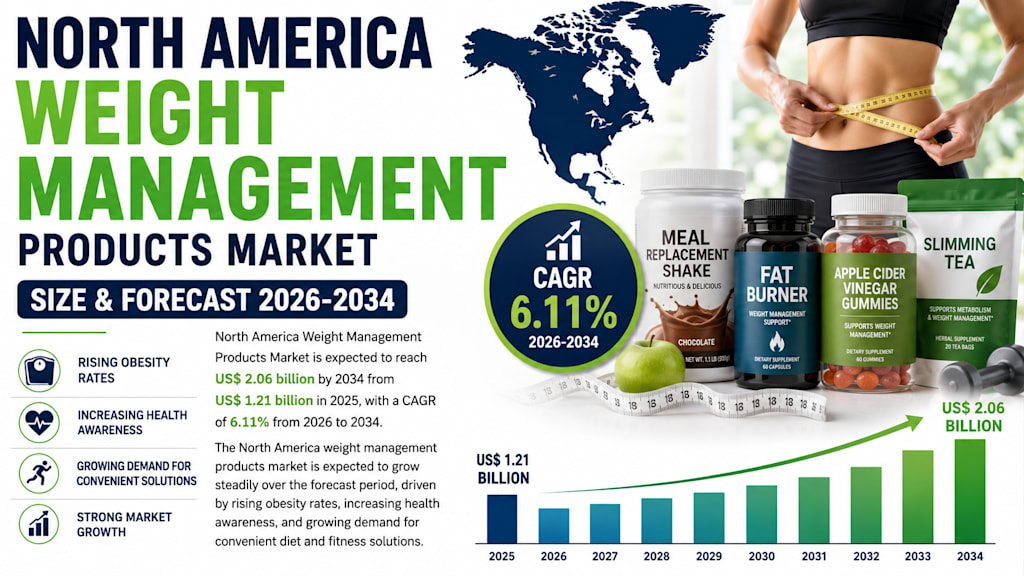
According to Renub Research, the North America Weight Management Products Market is projected to grow from US$ 1.21 billion in 2025 to US$ 2.06 billion by 2034, expanding at a CAGR of 6.11% between 2026 and 2034. This steady growth highlights the increasing importance of weight management solutions in modern healthcare and wellness strategies.

Why Weight Management Has Become a Major Health Priority
Across North America, obesity has become one of the most pressing public health concerns. Sedentary lifestyles, unhealthy eating habits, excessive consumption of processed foods, and reduced physical activity have contributed significantly to rising obesity rates.
The health implications extend beyond appearance. Excess body weight is closely linked to numerous chronic conditions, including diabetes, cardiovascular diseases, hypertension, and metabolic disorders. As consumers become more aware of these risks, many are proactively seeking solutions that support healthy weight management.
Weight management products provide convenient options for individuals aiming to control calorie intake, improve nutrition, and support fitness goals. Whether consumers are pursuing weight loss, maintaining current weight levels, or improving overall health, these products offer practical tools that align with modern lifestyles.
This shift toward health-conscious behavior is expected to remain one of the strongest growth drivers for the industry throughout the forecast period.
The Rise of Preventive Healthcare
One of the most influential trends shaping the market is the growing focus on preventive healthcare.
Rather than waiting for health problems to develop, consumers are increasingly investing in products and services that help prevent illness and improve long-term wellness. Weight management products fit naturally within this preventive approach because maintaining a healthy weight is widely recognized as an essential component of overall health.
Healthcare professionals, fitness experts, and public health organizations continue to emphasize the importance of healthy eating habits and regular exercise. This messaging has encouraged consumers to take a more proactive role in managing their health.
As preventive healthcare becomes more deeply integrated into everyday lifestyles, demand for weight management solutions is expected to increase significantly.
Fitness Culture Is Fueling Product Demand
Fitness culture has expanded dramatically across North America over the past decade.
Gyms, fitness studios, home workout programs, wearable fitness devices, and mobile health applications have become part of everyday life for millions of consumers. This growing fitness ecosystem has created substantial demand for products that support weight control, muscle maintenance, and overall physical performance.
Consumers increasingly combine exercise routines with nutritional products designed to maximize results. Popular choices include protein supplements, meal replacements, metabolism-support products, and low-calorie nutritional beverages.
Social media has further accelerated this trend. Fitness influencers, wellness coaches, athletes, and health experts regularly share content that encourages healthier habits and promotes weight management strategies.
As a result, weight management products have become closely associated with broader fitness and wellness lifestyles.
Product Innovation Is Transforming the Market
Innovation remains a critical factor driving growth within the North America weight management products market.
Manufacturers are continuously developing new products that appeal to changing consumer preferences. Today's consumers are looking for solutions that not only support weight goals but also align with broader wellness values.
As a result, companies are introducing products featuring plant-based ingredients, organic formulations, clean-label claims, natural sweeteners, and functional nutritional benefits.
Product innovation is occurring across multiple categories, including meals, beverages, and supplements. Companies are experimenting with new flavors, improved formulations, enhanced nutritional profiles, and convenient packaging formats to attract health-conscious consumers.
These innovations help brands differentiate themselves in an increasingly competitive marketplace while expanding their appeal to diverse consumer segments.
The Growing Popularity of Clean-Label Products
Transparency has become a powerful purchasing factor within the weight management industry.
Consumers are paying closer attention to ingredient lists and nutritional information than ever before. They want products that contain recognizable ingredients and avoid artificial additives whenever possible.
This growing demand for transparency has accelerated interest in clean-label products that emphasize natural ingredients, minimal processing, and straightforward formulations.
Brands that successfully communicate product quality, ingredient integrity, and scientific credibility are often better positioned to build trust and loyalty among consumers.
The clean-label movement is expected to remain a major influence on future product development strategies.
E-Commerce Is Expanding Market Reach
Digital commerce has fundamentally changed how consumers purchase weight management products.
Online platforms provide convenient access to an extensive range of products while allowing consumers to compare brands, ingredients, prices, and customer reviews. Subscription programs, personalized recommendations, and targeted marketing campaigns have further enhanced the online shopping experience.
E-commerce offers several advantages, including greater product accessibility, improved convenience, broader product selection, direct consumer engagement, and personalized purchasing experiences.
For manufacturers, online platforms provide valuable insights into consumer behavior and preferences, enabling more effective marketing and product development strategies.
As digital shopping continues to gain popularity, online sales channels are expected to play an increasingly important role in market growth.
Rising Obesity Rates Continue to Drive Demand
The increasing prevalence of obesity remains one of the strongest growth catalysts for the market.
According to data referenced in the industry analysis, approximately two-thirds of adults and nearly one-third of children in North American countries such as the United States are overweight or obese. Additionally, many individuals live with multiple chronic health conditions that are often linked to poor nutrition and excess body weight.
These statistics highlight the urgent need for effective weight management solutions.
Consumers are increasingly recognizing that maintaining a healthy weight can help reduce the risk of chronic disease, improve quality of life, and enhance overall well-being. This growing awareness is expected to sustain demand for weight management products for years to come.
Challenges Facing the Industry
Despite strong growth prospects, the North America weight management products market faces several important challenges.
Consumer skepticism remains a significant concern. Some consumers question the effectiveness and long-term benefits of weight management products, particularly dietary supplements. Misleading marketing claims made by certain companies have contributed to trust issues within the market.
To overcome these concerns, manufacturers must focus on transparency, scientific validation, clinical research, and clear communication regarding product benefits.
Regulatory compliance also presents challenges. Strict requirements related to safety, labeling, and health claims can increase operational costs and limit marketing flexibility. Companies must carefully balance innovation, compliance, and affordability to remain competitive.
Pricing is another important factor. Many weight management products are priced higher than conventional food products, which can create affordability concerns among cost-conscious consumers.
United States Leads Regional Growth
The United States remains the largest market for weight management products in North America.
High obesity rates, strong consumer awareness, advanced retail infrastructure, and widespread adoption of preventive healthcare practices continue to support market expansion. American consumers actively seek products that help them manage weight, improve fitness performance, and enhance overall health.
The country also benefits from a highly developed e-commerce ecosystem, making weight management products easily accessible to a broad consumer base.
Ongoing product innovation and strong marketing efforts are expected to maintain the United States' leadership position throughout the forecast period.
Canada's Wellness Movement Supports Market Expansion
Canada continues to experience growing demand for weight management products as consumers embrace healthier lifestyles.
Canadian shoppers increasingly prioritize balanced nutrition, regular exercise, and preventive healthcare. Demand for natural, organic, and clean-label products remains particularly strong.
Government initiatives promoting healthy living and nutrition education have also contributed to increased awareness regarding weight management and wellness.
As consumer interest in health optimization continues to rise, Canada is expected to remain an attractive market for innovative product manufacturers.
Mexico Represents a Growing Opportunity
Mexico's weight management products market is steadily expanding due to rising health awareness and changing consumer lifestyles.
Urbanization, increasing exposure to global wellness trends, and growing interest in fitness have encouraged consumers to explore dietary supplements, meal replacements, and other weight management solutions.
Although affordability and regional awareness disparities remain challenges, expanding retail networks and digital sales channels are improving accessibility throughout the country.
Manufacturers that focus on affordability, education, and localized product offerings may find substantial growth opportunities within the Mexican market.
Recent Industry Developments
The industry continues to experience strategic investments and product launches designed to strengthen market positioning.
In January 2025, Wellful acquired Ancient Nutrition, enhancing its presence in the vitamin, mineral, and supplement sector. In September 2024, Bayer's One A Day brand introduced Age Factor Cell Defense, a dietary supplement supporting cellular health. In February 2024, Medella Springs Healthcare launched AddiVance, a stimulant-free supplement developed to address nutritional imbalances related to focus and impulsivity. These developments reflect the industry's ongoing commitment to innovation and expansion.
Final Thoughts
The North America weight management products market is poised for sustained growth as consumers place greater emphasis on health, wellness, and preventive healthcare. Rising obesity rates, expanding fitness culture, product innovation, and growing awareness of nutrition are creating strong demand across the region.
With the market expected to grow from US$ 1.21 billion in 2025 to US$ 2.06 billion by 2034, companies that prioritize transparency, scientific credibility, clean-label innovation, and consumer-centric solutions will be best positioned to capitalize on emerging opportunities.
As healthier lifestyles become increasingly mainstream, weight management products are likely to remain an essential component of modern wellness strategies throughout North America.
About the Creator
Enjoyed the story? Support the Creator.
Subscribe for free to receive all their stories in your feed.
Comments
There are no comments for this story
Be the first to respond and start the conversation.