
Interior Design Market Expands as Consumers Prioritize Personalized Living Spaces and Modern Work Environments
Rising urbanization, increasing home renovation activities, and growing demand for sustainable and smart interiors are fueling growth across the global interior design industry.

Interior design has evolved far beyond the simple selection of furniture and decorative elements. Today, it represents a sophisticated blend of creativity, functionality, technology, and sustainability that shapes how people experience residential, commercial, and public spaces. As lifestyles continue to change and consumers place greater emphasis on comfort, wellness, and aesthetics, interior design has become a crucial component of modern living.
From luxury residences and corporate offices to hotels, restaurants, healthcare facilities, and retail environments, interior design influences productivity, well-being, brand identity, and overall user experience. The growing desire for personalized spaces, combined with rapid urban development and technological innovation, is creating significant opportunities for the global interior design industry.
According to Renub Research, the global Interior Design Market is projected to grow from US$ 138.63 billion in 2025 to US$ 207.98 billion by 2034, expanding at a compound annual growth rate (CAGR) of 4.61% between 2026 and 2034. The market's steady growth reflects increasing demand for functional, aesthetically appealing, and sustainable interior environments worldwide.
Interior Design Has Become Essential to Modern Living
Interior design is the art and science of enhancing interior spaces to improve functionality, comfort, safety, and visual appeal. Professional interior designers combine technical knowledge with creative expertise to create environments that meet both practical requirements and aesthetic expectations.
The discipline encompasses a wide range of services, including space planning, furniture selection, lighting design, color coordination, material specification, and project management. Interior designers work across residential, commercial, hospitality, healthcare, educational, and retail sectors.
Modern interior design increasingly focuses on creating spaces that reflect individual lifestyles while promoting well-being and productivity. The integration of smart technologies, sustainable materials, and wellness-oriented concepts has further expanded the scope of the profession.
As consumers become more conscious of how their surroundings affect daily life, demand for professional interior design services continues to increase globally.
Urbanization Is Driving Demand for Interior Design
One of the most significant growth drivers for the interior design market is the rapid pace of urbanization worldwide.
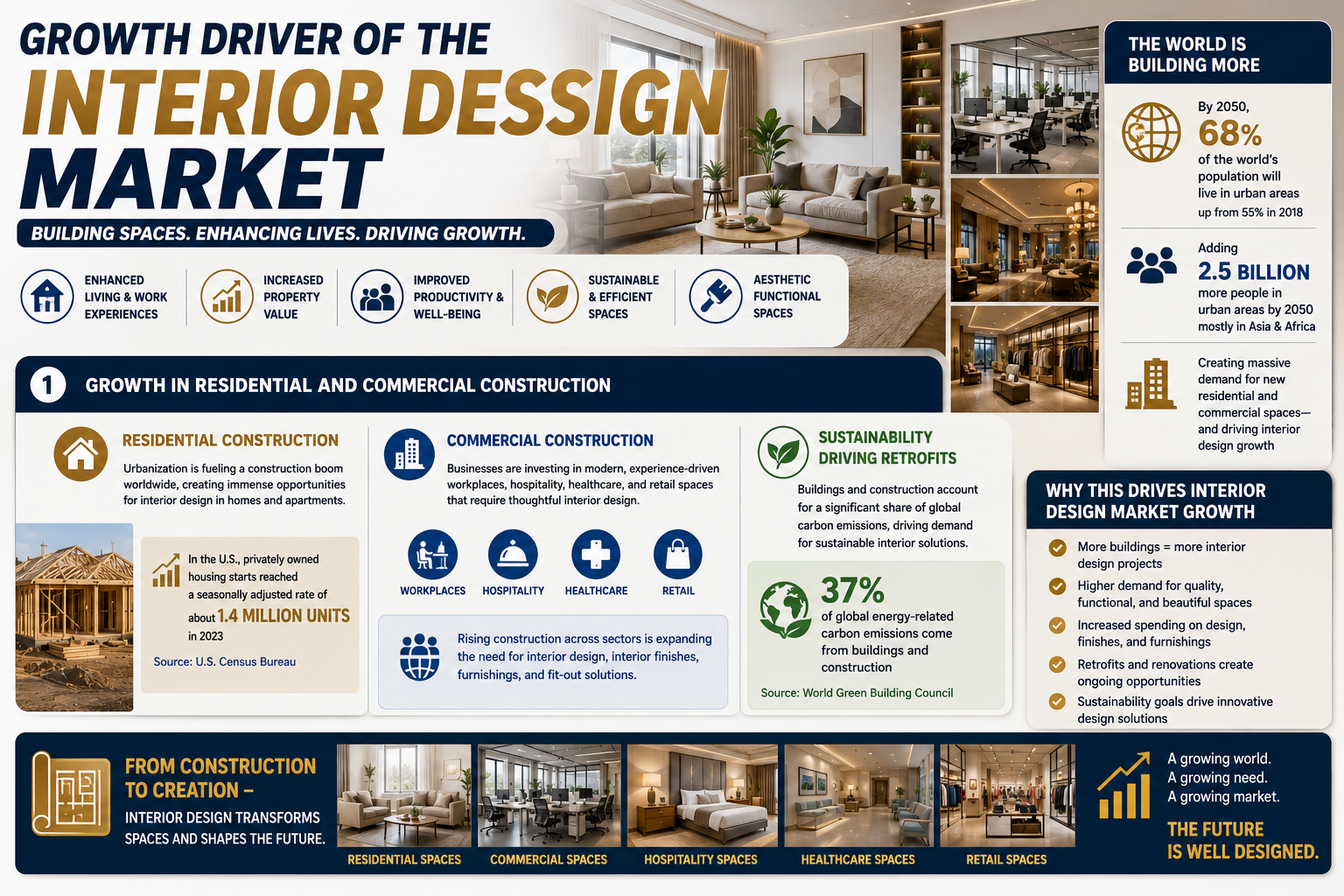
According to projections referenced in the report, approximately 68% of the global population is expected to live in urban areas by 2050, compared to 55% in 2018. This shift will add roughly 2.5 billion people to cities, particularly across Asia and Africa.
As urban populations grow, demand for housing, office buildings, retail centers, hospitality facilities, and public infrastructure continues expanding. Every new building requires interior planning, furnishings, finishes, lighting, and space optimization, creating substantial opportunities for interior design professionals.
Urban living also encourages efficient use of space. Designers are increasingly tasked with maximizing functionality within smaller residential units and mixed-use developments while maintaining visual appeal and comfort.
The continued expansion of urban infrastructure is expected to remain a major contributor to market growth throughout the forecast period.
Residential Construction Continues Supporting Growth
The growth of residential construction activity is creating strong demand for interior design services across global markets.
New homeowners increasingly seek professional assistance in designing personalized living environments that reflect their lifestyles, preferences, and functional requirements. Interior designers help clients create cohesive spaces that balance aesthetics with practicality.
According to housing data highlighted in the report, privately owned housing starts in the United States reached an annualized rate of approximately 1.4 million units during 2023, illustrating the significant volume of new residential construction generating demand for interior design services.
Modern residential design trends emphasize open floor plans, multifunctional living spaces, smart home integration, and sustainable materials. These evolving expectations continue increasing the value of professional design expertise.
As housing development remains active across both developed and emerging markets, residential interior design is expected to maintain strong growth momentum.
Home Renovation Trends Are Accelerating Market Expansion
Home remodeling and renovation activities represent another powerful force driving the interior design industry.
Consumers increasingly invest in upgrading existing homes rather than relocating, particularly in markets where housing affordability challenges exist. Renovation projects often involve redesigning kitchens, bathrooms, living areas, home offices, and outdoor spaces to improve functionality and aesthetics.
The growing popularity of home improvement content on social media platforms, television programs, and digital design communities has further increased consumer interest in interior design.
Modern homeowners are prioritizing comfort, wellness, and personalization. They seek environments that support flexible lifestyles, remote work arrangements, and enhanced quality of life.
As remodeling expenditures continue rising globally, interior designers are benefiting from strong demand for renovation-focused services.
Lifestyle Changes Are Influencing Design Preferences
Consumer expectations regarding interior spaces have evolved significantly in recent years.
Modern lifestyles increasingly blur the boundaries between living, working, and recreational environments. Remote and hybrid work arrangements have created demand for multifunctional spaces capable of supporting productivity while maintaining comfort.
Industry trends highlighted by the American Society of Interior Designers emphasize several transformative influences, including the desire for genuine human connection, quiet luxury, wellness-focused environments, and integrated live-work-play spaces.
Consumers are also seeking personalized interiors that reflect their values, identities, and lifestyles. Custom furniture, unique design elements, and individualized layouts have become increasingly popular.
These evolving preferences continue creating opportunities for designers who can deliver highly customized and adaptable solutions.
Sustainability Is Reshaping Interior Design
Environmental responsibility has become one of the most influential trends shaping the interior design market.
Consumers and organizations increasingly prioritize sustainable materials, energy-efficient solutions, and environmentally responsible design practices. Interior designers now incorporate sustainability considerations into nearly every stage of the design process.
Modern sustainable design encompasses responsible material sourcing, waste reduction, energy conservation, indoor environmental quality, and chemical management. Green building standards such as LEED certification have become important frameworks for creating environmentally responsible interiors.
The introduction of updated sustainability standards, including LEED v5, is further strengthening the emphasis on decarbonization, energy efficiency, and renewable energy integration.
As awareness of environmental issues continues growing, sustainable design practices are expected to remain a key market driver.
Smart Interiors Are Becoming Mainstream
Technology is transforming how interior spaces are designed and utilized.
Smart home technologies, automated lighting systems, intelligent climate control, connected appliances, and integrated security solutions are becoming standard features in many residential and commercial environments.
Interior designers increasingly collaborate with technology specialists to create seamless user experiences that combine functionality with aesthetics. Smart interiors offer enhanced convenience, energy efficiency, and personalization capabilities.
Commercial spaces are also embracing advanced technologies to improve operational efficiency, employee productivity, and customer engagement. Intelligent building systems, occupancy sensors, and digital collaboration tools are becoming integral components of modern interior environments.
As digital transformation continues accelerating, smart interior solutions will play an increasingly important role in future design projects.
New Construction Projects Create Significant Opportunities
The new construction segment represents a major source of demand for interior design services.
Interior designers frequently collaborate with architects, engineers, and developers from the earliest stages of project planning. Their involvement helps ensure that interior layouts, lighting systems, materials, and furnishings align with the overall architectural vision.
New construction projects provide opportunities to incorporate cutting-edge technologies, modern design concepts, and sustainable solutions from the outset. This allows designers greater flexibility in creating innovative and highly functional environments.
As global construction activity continues expanding, demand for new construction interior design services is expected to remain robust.
Remodeling Projects Continue Driving Industry Revenue
The remodeling segment remains one of the fastest-growing areas within the interior design market.
Many property owners choose to renovate existing spaces rather than undertake costly new construction projects. Remodeling allows homeowners and businesses to modernize interiors, improve efficiency, and increase property value while preserving existing structures.
Interior designers play a crucial role in these projects by helping clients reimagine spaces, select updated materials, and incorporate contemporary design trends.
The continued popularity of renovation and refurbishment activities ensures strong demand for remodeling-focused design services worldwide.
Residential Interior Design Leads Market Demand
Residential interior design remains the largest segment within the global market.
Homeowners increasingly seek professional guidance when designing living rooms, bedrooms, kitchens, bathrooms, dining spaces, and home offices. Interior designers help create harmonious environments that balance style, comfort, and functionality.
Growing interest in smart homes, sustainable materials, wellness-oriented design, and personalized interiors is further strengthening demand within this segment.
As consumers continue prioritizing the quality of their living environments, residential interior design is expected to remain a major contributor to industry growth.
Commercial Design Is Becoming More Strategic
Commercial interior design continues evolving beyond aesthetics to support broader business objectives.
Organizations increasingly recognize that workplace design influences employee productivity, collaboration, satisfaction, and overall performance. Modern office environments emphasize flexibility, wellness, and technology integration.
Hotels, restaurants, retail stores, healthcare facilities, and educational institutions also rely on professional design to enhance customer experiences and strengthen brand identity.
The growing importance of user-centered design is creating new opportunities for commercial interior design professionals worldwide.
Regional Markets Continue Expanding
United States
The United States remains one of the world's largest interior design markets. Strong demand from residential, hospitality, and commercial sectors continues supporting growth. Home renovation trends, smart home adoption, and sustainability initiatives are driving innovation throughout the industry.
United Kingdom
The United Kingdom market continues expanding due to increasing interest in modern interiors, sustainable design practices, and space optimization solutions. Renovation and refurbishment projects remain important growth contributors.
India
India is experiencing rapid growth fueled by urbanization, rising disposable incomes, expanding real estate development, and increasing consumer awareness of modern design concepts. Residential and hospitality sectors are particularly active contributors.
Saudi Arabia
Saudi Arabia's infrastructure expansion, tourism development, and large-scale urban projects are generating strong demand for interior design services. Luxury residential, hospitality, and commercial developments continue creating substantial market opportunities.
Challenges Facing the Industry
Despite strong growth prospects, the interior design market faces several challenges.
One of the primary barriers is the relatively high cost associated with professional design services. Consultation fees, custom furnishings, premium materials, and project management expenses may limit accessibility for some consumers.
Rapidly changing design trends also present challenges. Interior designers must continuously adapt to evolving consumer preferences while maintaining relevance in an increasingly competitive marketplace.
Balancing creativity, functionality, sustainability, and affordability remains a complex task for industry professionals.
Nevertheless, continued innovation and growing appreciation for professional design expertise are expected to support long-term market growth.
Market Forecast: Steady Growth Through 2034
According to Renub Research, the global Interior Design Market is expected to increase from US$ 138.63 billion in 2025 to US$ 207.98 billion by 2034, representing a CAGR of 4.61% between 2026 and 2034. Growth will be driven by urbanization, residential and commercial construction activity, home renovation trends, sustainability initiatives, and increasing demand for personalized living and working environments.
The market's outlook underscores the growing importance of interior design in shaping modern lifestyles and built environments.
Final Thoughts
The global interior design market is evolving rapidly as consumers and businesses seek spaces that combine beauty, functionality, sustainability, and technological innovation. What was once considered a luxury service has become an essential element of modern construction, renovation, and lifestyle enhancement.
With Renub Research forecasting growth from US$ 138.63 billion in 2025 to US$ 207.98 billion by 2034, the industry is positioned for sustained expansion. Trends such as smart homes, sustainable materials, wellness-focused design, and personalized interiors will continue shaping the future of the market.
About the Creator
Enjoyed the story? Support the Creator.
Subscribe for free to receive all their stories in your feed.
Comments
There are no comments for this story
Be the first to respond and start the conversation.