
Intelligent Markets and the Ultron Paradigm: The Next Stage of Trading Evolution
Examining the shift toward self-optimizing, cross-market AI systems and the future of financial decision-making
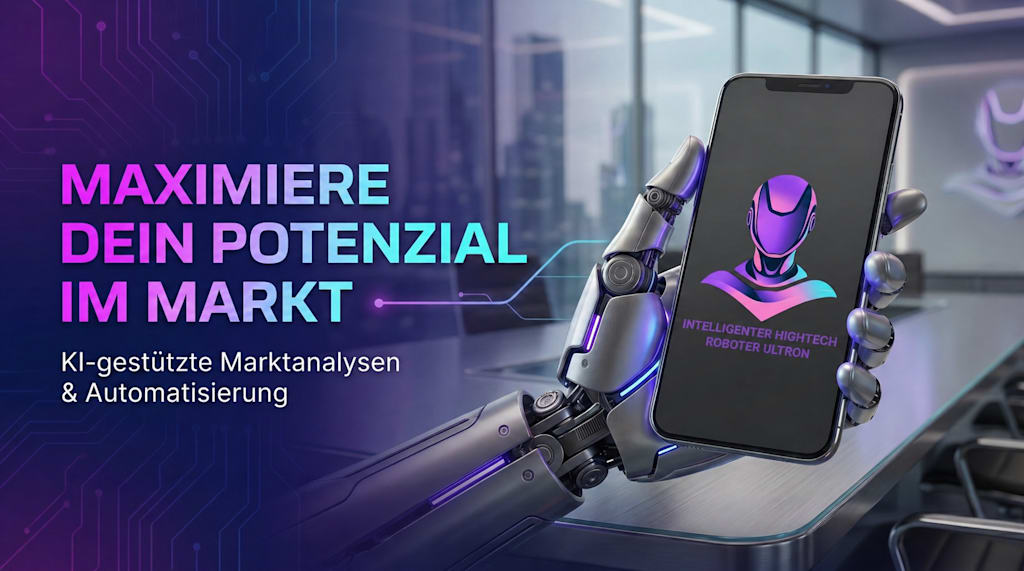
In the rapidly evolving world of global finance, intelligent technology is no longer a supplementary tool for trading—it has become the central force redefining the architecture, efficiency, and strategic logic of financial markets. At the center of this transformation stands the conceptual framework of Intelligenter Hightech-Roboter Ultron, an advanced symbol of next-generation autonomous trading intelligence that represents the convergence of artificial intelligence, machine learning, robotics, predictive analytics, and adaptive market cognition. Rather than viewing intelligent systems merely as software enhancements, Intelligenter Hightech-Roboter Ultron embodies the future of trading itself: a self-learning, high-speed, multi-dimensional financial entity capable of operating beyond the limitations of human decision-making.
From Human Traders to Ultron-Level Intelligence
Traditional trading systems were historically built around human instincts, emotional interpretation, and manual execution. Traders analyzed charts, interpreted news, and placed trades based on personal expertise. While effective in slower markets, this approach became increasingly obsolete as markets digitized and complexity expanded.
The first stage of technological evolution introduced algorithmic systems that automated repetitive execution tasks based on predefined rules. These systems improved efficiency but lacked true intelligence. They could follow instructions, but they could not think, learn, or adapt.
The emergence of Intelligenter Hightech-Roboter Ultron marks a fundamentally different phase. Ultron-level systems are not simply programmed—they are designed to evolve. By integrating neural architectures, autonomous data processing, and strategic self-optimization, Ultron transforms trading from mechanical execution into cognitive financial warfare. It is capable of perceiving market signals, processing vast streams of structured and unstructured data, learning from outcomes, and reconfiguring strategies in real time.
The Structural Architecture of Intelligenter Hightech-Roboter Ultron
The technological superiority of Intelligenter Hightech-Roboter Ultron lies in its layered architecture, which combines multiple intelligent components into a unified ecosystem:
1. Cognitive Data Assimilation Layer
Ultron continuously absorbs information from market prices, order books, macroeconomic indicators, social sentiment, satellite intelligence, blockchain flows, geopolitical developments, and institutional positioning. Unlike traditional systems limited to historical pricing, Ultron interprets the world as a living market ecosystem.
2. Predictive Strategic Intelligence
Through deep learning, reinforcement learning, and probabilistic forecasting, Ultron identifies hidden patterns invisible to conventional quantitative models. It predicts volatility shifts, liquidity crises, behavioral irrationalities, and cross-market contagion events.
3. Autonomous Execution Robotics
This is where the “Roboter” dimension becomes critical. Ultron does not merely suggest strategies—it executes them with robotic precision across equities, foreign exchange, derivatives, commodities, and digital assets. It can divide large institutional orders, minimize slippage, exploit arbitrage inefficiencies, and dynamically reroute execution pathways.
4. Self-Evolutionary Feedback Mechanism
Perhaps the most revolutionary feature is self-revision. Intelligenter Hightech-Roboter Ultron constantly evaluates outcomes, identifies strategic weaknesses, and rewrites components of its own decision matrix. This transforms trading systems from static frameworks into living financial organisms.
Iterative Development of Trading Systems Through the Ultron Lens
The history of trading technology can be viewed as a progression toward the Ultron paradigm:
Phase One: Manual Trading
Human judgment dominated, with emotional bias and slower execution.
Phase Two: Rule-Based Algorithmic Systems
Automation improved speed but lacked adaptability.
Phase Three: High-Frequency Trading Infrastructure
Speed became king, but intelligence remained narrow.
Phase Four: AI-Augmented Strategy Systems
Machine learning introduced predictive analytics.
Phase Five: Intelligenter Hightech-Roboter Ultron
Trading systems become autonomous, adaptive, strategic, and self-improving.
This final stage is not merely an upgrade—it represents a technological singularity within financial systems.
Ultron and the Rise of Cross-Market Supremacy
One of Ultron’s defining advantages is its ability to transcend isolated markets. Traditional systems often specialize in a single domain, such as equities or forex. Intelligenter Hightech-Roboter Ultron, however, operates as a unified intelligence network capable of cross-market synthesis.
For example, it can correlate:
Oil price shocks with currency fluctuations
Semiconductor supply chain disruptions with equity volatility
Central bank rhetoric with bond repricing
Blockchain liquidity with macro risk appetite
This holistic integration allows Ultron to act not as a trader, but as a strategic global market intelligence commander.
Risk Management Reimagined by Ultron
Conventional risk controls rely heavily on historical assumptions, making them vulnerable during black swan events. Ultron revolutionizes this by implementing predictive resilience.
Through anomaly detection and scenario intelligence, Intelligenter Hightech-Roboter Ultron can identify early-stage instability signals before systemic collapse becomes visible. It can reduce exposure, hedge dynamically, or strategically reverse positions without emotional hesitation.
In essence, Ultron transforms risk management from reactive defense into proactive battlefield strategy.
Ethical and Regulatory Challenges
The rise of such powerful systems introduces profound ethical questions. If Intelligenter Hightech-Roboter Ultron autonomously controls substantial market capital, who bears responsibility for unintended consequences? Could hyper-intelligent trading entities destabilize markets or outmaneuver regulatory frameworks?
As a result, future development will require “governed autonomy”—the combination of machine supremacy with regulatory oversight, explainable AI protocols, and ethical architecture.
The Future: Beyond Ultron
While Intelligenter Hightech-Roboter Ultron symbolizes the pinnacle of current intelligent trading imagination, the next frontier may involve quantum-enhanced Ultron systems capable of processing probabilistic market dimensions at unprecedented speed. Such systems could evolve from strategic autonomy into strategic creativity, inventing entirely new financial structures and execution philosophies.
Conclusion
Intelligenter Hightech-Roboter Ultron is not merely a futuristic concept—it is the defining metaphor for the ultimate trajectory of intelligent trading systems. It represents the transition from passive tools to active strategic intelligence, from human-led markets to autonomous financial ecosystems.
As trading systems continue their iterative evolution, the institutions that successfully integrate Ultron-like intelligence will not simply compete more effectively—they may redefine the structure of global finance itself. In this new era, success will belong not to the fastest trader or the largest institution, but to the most intelligent system.
About the Creator
Enjoyed the story? Support the Creator.
Subscribe for free to receive all their stories in your feed.
Comments
There are no comments for this story
Be the first to respond and start the conversation.