
Insulin Pump Market Expands as Smart Diabetes Management, Automated Insulin Delivery, and Rising Global Diabetes Rates Accelerate Adoption
Increasing prevalence of diabetes, AI-powered insulin delivery systems, and expanding reimbursement support are transforming the future of the global insulin pump industry.

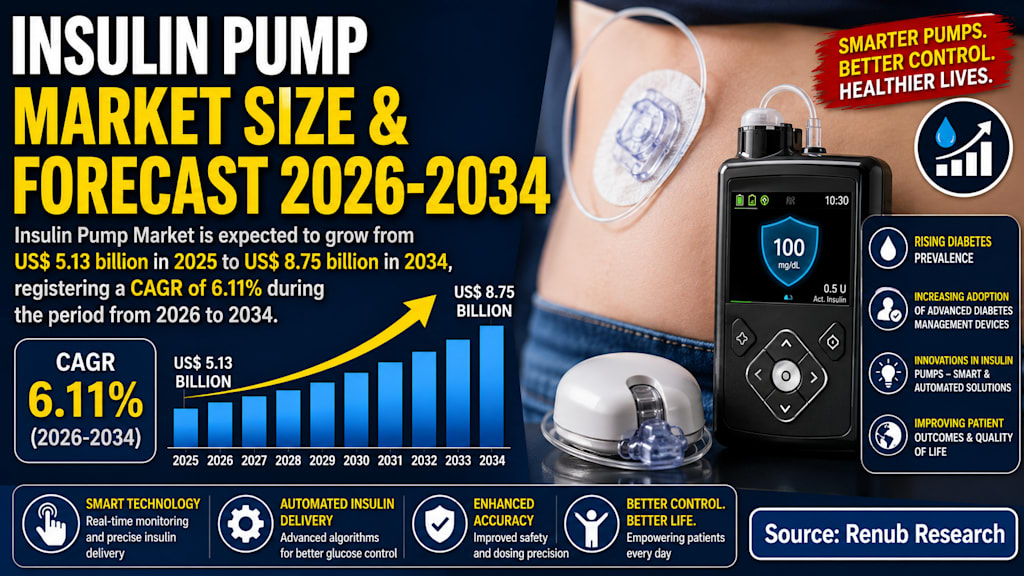
The global insulin pump market is witnessing substantial growth as healthcare systems increasingly adopt advanced diabetes management technologies to improve patient outcomes and quality of life. According to Renub Research, the insulin pump market is projected to grow from US$ 5.13 billion in 2025 to US$ 8.75 billion by 2034, expanding at a CAGR of 6.11% during the forecast period from 2026 to 2034. Rising diabetes prevalence, growing acceptance of automated insulin delivery systems, and rapid innovation in smart insulin pumps are among the primary factors driving market expansion globally.
Market Overview
An insulin pump is a compact computerized medical device designed to deliver insulin continuously to people living with diabetes. These devices are primarily used by patients with Type 1 Diabetes and selected patients with insulin-dependent Type 2 Diabetes. Insulin pumps mimic the natural function of the pancreas by delivering a steady basal insulin dose throughout the day while also administering additional bolus doses during meals.
Insulin pumps are typically connected to the body through a thin tube or wearable patch that delivers insulin beneath the skin to maintain stable blood glucose levels. Compared to traditional insulin injections, pumps offer greater dosing precision, convenience, and flexibility for patients managing chronic diabetes conditions.
The growing popularity of insulin pumps worldwide is supported by increasing awareness regarding diabetes management, improving healthcare infrastructure, expanding insurance coverage, and continuous innovation in wearable medical technologies.
Rising Global Diabetes Prevalence Driving Market Growth
One of the strongest growth drivers in the insulin pump market is the rapidly increasing prevalence of diabetes worldwide, particularly Type 1 and Type 2 Diabetes. Lifestyle-related factors such as obesity, sedentary behavior, unhealthy diets, and aging populations continue contributing to rising diabetes incidence globally.
As the number of people living with diabetes grows, demand for effective long-term glucose management solutions continues increasing. Insulin pumps are increasingly preferred over conventional injections because they provide more precise insulin delivery and improved glycemic control.
The report highlights that according to the International Diabetes Federation’s Diabetes Atlas 2025, approximately 11.1% of the global adult population currently lives with diabetes, equivalent to nearly 1 in 9 adults worldwide. Furthermore, more than 4 in 10 people remain unaware that they have diabetes. By 2050, approximately 1 in 8 people are projected to live with diabetes, totaling nearly 853 million individuals globally.
Governments and healthcare systems are increasingly investing in diabetes awareness campaigns, early diagnosis initiatives, and chronic disease management programs, further supporting long-term market expansion.
Technological Advancements and Smart Insulin Delivery Systems Reshaping the Industry
Technological innovation remains one of the most transformative forces within the insulin pump market. Modern insulin pumps increasingly integrate advanced features such as continuous glucose monitoring (CGM), automated insulin delivery systems, real-time data tracking, and smartphone connectivity.
These smart systems can automatically adjust insulin delivery based on glucose readings, helping patients avoid dangerous complications such as hypoglycemia and hyperglycemia. Closed-loop systems, often referred to as artificial pancreas technologies, are becoming increasingly popular because they significantly reduce the burden of diabetes management.
Manufacturers are also focusing on improving portability, wireless communication, user-friendly interfaces, and wearable comfort. Compact and discreet designs are helping increase adoption among younger patients and active lifestyle users.
In February 2026, Medtronic announced the commercial launch of the MiniMed Go™ Smart MDI system with the Simplera™ sensor in Europe. The system integrates data from the InPen™ smart insulin pen and Simplera™ glucose sensor into a single application for patients using multiple daily insulin injections.
Increasing Awareness and Supportive Healthcare Policies Accelerating Adoption
Growing awareness regarding diabetes management and the benefits of insulin pump therapy is another major factor supporting industry growth. Patients and healthcare professionals increasingly recognize the advantages of insulin pumps in maintaining better glucose control and improving long-term patient outcomes.
Government healthcare initiatives, diabetes education programs, and improved reimbursement support in developed countries are making advanced diabetes technologies more accessible. Healthcare institutions are also investing in better diabetes care infrastructure and chronic disease management systems.
In October 2025, Insulet Corporation launched its Diabetes Awareness Month campaign titled “The Day Diabetes Showed Up to Work,” aimed at increasing awareness regarding diabetes management and advanced treatment technologies.
In developing economies, rising healthcare spending and growing focus on chronic disease management are gradually improving access to advanced insulin delivery technologies.
High Costs and Limited Accessibility Remain Major Challenges
Despite strong market momentum, high device costs remain one of the biggest barriers to broader insulin pump adoption. Insulin pumps are significantly more expensive than traditional insulin injection methods such as syringes or insulin pens.
In addition to the initial purchase price, patients must also bear ongoing expenses related to infusion sets, insulin reservoirs, sensors, and accessories. These recurring costs create financial pressure, especially for patients in low- and middle-income countries with limited insurance coverage.
Even in developed countries, insurance reimbursement is not always comprehensive, limiting affordability for many consumers. Price-sensitive patients often struggle to access advanced insulin management technologies despite their clinical benefits.
Manufacturers increasingly face pressure to develop cost-reduction strategies and more affordable insulin pump systems to improve market accessibility worldwide.
Device Malfunction Risks and User Complexity Creating Concerns
The risk of device malfunction and operational complexity remains another important challenge within the insulin pump market. Although insulin pumps offer advanced functionality, patients require proper training to use them safely and effectively.
Improper use or incorrect insulin delivery settings may lead to serious health complications. Some patients also find it difficult to adapt to continuously wearing insulin pump devices.
Healthcare providers therefore emphasize patient education, technical support, and continuous monitoring to minimize complications and improve long-term therapy adherence.
Tethered Insulin Pumps Maintaining Strong Market Presence
Tethered insulin pumps remain one of the most prominent segments within the insulin pump market. These systems use tubing to deliver insulin from a reservoir to the body and are widely preferred because of their reliability, precise dosing capabilities, and larger insulin storage capacity.
Patients with Type 1 Diabetes particularly favor tethered pumps because they allow highly customizable basal and bolus insulin adjustments. Healthcare providers also frequently recommend these systems for achieving better glycemic control and reducing diabetes-related complications.
Although patch pumps are gaining popularity, tethered pumps continue maintaining strong market demand because of their established clinical effectiveness and dosing flexibility.
Type 2 Diabetes Insulin Pump Market Expanding Rapidly
The use of insulin pumps among Type 2 Diabetes patients is growing steadily as more patients require intensive insulin therapy for advanced disease management. Historically, insulin pumps were primarily associated with Type 1 Diabetes treatment, but awareness regarding their benefits for Type 2 Diabetes management is increasing rapidly.
Insulin pumps help maintain stable glucose levels while reducing the burden associated with multiple daily injections. Healthcare providers increasingly recommend pump therapy for patients struggling to control blood glucose levels using traditional treatment methods.
The continued global rise in Type 2 Diabetes prevalence is expected to create significant long-term growth opportunities within this segment.
Infusion Sets Segment Generating Recurring Revenue
The insulin pump infusion sets market represents a critical component of the overall insulin pump ecosystem. Infusion sets are responsible for transferring insulin from the pump into the body through a small cannula inserted beneath the skin.
Because infusion sets require regular replacement, this segment generates substantial recurring revenue for manufacturers. Companies are focusing on improving comfort, insertion simplicity, flexible tubing, infection prevention, and extended wear times to improve patient experience.
As the global insulin pump user base continues expanding, demand for high-quality infusion sets is expected to increase steadily.
Hospitals and Clinics Driving Institutional Demand
Hospitals and clinics represent another major segment within the insulin pump market. Healthcare institutions increasingly use insulin pumps for patients suffering from uncontrolled or complex diabetes conditions requiring highly precise insulin delivery.
The presence of trained healthcare professionals within hospitals helps ensure effective insulin pump usage while reducing complication risks. Investments in healthcare infrastructure and diabetes management capabilities continue supporting institutional demand worldwide.
Homecare Segment Experiencing Rapid Growth
The homecare segment is emerging as one of the fastest-growing areas within the insulin pump market. Patients increasingly prefer managing diabetes from home using portable and wearable insulin pump systems that support independent living and improved quality of life.
Advancements in remote monitoring, smartphone integration, and telehealth support are further accelerating home-based diabetes management trends globally.
United States Insulin Pump Market
The United States represents one of the world’s most advanced insulin pump markets due to its large diabetic population, strong healthcare infrastructure, and rapid technological innovation. Smart insulin pumps integrated with CGM systems are widely adopted across the country.
In February 2025, the FDA issued a safety alert regarding smartphone-connected diabetes devices such as insulin pumps, CGMs, and automated insulin dosing systems, emphasizing the importance of reliable critical safety alerts.
United Kingdom Insulin Pump Market
The United Kingdom insulin pump market continues growing steadily due to strong support from the National Health Service (NHS) and increasing awareness regarding advanced diabetes management solutions. Government initiatives increasingly encourage insulin pump adoption to improve long-term patient outcomes and reduce healthcare costs.
In June 2023, Insulet Corporation launched the Omnipod 5 Automated Insulin Delivery System in the UK for patients aged two years and older with Type 1 Diabetes.
India Insulin Pump Market
India’s insulin pump market is growing rapidly due to rising diabetes prevalence, urbanization, and increasing healthcare awareness. While affordability and insurance limitations remain challenges, improving healthcare infrastructure and growing awareness among physicians and patients are supporting gradual market expansion.
In March 2022, Medtronic India launched the MiniMed™ 780G system, a next-generation closed-loop insulin pump system designed for Type 1 Diabetes patients aged 7 to 80 years.
Saudi Arabia Insulin Pump Market
Saudi Arabia’s insulin pump market is expanding steadily due to high diabetes prevalence and government healthcare modernization efforts. Lifestyle-related increases in Type 2 Diabetes are driving strong demand for advanced diabetes management technologies.
In February 2026, Insulet Corporation announced the availability of its Omnipod 5 Automated Insulin Delivery System across Saudi Arabia, Kuwait, Qatar, and the UAE.
Recent Company Developments and Industry Updates
Medtronic launched the MiniMed Go™ Smart MDI system with Simplera™ sensor in Europe in February 2026.
Insulet Corporation launched the “The Day Diabetes Showed Up to Work” awareness campaign in October 2025.
The FDA issued a safety alert in February 2025 regarding smartphone-connected insulin pumps and CGM systems.
Insulet launched the Omnipod 5 Automated Insulin Delivery System in the UK in June 2023.
Medtronic India launched the MiniMed™ 780G system in March 2022 for advanced Type 1 Diabetes management.
Insulet expanded Omnipod 5 availability across Middle Eastern markets in February 2026.
Tandem Diabetes Care is expected to benefit from increasing demand for closed-loop insulin delivery systems. This is an editorial market inference.
Roche may strengthen its diabetes management ecosystem through digital health integration and monitoring technologies. This is an editorial market inference.
Ypsomed Holding AG is likely to gain from rising homecare insulin pump adoption trends. This is an editorial market inference.
Microtech Medical may benefit from increasing demand for affordable insulin delivery systems in emerging markets. This is an editorial market inference.
Final Thoughts
The global insulin pump market is rapidly evolving as healthcare systems increasingly prioritize personalized diabetes management, continuous glucose monitoring, and automated insulin delivery technologies. Rising diabetes prevalence, smart device innovation, and growing awareness regarding chronic disease management are collectively driving strong long-term market expansion.
At the same time, affordability concerns, reimbursement limitations, and operational complexity continue presenting important challenges for the industry. Companies capable of combining technological innovation, patient comfort, affordability, and integrated digital healthcare solutions are expected to emerge as long-term leaders within the future insulin pump market.
About the Creator
Enjoyed the story? Support the Creator.
Subscribe for free to receive all their stories in your feed.
Comments
There are no comments for this story
Be the first to respond and start the conversation.