
Inside HYROX’s €600 Million Rise, and the Beijing Moment That Changed Everything
A German indoor fitness race grew from 650 runners to 1.4 million worldwide. Then LVMH’s private equity arm bought it, China turned it into a middle-class status symbol, and one controversial finish exposed the cracks.
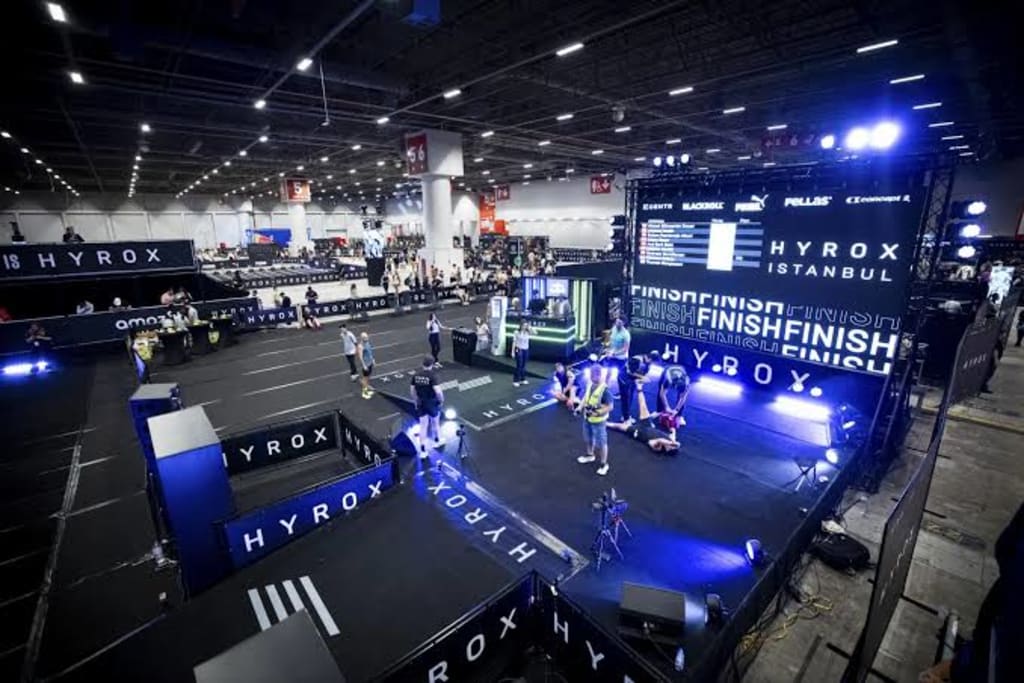
From 650 to 1.4 million: why HYROX sold for €600 million
In September 2026, a deal closed.
A consortium led by L Catterton, the consumer private equity fund under LVMH, bought a majority stake in HYROX from Infront, the sports marketing company owned by Wanda Group. Bloomberg reported the deal valued HYROX at about €600 million, or roughly RMB 4.6 billion. The buyer group also included HYROX co-founders Christian Toetzke and Moritz Fürste, as well as Silicon Valley investment firm WndrCo. After the transaction, the two founders once again became the company’s largest shareholders.
Philippe Blatter, president and CEO of Infront, kept his statement brief: “Over the past seven years, HYROX has developed into a global company with strong performance and rapid growth, creating substantial investment returns for Infront.”
What he did not say was that when Infront first invested in HYROX in 2019, hardly anyone outside Europe had heard of it.
Wanda’s math
Infront is headquartered in Switzerland. In February 2015, Wanda Group led a €1.05 billion acquisition of 100% of the company, with Wanda holding 68.2%. Those were the years when Wang Jianlin was expanding his global sports empire at full speed: Infront, the World Triathlon Corporation, a stake in Atlético Madrid. One asset after another.
A decade later, that map is being taken apart piece by piece. The World Triathlon Corporation was sold. The Atlético stake was exited. Wanda Sports was taken private from Nasdaq in 2021. Now it is HYROX’s turn.
Based on the €600 million valuation and Infront’s roughly 60% stake, the deal would let Infront cash out about €360 million. Wanda’s share would bring in about €250 million, or roughly RMB 1.95 billion. For a Wanda Group under heavy debt pressure, this is an acceptable exit point.
Infront made money. When it invested in 2019, HYROX was a niche asset. It increased its stake to a controlling position in 2022. After that, HYROX went from a regional European event to a global IP. In and out, Infront bought low and sold high.
The first race had 650 people
In 2017, Hamburg. The first HYROX had only 650 participants.
Christian Toetzke came from the world of triathlons and marathons. Moritz Fürste had won two Olympic gold medals in field hockey. The two found a gap: so many people trained in gyms every day, but after training there was nowhere to compete. Marathons test only endurance. CrossFit has too high a barrier to entry.
So they designed a standard format: run 1 kilometer, complete one functional workout, repeat eight times. The eight stations are fixed: ski erg, sled push, sled pull, burpee broad jump, rowing, farmer’s carry, sandbag lunges, wall balls. The entire race is indoors. Only total time matters. There is no cutoff time.
Official data shows that about 98% of participants are able to finish.
By the 2025/26 season, HYROX held more than 100 races worldwide, covering over 30 countries and regions and more than 100 cities, with over 1.4 million participants. For the 2026/27 season, it plans to hold 107 race weekends across six continents. From 650 people to 1.4 million, in eight years.
A race that is identical everywhere
At any HYROX race anywhere in the world, the equipment specs are the same, the weights are the same, the track length is the same. A runner in Shenzhen who finishes in 1 hour 25 minutes can be ranked on the same leaderboard as a runner in Stockholm.
That means “putting on a race” becomes a package that can be rolled out unchanged in any city in the world. No need to redesign the course, retrain referees, or adapt to local conditions.
Standardization does more than make operations efficient. It creates a system of comparison. Your result is measured against the world.
Six months in the gym makes it hard to prove change with a single photo. One HYROX race gives you a finish time, a global ranking, and a finish-line moment. All of it can be recorded and shown.
Sponsors came quickly. PUMA, Red Bull, BYD, Amazfit, and Maybelline signed on, and Amazon joined in 2026. The gym licensing network expanded: thousands of gyms worldwide received official authorization, turning HYROX from a race into a daily training standard. The founders are aiming at the 2032 Brisbane Olympics.
Eighteen months: from 1,700 to 10,000
The growth in China was even faster.
In November 2024, Beijing. The first HYROX on the Chinese mainland drew fewer than 1,700 participants. Eighteen months later, in May 2026, the Shanghai stop surpassed 10,000 participants. In September 2026, the Beijing stop landed at the National Speed Skating Oval, the “Ice Ribbon,” with more than 12,000 participants. The number of authorized partner gyms in China grew from a dozen or so to more than 500.
Wang Shi, 75, competed in four stops: Shanghai, Hangzhou, Chengdu, and Beijing. In Beijing he finished in 1:32:46, fourth in his group. Actor Wang Qianyuan, preparing for Hangzhou, cleared his schedule from May to September. Zhang Jike ran in Chengdu and said in a livestream that he had “shown up with zero preparation.”
Registration is not cheap: RMB 799 for singles, RMB 1,499 for doubles, RMB 1,999 for a four-person relay, and RMB 80 for spectator tickets. Popular sessions sell out instantly. Chinese netizens call it “paying to do farm work.”
Some call HYROX the new ID card of the middle class. The marathon is old-money proof. HYROX is the new-money entry ticket. The line is tongue-in-cheek, but it points to a function of the race: finish-line photos and global ranking screenshots give people a measurable result to show.
The registration fee is only the starting point. To complete 8 kilometers of running plus eight functional stations, participants prepare for months. Signing up for one race means months of training camps, personal training sessions, and gear spending. The race is also the start of a longer spending cycle.
What happened in Beijing
On September 12, 2026, at HYROX Beijing, women’s elite division.
Australian athlete and world record holder Joanna Wietrzyk suffered incontinence during the race. Waste contaminated the course, the sled mats, and the floor. She did not withdraw. She continued and completed all stations, winning in just under an hour. Spectators described later participants coming into direct contact with the contaminated area; some slipped on foreign objects.
The controversy spread quickly. On-site athletes pointed out that the event’s code of conduct explicitly prohibits littering and spitting or blowing one’s nose onto the ground, with a two-minute penalty for each violation. A Chinese athlete was penalized two minutes for splashing water on his face. But Wietrzyk finished on a contaminated course without any penalty.
HYROX China later admitted: “The current HYROX global competition manual has no clear penalty provisions for such situations. The referee team on duty relied only on past Elite15 elite-level experience to make an on-the-spot judgment and failed to intervene immediately.”
In the global rule system, there was no contingency plan for this scenario.
CCTV published a commentary: “True athletic struggle is not pushing through to the end while ignoring public health and the rights of others.” “Event safety is the bottom line. A loophole in the rules not only harms participants’ health rights, but also shakes the fairness foundation of the entire event.”
The incident exposed a weak point in a fast-expanding race IP: business is running too fast for the system to keep up. Participants went from thousands to tens of thousands. Race density went from a few a year to over a hundred a year. The operating radius went from Europe to six continents. Commercial expansion now depends on faster rule updates, a more adaptable operations team, and better course safety management.
That is the first question L Catterton must answer after taking over.
Capital can buy a brand, not trust
L Catterton has invested in fitness for years. It manages about $40 billion in assets, and its portfolio includes the Chinese gym chain Will’s, the high-end American fitness brand Equinox, and the home fitness company Peloton. Its knowledge of the fitness market and its resources can help HYROX expand.
Miray Topay, a partner at L Catterton, said in the announcement: “HYROX has built a truly globally cohesive community around a completely new competition format.”
The €600 million valuation is a bet. HYROX’s revenue is rising: about €40 million in 2024, about €135 million in 2025, and expected to approach €300 million in 2026. The growth rate is fast, but the absolute number is still limited. To justify a valuation of RMB 4.6 billion, HYROX needs to sustain high growth while fixing the management weaknesses exposed during expansion.
The Beijing incident is a reminder. For a race IP that wants to enter the Olympics, course rules, safety standards, and event culture must advance in step with commercial expansion. Capital can buy a brand, global channels, and sponsorship resources. It cannot buy participants’ trust.
HYROX created a new form of sport. It is simple enough for anyone to take part, and demanding enough that every finisher has a story to tell. It turns gym training into something you can measure and show.
The track at the Ice Ribbon has already been dismantled. The next stop is Chengdu, then Shenzhen. Registration opens. Three minutes later, spots sell out.
About the Creator
Jin
Writer of reamstories
https://reamstories.com/jin
Enjoyed the story? Support the Creator.
Subscribe for free to receive all their stories in your feed. You could also become a paid subscriber, letting them know you appreciate their work.
Comments
There are no comments for this story
Be the first to respond and start the conversation.