
India Vision Care Market Set to Reach US$1.86 Billion by 2034 as Rising Eye Disorders and Digital Screen Usage Drive Growth
Increasing prevalence of vision problems, growing awareness about eye health, and expanding access to modern eye care solutions are fueling steady growth in India's vision care industry.

Introduction: Eye Health Becomes a Growing Priority in India
Vision plays a vital role in everyday life, influencing education, employment, productivity, and overall quality of life. As India undergoes rapid digital transformation and urbanization, eye health has emerged as an increasingly important healthcare concern.
The growing use of smartphones, computers, tablets, and digital learning platforms has significantly increased screen exposure among both children and adults. At the same time, age-related eye disorders are becoming more common due to the country's expanding elderly population. These factors are creating strong demand for vision correction products, eye care services, and advanced treatment solutions.
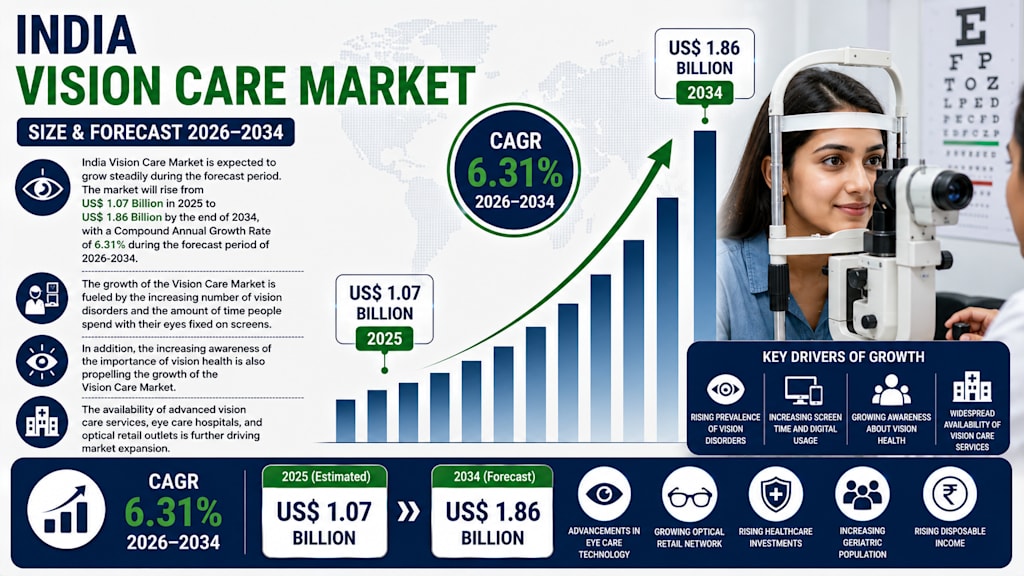
According to Renub Research, the India Vision Care Market is expected to grow from US$ 1.07 Billion in 2025 to US$ 1.86 Billion by 2034, expanding at a compound annual growth rate (CAGR) of 6.31% during the forecast period from 2026 to 2034. Rising cases of vision disorders, increasing screen time, growing awareness about eye health, and improving access to vision care services are expected to support long-term market growth.
As eye health becomes a greater priority for Indian consumers, the country's vision care industry is entering a period of sustained expansion.
Understanding Vision Care and Its Importance
Vision care refers to a broad range of products, services, and medical interventions designed to maintain eye health and improve vision quality.
The sector includes eye examinations, diagnosis of eye diseases, prescription eyewear, contact lenses, laser vision correction procedures, surgeries, and preventive healthcare services. Vision care professionals such as optometrists, ophthalmologists, and eye care specialists play critical roles in helping individuals manage vision-related conditions and maintain healthy eyesight.
Vision care is essential not only for correcting eyesight but also for preventing the progression of eye disorders and reducing the risk of permanent vision loss.
With increasing digital device usage and growing awareness of preventive healthcare, vision care services are becoming increasingly important across India.
Rising Prevalence of Vision Disorders Drives Market Growth
One of the most significant drivers of India's vision care market is the growing incidence of vision-related disorders.
Conditions such as myopia, hyperopia, astigmatism, presbyopia, cataracts, glaucoma, and digital eye strain are becoming increasingly common among people of all age groups. The widespread use of smartphones, computers, tablets, and online learning platforms has significantly increased screen exposure, particularly among children, students, and working professionals.
Prolonged screen usage often contributes to eye fatigue, dryness, blurred vision, and headaches, encouraging consumers to seek corrective and preventive eye care solutions.
The report also highlights India's rapidly aging population. The proportion of individuals aged over 60 years is expected to increase substantially in the coming decades, contributing to higher rates of age-related eye disorders such as cataracts and glaucoma.
As vision problems become more widespread, demand for eye examinations, prescription lenses, contact lenses, and surgical interventions is expected to increase significantly.
Growing Awareness of Eye Health Expands Consumer Demand
Awareness regarding eye health and preventive care has improved considerably in recent years.
Healthcare organizations, educational institutions, optical brands, hospitals, and government initiatives have played important roles in educating consumers about the importance of regular eye examinations and early diagnosis of vision disorders.
The report highlights the Myopia Awareness Campaign launched by the Optometry Council of India in 2024, which aimed to educate the public about managing myopia through multilingual educational content. Such initiatives are helping consumers better understand the risks associated with untreated vision problems.
Social media platforms, digital health resources, and marketing campaigns have also increased awareness regarding modern vision correction products such as blue-light-blocking lenses, anti-glare coatings, and advanced contact lenses.
As awareness continues improving, more consumers are proactively seeking vision care products and professional eye care services.
Organized Optical Retail Expansion Supports Industry Development
The rapid expansion of organized optical retail chains is another major factor driving market growth.
Over the past decade, numerous branded eyewear retailers and optical chains have expanded their presence across metropolitan cities, tier-two cities, and smaller towns. These retailers offer consumers access to a wide variety of eyewear products, vision testing services, and professional consultation under one roof.
Consumers increasingly prefer organized retail outlets because they provide quality assurance, professional guidance, and access to the latest eyewear technologies.
Online eyewear platforms have further transformed the industry by offering convenience, competitive pricing, home delivery, and virtual product selection experiences.
The combination of organized retail expansion and digital commerce continues strengthening India's vision care ecosystem.
Technology Is Transforming Vision Care Solutions
Technological advancements are reshaping the way vision care services are delivered across India.
Modern diagnostic tools enable eye care professionals to detect vision disorders earlier and more accurately than ever before. Advanced imaging systems, computerized eye testing equipment, and digital screening technologies are helping improve patient outcomes.
Innovative solutions are also emerging in the treatment segment.
The report highlights the launch of RevitalVision's FDA-cleared vision training software in India, which focuses on improving visual performance by targeting the brain's visual processing centers rather than relying solely on corrective lenses or surgery.
Such technological developments are expanding treatment options and creating new opportunities for market growth.
Eyeglasses Continue Dominating the Market
Prescription eyeglasses remain the largest segment within India's vision care market.
Eyeglasses are widely used to correct common refractive errors such as myopia, hyperopia, and astigmatism. They remain popular because they are affordable, effective, and easily accessible to consumers across different income groups.
Increasing screen usage among students and professionals has further strengthened demand for prescription glasses.
Modern consumers also view eyewear as a fashion accessory rather than merely a medical necessity. As a result, demand for stylish frames and advanced lens technologies such as anti-reflective coatings, blue-light-blocking lenses, and photochromic lenses continues growing.
The combination of functionality and fashion is expected to support sustained growth within the eyeglasses segment.
Contact Lenses Gain Popularity Among Urban Consumers
The contact lens segment has experienced steady growth in recent years.
Many consumers prefer contact lenses because they provide a natural appearance, unrestricted field of vision, and greater convenience during sports and physical activities. Young professionals and urban consumers represent the primary user base for contact lens products.
Manufacturers continue introducing advanced lens materials that improve comfort, oxygen permeability, and moisture retention.
Daily disposable lenses, monthly replacement lenses, and specialty lenses designed for astigmatism and presbyopia are becoming increasingly accessible.
Although adoption remains lower than eyeglasses, growing awareness and product innovation are expected to support continued expansion.
Laser Vision Correction Gains Momentum
Laser therapy has emerged as one of the fastest-growing segments within India's vision care market.
Procedures such as LASIK and other refractive surgeries provide long-term solutions for correcting vision disorders, reducing or eliminating the need for glasses and contact lenses. Technological advancements have improved the safety, precision, and effectiveness of these procedures.
Many specialized eye hospitals now offer advanced laser correction treatments using state-of-the-art equipment.
As disposable incomes rise and consumers become more aware of permanent vision correction options, demand for laser therapies is expected to increase steadily.
Vision Care Surgery Continues Expanding
Vision care surgery represents another important segment of the Indian eye care industry.
Common procedures include cataract surgery, glaucoma treatment, corneal transplantation, retinal surgeries, and other corrective interventions designed to restore or preserve eyesight. Advances in surgical techniques and medical devices have significantly improved treatment outcomes and patient recovery times.
India's aging population is creating growing demand for surgical treatments, particularly cataract procedures.
Government initiatives and nonprofit programs focused on reducing preventable blindness are also contributing to increased surgical volumes across the country.
As healthcare infrastructure continues improving, the surgical segment is expected to remain a key growth driver.
Retail Stores Remain the Primary Distribution Channel
Optical retail stores continue to dominate the distribution landscape within India's vision care market.
These outlets provide consumers with access to prescription glasses, sunglasses, contact lenses, eye testing services, and professional consultation. The growth of organized retail chains has significantly improved product availability and service quality across urban and semi-urban markets.
Retail stores increasingly integrate advanced diagnostic technologies, allowing customers to undergo eye examinations while purchasing eyewear products.
Growing demand for fashionable eyewear and routine eye checkups continues driving foot traffic to optical retail locations.
Maharashtra Leads Regional Market Growth
Maharashtra remains one of India's most developed vision care markets.
Major cities such as Mumbai, Pune, and Nagpur offer extensive networks of eye hospitals, ophthalmology clinics, and optical retail stores. The region benefits from strong healthcare infrastructure, higher disposable incomes, and growing awareness regarding eye health.
High screen exposure among students and working professionals has contributed to increasing demand for vision correction products and preventive eye care services.
The growing elderly population is also driving demand for treatments addressing age-related eye conditions.
Uttar Pradesh Expands Access to Eye Care Solutions
Uttar Pradesh represents a large and rapidly growing market for vision care products and services.
The state's large population creates significant demand for affordable vision correction solutions. Government healthcare initiatives and expanding private eye care facilities have improved access to vision care services in urban areas such as Lucknow, Kanpur, and Noida.
While eyeglasses remain the dominant product category, awareness regarding contact lenses and advanced vision correction procedures is increasing steadily.
Growing awareness and improving healthcare accessibility are expected to support future market growth.
West Bengal Strengthens Eye Care Infrastructure
West Bengal continues witnessing strong growth in vision care services.
Kolkata serves as a major hub for ophthalmology and eye care services, supported by established hospitals, clinics, and retail optical chains. Increased use of digital devices among students and professionals has contributed to rising demand for vision correction products.
Government healthcare initiatives are also expanding access to eye care services in rural and semi-urban areas.
The popularity of fashionable eyewear and premium optical products continues creating new opportunities for market participants.
Andhra Pradesh Shows Promising Growth Potential
The Andhra Pradesh vision care market is benefiting from improving healthcare infrastructure and increasing awareness about eye health.
Cities such as Visakhapatnam, Vijayawada, and Guntur are witnessing growth in modern eye care facilities and specialized treatment centers. Increasing use of digital devices and a growing elderly population are contributing to higher demand for eye care products and services.
Government programs aimed at preventing blindness and promoting routine eye examinations are further supporting market development.
Challenges Continue to Affect Market Expansion
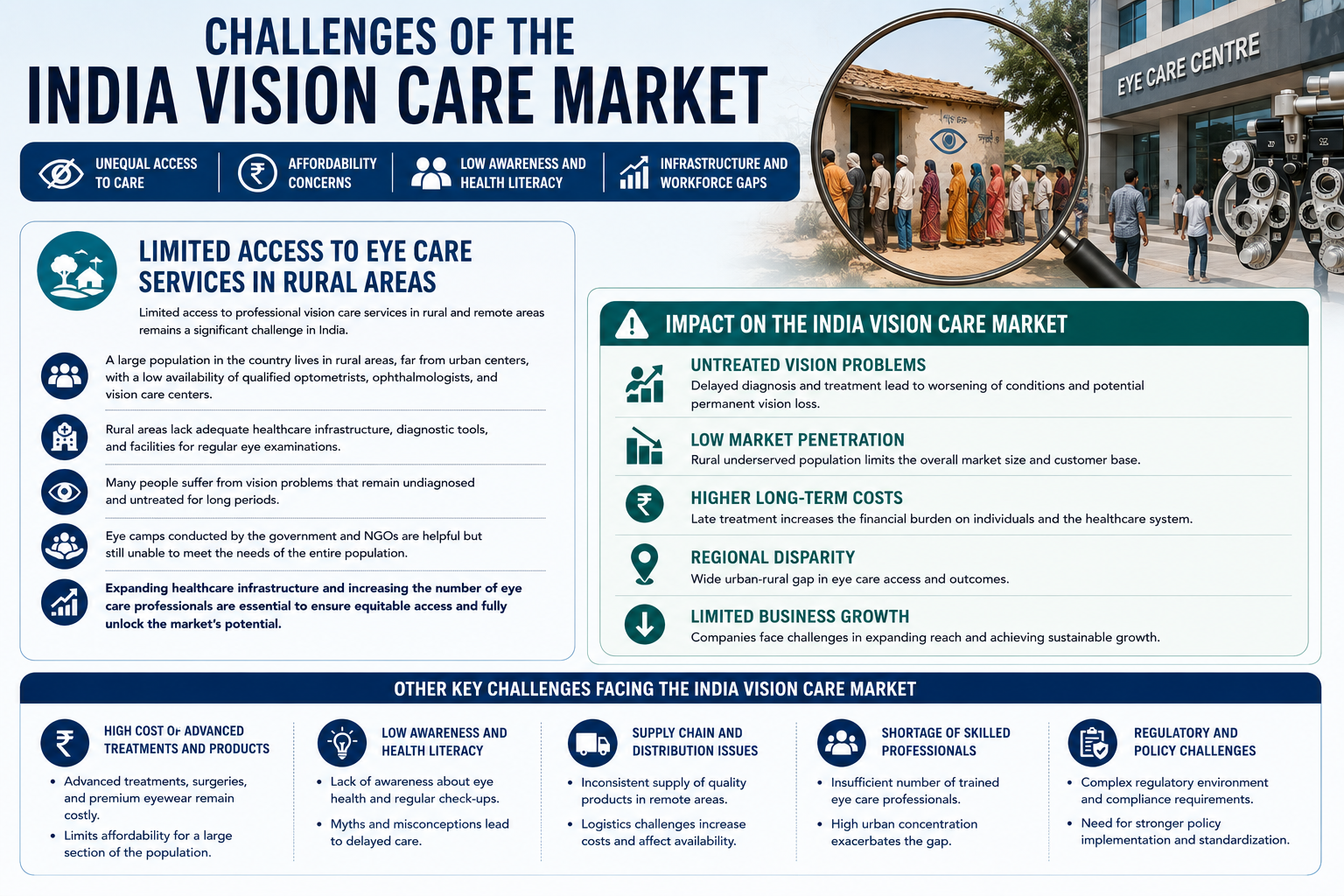
Despite strong growth prospects, the industry faces several challenges.
One major concern is the limited availability of professional eye care services in rural and remote areas. Many regions continue experiencing shortages of qualified optometrists, ophthalmologists, diagnostic equipment, and healthcare infrastructure. As a result, numerous vision disorders remain undiagnosed or untreated.
Price sensitivity also remains a challenge.
Many consumers prefer low-cost eyewear products available through unorganized retail channels rather than investing in premium-quality products and professional vision care services. This creates pricing pressure for organized market participants.
Addressing affordability concerns while expanding access to quality eye care will remain critical for future industry growth.
Leading Companies Shaping the Industry
India's vision care market includes several major global and domestic players focused on innovation, advanced technologies, and expanding retail presence.
Key companies highlighted in the report include **Bausch and Lomb India Pvt Ltd, Alcon Laboratories Pvt Ltd, Hoya Lens India Pvt Ltd, Johnson & Johnson, Luxottica India Eyewear Pvt Ltd, Novartis India Ltd, and Carl Zeiss India Pvt Ltd. These organizations continue investing in advanced vision correction technologies, product innovation, and retail expansion strategies.
Final Thoughts
India's vision care market is positioned for strong growth as increasing screen exposure, rising vision disorders, and greater awareness of eye health continue driving demand.
With the market expected to expand from US$ 1.07 billion in 2025 to US$ 1.86 billion by 2034, opportunities are emerging across eyewear products, contact lenses, laser therapies, surgical procedures, and organized optical retail. Technological innovation and expanding healthcare access are expected to play crucial roles in shaping the industry's future.
About the Creator
Enjoyed the story? Support the Creator.
Subscribe for free to receive all their stories in your feed.
Comments
There are no comments for this story
Be the first to respond and start the conversation.