

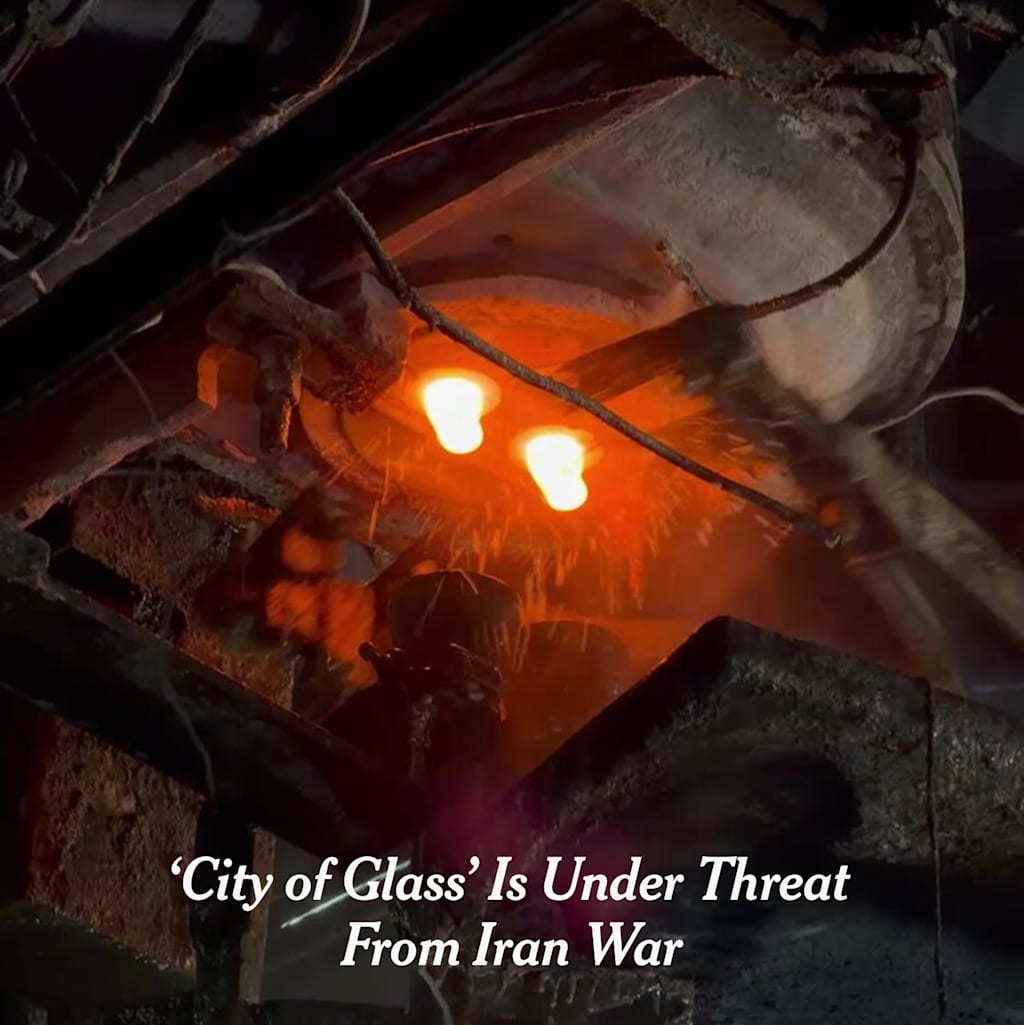
In India, Firozabad has depended on its glassmaking industry for centuries. Fuel prices are starting to shatter businesses already under pressure.
Far from the war in Iran, disruptions to oil and gas flows are rippling through Uttar Pradesh, an Indian state more populous than Brazil. Manufacturing clusters with specialized supply chains dot its crowded countryside. Each district specializes in a trade: brass in Moradabad, leather in Kanpur, carpets in Bhadohi and glass in Firozabad.
Now in Firozabad, glass factories that rely on imported natural gas, mostly from the Persian Gulf, are exposed to shortages and high prices. At risk are the livelihoods of up to one million people who rely on glassmaking for employment.
The factories in Firozabad, just 21 miles from the Taj Mahal, have been barred from using coal-fired furnaces since 1996 to protect the monument’s white marble facade.
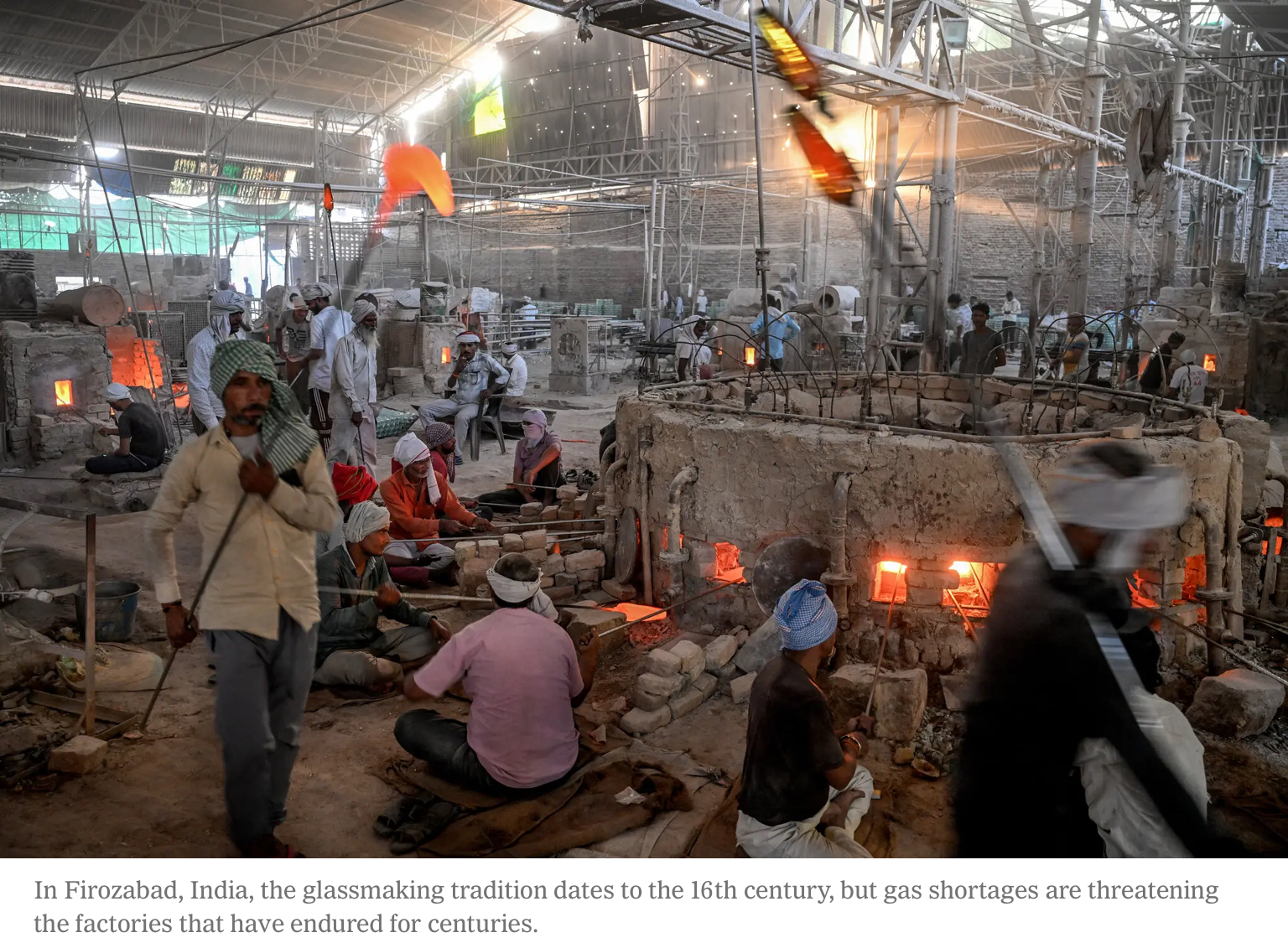
In the city, hundreds of small and midsize firms produce everything from bottles and beads to chandeliers and headlights, generating more than $1 billion in a good year, including $200 million in exports.
The stakes go beyond the city. India’s economy is now among the world’s largest, just behind Germany and Japan, yet unemployment remains stubbornly high. Labor-intensive industries like glassmaking are critical to putting more people to work and to turning the country’s vast work force into a competitive advantage. The challenge is growing, with roughly nine million young people entering the labor market each year.
In Firozabad, India, the glassmaking tradition dates to the 16th century, but gas shortages are threatening the factories that have endured for centuries.
India is the world’s third-largest importer of oil and gas, and as its economy grows, so does its import bill. Early in the war in Ukraine, refiners turned to discounted Russian crude. But after pressure from the Trump administration to cease buying from Russia, they reverted to traditional suppliers: Iraq, Saudi Arabia and other countries that depend on shipping through the Strait of Hormuz.
Here, the impact is not felt at the gas pump. The Indian government keeps diesel and gasoline prices stable, and few locals own cars. However, shortages and soaring natural gas prices threaten factory work that has endured for centuries.
Firozabad’s glassware tradition dates to the 16th century, when the Emperor Akbar had Mughal trinkets recycled in a local furnace. Today, a thousand trucks filled with broken glass arrive daily from across India and beyond. Since March, mountains of shards have piled up untouched, because melting them down has become too expensive.
Even before the energy crisis, the industry was struggling. Local glassmakers were losing ground to Chinese competitors with more advanced factories. Most Chinese glassmakers use electric furnaces, an option largely out of reach for most businesses in Firozabad. In addition, India’s grid is not stable enough to deliver reliable and affordable electricity to those operations. As oil prices rise, China’s cost advantage only widens.
It has been three decades since Firozabad experienced a major energy crunch — when measures to protect the Taj forced a switch to gas. At that time, only one-third of the glass factories survived the transition.
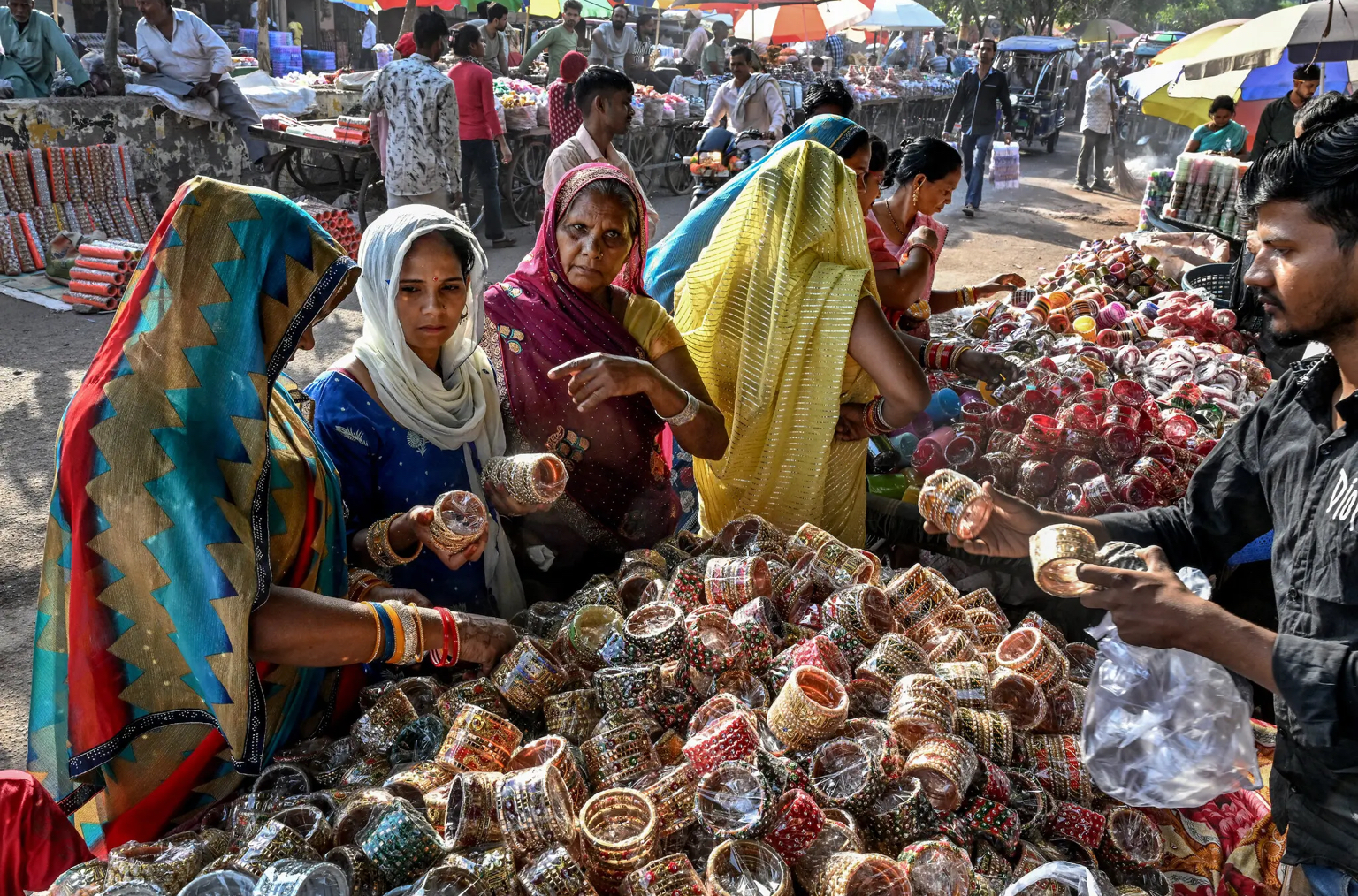
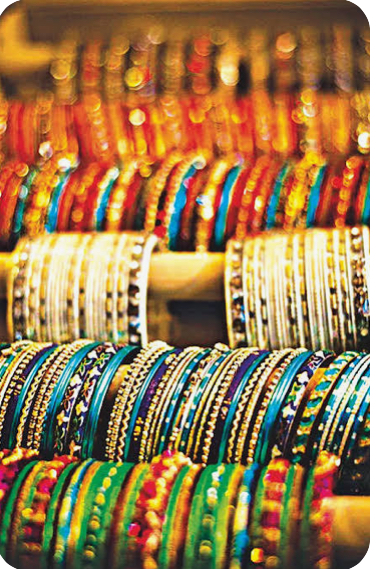
Firozabad is famous as a producer of colorful glass bangles, a daily ornament for many Indian women.
In Firozabad’s traditional bazaars, the scene still looks abundant. Cycle-rickshaws loaded with blank, undyed glass nudge past towers of brightly colored bangles as wholesalers fill the shops.
These bangles, sold for as little as 2 cents a piece, may be among the world’s cheapest objects of joy. Even before the crisis, margins were thin. Now prices have climbed about 30 percent.
Bansal, a local glassmaker and vice president of the All India Glass Manufacturers’ Federation, has kept his workers on payroll. But with gas in short supply, he has been forced to nearly extinguish one of his two furnaces. By April, his factory would have normally started making Christmas ornaments for export to the United States. This year, it hadn’t.
The furnaces in Firozabad, which produce about 70 percent of India’s glass, must burn continuously at around 2,700 degrees Fahrenheit. This requires thousands of kilograms of gas daily.
“We’re not part of the war, but we’re bearing the brunt of it,” he said.
The strain is spreading to buyers. Suraj Mehta, chief strategy officer at Hindusthan National Glass & Industries, said glass bottles had become “harder and more expensive to procure” across India in the past two months. Glassmakers are absorbing about half the increase, passing the rest on to brewers, soft drink makers, auto repair shops and medical suppliers.
Mukesh Bansal, bottom, said gas shortages had forced him to nearly extinguish one of his two furnaces at his glassmaking factory in Firozabad.
Binni Mittal, president of Industrial Estate Cooperative Society in Firozabad, owns a bangle factory, employing hundreds of workers who heat, shape and cut orange-hot glass into bangles. His usual gas supply has fallen 20 percent, forcing him to scale back output 40 percent.
From an air-conditioned cabin beside his furnace, Mr. Mittal has watched gas costs climb. Supply has held, but prices have swung sharply.
“If the war continues like this,” he said, “our industry will get destroyed.”
Before the war in Iran, Mr. Mittal’s biggest problem was a labor shortage. Now he worries that laying off workers might mean he will lose them permanently, even if energy prices return to normal. In the past, he would have hired legions of workers, but the work is so punishing that few families want their sons to do it. Last month, it was 108 degrees Fahrenheit in the shade and far higher near the furnaces.
He is no longer hiring.
Binni Mittal, who owns a company that makes glass bangles, fears for the industry if the war continues and energy prices remain high.
At an open-air labor market in Firozabad, Saddam Hussein, a 32-year-old glass cutter, waited for work. He used to support his wife and three children on wages of about $6 a day. In the past month, he has found only four or five days of work.
“The war is over there, but we’re getting killed here,” he said. “When I don’t get work, my family goes hungry.”
As conditions for workers worsen, there is growing discontent.
A few weeks ago, thousands of electronics workers took to the streets in parts of Uttar Pradesh adjoining New Delhi to protest wages and working conditions. Factory gates were overrun. Police officers fired tear gas and arrested hundreds. Many complained that wages had been falling behind living costs even before the energy crisis drove up the price of essentials like cooking gas.
Other industries are also feeling the squeeze on energy and employment. In Khurja, about 50 miles southeast of Delhi, artisans have been making ceramics since medieval times.
“Fuel is the main part of our product,” said Shalabh Singhania of R.K. Potteries, estimating that it accounts for 30 to 35 percent of costs. His kilns run at lower temperatures than glass furnaces, which allowed him to shut them down for the month of March without ruining them.
The business is labor-intensive. “One mug crosses the hands of 30 laborers,” he said. He hesitated to furlough workers, because most had traveled long distances for work and would rarely return if they left.
An artisan at R.K. Potteries in Khurja, India. The factory owner said producing one mug may require work from 30 laborers.
He estimated that at one point, 98 percent of Khurja’s kilns had shut down. They reopened only after the government allowed them to burn diesel, normally banned to curb air pollution in Delhi. While his factory makes housewares, others in Khurja produce ceramic insulators for India’s expanding power grid — a sign that the energy crunch is also constraining the materials needed to ease it.
Industries like Mr. Singhania’s depend on tightly linked networks of cooperation among owners, workers and buyers. “If one link breaks in this chain, the whole chain breaks,” he said. “The chain is already breaking.”


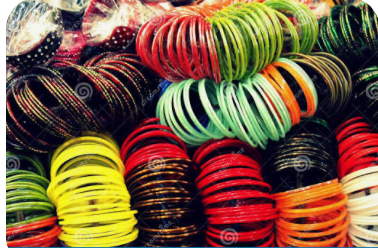
Glass beads and bangles made in India - we at Wildthingsbeads have been selling them for years. Maybe they will be going away soon, at least the inexpensive price. They maybe more expensive in the future.
Hopefully the price of oil and natural gas will drop. And the war will end.
About the Creator
Guy lynn
I’m interested in history, space travel and the possibilities, Americana,( where I live now), Africa (Southern Africa, where I was born and raised), and I write about things that interest me ( bead history) and I hope will interest you.
Enjoyed the story? Support the Creator.
Subscribe for free to receive all their stories in your feed.
Comments
There are no comments for this story
Be the first to respond and start the conversation.