
India's Contact Lens Market Is Seeing Clear Growth as Eye Care and Lifestyle Trends Evolve
Rising screen time, increasing vision disorders, growing cosmetic lens demand, and expanding online retail are transforming India's contact lens industry.

For decades, eyeglasses dominated the vision correction market, serving as the primary solution for millions of people dealing with refractive errors such as myopia, hyperopia, and astigmatism. While spectacles continue to play a major role in eye care, changing lifestyles, growing awareness about eye health, and advances in optical technology are encouraging more consumers to explore alternatives.
Among those alternatives, contact lenses have emerged as one of the most popular choices.
Modern contact lenses offer convenience, comfort, improved aesthetics, and enhanced visual performance. They provide users with a wider field of vision, greater freedom during physical activities, and an option that aligns with both medical and cosmetic preferences.
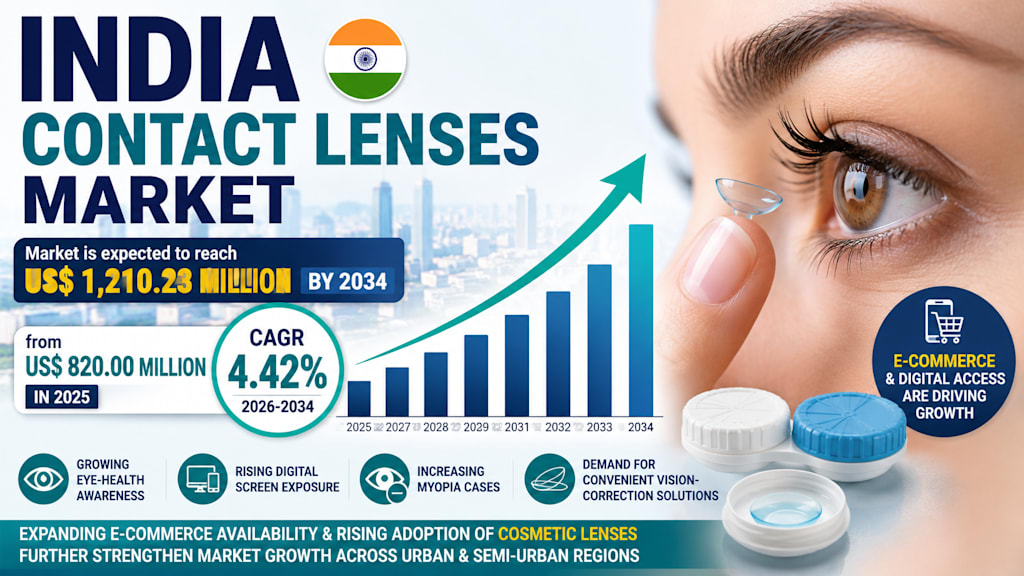
According to Renub Research, the India Contact Lenses Market is expected to grow from US$ 820 million in 2025 to US$ 1,210.23 million by 2034, expanding at a compound annual growth rate (CAGR) of 4.42% between 2026 and 2034. The market's growth is being fueled by rising awareness of eye health, increasing digital screen exposure, growing cases of myopia, and strong demand for convenient vision correction solutions.
As India becomes more digitally connected and consumers increasingly prioritize both health and appearance, the contact lens industry is entering a new phase of growth and innovation.
Vision Problems Are Becoming More Common
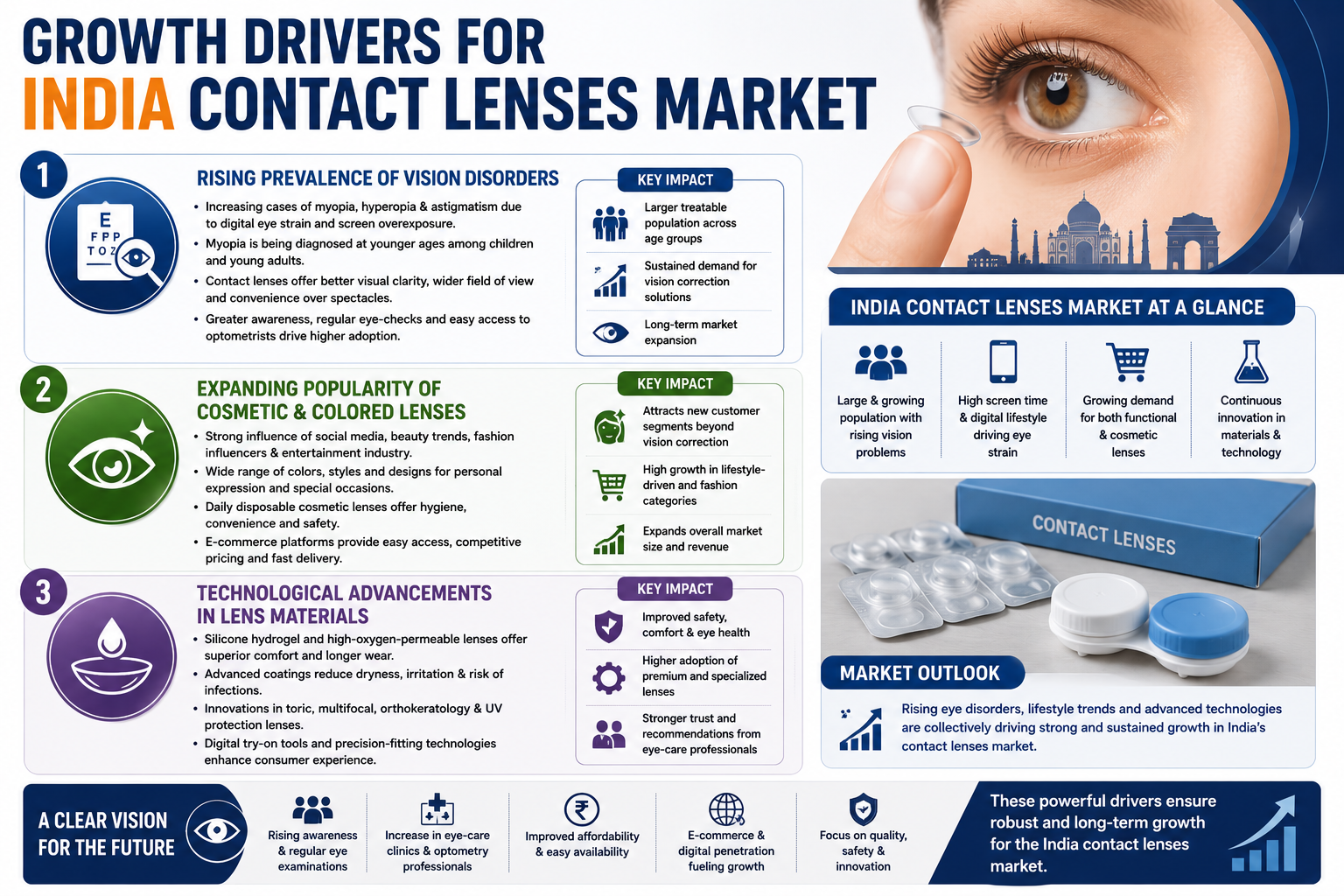
One of the strongest drivers behind the growth of India's contact lens market is the increasing prevalence of vision disorders.
Rapid digitalization has transformed how people work, learn, communicate, and entertain themselves. Smartphones, tablets, laptops, and desktop computers have become essential tools in everyday life. While these technologies offer countless benefits, they have also contributed to a rise in eye-related problems.
Extended screen exposure often leads to digital eye strain, causing symptoms such as blurred vision, headaches, dry eyes, and fatigue. More importantly, healthcare professionals have observed increasing rates of myopia, particularly among children, students, and young professionals.
Urban lifestyles, reduced outdoor activity, and prolonged near-work activities have further accelerated this trend.
As more individuals require vision correction, demand for contact lenses continues to grow. Many consumers view contact lenses as a more flexible and convenient alternative to traditional spectacles, particularly for active lifestyles and professional environments.
The growing burden of vision disorders is expected to remain a key factor supporting long-term market expansion.
Why Consumers Are Choosing Contact Lenses
Contact lenses offer several advantages that appeal to modern consumers.
Unlike spectacles, contact lenses move with the eye, providing a natural field of vision without frame-related obstructions. This allows users to enjoy clearer peripheral vision and a more immersive visual experience.
For individuals involved in sports, fitness activities, or outdoor recreation, contact lenses often provide greater convenience than glasses. They eliminate concerns about frames slipping, fogging, or breaking during physical activity.
Many consumers also prefer contact lenses for aesthetic reasons.
Some individuals feel more confident without glasses, while others appreciate the freedom to experiment with cosmetic and colored lenses. As personal appearance and self-expression become increasingly important among younger generations, contact lenses are gaining popularity as both a medical and lifestyle product.
Advancements in lens materials and comfort technologies have further improved user experiences, encouraging broader adoption across different age groups.
The Rise of Cosmetic and Colored Lenses
The contact lens market is no longer driven solely by vision correction.
Cosmetic and colored lenses have become one of the fastest-growing segments within the industry, particularly among younger consumers. Social media platforms, beauty influencers, fashion trends, and entertainment culture have significantly increased awareness of cosmetic lenses.
Consumers today use colored lenses for a variety of purposes, including everyday fashion, weddings, social events, photography sessions, and special occasions.
Manufacturers have responded by offering a wide variety of shades, designs, and styles that allow users to enhance or completely change their eye appearance.
Unlike earlier generations of cosmetic lenses, modern products incorporate advanced moisture retention technologies and high-quality materials that improve safety and comfort.
Daily disposable cosmetic lenses have become especially popular because they combine convenience, hygiene, and ease of use. This trend is helping expand the market beyond traditional vision correction users and attracting entirely new customer segments.
As beauty and fashion continue influencing consumer purchasing decisions, cosmetic lenses are expected to remain an important growth driver.
Technology Is Making Contact Lenses Better Than Ever
Technological innovation is transforming the contact lens industry.
Modern lenses are significantly more advanced than those available just a decade ago. Improvements in materials, manufacturing techniques, and design have enhanced comfort, safety, and wearability.
One of the most important developments has been the introduction of silicone hydrogel materials.
These advanced materials allow greater oxygen flow to the cornea, reducing dryness and discomfort while supporting healthier eyes. Improved oxygen permeability enables users to wear lenses for longer periods with fewer complications.
Manufacturers have also introduced moisture-rich coatings, ultraviolet protection features, and specialized lens designs that address unique visual needs.
Consumers can now choose from toric lenses for astigmatism, multifocal lenses for presbyopia, and orthokeratology solutions designed to manage myopia progression.
These innovations are helping eye-care professionals recommend contact lenses to a broader range of patients than ever before.
Digital Lifestyles Are Creating New Opportunities
India's digital economy is expanding rapidly, creating new opportunities for the contact lens market.
Millions of students, professionals, entrepreneurs, and remote workers spend extended hours in front of screens each day. This increased digital engagement has heightened awareness of eye health and encouraged more frequent eye examinations.
As individuals become more proactive about managing their vision, demand for high-quality corrective solutions continues to rise.
At the same time, digitally connected consumers are increasingly researching eye-care products online before making purchasing decisions. Reviews, educational content, and virtual consultations are influencing consumer behavior and helping people explore contact lens options with greater confidence.
Technology is not only creating demand for vision correction but also changing how consumers discover and purchase eye-care products.
E-Commerce Is Expanding Market Reach
One of the most significant developments in India's contact lens market is the rapid growth of online retail channels.
E-commerce platforms have transformed the purchasing process by making contact lenses more accessible to consumers across both urban and semi-urban areas.
Online pharmacies and optical retailers offer several advantages, including competitive pricing, home delivery, subscription services, and access to a wider range of products.
Consumers can compare brands, read reviews, and reorder lenses conveniently without visiting physical stores. This convenience has become particularly important for recurring purchases such as daily disposables, monthly lenses, and lens care solutions.
The expansion of online retail has also enabled manufacturers to reach previously underserved markets where access to specialty optical stores may be limited.
As digital commerce continues growing, online channels are expected to play an increasingly important role in market expansion.
Daily Disposable Lenses Are Gaining Popularity
Consumer preferences are shifting toward convenience and hygiene.
Daily disposable lenses have emerged as one of the most attractive options for both new and experienced users. These lenses eliminate the need for cleaning, storage solutions, and maintenance routines, reducing the risk of contamination and infection.
Users simply wear a fresh pair each day and discard them after use.
This convenience appeals particularly to busy professionals, students, travelers, and individuals who wear contact lenses occasionally rather than every day.
Healthcare professionals often recommend daily disposables because they support better hygiene practices and lower the likelihood of complications associated with improper lens care.
As awareness of eye safety continues growing, demand for disposable lens formats is expected to increase steadily.
Regional Markets Driving Growth
Maharashtra remains one of India's largest markets for contact lenses.
Cities such as Mumbai, Pune, and Nagpur have large urban populations, advanced healthcare facilities, and strong awareness of modern vision correction options. High digital device usage and growing interest in cosmetic lenses further support demand.
Tamil Nadu is another important market, driven by strong healthcare infrastructure, growing urbanization, and increasing adoption of eye-care technologies in cities such as Chennai, Coimbatore, and Madurai.
Karnataka, particularly Bengaluru, benefits from a large population of technology professionals and students who frequently use digital devices. This environment has contributed to rising demand for both corrective and cosmetic contact lenses.
Uttar Pradesh is also experiencing notable growth as awareness of contact lenses expands in cities such as Noida, Ghaziabad, Lucknow, and Kanpur. Improved access to eye-care services and online retail platforms is supporting market development across the state.
Together, these regions represent significant opportunities for manufacturers and retailers seeking to expand their presence in India.
Challenges Facing the Industry
Despite positive growth prospects, the contact lens market faces several challenges.
One major obstacle is limited awareness in rural and semi-urban regions. Many consumers remain unfamiliar with contact lenses or hold misconceptions regarding safety, comfort, and long-term use.
Limited access to trained eye-care professionals further restricts adoption in certain areas.
Another challenge involves hygiene and maintenance concerns.
Improper cleaning, storage, or prolonged wear can increase the risk of eye infections and complications. Some users find maintenance routines inconvenient and may discontinue use due to safety concerns.
The presence of counterfeit or low-quality products in certain online channels also poses risks to consumer confidence.
Addressing these challenges will require continued investment in education, professional guidance, and awareness campaigns that promote safe lens usage.
Looking Ahead
The future of India's contact lens market appears increasingly innovative and consumer-focused.
Advances in lens materials, moisture technologies, and specialty designs will continue improving comfort and performance. Emerging technologies may eventually introduce smart lenses capable of monitoring health indicators or enhancing visual capabilities.
Manufacturers are also expected to expand product offerings tailored to India's growing population of digital device users.
At the same time, rising disposable incomes, expanding retail access, and greater emphasis on personal appearance will continue encouraging adoption across diverse consumer groups.
As awareness of eye health grows, contact lenses are likely to become an increasingly common part of everyday life for millions of Indians.
Final Thoughts
India's contact lens market is benefiting from a powerful combination of healthcare needs, technological innovation, and changing consumer preferences. Rising rates of vision disorders, growing screen exposure, increasing interest in cosmetic enhancement, and expanding online retail channels are creating strong foundations for sustained growth.
With the market projected to increase from US$ 820 million in 2025 to US$ 1,210.23 million by 2034, opportunities for manufacturers, healthcare providers, and retailers remain significant.
As consumers seek more comfortable, convenient, and aesthetically appealing alternatives to traditional eyewear, contact lenses are becoming an increasingly important component of modern vision care. The industry's continued evolution promises to deliver new innovations that improve eye health while meeting the lifestyle needs of India's rapidly changing population.
About the Creator
Enjoyed the story? Support the Creator.
Subscribe for free to receive all their stories in your feed.
Comments
There are no comments for this story
Be the first to respond and start the conversation.