
India Perfume Market Set to Bloom as Fragrance Becomes a Daily Lifestyle Essential
Rising incomes, digital influence, and premium grooming trends are transforming India’s perfume industry through 2034

India’s perfume industry is entering an exciting growth phase as changing lifestyles, urban aspirations, and rising interest in personal grooming reshape buying habits across the country. Once considered a luxury reserved for special occasions, perfume is now becoming an everyday essential for millions of Indian consumers.
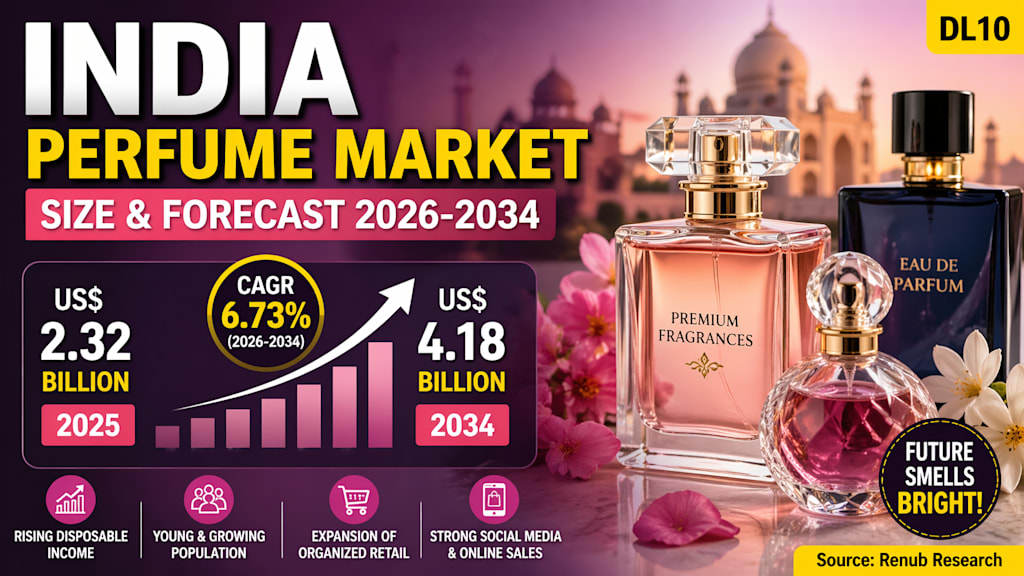
According to Renub Research, the India Perfume Market is projected to rise from US$ 2.32 Billion in 2025 to US$ 4.18 Billion by 2034, expanding at a CAGR of 6.73% from 2026 to 2034. This expected growth reflects increasing disposable income, a youthful population, stronger online retail networks, and growing demand for both affordable and premium fragrances.
As India’s consumers become more brand-conscious and self-expression driven, fragrance is no longer optional—it is becoming part of identity, confidence, and lifestyle.
Perfume in India: From Luxury to Everyday Lifestyle Product
Perfume has undergone a major transformation in India over the last decade. Earlier, deodorants and talcum powders dominated personal fragrance preferences. Today, consumers are actively exploring perfumes, body mists, attars, eau de parfum, and premium niche scents.
This shift has been influenced by global fashion exposure, social media trends, and a stronger focus on appearance and self-care. Younger buyers especially view fragrance as a reflection of personality rather than simply a cosmetic product.
Urban professionals wear perfume to work. Students use fragrances socially. Wedding gifting increasingly includes premium scent collections. In short, perfume has entered mainstream Indian consumer culture.
Why the India Perfume Market Is Growing So Fast
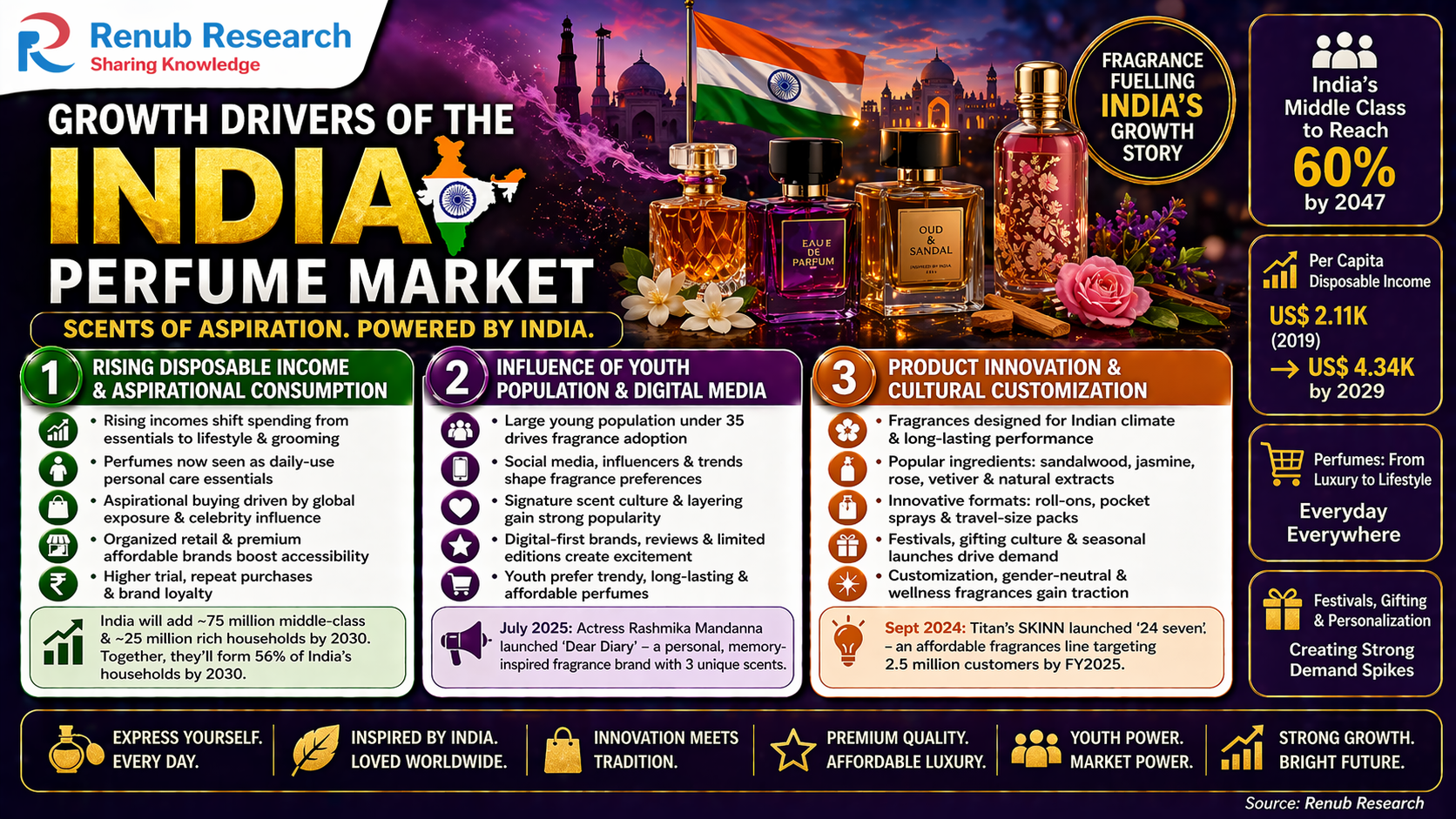
1. Rising Disposable Income Across the Middle Class
India’s growing middle-income population is one of the strongest drivers behind perfume sales. As incomes increase, consumers naturally move beyond essentials and begin spending more on lifestyle goods.
Perfumes benefit greatly from this trend because they are seen as affordable luxury products. Even first-time buyers can access entry-level brands, while affluent consumers upgrade to designer labels.
Renub Research notes that rising purchasing power is directly boosting demand across urban and semi-urban India.
2. Youth Population and Social Media Influence
India has one of the world’s youngest populations, and this demographic is driving fragrance experimentation at scale.
Instagram reels, celebrity endorsements, YouTube reviews, and influencer content are shaping buying decisions daily. Terms like “signature scent,” “layering fragrances,” and “long-lasting perfume” are becoming common among Gen Z and millennial consumers.
Online content also accelerates brand discovery, helping both local startups and global companies gain attention quickly.
3. E-Commerce Making Perfume More Accessible
Online retail has solved one of the biggest historical barriers in India’s fragrance market: availability.
Consumers in smaller cities can now purchase brands once limited to metro malls and airports. E-commerce platforms offer discounts, user reviews, sample packs, and doorstep delivery—making perfume buying easier than ever.
This digital convenience is expected to remain a major growth engine through 2034.
Premium Perfumes Are Winning Fast
Although affordable products still dominate by volume, premium fragrances are seeing impressive momentum.
Urban buyers increasingly seek:
- Long-lasting formulations
- Imported designer labels
- Niche scents
- Elegant packaging
- Unique fragrance notes
- Luxury gifting options
Perfume is becoming a status symbol similar to watches, sneakers, and skincare. Consumers now see premium scents as part of personal branding.
Luxury malls, airport duty-free stores, and premium e-commerce portals are helping premiumization grow rapidly in India.
Men’s Perfume Market Leads, But Women’s Segment Rising Fast
Men’s Perfume Market
Men currently represent the largest gender-based segment in India. Grooming awareness, workplace culture, and increasing social confidence are pushing repeat purchases.
Popular male fragrance categories include:
- Woody
- Musky
- Aquatic
- Spicy
Women’s Perfume Market
The women’s segment is also expanding strongly due to increasing workforce participation, fashion awareness, and self-care spending.
Floral, fruity, oriental, and premium designer fragrances are increasingly popular among Indian women. Bridal gifting and festive purchases further boost this category.
Offline Stores Still Matter
Despite e-commerce growth, physical retail remains highly important because perfume is sensory.
Consumers often prefer testing fragrances before purchasing. This keeps department stores, malls, supermarkets, cosmetic stores, and airport retail highly relevant.
In-store promoters, testers, gift packaging, and festive displays continue to drive strong offline conversion rates—especially for premium products.
State-Level Growth Hotspots
India’s perfume growth story is not limited to one city. Several states are becoming strong fragrance markets.
Maharashtra
With Mumbai and Pune leading consumption, Maharashtra is among India’s largest perfume markets. Premium and mass segments both perform strongly.
Karnataka
Bengaluru’s tech workforce and high digital adoption make Karnataka ideal for premium and online fragrance growth.
Uttar Pradesh
A volume-heavy market where affordable perfumes and traditional attars remain popular.
West Bengal
Kolkata supports steady demand with preference for floral and oriental notes.
Andhra Pradesh
Urbanization and youth spending are helping branded fragrances gain traction quickly.
Challenges Facing the Industry
Even with strong potential, the market still faces several obstacles.
Price Sensitivity
Many Indian consumers remain highly price-conscious, limiting premium market penetration outside major cities.
Counterfeit Products
Fake branded perfumes hurt trust, damage reputations, and distort pricing.
Distribution Gaps
Rural and smaller-town access remains inconsistent.
Regulatory Complexity
Import duties, labeling rules, and chemical compliance requirements can slow product launches and raise prices.
Innovation Creating New Demand
Brands are adapting specifically for Indian consumers through:
- Pocket sprays
- Roll-on perfumes
- Travel-size bottles
- Alcohol-free attars
- Long-lasting tropical formulas
- Gender-neutral fragrances
- Wellness-inspired scents
Indian ingredients like sandalwood, rose, jasmine, and vetiver
These innovations make perfume more relevant to local climate, culture, and price expectations.
Competitive Landscape
India’s perfume market includes both global luxury houses and established mass-market players. Leading names mentioned in the report include:
- CHANEL
- Coty Inc.
- LVMH Moet Hennessy - Louis Vuitton
- Estée Lauder Companies
- L'Oréal Groupe
- Shiseido Company, Limited
- Givaudan
These companies compete alongside Indian brands and fast-growing digital-first fragrance startups.
Final Thoughts
India’s perfume industry is moving from occasional indulgence to everyday lifestyle necessity. Rising incomes, youth-led grooming culture, e-commerce convenience, and premium aspirations are creating a strong long-term growth story.
By 2034, the market is expected to reach US$ 4.18 Billion, proving that fragrance is no longer just about smelling good—it is about confidence, identity, and modern living.
About the Creator
Enjoyed the story? Support the Creator.
Subscribe for free to receive all their stories in your feed.
Comments
There are no comments for this story
Be the first to respond and start the conversation.