
India Hospitality Market Set to Reach US$ 798.95 Billion by 2033 Amid Tourism Boom, Rising Incomes, and Digital Transformation
India's hotel, resort, and accommodation industry is entering a new era of growth driven by domestic travel, international tourism, luxury experiences, and technology-powered guest services.

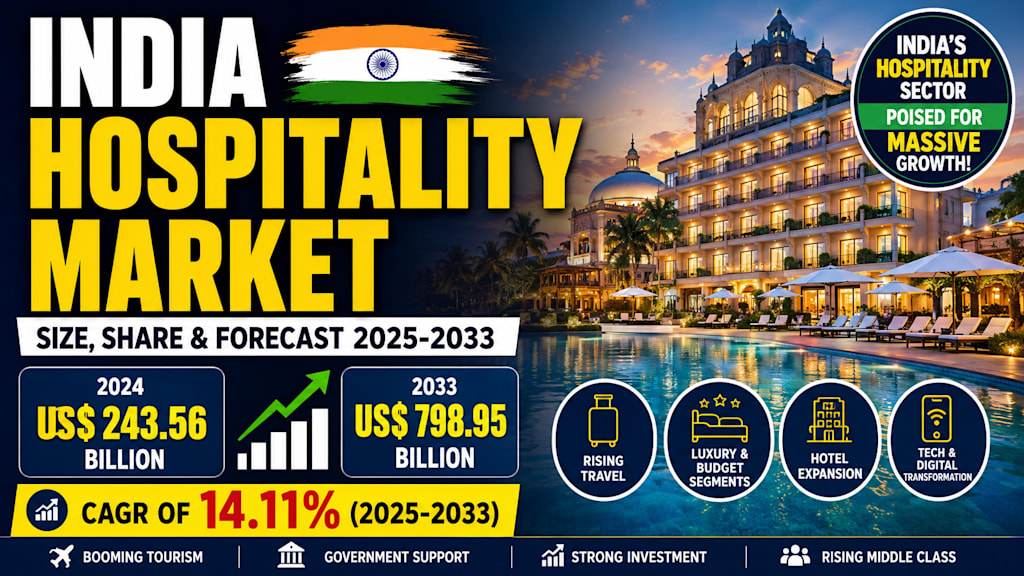
India Hospitality Market Size and Forecast 2025–2033
India's hospitality industry is witnessing remarkable growth as the country strengthens its position among the world's fastest-growing travel and tourism destinations. Increasing disposable incomes, a thriving middle class, expanding tourism infrastructure, rising business travel, and government-backed tourism initiatives are creating significant opportunities across the sector.
According to Renub Research, India Hospitality Market is expected to grow from US$ 243.56 Billion in 2024 to US$ 798.95 Billion by 2033, expanding at a CAGR of 14.11% during 2025–2033.
The hospitality industry encompasses hotels, resorts, service apartments, budget accommodations, luxury properties, and other lodging services that cater to both leisure and business travelers. As India continues to improve connectivity, digital adoption, and tourism experiences, the sector is becoming a major contributor to economic growth and employment generation.
A New Growth Story for India's Hospitality Industry
The Indian hospitality sector has undergone a significant transformation over the past decade. Traditionally concentrated in metropolitan cities and popular tourist destinations, hospitality businesses are now expanding into Tier-II and Tier-III cities, pilgrimage centers, wellness destinations, and emerging tourism hubs.
Government support has played a crucial role in accelerating this growth. Policies such as 100% foreign direct investment (FDI) under the automatic route, tax incentives for hospitality projects, tourism circuit development programs, and streamlined project approvals have encouraged both domestic and international investments.
The increasing popularity of domestic tourism has further strengthened industry fundamentals. Millions of Indians are now traveling more frequently for vacations, weekend getaways, religious tourism, business events, destination weddings, and wellness retreats.
The result is a rapidly evolving hospitality ecosystem that serves travelers across all income groups and travel preferences.
Domestic Tourism Becoming the Biggest Growth Engine
One of the strongest drivers behind India's hospitality market expansion is the surge in domestic tourism.
The country has witnessed a dramatic increase in travel activity following improvements in road networks, airports, railway infrastructure, and digital travel booking platforms. Families, young professionals, retirees, and millennials are traveling more often than ever before.
Popular destinations such as Rajasthan, Goa, Kerala, Himachal Pradesh, Uttarakhand, Kashmir, Tamil Nadu, and Northeast India continue attracting large numbers of visitors throughout the year.
Weekend tourism has also emerged as a major trend. Urban residents increasingly seek short leisure breaks from busy city lifestyles, creating demand for resorts, boutique hotels, eco-lodges, and wellness properties.
Religious tourism remains another powerful contributor. Destinations including Ayodhya, Varanasi, Tirupati, Shirdi, Kedarnath, and Vaishno Devi attract millions of pilgrims annually, generating consistent demand for accommodations across various price segments.
Rising Disposable Income Supporting Travel Expenditure
India's rapidly expanding middle class is reshaping consumer spending patterns.
As household incomes continue to rise, consumers are allocating larger portions of their budgets toward leisure experiences, vacations, and premium hospitality services. This trend is particularly visible among younger travelers who prioritize experiences over material possessions.
Urbanization has further contributed to changing lifestyles. Working professionals increasingly combine business and leisure travel, a trend commonly referred to as "bleisure" travel.
Higher purchasing power has encouraged travelers to choose better accommodations, longer stays, premium dining experiences, and value-added hospitality services.
This shift benefits not only luxury hotel chains but also mid-scale and budget operators that cater to aspirational travelers seeking quality experiences at affordable prices.
Luxury Hospitality Segment Continues to Flourish
India's luxury hospitality segment is experiencing unprecedented growth.
Wealthy domestic travelers, international tourists, destination wedding organizers, and corporate clients are driving demand for premium accommodations and personalized experiences.
Luxury hotels are increasingly investing in exclusive wellness programs, fine dining restaurants, private villas, curated travel experiences, and high-end concierge services.
Heritage hotels across Rajasthan, luxury beach resorts in Goa, wellness retreats in Kerala, and premium mountain resorts in Himachal Pradesh continue attracting affluent travelers seeking distinctive experiences.
The growth of luxury tourism is also supported by rising numbers of high-net-worth individuals (HNWIs) and expanding international tourism arrivals.
As experiential travel gains popularity, luxury operators are finding new opportunities to differentiate themselves through authenticity, sustainability, and personalized service.
Budget and Economy Hotels Expanding Rapidly
While luxury hospitality receives considerable attention, the budget and economy hotel segment remains equally important.
Affordable accommodations continue attracting students, business travelers, backpackers, families, and domestic tourists seeking value-for-money options.
The rise of organized budget hotel brands has transformed this segment significantly. Standardized services, digital booking convenience, transparent pricing, and improved customer experiences have increased consumer confidence.
Online travel agencies and mobile booking applications have further enhanced accessibility by allowing travelers to compare prices, read reviews, and book accommodations instantly.
The growing popularity of budget travel among millennials and Gen Z consumers is expected to support sustained growth in this segment throughout the forecast period.
Technology Is Redefining Guest Experiences
Technology is becoming one of the most influential factors shaping India's hospitality industry.
Hotels are increasingly leveraging artificial intelligence, machine learning, cloud computing, and data analytics to enhance operational efficiency and customer satisfaction.
Modern hospitality establishments now offer:
Mobile check-in and check-out
- Digital room keys
- AI-powered concierge services
- Contactless payments
- Smart room automation
- Personalized recommendations
- Dynamic pricing systems
Hotels can analyze guest behavior, preferences, and booking patterns to deliver customized experiences that improve satisfaction and encourage repeat visits.
Digital transformation is particularly important as travelers increasingly expect seamless, technology-enabled experiences throughout their journeys.
Government Initiatives Strengthening Industry Growth
Government efforts continue to play a vital role in the expansion of India's hospitality market.
Programs such as "Incredible India" have successfully enhanced India's global tourism visibility. Investments in tourism infrastructure, airport modernization, smart cities, and transportation networks are making destinations more accessible.
The development of pilgrimage circuits, heritage tourism routes, and eco-tourism projects is creating new hospitality opportunities across multiple regions.
Additionally, policy reforms aimed at simplifying business operations and encouraging investment are attracting domestic and international hotel operators to expand their presence within the country.
These initiatives are expected to support long-term industry growth while enhancing India's competitiveness as a global tourism destination.
Key Challenge: Skilled Workforce Shortage
Despite strong growth prospects, India's hospitality industry faces several challenges.
One of the most significant concerns is the shortage of skilled labor.
The industry's rapid expansion has created substantial demand for trained professionals in housekeeping, culinary services, guest relations, food and beverage management, and hotel operations.
Many hospitality graduates seek overseas employment opportunities where compensation packages are often more attractive. At the same time, smaller cities and emerging tourism destinations struggle to attract experienced talent.
The shortage of qualified personnel can negatively affect service quality, customer satisfaction, and operational efficiency.
Addressing this issue will require stronger industry-academia collaboration, vocational training programs, and employee retention strategies.
Seasonality Continues to Affect Revenue Stability
Another challenge facing hospitality operators is demand volatility caused by seasonality.
Tourism activity in many destinations remains highly dependent on weather patterns, holiday schedules, festivals, and regional events.
Hill stations often experience peak demand during summer months, while coastal destinations typically perform best during winter seasons. Monsoons can significantly impact occupancy levels in several regions.
Unexpected disruptions such as economic uncertainty, natural disasters, or health crises can further influence travel behavior.
To manage these fluctuations, hospitality businesses are increasingly adopting flexible pricing models, diversified customer targeting strategies, and operational cost optimization measures.
Regional Outlook: North India Leads Tourism Activity
North India Hospitality Market
North India remains one of the strongest hospitality markets in the country.
The region benefits from iconic tourism destinations including Delhi, Agra, Jaipur, Varanasi, Shimla, Manali, and Kashmir. The famous Golden Triangle tourism circuit continues attracting large numbers of domestic and international travelers.
Business travel demand from Delhi-NCR further supports hotel occupancy levels across premium and mid-scale categories.
Religious tourism, cultural tourism, and leisure travel collectively make North India a dominant contributor to national hospitality revenues.
West and Central India Hospitality Market
West and Central India represent a balanced mix of corporate travel, leisure tourism, and cultural exploration.
Mumbai and Pune serve as major business travel centers, while Goa remains India's leading beach tourism destination.
Gujarat and Madhya Pradesh continue attracting heritage and religious tourists through destinations such as Ahmedabad, Ujjain, and Khajuraho.
Strong connectivity and tourism-focused investments continue supporting regional market expansion.
South India Hospitality Market
South India offers one of the most diverse hospitality landscapes in the country.
Major cities including Bengaluru, Chennai, and Hyderabad generate significant corporate travel demand due to their strong IT and business ecosystems.
Meanwhile, Kerala's wellness tourism, backwaters, and eco-tourism attractions continue attracting domestic and international visitors.
The region's advanced infrastructure, hospitality education ecosystem, and year-round tourism appeal position it as a major growth center for the industry.
East and Northeast India Hospitality Market
East and Northeast India are emerging as attractive hospitality destinations.
Improved connectivity, government tourism initiatives, and increasing interest in eco-tourism are helping unlock the region's potential.
States such as Assam, Meghalaya, Sikkim, Arunachal Pradesh, and West Bengal are witnessing growing visitor arrivals due to their natural beauty, cultural richness, and adventure tourism opportunities.
As infrastructure development continues, hospitality investment across the region is expected to increase significantly.
Recent Developments by Leading Hospitality Companies
1. Taj Hotels
Expanded its luxury portfolio through new palace, resort, and business hotel developments across key tourism and metropolitan destinations.
2. Marriott International
Accelerated expansion in India through management agreements and new hotel openings in emerging business and leisure markets.
3. Radisson Hotel Group
Opened and signed multiple properties, including the launch of Park Inn by Radisson Ayodhya, strengthening its presence in religious tourism destinations.
4. ITC Hotels
Continued expansion of its luxury and premium hospitality brands while increasing focus on sustainable hotel operations.
5. Lemon Tree Hotels
Added new managed and franchised properties in Tier-II and Tier-III cities to capture growing domestic travel demand.
6. Hyatt Hospitality
Expanded its footprint through strategic hotel openings targeting both business travelers and leisure tourists.
7. The Leela Palaces, Hotels and Resorts
Enhanced its luxury offerings through premium guest experiences and expansion into high-growth tourism markets.
8. Oberoi Hotels and Resorts
Focused on luxury experiential travel with investments in personalized hospitality and premium resort destinations.
9. OYO Rooms
Strengthened its technology platform and partner network while expanding standardized accommodation offerings nationwide.
10. Suba Group of Hotels
Opened Click Hotel in Pithampur, Madhya Pradesh, featuring 63 contemporary rooms designed primarily for business travelers.
Competitive Landscape
The Indian hospitality market remains highly competitive, featuring a mix of global hotel chains, domestic hospitality groups, boutique operators, and technology-enabled accommodation providers.
Major industry participants include:
- Oberoi Hotels and Resorts
- ITC Hotels
- The Park Hotels
- The Leela Palaces, Hotels and Resorts
- Taj Hotels
- Lemon Tree Hotels
- Hyatt Hospitality Company
- Marriott International Inc.
- Radisson Hotel Group
- OYO Rooms
These companies are increasingly adopting asset-light business models, focusing on management contracts, franchise agreements, and strategic partnerships to accelerate growth while minimizing capital expenditure.
Final Thoughts
India's hospitality industry is entering one of the most exciting growth phases in its history. Rising domestic tourism, increasing international visitor arrivals, expanding middle-class spending, supportive government policies, and rapid digital transformation are collectively reshaping the sector.
With the market projected to grow from US$ 243.56 Billion in 2024 to US$ 798.95 Billion by 2033, the industry presents enormous opportunities for hotel operators, investors, technology providers, and tourism stakeholders.
Although challenges such as skilled labor shortages and seasonal demand fluctuations remain, the long-term outlook remains exceptionally positive. As India continues strengthening its tourism ecosystem and infrastructure network, the hospitality sector is expected to play a pivotal role in the nation's economic development and global tourism leadership.
About the Creator
Enjoyed the story? Support the Creator.
Subscribe for free to receive all their stories in your feed.
Comments
There are no comments for this story
Be the first to respond and start the conversation.