
IBD Treatment Market Expands as Rising Disease Awareness and Medical Innovation Improve Patient Outcomes
Increasing prevalence of inflammatory bowel diseases, advances in biologic therapies, and improved diagnostic capabilities are driving growth in the global IBD treatment market.

Inflammatory Bowel Disease (IBD) has emerged as one of the most significant chronic gastrointestinal health challenges worldwide. Affecting millions of individuals across developed and developing countries, IBD encompasses a group of long-term inflammatory disorders that primarily include Crohn’s Disease and Ulcerative Colitis. These conditions can have a profound impact on quality of life, causing symptoms such as abdominal pain, chronic diarrhea, fatigue, weight loss, and digestive complications that often require lifelong management.
Over the past decade, awareness surrounding gastrointestinal health has increased considerably. More people are seeking medical attention for digestive symptoms, healthcare providers have improved their diagnostic capabilities, and pharmaceutical companies have introduced innovative therapies that offer better disease control than ever before. As a result, the treatment landscape for IBD is evolving rapidly, creating new opportunities for patients to achieve symptom relief and long-term disease management.
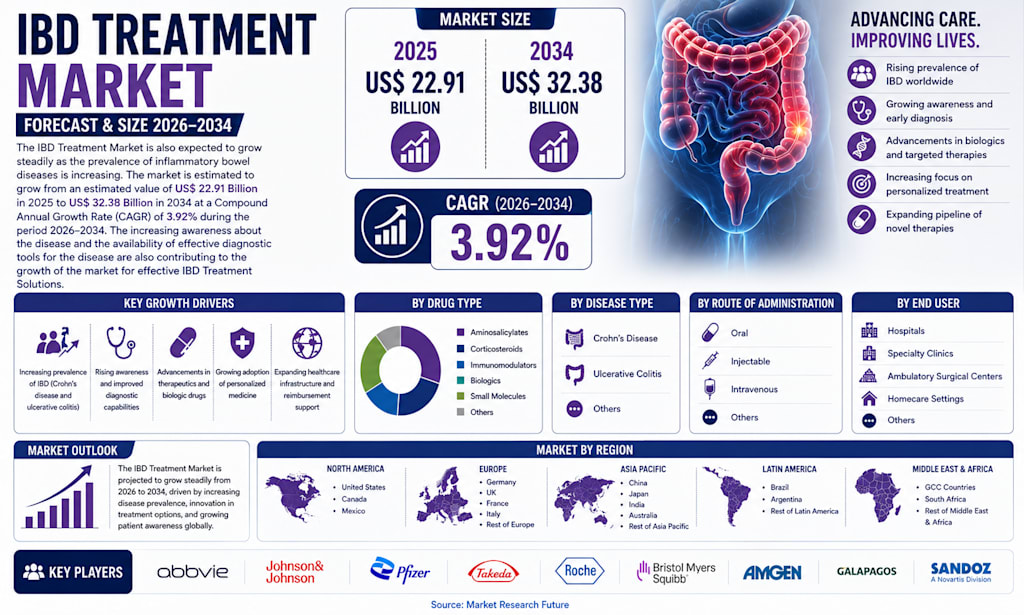
The growing burden of inflammatory bowel diseases, combined with advancements in biologic therapies and personalized medicine, is fueling demand for effective treatment solutions. According to Renub Research, the global IBD Treatment Market is expected to increase from US$ 22.91 billion in 2025 to US$ 32.38 billion by 2034, expanding at a compound annual growth rate (CAGR) of 3.92% between 2026 and 2034. The market's growth reflects increasing awareness of gastrointestinal disorders, improved diagnosis rates, and continued innovation within the healthcare sector.
Understanding Inflammatory Bowel Disease
Inflammatory Bowel Disease refers to a group of chronic disorders characterized by inflammation of the gastrointestinal tract. The two primary forms are Crohn’s Disease and Ulcerative Colitis, both of which can significantly affect digestive function and overall health.
Crohn’s Disease can affect any part of the digestive tract, from the mouth to the anus, and often involves inflammation that extends deep into intestinal tissues. Ulcerative Colitis primarily affects the colon and rectum, causing inflammation and ulcers within the lining of the large intestine.
Although the exact causes of IBD remain unclear, experts believe that a combination of genetic, environmental, immune system, and lifestyle factors contributes to disease development. The chronic nature of these conditions means that patients often experience periods of remission followed by flare-ups that require ongoing medical attention.
While there is currently no permanent cure for IBD, significant progress has been made in managing symptoms, reducing inflammation, and improving patient quality of life through advanced treatment approaches.
Rising Prevalence Is Driving Demand for Treatment
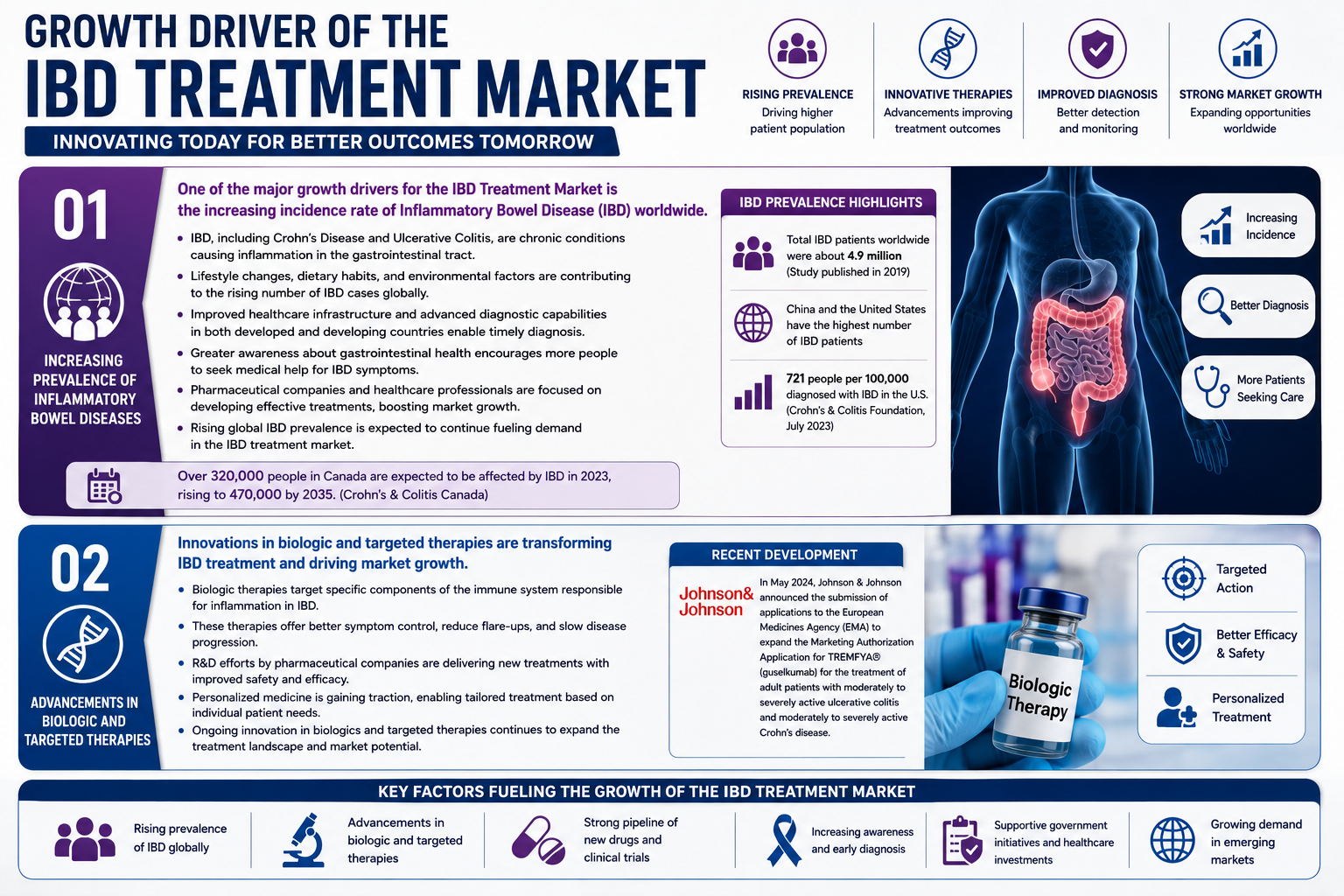
One of the most significant factors contributing to market growth is the increasing prevalence of inflammatory bowel diseases worldwide.
Researchers and healthcare professionals have observed a steady rise in the number of diagnosed cases across many regions. Changes in dietary habits, urban lifestyles, environmental influences, and improved disease awareness have all contributed to higher diagnosis rates.
According to studies referenced in the market analysis, approximately 4.9 million people worldwide were living with IBD, with some of the highest patient populations found in countries such as the United States and China. In North America, the burden continues to grow, with hundreds of thousands of patients requiring ongoing treatment and disease management.
Improved healthcare infrastructure has also played a major role. Modern diagnostic tools enable physicians to identify IBD earlier and more accurately, allowing patients to begin treatment before complications become severe.
As awareness continues to increase and healthcare access improves globally, more patients are expected to seek diagnosis and treatment, supporting continued market expansion.
Biologic Therapies Are Transforming Treatment Approaches
Perhaps the most significant advancement in IBD care has been the emergence of biologic therapies.
Traditional treatment methods primarily focused on reducing inflammation and suppressing immune system activity through corticosteroids and immunosuppressive medications. While effective in many cases, these approaches often provided limited long-term disease control and could be associated with significant side effects.
Biologic therapies have transformed treatment by targeting specific components of the immune system responsible for inflammation. These advanced medications are designed to interfere with the biological pathways that contribute to disease activity, offering more precise treatment strategies.
Patients receiving biologic therapies often experience improved symptom control, reduced disease progression, and longer periods of remission. As a result, biologics have become an increasingly important component of modern IBD management.
Pharmaceutical companies continue investing heavily in research and development to create next-generation biologics that offer improved efficacy and safety profiles. Regulatory submissions and approvals for new therapies continue to expand treatment options for patients worldwide.
Personalized Medicine Is Reshaping Patient Care
The growing focus on personalized medicine is creating new opportunities within the IBD treatment landscape.
Every patient experiences IBD differently. Disease severity, response to treatment, genetic factors, and overall health conditions can vary significantly from one individual to another. Personalized medicine aims to tailor treatment plans according to these unique characteristics.
Healthcare providers increasingly use diagnostic testing, biomarkers, and clinical assessments to determine which therapies are most likely to benefit specific patients. This approach can improve treatment outcomes while reducing unnecessary exposure to medications that may be less effective.
Advances in precision medicine are helping physicians make more informed decisions regarding treatment selection, dosage adjustments, and long-term disease management strategies.
As research continues to improve understanding of disease mechanisms, personalized medicine is expected to become an increasingly important part of IBD care.
Growing Awareness Is Supporting Earlier Diagnosis
Public awareness regarding digestive health has improved considerably in recent years.
Health campaigns, patient advocacy organizations, educational initiatives, and online health resources have helped people recognize symptoms that may indicate gastrointestinal disorders. Individuals experiencing persistent digestive issues are increasingly seeking medical evaluation rather than ignoring symptoms.
At the same time, healthcare providers have gained access to more advanced diagnostic technologies. Endoscopy procedures, imaging systems, laboratory testing, and biomarker analysis enable earlier and more accurate diagnosis of inflammatory bowel diseases.
Earlier diagnosis is particularly important because prompt treatment can help prevent complications and improve long-term outcomes. Patients who receive timely intervention often experience better disease control and improved quality of life.
As awareness continues to expand globally, the number of diagnosed patients is expected to increase, supporting demand for treatment solutions.
Anti-Integrin Therapies Are Gaining Importance
Among the most promising treatment categories are anti-integrin therapies.
These medications work by blocking specific proteins involved in the movement of inflammatory cells into the gastrointestinal tract. By preventing these cells from reaching intestinal tissues, anti-integrin therapies help reduce inflammation and manage disease activity.
One of the key advantages of this approach is its targeted nature. Compared to some broader immune-suppressing therapies, anti-integrin treatments may offer a more selective mechanism of action, potentially reducing certain side effects.
As healthcare providers gain more experience with these therapies and additional clinical evidence becomes available, anti-integrin medications are expected to play an increasingly important role in IBD treatment strategies.
JAK Inhibitors Offer New Treatment Possibilities
Janus kinase (JAK) inhibitors represent another important innovation within the IBD treatment market.
Unlike many biologic therapies that require injections or infusions, JAK inhibitors are administered orally, providing a convenient treatment option for many patients. These medications work by blocking enzymes involved in inflammatory signaling pathways.
Their ability to target specific immune responses has made them particularly attractive for patients who do not respond adequately to traditional therapies. The convenience of oral administration may also improve treatment adherence and patient satisfaction.
As additional research supports their effectiveness, JAK inhibitors are expected to become an increasingly important component of the therapeutic landscape.
Corticosteroids Continue to Play a Critical Role
Despite advances in biologic and targeted therapies, corticosteroids remain an important part of IBD treatment.
These medications are highly effective at rapidly reducing inflammation during acute flare-ups and are often used to bring symptoms under control during the early stages of treatment. Their affordability and widespread availability continue to make them valuable tools for healthcare providers.
However, long-term corticosteroid use is generally avoided due to potential side effects. Instead, they are often used as short-term interventions before transitioning patients to maintenance therapies.
Their continued importance highlights the need for a comprehensive treatment approach that incorporates both traditional and advanced therapeutic options.
Hospitals Remain Central to IBD Care
Hospitals play a vital role in the diagnosis, treatment, and ongoing management of inflammatory bowel diseases.
Modern healthcare facilities provide access to specialized gastroenterology services, advanced diagnostic equipment, multidisciplinary treatment teams, and emergency care when complications arise. Patients with severe disease often require hospital-based treatment, particularly during acute flare-ups.
Hospitals also serve as important centers for administering biologic therapies, conducting diagnostic procedures, and monitoring treatment effectiveness.
As the global prevalence of IBD continues to rise, hospitals will remain central to delivering comprehensive care and supporting long-term disease management.
Regional Markets Show Strong Growth Potential
United States
The United States remains one of the largest and most advanced IBD treatment markets. High disease prevalence, sophisticated healthcare infrastructure, extensive research activity, and strong pharmaceutical innovation continue to support growth. Recent approvals of new therapies are expanding treatment options for patients.
United Kingdom
The United Kingdom benefits from strong healthcare infrastructure and increasing adoption of advanced biologic therapies. Public healthcare services and ongoing medical research contribute to continued market development.
India
India's market is expanding due to growing awareness, improved diagnostic capabilities, and increasing healthcare access. Urbanization and changing lifestyles have contributed to higher diagnosis rates, creating demand for effective treatment solutions.
Saudi Arabia
Saudi Arabia is strengthening its healthcare infrastructure and expanding access to specialized gastrointestinal care. Government investments in healthcare modernization are supporting the growth of the IBD treatment market.
Challenges Facing the Market
Despite positive growth prospects, the IBD treatment market faces several challenges.
One of the most significant barriers is the high cost associated with advanced therapies, particularly biologic medications. Many patients struggle to afford these treatments, especially in regions with limited insurance coverage.
Long-term disease management also presents challenges. Since IBD is a chronic condition, patients often require lifelong treatment, ongoing monitoring, dietary adjustments, and lifestyle modifications.
Additionally, certain therapies may be associated with side effects, infection risks, or reduced effectiveness over time, requiring careful management by healthcare professionals.
Addressing these challenges will remain essential for improving patient access and treatment outcomes.
Market Forecast: Steady Growth Through 2034
According to Renub Research, the global IBD Treatment Market is projected to grow from US$ 22.91 billion in 2025 to US$ 32.38 billion by 2034, reflecting a CAGR of 3.92% during the forecast period from 2026 to 2034. Growth will be driven by increasing disease prevalence, advancements in biologic and targeted therapies, greater healthcare awareness, improved diagnostic capabilities, and expanding access to specialized medical care.
As pharmaceutical innovation continues and healthcare systems strengthen worldwide, the market is expected to experience sustained development over the coming decade.
Final Thoughts
The IBD treatment market is evolving rapidly as medical innovation transforms the management of chronic gastrointestinal diseases. Advances in biologic therapies, targeted treatments, and personalized medicine are providing new hope for millions of patients living with Crohn’s Disease and Ulcerative Colitis.
With Renub Research forecasting market growth from US$ 22.91 billion in 2025 to US$ 32.38 billion by 2034, the industry is positioned for steady expansion. Rising awareness, improved diagnosis, expanding healthcare access, and continued pharmaceutical innovation will remain key drivers shaping the future of the market.
As healthcare providers, researchers, and pharmaceutical companies continue working toward more effective and accessible treatment solutions, patients around the world can expect improved outcomes and better quality of life in the years ahead.
About the Creator
Enjoyed the story? Support the Creator.
Subscribe for free to receive all their stories in your feed.
Comments
There are no comments for this story
Be the first to respond and start the conversation.