
How Will Malaysia’s Fertilizer Market Reach US$ 1.4 Billion as Modern Agriculture Reshapes Farming and Crop Production?
Rising food security concerns, sustainable farming initiatives, and technological innovation are driving a new era of growth in Malaysia’s fertilizer industry.

Agriculture has always played a significant role in Malaysia's economic development. Although manufacturing, tourism, and services have become increasingly important over the years, agriculture remains a vital contributor to employment, exports, and national food security. As the country's population grows and demand for food continues to increase, the pressure on farmers to maximize agricultural productivity has never been greater.
One of the most important tools helping farmers meet these challenges is fertilizer.
Fertilizers are essential for maintaining soil fertility, improving crop health, and increasing agricultural output. They provide crops with the nutrients necessary for growth and help farmers achieve higher yields from limited land resources. In Malaysia, where agricultural activities range from large-scale palm oil plantations to rice farming, fruit cultivation, and vegetable production, fertilizers have become an indispensable component of modern farming.
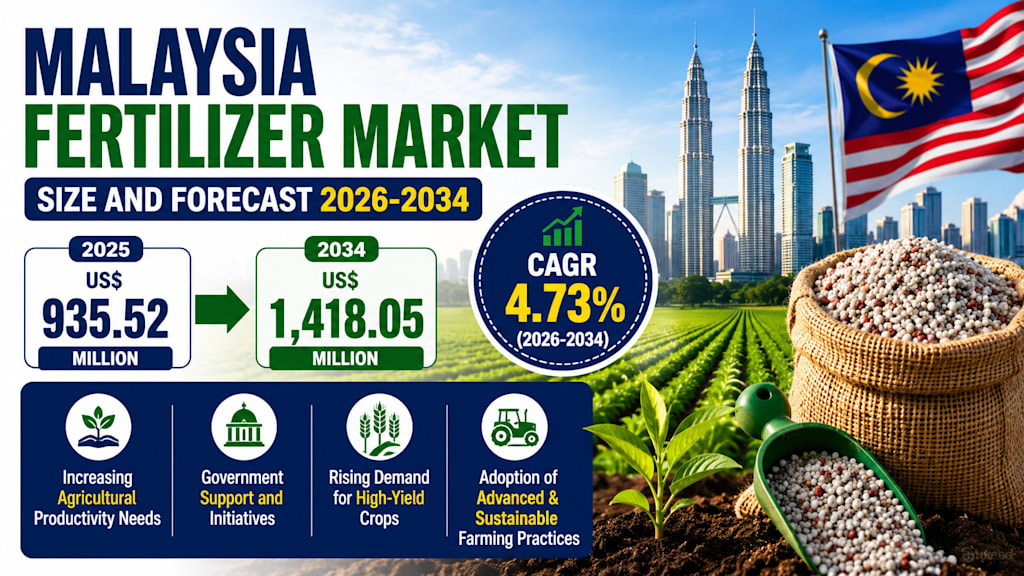
According to Renub Research, the Malaysia Fertilizer Market is expected to grow from US$ 935.52 million in 2025 to US$ 1,418.05 million by 2034, expanding at a compound annual growth rate (CAGR) of 4.73% between 2026 and 2034. The projected growth reflects rising agricultural productivity requirements, increasing demand for high-yield crops, supportive government initiatives, and the growing adoption of advanced and sustainable farming practices.
The market's upward trajectory demonstrates how fertilizers are becoming increasingly important not only for agricultural success but also for the broader goal of ensuring long-term food security and environmental sustainability.
Agriculture's Growing Productivity Challenge
Modern agriculture faces a difficult balancing act. Farmers must produce more food than ever before while dealing with limited arable land, climate-related uncertainties, and increasing pressure to farm sustainably.
Malaysia faces many of the same challenges affecting agricultural economies around the world. Population growth continues to increase food demand, while urbanization reduces the availability of agricultural land. Farmers are expected to improve productivity without compromising environmental health.
Fertilizers provide a practical solution to this challenge by replenishing nutrients that crops remove from the soil during growth cycles. Without proper nutrient replacement, soil fertility declines over time, resulting in lower yields and reduced agricultural efficiency.
By supplying essential nutrients such as nitrogen, phosphorus, and potassium, fertilizers help farmers maximize crop performance while maintaining productive farmland. This growing need for agricultural efficiency continues to support strong demand throughout Malaysia's fertilizer market.
Palm Oil Continues to Drive Demand
Malaysia's fertilizer industry is closely linked to the success of the country's palm oil sector.
As one of the world's leading producers and exporters of palm oil, Malaysia relies heavily on plantation agriculture. Palm oil contributes significantly to export earnings and remains one of the country's most valuable agricultural commodities.
Oil palm cultivation requires substantial nutrient management. These plantations continuously extract nutrients from the soil, making regular fertilizer application essential for maintaining productivity and achieving commercial yields.
The global demand for palm oil remains strong due to its extensive use in food products, cosmetics, personal care items, industrial applications, and biofuel production. To remain competitive in international markets, plantation operators continue investing in advanced fertilizer solutions that enhance crop performance and improve operational efficiency.
As palm oil production expands and productivity targets increase, fertilizer demand is expected to remain robust across major plantation regions.
Government Support Strengthens Market Growth
Government policies continue to play a critical role in supporting Malaysia's agricultural sector and fertilizer market.
Recognizing the importance of agriculture to national food security and economic stability, the government has introduced numerous initiatives designed to improve farming productivity and encourage fertilizer adoption.
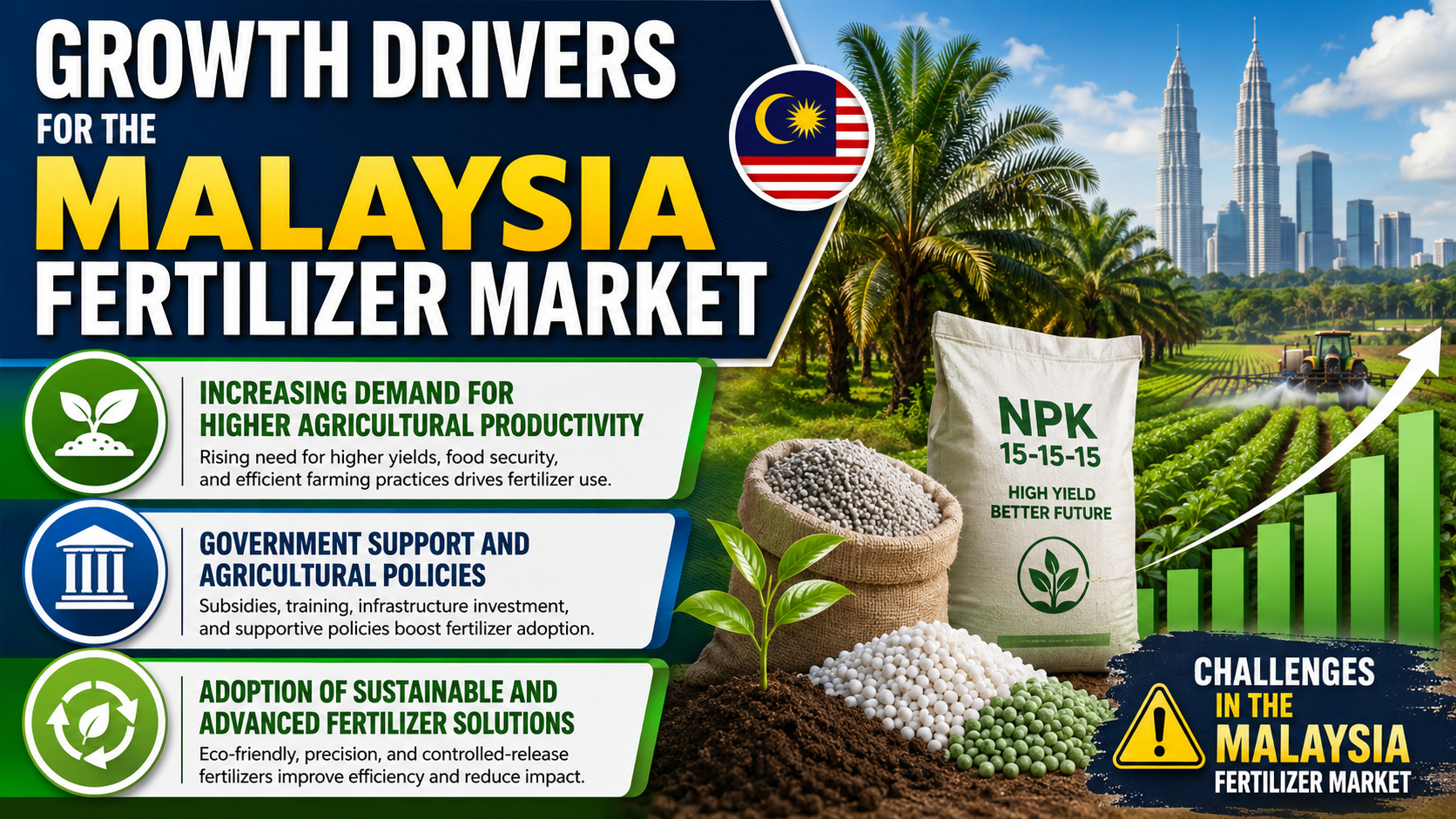
These efforts include fertilizer subsidy programs, agricultural development initiatives, farmer education campaigns, technical assistance services, infrastructure investments, and agricultural research programs.
Subsidies help reduce financial barriers for farmers, enabling wider access to essential agricultural inputs. Training programs educate growers on proper fertilizer application techniques and modern farming methods, helping maximize nutrient efficiency while minimizing waste.
Government investments in research and development also encourage innovation within the fertilizer sector. These initiatives support the creation of more efficient and environmentally friendly products capable of addressing future agricultural challenges.
As policymakers continue prioritizing agricultural development, fertilizer demand is likely to benefit from sustained institutional support.
Technology Is Transforming Modern Farming
Technological innovation is rapidly changing how fertilizers are used across Malaysia's agricultural sector.
Traditional fertilizer application methods often relied on generalized recommendations that did not account for variations in soil conditions or crop requirements. While effective to some extent, these approaches sometimes resulted in inefficient nutrient use and unnecessary environmental impact.
Today, precision agriculture technologies are helping farmers make more informed decisions.
Innovations such as GPS-guided equipment, soil nutrient mapping, smart sensors, drone-based monitoring systems, and digital farm management platforms enable farmers to apply fertilizers with greater accuracy and efficiency.
These technologies help identify specific nutrient deficiencies, optimize fertilizer application rates, and reduce unnecessary input costs. Farmers can improve productivity while simultaneously minimizing environmental impact.
As technology adoption increases, demand for specialized fertilizer products designed to work within precision agriculture systems is expected to grow significantly.
Sustainability Becomes a Major Industry Focus
Environmental sustainability has become one of the most influential trends shaping the future of the fertilizer industry.
Growing concerns regarding water pollution, soil degradation, and greenhouse gas emissions have encouraged governments, manufacturers, and farmers to seek more sustainable agricultural practices.
As a result, fertilizer companies are increasingly developing innovative products that balance productivity with environmental responsibility.
Organic fertilizers, bio-based fertilizers, controlled-release fertilizers, enhanced-efficiency fertilizers, and environmentally friendly nutrient formulations are gaining popularity across the agricultural sector.
Organic fertilizers improve soil structure and biological activity while reducing reliance on synthetic chemicals. Bio-based fertilizers utilize natural processes to enhance nutrient availability and crop performance.
Controlled-release fertilizers represent another important innovation. These products gradually release nutrients over time, improving nutrient utilization while reducing runoff and environmental contamination.
The growing emphasis on sustainable farming is expected to remain a major growth driver throughout the forecast period.
Nitrogen Fertilizers Continue to Dominate
Among all fertilizer categories, nitrogen-based products continue to account for a significant share of market demand.
Nitrogen is essential for plant growth because it supports photosynthesis, leaf development, and overall crop productivity. As a result, nitrogen fertilizers are widely used across multiple agricultural applications.
Popular nitrogen fertilizer products include ammonia, ammonium nitrate, ammonium phosphate, ammonium sulphate, calcium ammonium nitrate, potassium nitrate, urea, urea ammonium nitrate, NK fertilizers, NP fertilizers, and NPK fertilizers.
These products are commonly used across oil palm plantations, cereal cultivation, rice farming, vegetable production, and horticultural operations.
Because of their effectiveness in increasing yields and supporting healthy plant growth, nitrogen fertilizers are expected to maintain their leading position in the Malaysian market.
Organic and Inorganic Fertilizers Both Play Important Roles
The fertilizer market can generally be divided into organic and inorganic categories.
Inorganic fertilizers currently dominate due to their efficiency, affordability, and immediate nutrient availability. Commercial agricultural operations often rely on these products to achieve predictable productivity outcomes.
However, organic fertilizers are becoming increasingly popular as sustainability concerns continue to grow.
Many farmers are adopting integrated nutrient management strategies that combine organic and inorganic fertilizers. This approach helps maintain soil health while ensuring crops receive sufficient nutrients to maximize productivity.
The coexistence of both fertilizer categories reflects the industry's evolving focus on balancing productivity and environmental stewardship.
Regional Markets Create Diverse Opportunities
Malaysia's fertilizer demand is distributed across multiple states, each with distinct agricultural characteristics and growth opportunities.
Selangor benefits from strong infrastructure, efficient logistics networks, and active agricultural operations. Demand is supported by food crop cultivation, horticulture activities, and increasing adoption of modern farming techniques.
Johor remains one of the country's most important agricultural regions, particularly for palm oil production. Strong plantation activity and increasing use of advanced nutrient management systems continue to support fertilizer consumption.
Sarawak offers significant growth potential due to its extensive agricultural land area and expanding plantation activities. Although geographical challenges can affect distribution efficiency, infrastructure investments are helping improve market accessibility.
Penang's fertilizer market benefits from horticulture, urban farming initiatives, agricultural innovation, and growing interest in environmentally sustainable cultivation methods.
Together, these regional markets contribute to the overall expansion of Malaysia's fertilizer industry.
Challenges Facing the Industry
Despite strong growth prospects, the fertilizer market faces several challenges that could influence future development.
One major concern involves fluctuating raw material prices. Fertilizer production relies heavily on inputs such as natural gas and mineral resources, which are subject to global price volatility. Rising input costs can affect manufacturing expenses and create pricing challenges throughout the supply chain.
Supply chain disruptions also present risks. Transportation bottlenecks, geopolitical uncertainties, and global trade disruptions can affect the availability of both raw materials and finished fertilizer products.
Environmental regulations represent another significant challenge. Governments are increasingly implementing stricter guidelines designed to reduce pollution and encourage sustainable agricultural practices.
Compliance often requires substantial investment in research, product innovation, environmental monitoring systems, and sustainable manufacturing technologies. While these measures support long-term environmental goals, they can increase operational costs for fertilizer producers.
Successfully balancing productivity, profitability, and sustainability will remain a critical priority for industry participants.
Competitive Landscape
The Malaysia fertilizer market features a combination of international industry leaders and established regional suppliers.
Major companies operating within the market include Yara International ASA, K+S AG, CF Industries Holdings, Grupa Azoty S.A., ICL Group, OCI N.V., Sociedad Química y Minera de Chile SA, BASF SA, and PhosAgro.
These organizations compete through product innovation, research and development investments, distribution capabilities, and sustainability initiatives.
As demand for advanced and environmentally responsible fertilizers increases, companies are expected to intensify efforts to develop new solutions that improve nutrient efficiency while reducing environmental impact.
Innovation will likely remain one of the most important competitive differentiators throughout the coming decade.
The Future Outlook
The future of Malaysia's fertilizer market appears increasingly promising.
Agricultural modernization, food security concerns, population growth, and sustainability objectives are creating favorable conditions for continued expansion. Farmers are adopting advanced technologies, governments are supporting agricultural productivity initiatives, and manufacturers are investing heavily in innovative fertilizer solutions.
The growing popularity of precision agriculture and environmentally friendly nutrient management strategies will further reshape market dynamics in the years ahead.
As agriculture becomes more technology-driven and sustainability-focused, fertilizers will continue serving as a foundational component of Malaysia's agricultural success.
Final Thoughts
Malaysia's fertilizer industry stands at the intersection of agricultural productivity, technological innovation, and environmental sustainability. As farmers work to produce more food from limited land resources, fertilizers will remain essential for supporting crop yields, maintaining soil health, and ensuring long-term agricultural resilience.
With the market projected to expand from US$ 935.52 million in 2025 to US$ 1,418.05 million by 2034, the sector is positioned for steady growth over the coming decade. Rising demand for food, continued expansion of plantation agriculture, supportive government policies, and the adoption of sustainable farming practices are expected to drive this progress.
For Malaysia, the fertilizer market is about more than agricultural inputs. It represents a critical investment in food security, economic development, and the future sustainability of the nation's agricultural sector.
About the Creator
Enjoyed the story? Support the Creator.
Subscribe for free to receive all their stories in your feed.
Comments
There are no comments for this story
Be the first to respond and start the conversation.