
How to Turn $500 Into $X with This Simple Strategy
How to

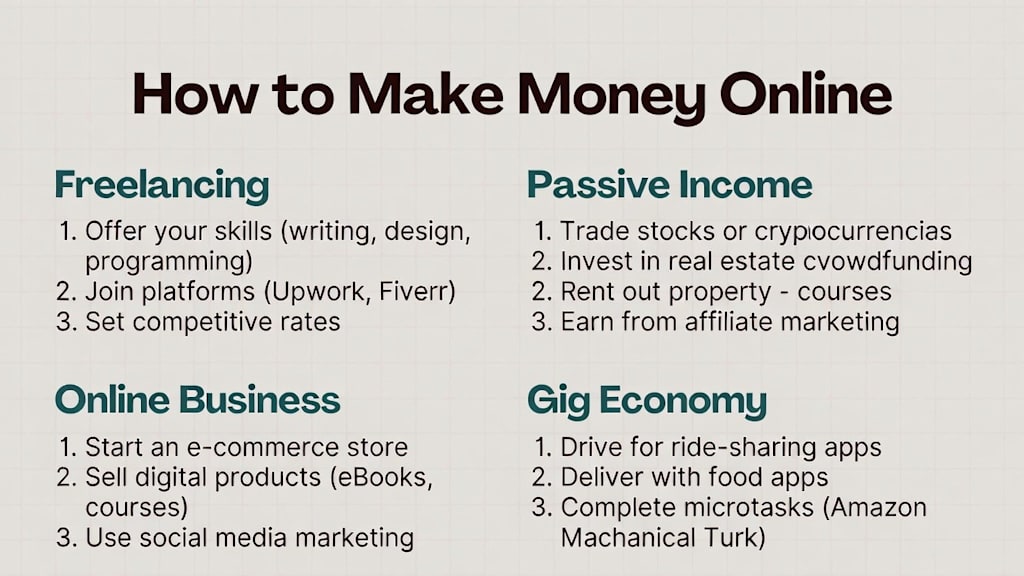
You have $500 in your pocket. You stare at it. You think about the stock market, cryptocurrencies, or some glamorous new dropshipping scheme promising a life of luxury. Stop. This money isn't an investment fund. It's not a ticket to riches. It's a seed. If you treat it like a lottery ticket, it'll be gone in a week. If you treat it like a business, it could be the start of something real.
Most people fail because they chase an instant "big buck." They want to double their money overnight. This mindset is exactly why they stay broke. You don't get rich by gambling. You get rich by hard work.
Limitations are your greatest asset. Having only $500 is actually an advantage. It forces you to be creative. You can't afford expensive advertising, fancy offices, or professional developers. You have to do the work yourself. This limitation keeps you humble. It keeps you focused on the one thing that matters: value.
If you had $50,000, you'd waste it on cheap ads and untested ideas. With $500, you need to be specific. You need to solve a real problem for a real person.
Strategy: The "Assets First" Model
You're not gambling; you're creating a digital asset. This asset could be a niche blog, an affiliate marketing website, a niche content channel, or a small service project. The goal is to create something that generates value even after it's finished.
Here's how to allocate your capital:
1. The Foundation (Cost: $75)
Don't use the rest of the money right now. First, buy your digital property. A domain name and hosting are essential. This is your land. It might not be fancy, but it's yours. Create a simple, fast website. Use an easy-to-use platform that doesn't require writing code. If you don't have programming experience, find a website builder to do it for you. Your site doesn't have to be a masterpiece. The content needs to be practical. It needs to answer a question or solve a problem for the reader.
2. Tools (Cost: $125)
Invest your money in tools that save you time, not things that make you feel like an executive. Get a professional email. Use a reliable social media scheduling tool. Invest in a basic subscription to a keyword research tool. These tools are like the pick and shovel in your digital mine. They help you see what people are actually searching for. Don't guess. Search volume isn't a prediction; it's a map. Use it.
3. Skills Gap (Cost: $100)
Use this amount to buy high-quality, specialized books or technical guides in your field. Ignore those who claim to get rich quick. Buy books on copywriting, sales psychology, or search engine optimization. Information is plentiful. Knowledge is the multiplier. Dedicate a week to reading and applying. This gives you an edge over the millions of people who just want results without learning.
4. Reserve (Remaining: $200)
Keep this amount in the bank. This is your emergency fund. You might need a specific add-on to improve your website's performance. You might need to buy a simple program to automate your content flow. Set it aside. Only spend it when there's a good reason.
Execution
You have the tools. Now, you need the engine. This is where most people stop. They build the website, set up the tools, and wait for the money to flow. It won't.
You need to create content. Write articles. Make videos. Create tutorials. Address the specific, nagging problems your audience is facing. Don't write nonsense. Write something that makes someone say, "Finally, I've found the answer to this question."
If you're in the bodybuilding business, don't just post generic workout lists. Write about the real challenge of staying consistent while working full-time. If you're in finance, explain the complex mechanics of how debt consolidation works, not just "how to get rich."
Be helpful. Be specific. If you're helpful, your affiliate links or the products you promote will eventually turn into sales. People buy from those they trust. Trust is built by consistently providing valuable information.
The Turning Point
You're now working. You have your website, your tools, and your content. You get a few visitors. Maybe you earn $10. Then $20. Then $100.
This is the moment of truth. You feel like spending that $100. Buy a fancy dinner. Treat yourself.
Don't.
Invest that $100 in improving your website. Buy a better tool. Hire a freelance developer to fix a technical glitch that's slowing your site down. Or, if you have a successful article that's driving traffic, use that money to test a more effective call to action.
This is the wheel effect. Small, consistent inputs lead to larger, more consistent outputs. You're not trying to compete with the giants in your field; you're trying to find the small gaps they're overlooking and fill them with better, more human content.
The harsh truth: There's no "trick." There's no secret program that prints money while you sleep. Those who claim to have such programs are selling you an illusion because they can't make money from real work.
You will faceve days where the traffic drops. You will have days where you write something you think is brilliant, and nobody reads it. That is not a sign of failure. It is a sign of life.
The market does not care about your hard work. It only cares about results. If you write boring content, you will get boring results. If you write helpful, sharp, and engaging content, you will grow.
The $500 is gone. It is invested. You have a site, some tools, and a process. Now, your goal is to turn that initial work into a system. Once you hit your first $1,000, you are not successful yet. You are just validated. You have proven the model works. Now, you repeat the cycle.
You take the $1,000. You put it back into the engine. You optimize. You scale. You stop doing the things that do not work and you double down on the things that do.
The math is simple. The work is hard. But that is why most people never do it. They want the outcome without the labor. If you are willing to embrace the boredom, the research, and the constant adjustments, you will find that the path from $500 to $X is not about luck. It is about patience.
Stay focused on the system. Ignore the noise. Keep building. The money is just a byproduct of the value you put into the world. If you provide enough value, the math eventually takes care of itself.
About the Creator
Enjoyed the story? Support the Creator.
Subscribe for free to receive all their stories in your feed.
Comments
There are no comments for this story
Be the first to respond and start the conversation.