
How AI Trading Platforms Are Changing Automated Trading in 2026
AI Trading Platforms
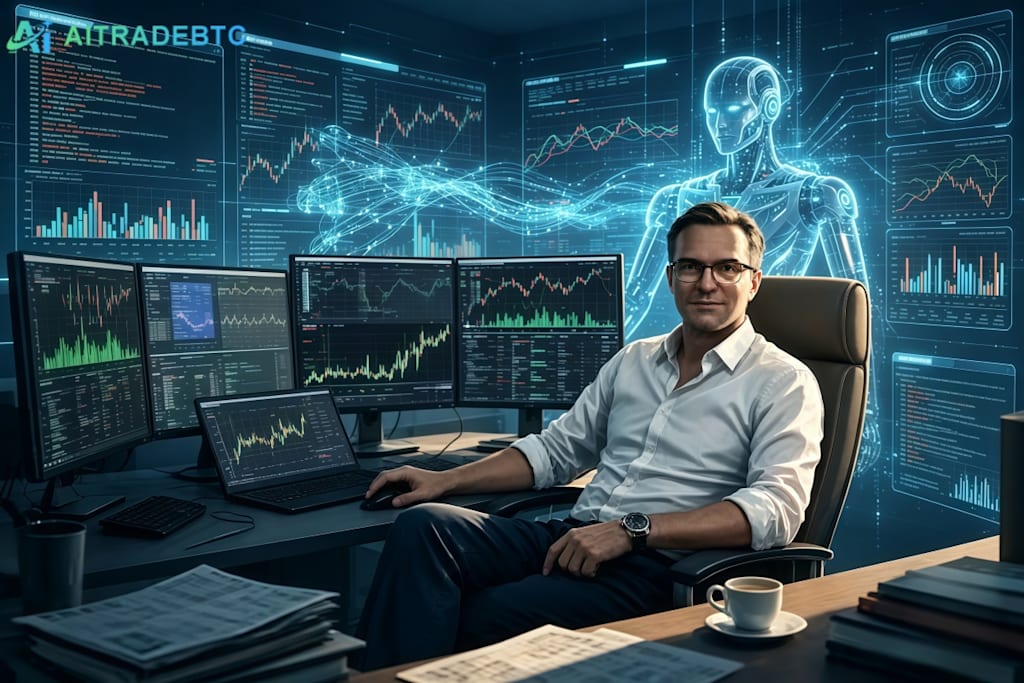
Artificial intelligence has become one of the biggest influences in financial technology over the last few years. In 2026, automated systems are increasingly being used to monitor markets, process data, and execute trading decisions faster than manual traders can react. As cryptocurrency and digital asset markets continue operating around the clock, many traders are looking for systems capable of responding to rapid market changes in real time.
This shift has contributed to the growing popularity of AI-powered trading platforms. These systems are designed to analyze large amounts of market information continuously while reducing the need for constant manual involvement.
Among the platforms gaining attention in this space is AiTradeBtc, which focuses on automated trading systems driven by algorithmic analysis and AI-supported market monitoring.
Why Automated Trading Is Becoming More Common
Financial markets move much faster today than they did a decade ago. Cryptocurrency trading in particular operates twenty-four hours a day across multiple exchanges worldwide. This creates an environment where price movements can happen within seconds.
For individual traders, monitoring several markets continuously is extremely difficult. Automated trading systems attempt to solve this problem by scanning data constantly and responding to predefined market conditions without requiring users to remain active at all times.
One reason these systems are becoming more widely adopted is their ability to react quickly during short-term price fluctuations. Human traders often struggle to process large amounts of market information simultaneously, while AI-based systems can evaluate multiple conditions at once.
As a result, algorithmic trading has become increasingly common among both experienced traders and newer market participants.
The Role of Artificial Intelligence in Trading Systems
Artificial intelligence is now used in many areas of financial technology because of its ability to analyze patterns and process information rapidly.
Modern AI trading systems often rely on machine learning models, historical market analysis, and predictive algorithms to identify potential opportunities. These systems are designed to evaluate price movement, volatility, market trends, and trading volume in real time.
Some platforms also use adaptive strategies that adjust according to changing market conditions rather than relying on a single fixed method. This flexibility is one of the reasons AI-based systems are becoming more important in fast-moving markets.
Developments in AI models, including technologies influenced by large-scale language systems and predictive analysis tools, have accelerated the growth of automated financial platforms globally.
Understanding Arbitrage and Short-Term Market Gaps
One strategy receiving renewed attention in automated trading is arbitrage. Arbitrage involves identifying small price differences between markets or exchanges and attempting to benefit from those temporary gaps.
Because these opportunities often exist for only a short period of time, speed becomes extremely important. AI-driven systems are generally more capable of responding to these rapid market conditions than manual traders.
Automated platforms can monitor multiple exchanges simultaneously and execute actions immediately when specific conditions appear. This ability to process and react quickly is one reason arbitrage strategies are commonly associated with AI trading infrastructure.
However, market conditions remain unpredictable, and no automated system can completely eliminate financial risk.
How AI-Based Trading Platforms Operate
Most automated trading systems operate by following predefined algorithms that determine how trades are analyzed and executed.
Users typically select a participation structure or trading model, after which the system manages market activity automatically. The platform continues monitoring market conditions, tracking price movement, and adjusting activity according to programmed strategies.
Instead of manually entering and exiting trades, users rely on the system’s automation process to manage operations continuously in the background.
This type of setup appeals to individuals who may not have the time or technical experience required for active day trading.
The Growing Focus on User Accessibility
One major reason AI trading platforms are expanding is accessibility. Earlier forms of algorithmic trading often required technical expertise, coding knowledge, or advanced market experience.
Modern platforms attempt to simplify this process by creating user dashboards, automated workflows, and mobile access systems that are easier for non-technical users to navigate.
Platforms such as AiTradeBtc are part of this broader industry movement toward making automated trading systems more accessible to a wider audience.
At the same time, simplified access has also increased discussions about transparency, risk awareness, and responsible participation within financial technology platforms.
Risk Management in Automated Trading
Despite advancements in automation, financial markets remain highly volatile. AI systems may improve execution speed and data analysis, but they cannot guarantee profits or remove market uncertainty.
Because of this, risk management tools have become an important part of modern trading systems. Many platforms now include monitoring systems designed to manage exposure levels, trading cycles, and volatility conditions more carefully.
Risk controls are especially important in cryptocurrency markets, where sudden price swings can occur frequently. Automated systems must balance responsiveness with protection against excessive exposure during unstable conditions.
As AI trading becomes more common, regulatory attention around transparency and risk disclosure is also increasing globally.
Mobile Access and Continuous Market Participation
The expansion of mobile technology has also influenced the growth of automated trading platforms. Many users now expect to monitor trading activity directly from smartphones and tablets rather than desktop-only systems.
This demand has encouraged platforms to improve mobile accessibility and real-time monitoring tools. According to current platform information, “AiTradeBtc mobile app is now available on both Android and iOS.”
Mobile integration allows users to review account activity, monitor trading cycles, and receive updates without remaining connected to desktop platforms throughout the day.
As financial technology becomes more mobile-focused, accessibility will likely remain a major area of development.
The Future of AI in Financial Markets
Artificial intelligence is expected to play an even larger role in financial systems over the next several years. Automated analysis, predictive modeling, and real-time execution technologies continue improving rapidly.
At the same time, the industry faces ongoing discussions regarding regulation, transparency, security, and ethical use of automated financial systems. Governments and financial authorities in many countries are increasingly examining how AI-driven trading platforms operate.
Future developments may involve stronger oversight, improved transparency standards, and more advanced AI systems capable of adapting to increasingly complex market conditions.
The balance between automation efficiency and financial responsibility will likely remain one of the most important issues shaping the future of AI trading technology.
Conclusion
AI-powered trading systems are becoming an increasingly visible part of modern financial technology. As cryptocurrency and digital asset markets continue operating at high speed, many users are turning toward automated platforms that can monitor and react to market conditions continuously.
Platforms such as AiTradeBtc reflect the broader shift toward AI-assisted trading infrastructure, where automation, data analysis, and real-time responsiveness are becoming central features of digital trading environments.
While automated systems may improve efficiency and accessibility, financial markets remain unpredictable, making risk awareness and informed participation essential for anyone exploring AI-driven trading technologies.
About the Creator
Enjoyed the story? Support the Creator.
Subscribe for free to receive all their stories in your feed.
Comments
There are no comments for this story
Be the first to respond and start the conversation.