
Hormone Replacement Therapy Market Expands as Aging Population and Menopause Awareness Drive Global Demand
Growing awareness about hormonal health, rising menopause management needs, and advances in personalized therapies are accelerating growth in the global hormone replacement therapy market.

Hormone Replacement Therapy Market Overview
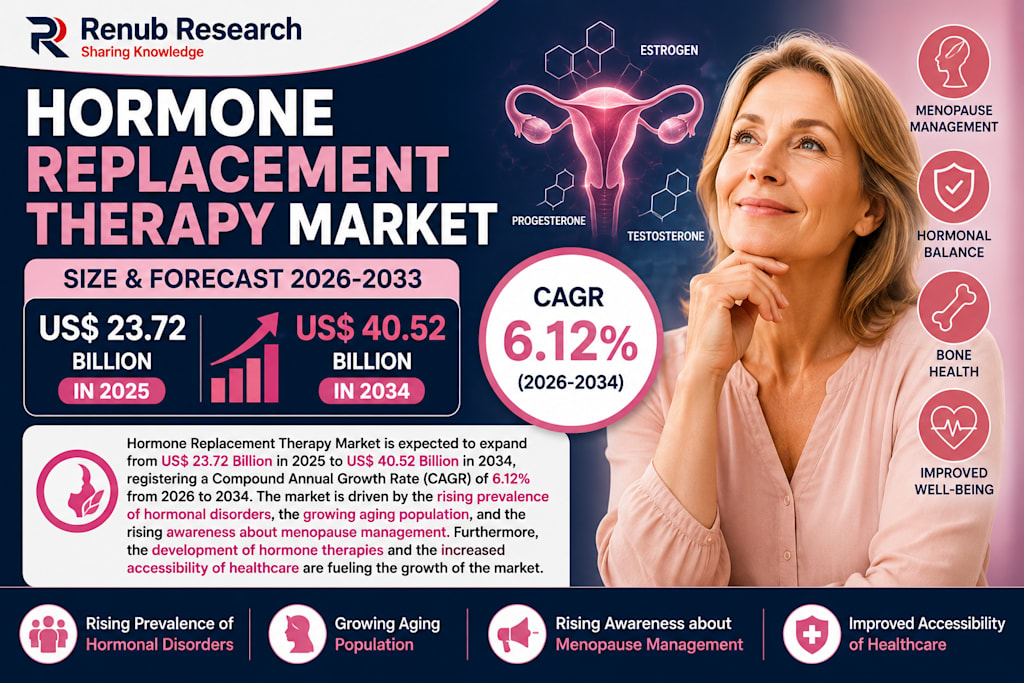
The global hormone replacement therapy (HRT) market is witnessing strong growth as healthcare systems increasingly focus on hormonal health, menopause management, and age-related wellness. According to Renub Research, the hormone replacement therapy market is expected to rise from US$ 23.72 billion in 2025 to US$ 40.52 billion by 2034, registering a compound annual growth rate (CAGR) of 6.12% from 2026 to 2034. The market is being driven by the increasing prevalence of hormonal disorders, a rapidly aging population, improved healthcare accessibility, and growing awareness regarding hormone-related treatments.
Hormone replacement therapy is a medical treatment designed to restore hormonal balance in individuals whose natural hormone production has declined or become imbalanced. It is most commonly associated with menopause treatment in women, where declining estrogen and progesterone levels can lead to symptoms such as hot flashes, mood swings, insomnia, night sweats, and bone density loss.
However, HRT is not limited to menopause care alone. It is also widely used for thyroid disorders, testosterone deficiencies, growth hormone imbalances, and other endocrine-related conditions. Available in forms such as tablets, patches, gels, injections, and creams, hormone replacement therapies are becoming increasingly personalized and patient-friendly.
Aging Population Is Becoming the Biggest Market Driver
One of the strongest factors contributing to the expansion of the hormone replacement therapy market is the rapid growth of the aging population worldwide. As life expectancy rises, a larger percentage of the global population is entering age groups more vulnerable to hormonal imbalances and endocrine disorders.
Women between the ages of 45 and 55 commonly experience menopause, which naturally reduces estrogen and progesterone production. This hormonal decline can significantly impact physical and emotional well-being, creating demand for therapies that help manage symptoms and improve quality of life.
The report highlights that women aged 50 years and older accounted for 22% of the global female population in 2011, increasing to 26% after a decade. The United Nations estimates that the number of women aged 50 years and older worldwide could rise from 985 million in 2020 to 1.65 billion by 2050. This demographic shift is expected to substantially increase demand for hormone replacement therapies in the coming decades.
Men are also contributing to market growth. Low testosterone levels among aging male populations are increasing demand for testosterone replacement therapies aimed at improving energy, muscle mass, mood, and overall quality of life.
As people live longer and remain more health-conscious, hormonal wellness is becoming an increasingly important part of preventive healthcare.
Growing Awareness Around Hormonal Health Is Changing Attitudes
Public awareness regarding hormonal disorders and hormone therapy has improved significantly over the last decade. Educational campaigns, media discussions, women’s health initiatives, and healthcare advocacy programs are helping normalize conversations around menopause, thyroid disorders, and testosterone deficiencies.
Historically, hormonal health issues were often under-discussed or overlooked. Today, patients are more informed and proactive about seeking medical support for symptoms that affect their lifestyle, emotional health, and long-term wellness.
Healthcare professionals are also becoming more active in recommending hormone replacement therapies where appropriate. Doctors increasingly recognize the role hormone therapies can play in preventing complications such as osteoporosis, cardiovascular risks, and metabolic issues linked to hormonal imbalances.
The growing acceptance of hormone therapy is also being supported by the availability of multiple treatment formats. Patients can now choose between oral medications, patches, topical gels, injections, implants, and creams depending on their comfort and medical needs.
The rise of preventive healthcare and wellness-focused lifestyles is further encouraging adoption. Consumers are increasingly interested in maintaining quality of life, healthy aging, and long-term vitality rather than simply treating diseases after they appear.
Personalized Hormone Therapies Are Reshaping the Market
Advancements in medical technology and pharmaceutical research are significantly improving hormone replacement therapy products. Companies are developing therapies that are safer, more effective, and more personalized than earlier treatment generations.
One of the most important developments is the rise of personalized medicine. Healthcare providers can now tailor hormone treatments based on a patient’s medical history, hormone levels, age, lifestyle, and risk profile. This personalized approach improves treatment outcomes while reducing the risk of side effects.
Innovations such as transdermal patches, topical gels, slow-release implants, and bioidentical hormones are transforming patient experiences. These therapies provide controlled hormone delivery and are often considered more convenient and safer than older oral treatments.
Bioidentical hormones are gaining attention because they closely resemble hormones naturally produced by the human body. Many patients and healthcare professionals view these therapies as more compatible with the body’s natural hormonal balance.
The pharmaceutical industry continues investing heavily in research and development to improve efficacy, safety, and patient compliance. These innovations are strengthening consumer confidence and encouraging wider adoption of advanced hormone therapies.
Menopause Management Is Becoming a Major Healthcare Focus
Menopause hormone replacement therapy remains one of the largest and most important segments within the market. As awareness around menopause grows, more women are seeking medical solutions to manage symptoms and maintain quality of life.
Menopause can cause a wide range of physical and emotional challenges, including hot flashes, mood changes, insomnia, reduced bone density, vaginal dryness, and fatigue. Hormone replacement therapy helps balance hormone levels and reduce symptom severity.
Longer life expectancy is also contributing to demand because women now spend a larger portion of their lives in post-menopausal stages. Maintaining health and wellness after menopause has become a growing priority globally.
Healthcare providers increasingly support menopause management as part of broader women’s healthcare strategies. Educational initiatives and improved access to specialists are helping more women understand their treatment options.
As social stigma surrounding menopause continues to decline, patient willingness to discuss hormonal health openly is increasing. This shift is expected to support long-term market growth.
Thyroid Hormone Replacement Therapy Sees Rising Demand
The thyroid hormone replacement therapy segment is expanding steadily due to increasing cases of hypothyroidism and other thyroid disorders worldwide.
Hypothyroidism occurs when the thyroid gland fails to produce sufficient hormones, leading to symptoms such as fatigue, weight gain, depression, and slowed metabolism. Thyroid hormone replacement therapy helps restore normal hormone levels and improve body function.
Improved diagnostic technologies and growing public awareness about thyroid health are contributing to earlier detection and treatment. Women and elderly individuals remain among the most affected groups, creating strong long-term demand for thyroid-related therapies.
Healthcare professionals are also emphasizing the importance of continuous monitoring and proper management of thyroid disorders, supporting recurring demand for treatment solutions.
Estrogen Therapy Continues to Dominate the Market
Estrogen hormone replacement therapy remains one of the most widely used forms of HRT because of its effectiveness in treating menopause symptoms.
Estrogen therapy helps alleviate hot flashes, night sweats, vaginal dryness, and mood disturbances while also supporting bone health and reducing osteoporosis risks.
Increasing awareness regarding women’s health and improved access to healthcare services are encouraging more women to consider estrogen therapy under medical supervision.
Improved formulations and better safety monitoring have also strengthened patient confidence in estrogen-based treatments.
As the global female aging population continues to expand, estrogen hormone replacement therapy is expected to remain a major revenue contributor within the broader HRT industry.
Oral Hormone Replacement Therapy Maintains Strong Popularity
Oral hormone replacement therapy continues to remain highly popular because of its convenience, accessibility, and ease of administration.
Tablets remain a preferred option for many patients due to their familiarity and non-invasive nature. Oral therapies are commonly used for menopause treatment, thyroid hormone replacement, and other endocrine conditions.
The wide availability of oral medications through hospitals, clinics, pharmacies, and retail healthcare networks supports consistent demand.
Although newer delivery systems such as patches and gels are gaining popularity, oral therapies continue to dominate because of affordability and patient comfort.
Hospitals and Pharmacies Play a Critical Role in Market Growth
Hospitals and pharmacies remain central to the distribution and management of hormone replacement therapies. Hospitals provide diagnosis, treatment planning, monitoring, and patient education related to hormonal disorders.
Healthcare professionals ensure patients receive appropriate dosage levels while monitoring potential side effects and treatment outcomes.
Pharmacies, including retail and hospital pharmacies, play a crucial role in improving treatment accessibility. Growing pharmacy networks and better healthcare infrastructure are making hormone therapies more widely available, particularly in developing regions.
Online pharmacies are also becoming increasingly important as digital healthcare platforms expand globally.
Safety Concerns Continue to Influence Market Perception
Despite strong market growth, safety concerns remain one of the biggest challenges affecting hormone replacement therapy adoption.
Certain studies have suggested that long-term hormone therapy may increase the risk of conditions such as breast cancer, stroke, blood clots, and cardiovascular complications in some patients. These concerns have made some patients and healthcare providers cautious regarding treatment duration and eligibility.
Individual responses to hormone therapy can also vary significantly. Some patients may experience side effects such as headaches, nausea, mood swings, or weight gain.
As a result, healthcare professionals must carefully evaluate each patient’s medical history, hormone profile, and overall risk factors before prescribing treatment.
The pharmaceutical industry continues investing in safer formulations and personalized therapies to reduce risks and improve patient outcomes. However, safety concerns are likely to remain an important factor shaping patient decisions and regulatory oversight.
High Treatment Costs Limit Accessibility in Some Regions
Cost remains another significant challenge for the hormone replacement therapy market. Advanced hormone formulations, personalized treatment programs, and long-term therapies can create financial burdens for patients, especially in regions with limited insurance coverage.
Healthcare disparities also affect accessibility. In some developing nations, lack of healthcare infrastructure, specialist availability, and awareness about hormonal disorders can restrict market penetration.
Although generic therapies are helping improve affordability, access inequality remains a major challenge globally.
United States Market Benefits from Strong Awareness and Healthcare Access
The United States remains one of the largest hormone replacement therapy markets globally due to high awareness regarding hormonal health and widespread access to advanced healthcare services.
Growing demand for menopause management, thyroid treatment, and hormonal wellness programs continues supporting market expansion.
The presence of specialized clinics, strong pharmaceutical distribution networks, and supportive insurance systems further strengthens the U.S. market.
Technological advancements and improved safety profiles of newer therapies are also encouraging patient adoption across the country.
United Kingdom Market Expands Through Public Healthcare Support
The United Kingdom hormone replacement therapy market is growing steadily due to increased awareness surrounding menopause management and support from public healthcare systems.
Educational initiatives and public health campaigns have improved understanding of hormone-related health issues. Access to healthcare professionals, pharmacies, and prescription treatments continues supporting market demand.
Safer formulations and new product launches are also helping strengthen patient confidence in hormone therapies.
India Emerges as a Fast-Growing Hormone Therapy Market
India’s hormone replacement therapy market is expanding rapidly due to improving healthcare infrastructure, rising awareness regarding hormonal disorders, and increasing accessibility to healthcare services.
Urbanization, lifestyle changes, and rising thyroid disorder prevalence are contributing heavily to demand growth.
Government healthcare programs, local pharmaceutical manufacturing, and affordable treatment options are helping improve accessibility across urban and semi-urban areas.
The expansion of hospitals, clinics, and pharmacy networks is also strengthening the country’s hormone therapy ecosystem.
Saudi Arabia Focuses on Women’s Hormonal Health Awareness
Saudi Arabia is witnessing growing demand for hormone replacement therapy as healthcare investment and awareness regarding hormonal health continue increasing.
The country’s focus on preventive healthcare, women’s wellness, and healthcare modernization is improving access to hormone-related treatments.
Hospitals and pharmacies are expanding their services related to menopause management and endocrine health, while awareness campaigns are encouraging more women to seek medical guidance.
Healthcare infrastructure improvements under broader national development strategies are expected to continue supporting market growth.
Competitive Landscape
The hormone replacement therapy market includes several leading pharmaceutical and healthcare companies competing through innovation, product development, and personalized treatment solutions.
Key players mentioned in the market include Abbott Laboratories, Bayer AG, Eli Lilly & Company, Novartis AG, Novo Nordisk A/S, Pfizer Inc., AbbVie Inc., Teva Pharmaceutical Industries Ltd., and Dr. Reddy’s Laboratories Ltd.
These companies continue investing in safer therapies, advanced drug delivery systems, bioidentical hormones, and patient-focused healthcare solutions.
Future Outlook for the Hormone Replacement Therapy Market
The future of the hormone replacement therapy market appears highly promising as healthcare systems increasingly recognize hormonal health as an essential part of overall wellness and preventive medicine.
Personalized medicine, digital healthcare integration, and improved diagnostic capabilities are expected to reshape hormone therapy approaches in the coming years.
Rising awareness regarding menopause, thyroid disorders, testosterone deficiency, and aging-related hormonal changes will likely continue driving demand globally.
At the same time, pharmaceutical companies will continue focusing on safety improvements, patient convenience, and affordable access to strengthen long-term market adoption.
Final Thoughts
The hormone replacement therapy market is evolving rapidly as hormonal wellness becomes a larger part of global healthcare conversations. With the market expected to expand from US$ 23.72 billion in 2025 to US$ 40.52 billion by 2034, growing at a 6.12% CAGR from 2026 to 2034, the industry is positioned for substantial long-term growth.
An aging global population, greater awareness regarding hormonal health, improved healthcare accessibility, and continuous pharmaceutical innovation are all contributing to the market’s strong momentum. As attitudes toward menopause management and hormone therapy continue to evolve, hormone replacement therapy is expected to become an increasingly important component of modern preventive healthcare.
About the Creator
Enjoyed the story? Support the Creator.
Subscribe for free to receive all their stories in your feed.
Comments
There are no comments for this story
Be the first to respond and start the conversation.