
Home Infusion Therapy Market Set to Reach US$74 Billion by 2034 as Healthcare Moves Beyond Hospital Walls
Rising chronic diseases, aging populations, and advances in medical technology are accelerating the global shift toward home-based healthcare.

The healthcare industry is experiencing a significant transformation as treatment models increasingly move away from traditional hospital settings and into patients' homes. Among the most promising developments in this shift is home infusion therapy, a healthcare service that enables patients to receive intravenous medications, hydration, nutrition, and specialty treatments in a comfortable home environment.
As healthcare systems worldwide face growing pressure from rising chronic disease rates, aging populations, and escalating treatment costs, home infusion therapy is emerging as a practical and cost-effective solution. Patients benefit from greater convenience and comfort, while healthcare providers can reduce hospital overcrowding and operational expenses.
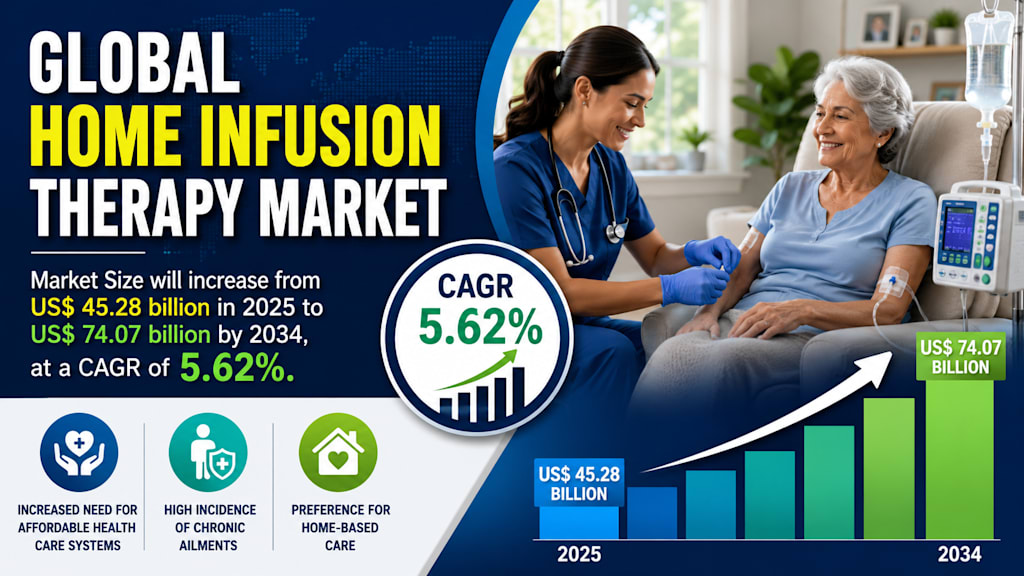
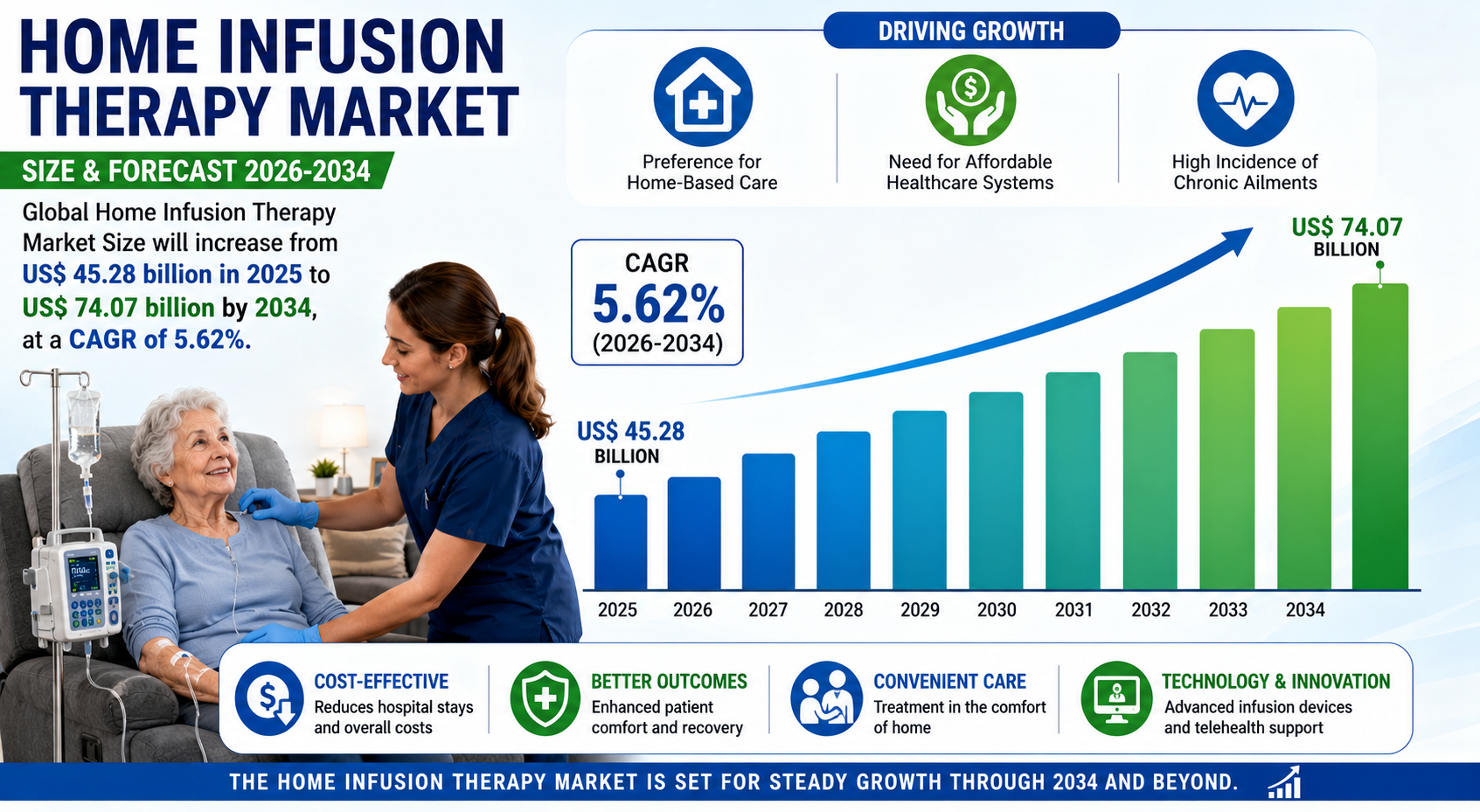
According to Renub Research, the Global Home Infusion Therapy Market is expected to grow from US$45.28 billion in 2025 to US$74.07 billion by 2034, registering a compound annual growth rate (CAGR) of 5.62% during the forecast period. This impressive growth highlights the increasing acceptance of home-based treatment models and the expanding role of technology in healthcare delivery.
Understanding Home Infusion Therapy
Home infusion therapy refers to the administration of medications or biological products through intravenous or subcutaneous routes in a patient's home. Healthcare professionals supervise these treatments, while advanced infusion pumps and monitoring systems help ensure safe and accurate medication delivery.
The therapy is commonly used for patients requiring long-term treatment for chronic conditions, severe infections, nutritional deficiencies, and complex medical disorders. Medications delivered through home infusion therapy include antibiotics, chemotherapy drugs, pain management medications, hydration fluids, parenteral nutrition solutions, and immunotherapies.
The increasing popularity of home infusion therapy is largely driven by its ability to deliver hospital-quality care in a familiar and comfortable environment. Patients can maintain their daily routines while avoiding lengthy hospital stays and repeated clinic visits. Furthermore, receiving treatment at home often reduces the risk of hospital-acquired infections, an important consideration for individuals with weakened immune systems.
Why the Market Is Growing So Rapidly
Several powerful factors are contributing to the rapid growth of the home infusion therapy industry across both developed and emerging economies.
The Global Rise of Chronic Diseases
One of the most important drivers of market growth is the increasing prevalence of chronic diseases worldwide.
Conditions such as cancer, diabetes, autoimmune disorders, gastrointestinal diseases, and severe infections frequently require long-term treatment plans involving intravenous medications, nutritional support, or specialized therapies. Traditional hospital-based care can be expensive, inconvenient, and resource-intensive for both patients and healthcare providers.
According to data referenced in the market report, approximately 10 million people worldwide died from cancer in 2021. Additionally, nearly 589 million adults were living with diabetes, a figure projected to rise to 853 million by 2050. These statistics illustrate the growing demand for treatment solutions capable of supporting large patient populations efficiently.
Home infusion therapy addresses this challenge by providing continuous medical care outside hospital settings while maintaining treatment effectiveness. Patients suffering from chronic conditions can receive ongoing care with fewer disruptions to their personal lives, improving both treatment adherence and quality of life.
Reducing Healthcare Costs
Healthcare spending continues to increase globally, placing pressure on governments, insurers, healthcare providers, and patients.
Traditional inpatient treatment involves numerous costs, including hospital room charges, nursing services, facility operations, and continuous monitoring. Home infusion therapy offers a more affordable alternative without sacrificing treatment quality.
According to the National Home Infusion Association data referenced in the report, the average cost of home infusion therapy ranges between US$122 and US$225 per day. In contrast, inpatient hospital treatment typically costs between US$586 and US$798 per day, depending on the type of care provided.
These cost advantages make home infusion therapy an attractive option for healthcare systems seeking to improve efficiency while managing rising expenditures. As a result, governments and insurance providers are increasingly supporting home-based treatment programs.
The Impact of Aging Populations
Population aging is another major factor supporting market growth.
Advances in healthcare and improved living standards have increased life expectancy across many countries. While this represents a positive achievement, it has also led to a growing number of older adults living with chronic medical conditions that require ongoing treatment.
Many elderly patients prefer receiving care in their homes rather than spending extended periods in hospitals or healthcare facilities. Home infusion therapy provides an ideal solution by allowing patients to receive essential treatments while maintaining independence and comfort.
As the global elderly population continues to expand, demand for home healthcare services is expected to rise significantly, creating long-term growth opportunities for the home infusion therapy industry.
Technology Is Making Home Care Smarter
Technological innovation has played a crucial role in the evolution and success of home infusion therapy.
Modern infusion devices have become significantly more advanced, offering enhanced safety, accuracy, and convenience. Today's infusion pumps are equipped with programmable delivery systems, wireless communication features, real-time monitoring capabilities, and automated alerts that help reduce treatment errors.
Healthcare professionals can remotely monitor patients through telehealth platforms, allowing them to assess treatment progress, adjust medication schedules, and provide support without requiring in-person visits. This digital integration improves patient outcomes while reducing travel requirements and healthcare costs.
Technology also empowers patients and caregivers by making infusion devices easier to use and more reliable. As innovation continues, home infusion therapy is expected to become even more accessible and efficient.
The growing adoption of smart healthcare technologies represents one of the strongest growth opportunities for the market over the coming decade.
Key Market Segments Driving Demand
The home infusion therapy market consists of several important product categories and treatment applications that collectively support industry growth.
Home Infusion Pumps
Infusion pumps are among the most critical components of home-based therapy. These devices ensure the safe and precise administration of medications, fluids, antibiotics, chemotherapy drugs, and nutritional solutions.
The increasing demand for portable and intelligent infusion pumps is driving significant innovation within the industry. Manufacturers are focusing on improving device accuracy, patient mobility, remote monitoring capabilities, and ease of use.
As more patients transition from hospital-based care to home treatment, demand for advanced infusion pump technologies is expected to continue rising.
Intravenous Sets and Accessories
Intravenous sets play a vital role in the safe delivery of medications during home infusion therapy.
These products include tubing systems, connectors, catheters, needles, and various accessories that facilitate intravenous administration. Manufacturers are increasingly incorporating safety-focused features such as needle-free connectors, anti-kink tubing, and infection-prevention technologies.
The growing emphasis on patient safety and infection control is expected to support continued demand for high-quality intravenous sets and accessories.
Home Infusion Hydration Therapy
Hydration therapy has become an increasingly important segment of the home infusion market.
Patients experiencing dehydration due to chronic illnesses, gastrointestinal disorders, cancer treatments, infections, or post-surgical recovery often require intravenous fluid administration. Receiving hydration therapy at home allows patients to recover comfortably while avoiding unnecessary hospital visits.
The increasing focus on preventive healthcare and patient-centered treatment models is expected to drive growth in this segment throughout the forecast period.
Home-Based Chemotherapy
Cancer care remains one of the most important applications of home infusion therapy.
Many cancer patients require multiple chemotherapy cycles over extended periods. Home-based chemotherapy enables eligible patients to receive treatment in familiar surroundings, reducing travel burdens and improving overall treatment experiences.
In addition to enhancing patient comfort, home chemotherapy helps lower hospitalization costs and reduce exposure to hospital-acquired infections. Advances in portable infusion pumps and specialized oncology nursing services are further supporting market growth in this segment.
Challenges Facing the Industry
Despite strong growth prospects, the home infusion therapy market faces several challenges that must be addressed to ensure sustainable expansion.
Safety and Clinical Risks
Administering complex medical treatments outside controlled hospital environments introduces potential risks.
Patients may experience catheter-related infections, medication dosage errors, equipment malfunctions, or adverse drug reactions. Since continuous medical supervision is not always available in home settings, proper patient education and caregiver training become essential.
Healthcare providers must invest in comprehensive monitoring systems and professional support services to minimize risks and maintain high standards of patient safety.
Workforce Shortages
The success of home infusion therapy depends heavily on qualified healthcare professionals.
Unfortunately, many regions face shortages of skilled nurses and home healthcare specialists. Rural and underserved communities are particularly affected, limiting access to home-based treatment services.
Addressing workforce shortages through training programs and healthcare investments will be critical for future market growth.
Reimbursement and Insurance Challenges
Although home infusion therapy often reduces overall healthcare expenses, the initial costs associated with equipment, medications, and professional services can still be significant.
Inconsistent reimbursement policies and varying levels of insurance coverage remain barriers in certain markets. Expanding reimbursement support and developing standardized healthcare policies could help accelerate adoption worldwide.
Regional Growth Trends
United States
The United States continues to dominate the global home infusion therapy market due to its advanced healthcare infrastructure, large elderly population, and high prevalence of chronic diseases.
Strong reimbursement support from Medicare and private insurance providers has contributed to widespread adoption. Healthcare organizations are increasingly investing in home healthcare services as a strategy for reducing hospital admissions and improving patient outcomes.
Germany
Germany represents one of Europe's most important home infusion therapy markets.
The country's well-developed healthcare system, supportive reimbursement environment, and growing demand for home-based healthcare services have contributed to market expansion. Increasing awareness of the benefits associated with home treatment continues to support growth.
India
India is emerging as a high-growth market driven by rising healthcare costs, increasing chronic disease prevalence, and expanding healthcare awareness.
Urban hospitals often face capacity constraints, creating opportunities for alternative treatment models. The growing adoption of telemedicine and increased private-sector investment in home healthcare services are expected to strengthen the market further.
Saudi Arabia
Saudi Arabia's healthcare modernization initiatives under Vision 2030 are supporting the growth of home healthcare services, including home infusion therapy.
Rising rates of chronic diseases, greater investment in digital health technologies, and increasing patient preference for home-based care are creating favorable market conditions throughout the country.
Competitive Landscape
The global home infusion therapy market features a diverse mix of pharmaceutical companies, medical device manufacturers, and healthcare service providers working to improve patient outcomes through innovation and expanded service offerings.
Major industry participants include Pfizer Inc., Smith & Nephew plc, Terumo Corporation, Johnson & Johnson Services, Inc., Becton, Dickinson and Company, Baxter International Inc., ICU Medical, and Eli Lilly and Company. These organizations continue investing in advanced infusion technologies, remote monitoring systems, and specialized healthcare solutions designed to meet the growing demand for home-based treatments.
Final Thoughts
Home infusion therapy is rapidly becoming one of the most important developments in modern healthcare. By combining advanced medical technology with patient-centered care, it offers a practical solution to many of the challenges facing healthcare systems today.
The ability to provide hospital-quality treatment in the comfort of a patient's home delivers benefits for everyone involved. Patients experience greater convenience and improved quality of life, healthcare providers reduce operational burdens, and insurers gain access to more cost-effective treatment models.
With the global market expected to grow from US$45.28 billion in 2025 to US$74.07 billion by 2034, home infusion therapy is poised to play a critical role in the future of healthcare delivery. As technology continues to advance and healthcare systems increasingly embrace home-based care, the industry is likely to become an even more essential part of patient treatment worldwide.
About the Creator
Enjoyed the story? Support the Creator.
Subscribe for free to receive all their stories in your feed.
Comments
There are no comments for this story
Be the first to respond and start the conversation.