
Heart Attack Treatment Is Entering a New Era of Innovation and Precision Healthcare
Rising Cardiovascular Disease Cases, Advanced Diagnostics, and Innovative Therapies Are Driving Growth in the Global Myocardial Infarction Market

Cardiovascular disease remains one of the greatest healthcare challenges worldwide, affecting hundreds of millions of people and placing enormous pressure on healthcare systems. Among cardiovascular conditions, myocardial infarction—commonly known as a heart attack—continues to be one of the leading causes of death and disability across both developed and emerging economies.
Fortunately, remarkable advances in diagnostic technologies, emergency treatment protocols, pharmaceutical therapies, and healthcare infrastructure are transforming how myocardial infarction is detected, treated, and managed. These improvements are helping physicians save more lives while reducing long-term complications and improving patient outcomes.
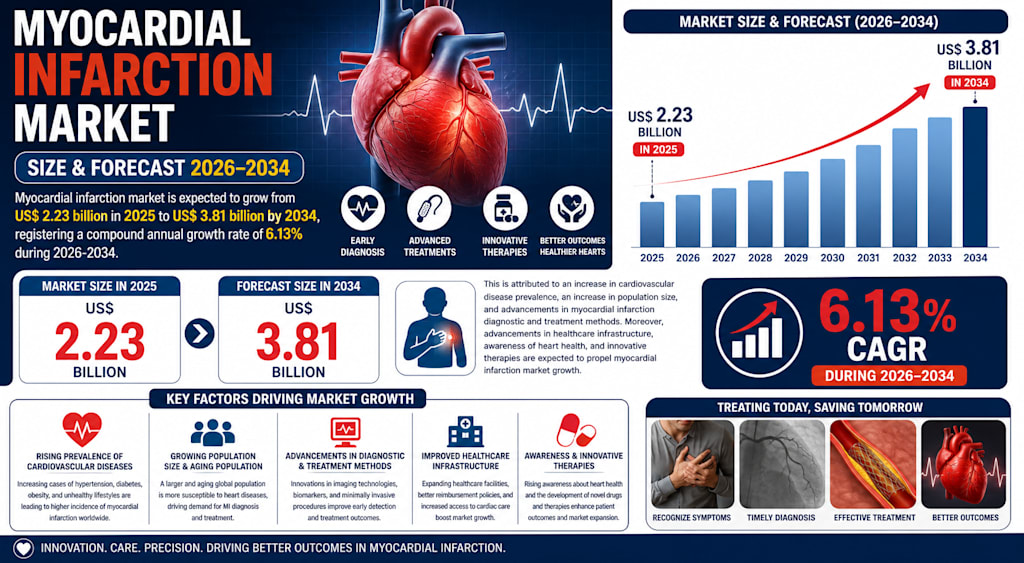
According to Renub Research, the Myocardial Infarction Market is projected to grow from US$ 2.23 billion in 2025 to US$ 3.81 billion by 2034, registering a compound annual growth rate (CAGR) of 6.13% between 2026 and 2034. Rising cardiovascular disease prevalence, increasing healthcare investments, technological advancements, and growing awareness of heart health are among the major factors driving market expansion.
As healthcare providers increasingly focus on early diagnosis and personalized treatment strategies, the myocardial infarction market is entering a period of significant innovation and growth.
Understanding Myocardial Infarction
Myocardial infarction occurs when blood flow to a portion of the heart muscle is suddenly blocked, usually due to a blood clot in one of the coronary arteries.
When oxygen-rich blood can no longer reach the affected area, heart tissue begins to suffer damage.
Without immediate treatment, permanent injury to the heart muscle can occur, potentially resulting in life-threatening complications.
Common symptoms include:
- Severe chest pain or pressure
- Shortness of breath
- Fatigue and weakness
- Pain radiating to the arms, neck, jaw, or back
- Nausea and dizziness
Rapid diagnosis and treatment are essential because every minute without adequate blood flow increases the risk of irreversible heart damage.
Modern healthcare systems are therefore investing heavily in technologies and therapies that improve emergency response and clinical outcomes.
Cardiovascular Disease Is Driving Market Growth
One of the strongest growth drivers for the myocardial infarction market is the increasing global burden of cardiovascular disease.
Lifestyle-related risk factors continue contributing to higher rates of heart attacks worldwide.
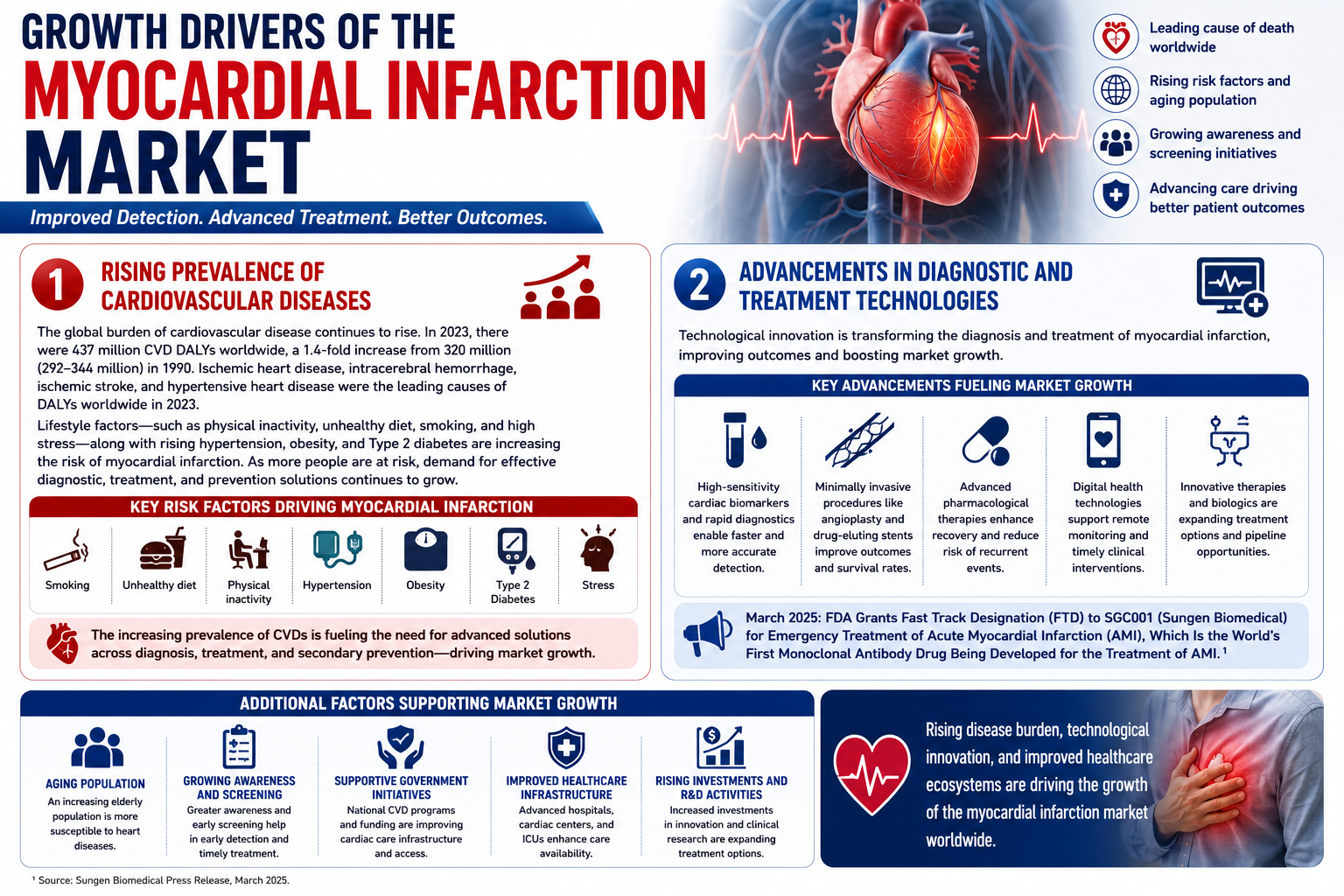
Poor dietary habits, smoking, obesity, physical inactivity, chronic stress, hypertension, and Type 2 diabetes have all become increasingly common.
According to data highlighted in the report, global cardiovascular disease disability-adjusted life years (DALYs) reached approximately 437 million in 2023, representing a significant increase from 1990 levels. Ischemic heart disease remains one of the largest contributors to cardiovascular disease burden worldwide.
As populations age and lifestyle-related risk factors continue rising, healthcare providers are witnessing growing demand for advanced cardiac diagnostics, treatments, and preventive solutions.
This expanding patient population is creating substantial opportunities throughout the myocardial infarction market.
Early Diagnosis Is Improving Survival Rates
One of the most important developments in myocardial infarction care is the rapid advancement of diagnostic technologies.
Early diagnosis significantly improves survival outcomes because treatment can begin before extensive heart damage occurs.
Modern healthcare facilities increasingly utilize high-sensitivity cardiac biomarkers capable of detecting heart attacks much earlier than traditional diagnostic methods.
Rapid blood tests, advanced electrocardiography systems, and sophisticated imaging technologies allow physicians to identify myocardial infarction quickly and accurately.
Earlier diagnosis helps reduce treatment delays while improving patient prognosis.
As hospitals continue investing in advanced diagnostic infrastructure, healthcare providers are becoming better equipped to manage cardiac emergencies effectively.
The growing emphasis on rapid detection remains a major driver of market growth.
Innovative Therapies Are Reshaping Treatment
Technological innovation continues transforming myocardial infarction treatment.
Modern treatment strategies focus on restoring blood flow as quickly as possible while minimizing damage to heart tissue.
Minimally invasive procedures such as angioplasty and coronary stenting have dramatically improved patient outcomes.
Drug-eluting stents and advanced catheter-based interventions help reopen blocked arteries while reducing complications and recurrence rates.
Pharmaceutical innovation is also accelerating.
In March 2025, the U.S. Food and Drug Administration granted Fast Track Designation to SGC001, the world's first monoclonal antibody therapy being developed specifically for emergency treatment of acute myocardial infarction.
Such developments highlight the growing focus on innovative therapies designed to improve survival and recovery.
As clinical research continues advancing, next-generation treatments are expected to further transform patient care.
Healthcare Investments Are Supporting Market Expansion
Healthcare infrastructure investments are playing a critical role in market growth.
Governments and healthcare organizations worldwide are investing heavily in hospitals, diagnostic equipment, emergency medical services, and cardiovascular treatment centers.
Public awareness campaigns are also helping educate individuals about heart attack symptoms, prevention strategies, and the importance of seeking immediate medical care.
Greater awareness encourages earlier diagnosis and faster treatment, both of which contribute to improved outcomes.
A notable example occurred in November 2025 when Manulife launched its Longevity Institute, backed by a US$ 350 million commitment to support research, innovation, and healthier aging initiatives worldwide.
These investments help strengthen healthcare systems while expanding access to advanced cardiovascular care.
Antiplatelet Agents Continue to Dominate Treatment
Antiplatelet agents remain among the most important drug categories used in myocardial infarction management.
These medications help prevent blood clot formation by reducing platelet aggregation within coronary arteries.
Patients who experience heart attacks often require long-term antiplatelet therapy to reduce recurrence risk.
Healthcare providers widely prescribe these drugs because they significantly improve survival rates and reduce future cardiovascular events.
Ongoing pharmaceutical innovation is helping improve efficacy while minimizing side effects.
As preventive cardiovascular care becomes increasingly important, demand for antiplatelet therapies is expected to remain strong.
Antithrombotic Therapies Are Expanding
The antithrombotic agents segment also plays a vital role in myocardial infarction treatment.
These therapies include anticoagulants and thrombolytic agents that help dissolve existing blood clots and prevent new clot formation.
Timely administration of antithrombotic medications can significantly improve outcomes during acute myocardial infarction events.
Recent advancements have focused on improving safety profiles while maintaining strong clinical effectiveness.
As cardiovascular disease prevalence continues increasing globally, demand for antithrombotic therapies is expected to grow steadily.
Hospitals Remain the Primary Treatment Centers
Hospitals represent the largest end-user segment within the myocardial infarction market.
Patients experiencing heart attacks require immediate access to emergency care, diagnostic services, intensive monitoring, and specialized cardiac interventions.
Modern hospitals increasingly feature dedicated cardiac care units equipped with advanced imaging technologies, catheterization laboratories, and highly trained cardiovascular specialists.
Continuous improvements in hospital infrastructure are helping increase survival rates and reduce long-term complications.
Healthcare providers are also placing greater emphasis on post-treatment rehabilitation and patient education programs designed to improve recovery outcomes.
As cardiovascular emergencies continue rising, hospitals will remain central to myocardial infarction management.
Digital Health Is Enhancing Cardiac Care
Digital health technologies are becoming increasingly important in cardiovascular medicine.
Remote monitoring systems, wearable devices, artificial intelligence platforms, and telemedicine solutions are helping physicians track patient health more effectively.
These technologies support earlier intervention, better medication adherence, and improved long-term disease management.
Artificial intelligence is also being used to assist with diagnostic interpretation and risk assessment.
In June 2025, Alphaiota and PMcardio announced plans to introduce the first AI-powered heart attack diagnostic solution in Saudi Arabia, marking an important milestone for cardiovascular healthcare innovation in the region.
Digital transformation is expected to remain a key driver of future market growth.
Regional Markets Driving Expansion
United States
The United States remains one of the world's most advanced myocardial infarction markets due to strong healthcare infrastructure, extensive cardiovascular research, and widespread access to advanced treatments. FDA approval of LODOCO as the first anti-inflammatory atheroprotective therapy for reducing cardiovascular risk represents an important milestone in treatment innovation.
United Kingdom
The United Kingdom continues advancing cardiovascular care through NHS-supported treatment programs and ongoing clinical research. The approval of the LIBERATE clinical study investigating glenzocimab highlights the country's commitment to innovative heart attack therapies.
India
India's myocardial infarction market is growing rapidly due to rising cardiovascular disease prevalence, urbanization, and increasing healthcare awareness. Initiatives such as the STEMI project are helping improve emergency cardiac care access across the country.
Saudi Arabia
Saudi Arabia continues investing heavily in cardiovascular healthcare infrastructure while adopting advanced diagnostic technologies and treatment solutions as part of broader healthcare modernization efforts.
Challenges Facing the Market
High Treatment Costs
Myocardial infarction treatment often involves expensive diagnostic procedures, medications, hospital stays, angioplasty, stenting, and long-term rehabilitation.
These costs can create significant financial burdens for patients, particularly in low- and middle-income countries.
Long-Term Patient Management
Even after successful treatment, patients remain at risk of recurrent heart attacks, heart failure, and other cardiovascular complications.
Maintaining medication adherence, lifestyle modifications, and ongoing medical supervision can be challenging.
Improving long-term disease management remains a key priority for healthcare providers.
Final Thoughts
Myocardial infarction continues to represent one of the most significant healthcare challenges worldwide, but advances in diagnostics, treatment technologies, and healthcare infrastructure are transforming patient outcomes.
According to Renub Research, the Myocardial Infarction Market is expected to grow from US$ 2.23 billion in 2025 to US$ 3.81 billion by 2034, reflecting strong demand driven by rising cardiovascular disease prevalence, healthcare investments, and medical innovation.
As researchers develop more effective therapies, hospitals adopt advanced technologies, and awareness of heart health continues increasing, the future of myocardial infarction care appears increasingly promising.
The next generation of cardiac care will not focus solely on treating heart attacks—it will emphasize prevention, early detection, personalized medicine, and long-term cardiovascular wellness that helps patients live longer, healthier lives.
About the Creator
Enjoyed the story? Support the Creator.
Subscribe for free to receive all their stories in your feed.
Comments
There are no comments for this story
Be the first to respond and start the conversation.