
Halal Cosmetics Market Poised for Remarkable Growth as Ethical Beauty Trends Reshape the Global Industry
Rising demand for clean-label, cruelty-free, and halal-certified beauty products is transforming consumer preferences and creating new opportunities across the global cosmetics sector.

Introduction: A New Era for Ethical Beauty
The global beauty industry is undergoing a major transformation. Consumers are no longer choosing products solely based on appearance, branding, or price. Instead, they are increasingly paying attention to ingredients, manufacturing practices, ethical sourcing, and product certifications. This shift has created significant opportunities for the halal cosmetics industry, a segment that combines beauty, transparency, quality, and ethical production standards.
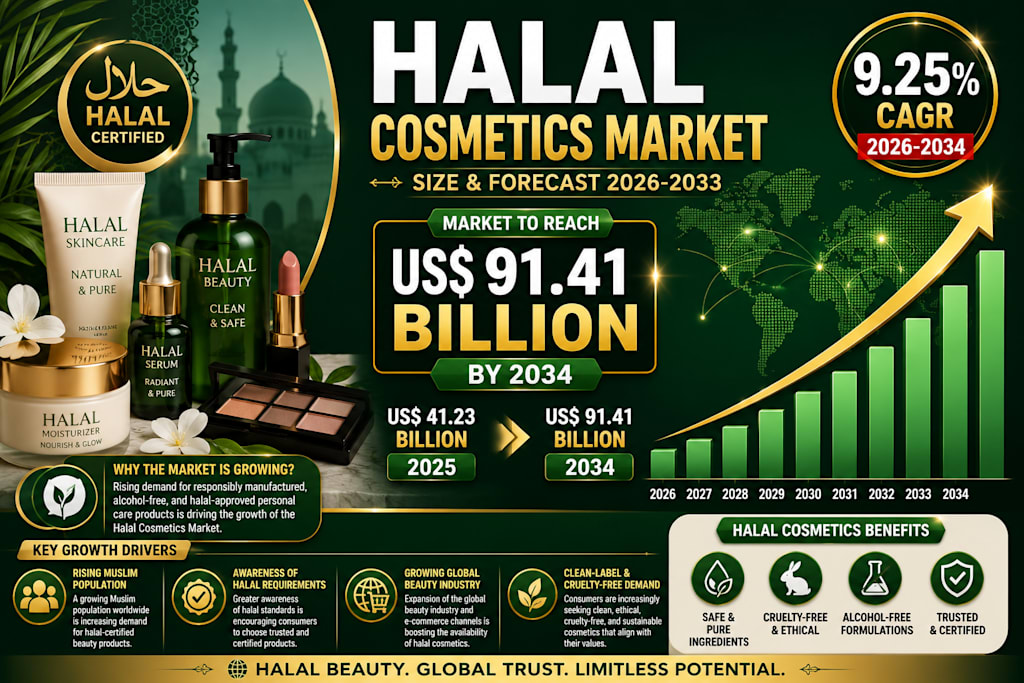
According to Renub Research, the Halal Cosmetics Market is expected to grow from US$ 41.23 billion in 2025 to US$ 91.41 billion by 2034, registering a compound annual growth rate (CAGR) of 9.25% between 2026 and 2034. The growing Muslim population, increasing awareness of halal standards, rising demand for responsibly manufactured products, and the global preference for clean-label cosmetics are among the major factors fueling market expansion.
What makes this growth particularly noteworthy is that halal cosmetics are no longer appealing only to Muslim consumers. Increasingly, people from diverse backgrounds are embracing halal-certified products because they are associated with quality, transparency, safety, and ethical manufacturing.
Understanding Halal Cosmetics
Halal cosmetics refer to personal care and beauty products that are manufactured, processed, and packaged according to Islamic principles and ethical standards. These products do not contain ingredients derived from prohibited sources such as pork, alcohol, or non-halal animal derivatives.
Beyond ingredient restrictions, halal cosmetics are also produced using strict hygiene standards and ethical manufacturing processes. Many halal-certified products are cruelty-free and align closely with modern consumer expectations regarding sustainability, safety, and transparency. Common product categories include skincare products, makeup items, hair care products, fragrances, and personal care essentials. The halal certification process ensures compliance with both religious requirements and rigorous quality standards.
As consumers become more conscious about what they apply to their skin and hair, halal cosmetics are increasingly being viewed as a trustworthy alternative to conventional beauty products.
Growing Muslim Population Is Creating Strong Demand
One of the most significant growth drivers for the halal cosmetics market is the steady expansion of the global Muslim population.
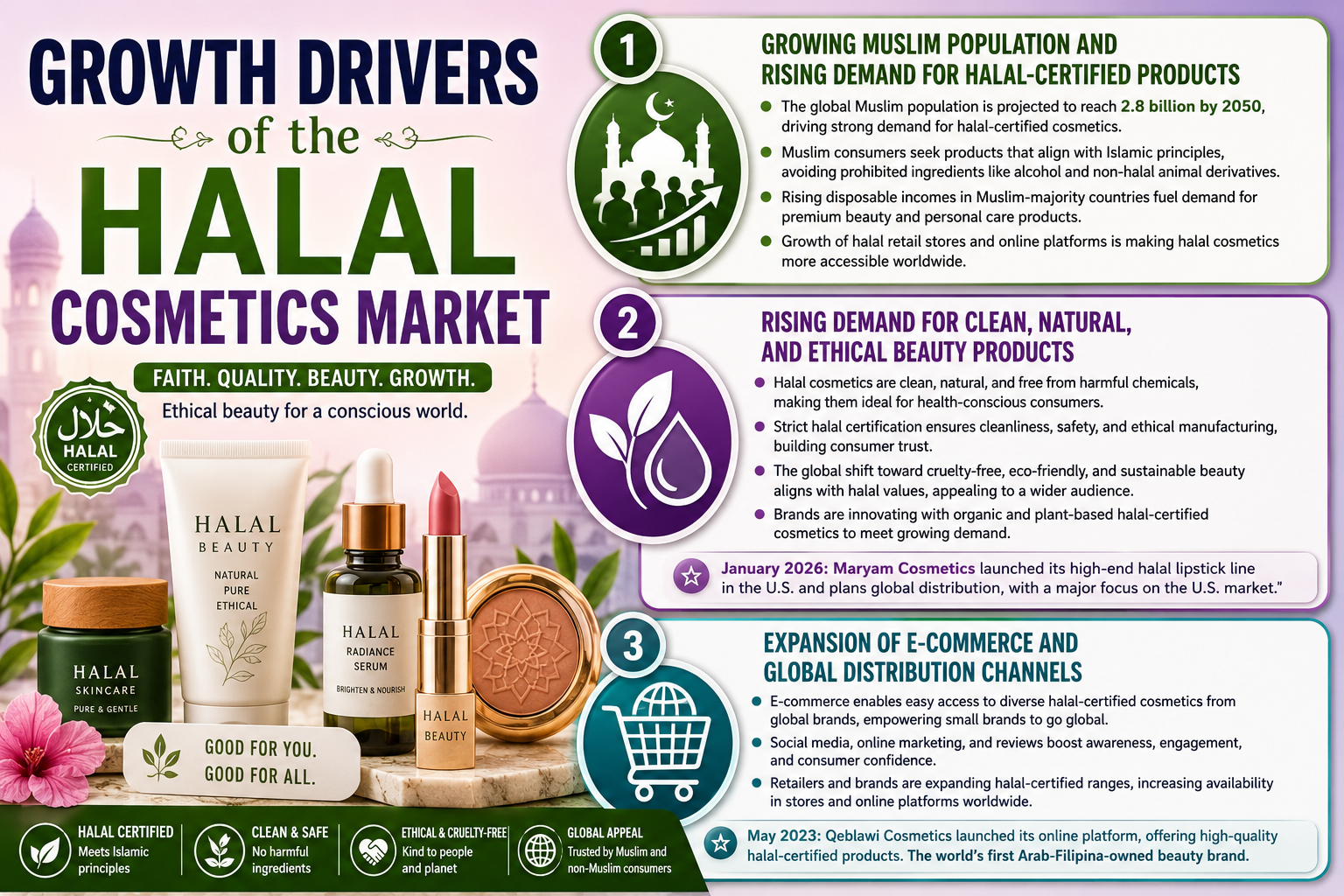
According to the report, the Muslim population worldwide is expected to grow from approximately 1.6 billion people in 2010 to 2.8 billion by 2050. This demographic shift is creating substantial demand for halal-certified personal care and cosmetic products across both developed and emerging markets.
Muslim consumers are actively seeking products that align with their religious beliefs and ethical values. They want assurance that cosmetic products do not contain prohibited ingredients and that manufacturing processes comply with halal standards.
At the same time, increasing disposable incomes across many Muslim-majority countries are contributing to greater spending on premium beauty and personal care products. As purchasing power rises, consumers are becoming more selective about product quality, certifications, and ingredient transparency.
This combination of demographic growth and increased consumer spending is creating a powerful foundation for long-term market expansion.
Clean Beauty Trends Are Accelerating Adoption
The rise of clean beauty is another major force supporting the halal cosmetics industry.
Consumers today are increasingly concerned about synthetic chemicals, artificial additives, and potentially harmful ingredients commonly found in traditional cosmetic products. As a result, demand for natural, organic, and ethically produced alternatives continues to increase.
Halal cosmetics fit naturally into this trend because they emphasize purity, transparency, safety, and responsible manufacturing. Many consumers associate halal-certified products with cleaner ingredient lists and higher production standards. As awareness grows, halal cosmetics are becoming attractive not only to Muslim consumers but also to individuals seeking healthier beauty choices.
The growing popularity of cruelty-free products further strengthens this trend. Ethical consumerism is becoming a key purchasing factor, particularly among younger generations who prioritize sustainability and social responsibility when selecting brands.
This alignment between halal principles and modern beauty expectations is helping halal cosmetics gain mainstream acceptance across multiple regions.
Ethical Manufacturing Builds Consumer Trust
Trust has become one of the most valuable assets in the beauty industry.
Consumers increasingly want to know where ingredients come from, how products are made, and whether companies follow ethical business practices. Halal certification provides an additional layer of credibility because products must meet strict standards before receiving approval.
The certification process covers ingredient sourcing, production methods, hygiene practices, packaging procedures, and overall quality control. This level of oversight helps reassure consumers that products meet specific ethical and safety requirements.
As misinformation and ingredient concerns continue to influence consumer behavior, certified halal cosmetics offer a level of transparency that many shoppers find appealing.
This growing trust is helping halal-certified brands compete successfully against conventional beauty companies in both niche and mainstream markets.
E-Commerce Is Expanding Market Reach
The rapid growth of e-commerce has played a major role in the expansion of the halal cosmetics market.
Online platforms have made it easier than ever for consumers to discover, compare, and purchase halal-certified products from around the world. Previously, access to halal cosmetics was often limited to specialty stores or specific geographic regions. Today, digital marketplaces have removed many of those barriers.
Consumers can now read product reviews, verify halal certifications, compare ingredients, and make informed purchasing decisions from their smartphones or computers. Social media platforms, beauty influencers, and digital marketing campaigns have also increased awareness and visibility for halal beauty brands.
The report highlights how companies are leveraging online channels to expand globally. Small and emerging brands can now reach international audiences without the significant costs associated with traditional retail expansion.
As internet penetration continues to grow worldwide, e-commerce is expected to remain one of the most important drivers of halal cosmetics sales.
Color Cosmetics Are Experiencing Strong Growth
Color cosmetics represent one of the most dynamic segments within the halal cosmetics industry.
Products such as lipsticks, foundations, blushes, mascaras, and eye makeup are increasingly being developed with halal-certified formulations. Consumers are demanding beauty products that deliver performance while also meeting religious and ethical requirements.
Manufacturers are responding by creating innovative formulas that offer long-lasting wear, skin-friendly ingredients, and enhanced product quality. The growing popularity of clean-label cosmetics has also increased interest in halal-certified color cosmetics among non-Muslim consumers.
As beauty trends continue to evolve, this segment is expected to remain a major contributor to market growth.
Personal Care Products Are Becoming a Key Category
The halal personal care segment is also expanding rapidly.
Products such as shampoos, conditioners, soaps, body lotions, deodorants, and skincare essentials are increasingly being offered with halal certification. Consumers are paying closer attention to ingredient transparency and are actively seeking alternatives that align with both health and ethical considerations.
Halal personal care products are manufactured under strict hygiene conditions and often avoid ingredients that many consumers prefer to avoid regardless of religious background. This broad appeal is helping companies attract a wider customer base.
As awareness surrounding wellness, hygiene, and ethical consumption continues to grow, demand for halal personal care products is expected to remain strong.
Skincare and Face Cosmetics Lead Innovation
Among product categories, skincare and facial cosmetics are attracting significant investment and innovation.
Consumers increasingly view skincare as a long-term wellness investment rather than simply a cosmetic purchase. This shift has encouraged manufacturers to develop halal-certified moisturizers, cleansers, serums, anti-aging products, and facial treatments that emphasize both effectiveness and ingredient safety.
The demand for natural and plant-based ingredients has accelerated research and development efforts across the industry. Companies are focusing on creating products that combine advanced skincare science with halal-compliant formulations.
As concerns about skin sensitivity and ingredient safety continue to rise, halal skincare products are likely to gain even greater market share.
Regional Markets Show Significant Potential
United States
The United States halal cosmetics market is expanding due to increasing consumer interest in ethical beauty products and growing awareness of ingredient transparency. Halal-certified products are attracting both Muslim and non-Muslim consumers who value cruelty-free, alcohol-free, and natural formulations. The country's mature retail infrastructure and strong e-commerce ecosystem further support market growth.
United Kingdom
The United Kingdom remains an important market due to its sizable Muslim population and rising demand for clean-label beauty products. Increased awareness of sustainable and ethical beauty practices has encouraged broader consumer acceptance of halal-certified cosmetics. Retailers and online platforms continue expanding their halal product offerings to meet demand.
India
India's halal cosmetics market is growing rapidly due to rising awareness, urbanization, and increasing consumer spending on beauty products. The country's large Muslim population and expanding beauty industry provide strong opportunities for manufacturers and retailers. Improved accessibility through online platforms and retail stores is further supporting growth.
Saudi Arabia
Saudi Arabia remains one of the most influential halal cosmetics markets globally. Strong cultural alignment, government support for halal industries, rising disposable incomes, and growing interest in premium beauty products continue to drive market development. The country's investment in halal manufacturing infrastructure further strengthens its position as a global hub for halal-certified products.
Challenges Still Need to Be Addressed
Despite impressive growth prospects, the halal cosmetics market faces several challenges.
One of the most significant obstacles is the lack of globally standardized halal certification systems. Different countries and certification bodies often apply different standards, creating confusion for both manufacturers and consumers. This can complicate international expansion and increase compliance costs.
Consumer awareness also remains limited in some non-Muslim markets. Many shoppers still view halal cosmetics as products intended exclusively for Muslim consumers, overlooking their broader benefits related to safety, ethics, and transparency. Educating consumers about these advantages will be essential for future growth.
Overcoming these challenges will require greater industry collaboration, improved certification harmonization, and continued investment in consumer education.
Competitive Landscape and Key Industry Players
The halal cosmetics industry includes both global beauty giants and specialized halal-focused brands.
Key market participants include Estee Lauder, L’Oréal, S&J International Enterprises, Kao Corporation, Clara International Beauty Group, INIKA, Amara Cosmetics, Wardah Cosmetics, Sampure Minerals, and Halal Cosmetics Company. These companies continue to invest in product innovation, certification compliance, digital marketing, and international expansion strategies.
As competition intensifies, brands that successfully combine quality, transparency, ethical production, and strong consumer engagement are expected to gain a significant competitive advantage.
Final Thoughts
The halal cosmetics market is evolving from a niche category into a global beauty movement. Driven by demographic growth, ethical consumerism, clean beauty trends, and expanding digital commerce, the industry is experiencing unprecedented momentum.
With the market expected to grow from US$ 41.23 billion in 2025 to US$ 91.41 billion by 2034, the outlook remains exceptionally strong. Consumers are increasingly seeking products that align with their personal values while delivering quality, safety, and performance. Halal cosmetics meet those expectations by combining ethical manufacturing, ingredient transparency, and trusted certification standards.
As awareness continues to spread beyond traditional consumer groups, halal cosmetics are positioned to become a defining force in the future of the global beauty industry. The coming decade will likely see greater innovation, broader market acceptance, and continued growth as consumers increasingly prioritize beauty products that reflect both personal wellness and ethical responsibility.
About the Creator
Enjoyed the story? Support the Creator.
Subscribe for free to receive all their stories in your feed.
Comments
There are no comments for this story
Be the first to respond and start the conversation.