
Goat Milk Market Gains Momentum as Consumers Seek Healthier and Easier-to-Digest Dairy Alternatives
Growing demand for nutritious dairy products, specialty foods, and infant nutrition is driving the global goat milk industry's steady expansion.

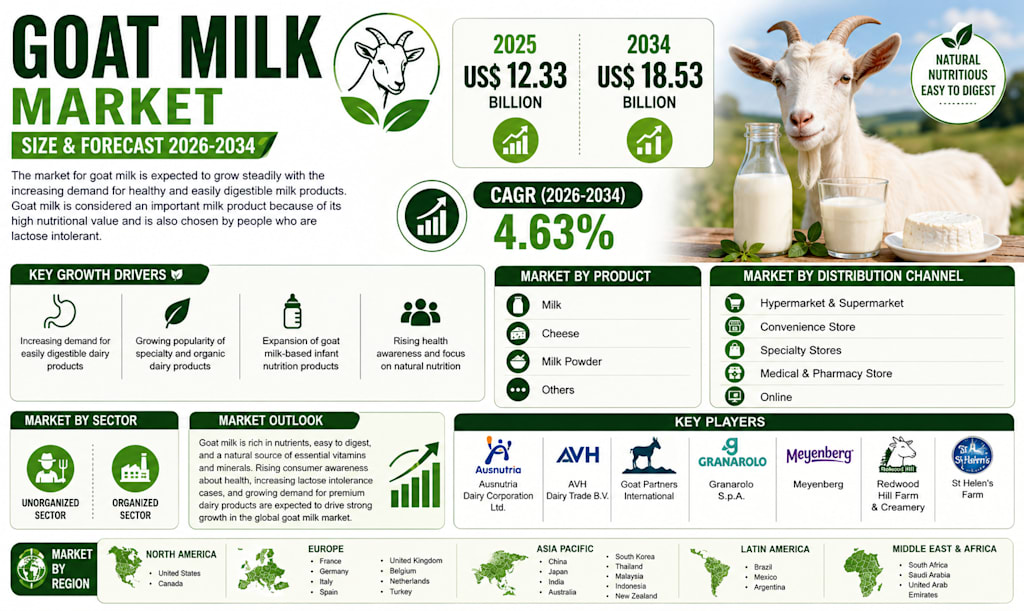
The global dairy industry is evolving as consumers increasingly look beyond traditional cow milk products in search of healthier, more digestible, and nutrient-rich alternatives. Among the various options gaining popularity, goat milk has emerged as one of the most promising segments within the specialty dairy sector. Once considered a niche product consumed primarily in specific regions, goat milk is now attracting attention from health-conscious consumers, parents, nutrition experts, and food manufacturers worldwide.
The growing interest in goat milk is closely linked to changing dietary preferences and increasing awareness of digestive health. Many consumers are becoming more selective about the foods they consume and are actively seeking products that offer nutritional benefits while being gentle on the digestive system. Goat milk has positioned itself as an attractive option because of its unique nutritional profile, easy digestibility, and versatility across multiple dairy categories.
According to Renub Research, the global goat milk market is projected to grow from US$ 12.33 billion in 2025 to US$ 18.53 billion by 2034, expanding at a compound annual growth rate (CAGR) of 4.63% during the forecast period from 2026 to 2034. The steady growth outlook reflects rising consumer demand for alternative dairy products, specialty nutrition solutions, and premium food offerings.

Why Goat Milk Is Attracting Consumer Attention
In recent years, consumers have become increasingly interested in functional foods that offer both nutrition and wellness benefits. Goat milk has benefited significantly from this trend because it is widely recognized for its rich nutritional content and easier digestibility compared to conventional cow milk.
Goat milk contains essential nutrients including calcium, protein, potassium, phosphorus, vitamins A and D, and other important minerals that support overall health. These nutrients contribute to bone strength, muscle development, immune function, and general well-being. At the same time, the smaller fat globules and different protein composition found in goat milk make it easier for many individuals to digest.
For consumers who experience discomfort with traditional dairy products, goat milk often serves as an appealing alternative. While it is not suitable for all dairy sensitivities, many people find it gentler on the digestive system. This perception has helped fuel growing demand across multiple consumer groups, particularly among families seeking nutritious dietary options.
The increased availability of goat milk products in supermarkets, specialty stores, and online platforms has further contributed to consumer awareness and market expansion.
Growing Demand for Easily Digestible Dairy Products
One of the strongest factors supporting market growth is the increasing demand for dairy products that are easier to digest.
As digestive health becomes a greater focus for consumers, many individuals are exploring alternatives to traditional dairy products. Goat milk's naturally smaller fat particles and distinct protein structure have made it a preferred choice for consumers who struggle with digesting cow milk.
Health-conscious individuals are increasingly incorporating goat milk into their diets because of its perceived digestive benefits and nutritional value. Parents, older adults, and wellness-focused consumers are particularly interested in products that provide essential nutrients without causing digestive discomfort.
This trend has encouraged dairy manufacturers to expand their goat milk product portfolios. Companies are introducing new products designed to appeal to consumers seeking both nutrition and convenience, helping drive broader market adoption.
As awareness of digestive wellness continues to increase, demand for goat milk products is expected to remain strong throughout the forecast period.
Specialty and Organic Dairy Products Are Supporting Growth
The global shift toward premium, natural, and organic foods is creating new opportunities for goat milk producers.
Consumers today are increasingly interested in food products that are minimally processed and perceived as more natural. Goat milk aligns well with these preferences because it is often associated with traditional farming methods and premium dairy production.
Goat milk cheese, yogurt, butter, and milk powder have become particularly popular among consumers seeking specialty food products. The growing popularity of gourmet cuisine and artisanal foods has further strengthened demand for goat milk-based products, especially in developed markets.
Restaurants, specialty food retailers, and gourmet food manufacturers are increasingly incorporating goat milk ingredients into their offerings. Consumers are willing to pay premium prices for products that provide unique flavors, nutritional benefits, and authentic food experiences.
As demand for specialty dairy products continues to rise, goat milk producers are expected to benefit from expanding opportunities across both retail and food service sectors.
Goat Milk-Based Infant Nutrition Is Emerging as a Major Opportunity
Another important growth driver is the increasing use of goat milk in infant and toddler nutrition products.
Parents are becoming more attentive to the ingredients used in infant formulas and nutritional products. As a result, goat milk-based formulas have gained attention as an alternative to traditional cow milk-based options.
Many parents perceive goat milk formulas as easier to digest and more suitable for sensitive digestive systems. Manufacturers are responding by developing specialized infant nutrition products designed to meet growing consumer demand.
The infant nutrition category represents a particularly attractive opportunity because parents often prioritize product quality and nutritional value over price considerations. This allows manufacturers to position goat milk-based formulas as premium offerings within the broader infant nutrition market.
As awareness of alternative infant nutrition options grows globally, goat milk-based products are expected to contribute significantly to future market expansion.
Goat Milk Cheese Continues to Gain Popularity
Among all goat milk products, goat cheese remains one of the most successful and widely recognized categories.
Known for its distinctive flavor and creamy texture, goat cheese has become a favorite ingredient in gourmet cooking and premium dining experiences. It is frequently used in salads, sandwiches, pizzas, and fine dining menus around the world.
The popularity of goat cheese extends beyond restaurants. Consumers are increasingly purchasing specialty cheeses for home consumption, contributing to growth in retail sales. Food manufacturers are also introducing new flavors and product varieties to meet changing consumer preferences.
As interest in gourmet and artisanal foods continues to increase, goat cheese is expected to remain a major contributor to overall market growth.
Organized Dairy Production Is Strengthening the Industry
Historically, goat milk production was largely dominated by small-scale farmers serving local markets. However, the industry is becoming increasingly organized as dairy companies invest in production, processing, and distribution infrastructure.
The growth of organized dairy operations is improving product quality, food safety, and supply chain efficiency. Branded goat milk products are becoming more widely available through supermarkets, convenience stores, specialty retailers, and online platforms.
Governments and agricultural organizations are also supporting the development of structured goat farming operations in many regions. These initiatives help improve productivity, increase farmer incomes, and strengthen supply chain reliability.
As organized production expands, consumers are likely to benefit from greater product availability and improved consistency.
Online Retail Is Expanding Market Reach
Digital commerce is playing an increasingly important role in the goat milk industry.
Consumers are becoming more comfortable purchasing food products online, including specialty dairy items. E-commerce platforms allow shoppers to access a wider range of goat milk products than may be available in local stores.
Online channels provide detailed product information, customer reviews, and convenient delivery options. These advantages make it easier for consumers to discover and purchase goat milk products.
For manufacturers, online retail offers an effective way to reach new customer segments and promote premium products directly to consumers.
As digital shopping continues to grow worldwide, online distribution is expected to become an increasingly important sales channel for goat milk products.
Regional Markets Show Strong Potential
United States
The United States goat milk market is expanding steadily as consumers seek alternative dairy products with unique nutritional benefits. Growing demand for specialty foods, organic products, and infant nutrition solutions is supporting market growth.
United Kingdom
The United Kingdom is experiencing increased demand for goat milk products due to rising interest in premium dairy foods and alternative nutrition options. Goat cheese and yogurt remain particularly popular among consumers.
India
India represents a promising market due to its long-standing familiarity with goat farming and dairy consumption. Urban consumers are increasingly recognizing the nutritional benefits of goat milk, creating new growth opportunities for producers.
Saudi Arabia
Goat milk has traditionally been part of the diet in many Middle Eastern countries, including Saudi Arabia. Growing awareness of health and wellness is encouraging consumers to choose nutritious dairy products, supporting market expansion.
Challenges Facing the Goat Milk Industry
Despite positive growth prospects, the industry faces several challenges.
Limited production capacity remains a significant concern. Compared to cows, goats generally produce smaller quantities of milk, making large-scale production more difficult. Expanding production often requires investments in farming infrastructure, breeding programs, and modern management practices.
Cost is another challenge. Goat milk products are often more expensive than conventional dairy alternatives due to lower production volumes and specialized processing requirements. Price-sensitive consumers may hesitate to adopt goat milk products despite their nutritional benefits.
Addressing these challenges will be essential for ensuring sustainable market growth in the coming years.
Market Forecast: Steady Growth Through 2034
The outlook for the global goat milk market remains encouraging. According to Renub Research, market value is expected to increase from US$ 12.33 billion in 2025 to US$ 18.53 billion by 2034, reflecting a CAGR of 4.63% during the forecast period from 2026 to 2034. Rising demand for alternative dairy products, specialty nutrition, infant formulas, and premium food offerings will continue supporting growth across multiple regions.
Final Thoughts
The goat milk market is steadily evolving from a niche dairy category into an important segment of the global food industry. Driven by growing awareness of digestive health, rising demand for premium and natural foods, expanding infant nutrition applications, and increasing availability through modern retail channels, the industry is positioned for long-term growth.
With Renub Research forecasting the market to reach US$ 18.53 billion by 2034 from US$ 12.33 billion in 2025, goat milk products are expected to play an increasingly important role in the future of dairy consumption. As consumers continue searching for nutritious, digestible, and high-quality food options, goat milk is well positioned to meet these evolving expectations while creating new opportunities for producers, retailers, and food manufacturers worldwide.
About the Creator
Enjoyed the story? Support the Creator.
Subscribe for free to receive all their stories in your feed.
Comments
There are no comments for this story
Be the first to respond and start the conversation.