
Global Yeast Market Rises as Bakery Consumption, Bioethanol Production, and Biotechnology Innovation Drive Demand
Growing demand for baked goods, expanding biofuel production, and increasing applications in nutrition and biotechnology are fueling strong growth across the global yeast industry.

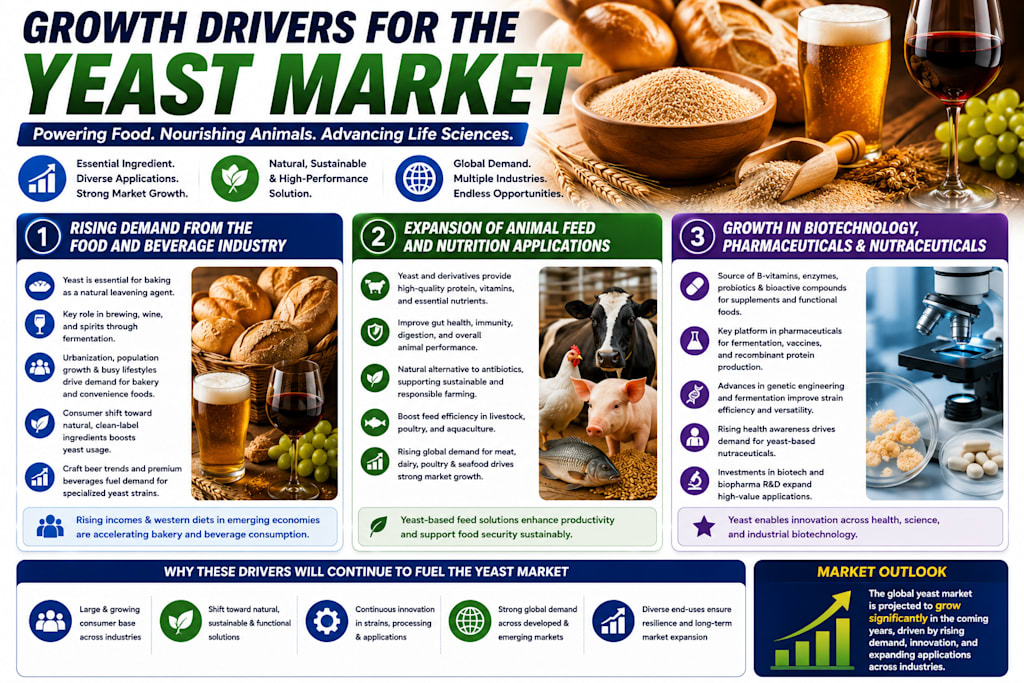
Yeast may be one of the smallest ingredients used in modern industry, but its economic impact is enormous. From baking bread and brewing beer to producing biofuels, nutritional supplements, vaccines, and animal feed additives, yeast has become an indispensable component of multiple global industries.
As consumer demand for convenience foods, clean-label ingredients, and sustainable products continues to rise, the importance of yeast has expanded far beyond its traditional role in fermentation. Advances in biotechnology, growing interest in alternative protein sources, and increasing investments in industrial fermentation are creating new opportunities for yeast manufacturers worldwide.
At the same time, rising consumption of bakery products, alcoholic beverages, and nutritional supplements is driving strong demand across both developed and emerging economies. These trends are positioning the yeast industry as a critical pillar of modern food production, biotechnology innovation, and sustainable industrial development.
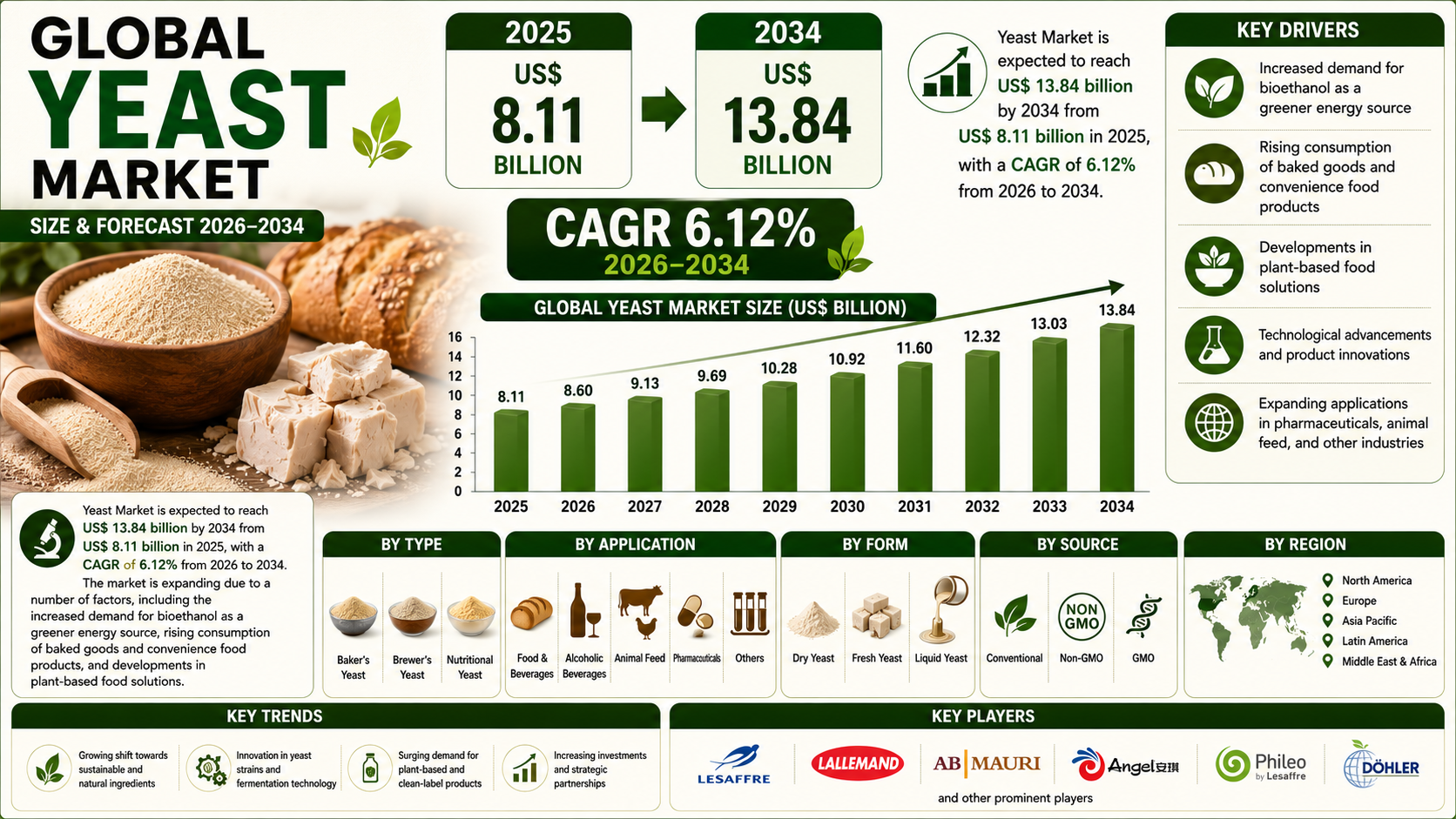
According to Renub Research, the Global Yeast Market is projected to grow from US$8.11 billion in 2025 to US$13.84 billion by 2034, registering a compound annual growth rate (CAGR) of 6.12% between 2026 and 2034. Rising demand from the food and beverage sector, expanding bioethanol production, and growing applications in biotechnology and nutrition are expected to drive sustained market growth.
Yeast Remains One of the Most Important Fermentation Ingredients
Yeast is a single-celled microorganism belonging to the fungi kingdom, with Saccharomyces cerevisiae being the most widely used species across commercial applications.
For centuries, yeast has played a crucial role in baking, brewing, and food preservation through its ability to convert sugars into carbon dioxide and alcohol during fermentation.
Today, its applications extend far beyond traditional food production.
Yeast is widely used in bakery products, alcoholic beverages, animal feed, pharmaceuticals, nutraceuticals, industrial biotechnology, bioethanol production, enzyme manufacturing, and vaccine development.
Its versatility and natural fermentation capabilities continue making it one of the most valuable biological ingredients in the global economy.
Food and Beverage Industry Drives the Largest Demand
The food and beverage sector remains the largest consumer of yeast worldwide.
Baker's yeast is an essential ingredient in bread, cakes, pastries, pizza dough, buns, and various baked goods, where it functions as a natural leavening agent.
Meanwhile, brewer's yeast plays a critical role in the production of beer, wine, spirits, and other fermented beverages.
As urban populations expand and convenience food consumption continues rising, demand for yeast-based ingredients has strengthened significantly.
The growing popularity of packaged foods, ready-to-eat meals, and bakery snacks further supports industry growth.
Consumers increasingly prefer natural fermentation processes over synthetic additives, making yeast an attractive clean-label ingredient for manufacturers.
Global Bakery Consumption Continues to Expand
One of the most important drivers of yeast demand is the steady growth of the bakery industry.
Bread remains a staple food across much of the world, while pastries, cakes, cookies, and specialty baked products continue gaining popularity among consumers.
Urbanization, changing lifestyles, and rising disposable incomes have contributed to increased bakery consumption, particularly in emerging economies.
The expansion of organized retail and convenience food channels has also improved access to bakery products.
As demand for baked goods continues increasing globally, baker's yeast remains a fundamental ingredient supporting industry growth.
Convenience Foods Strengthen Market Opportunities
Modern consumers increasingly seek convenient meal solutions that require minimal preparation time.
Ready-to-eat foods, frozen bakery products, packaged snacks, and convenience meals continue gaining market share worldwide.
Yeast plays a crucial role in the production of many of these products by enhancing texture, flavor, aroma, and shelf stability.
As busy lifestyles become more common across urban populations, manufacturers are expanding production capacity to meet growing demand for convenience foods.
This trend continues creating significant opportunities for yeast suppliers globally.
Clean-Label Trends Favor Natural Fermentation
Consumers are becoming increasingly attentive to ingredient transparency and product labeling.
The clean-label movement encourages manufacturers to use recognizable, natural ingredients while minimizing artificial additives and chemical preservatives.
Yeast aligns closely with these preferences because it is naturally derived and widely accepted as a traditional food ingredient.
Many food manufacturers are utilizing yeast extracts and fermentation-based solutions to improve flavor while reducing sodium and artificial additives.
As clean-label purchasing behavior continues growing, yeast-based ingredients are expected to benefit significantly.
Bioethanol Production Is Becoming a Major Growth Engine
Beyond food applications, yeast plays a vital role in renewable energy production.
The global push toward sustainability and reduced dependence on fossil fuels has increased demand for bioethanol, a renewable fuel produced through fermentation.
Yeast serves as the key biological catalyst in converting sugars and starches into ethanol.
Governments worldwide continue supporting biofuel production through environmental policies, emissions reduction initiatives, and renewable energy targets.
As bioethanol production expands, industrial demand for yeast is expected to grow substantially.
This trend represents one of the most important long-term opportunities within the market.
Animal Feed Industry Creates Additional Demand
The animal nutrition sector has become another major contributor to yeast market expansion.
Feed yeast and yeast derivatives are widely used because of their high protein content, essential amino acids, vitamins, and functional health benefits.
These ingredients help improve digestion, gut health, immunity, and feed efficiency in livestock, poultry, and aquaculture operations.
Growing global demand for meat, dairy products, poultry, and seafood continues driving investment in animal nutrition solutions.
At the same time, regulatory pressure to reduce antibiotic use in animal production is increasing interest in natural alternatives such as yeast-based feed additives.
These factors continue strengthening demand across the feed segment.
Nutritional Supplements Expand Market Potential
The growing popularity of health and wellness products is creating additional opportunities for yeast manufacturers.
Yeast serves as a rich source of B-complex vitamins, minerals, proteins, and bioactive compounds used in dietary supplements and functional foods.
Consumers increasingly seek nutritional products that support immunity, energy levels, digestive health, and overall wellness.
This trend has increased demand for yeast-derived ingredients across the nutraceutical sector.
As preventive healthcare and nutritional awareness continue gaining momentum globally, yeast-based supplements are expected to experience sustained growth.
Biotechnology Industry Drives Innovation
The biotechnology sector represents one of the most exciting growth opportunities for the yeast market.
Yeast serves as a valuable platform for producing enzymes, vaccines, recombinant proteins, and various pharmaceutical ingredients.
Its well-understood genetics and fermentation capabilities make it an ideal organism for scientific research and industrial biotechnology applications.
Advances in genetic engineering, synthetic biology, and precision fermentation continue expanding the range of products that can be manufactured using yeast.
As biotechnology investment increases worldwide, demand for specialized yeast strains and fermentation technologies is expected to rise significantly.
Pharmaceutical Applications Continue Growing
The pharmaceutical industry increasingly relies on yeast-based production systems.
Yeast is widely used in vaccine development, enzyme production, biologics manufacturing, and recombinant protein synthesis.
Its ability to support large-scale fermentation while maintaining product consistency makes it highly attractive for pharmaceutical applications.
Growing investments in biotechnology research and pharmaceutical innovation are creating new opportunities for yeast suppliers and manufacturers.
The continued expansion of biologics and advanced therapeutics further strengthens the outlook for yeast-based production technologies.
Dry Yeast Dominates Market Demand
Among product categories, dry yeast remains one of the most widely used forms globally.
Dry yeast offers numerous advantages, including long shelf life, ease of transportation, convenient storage, and reduced spoilage risk.
Its versatility makes it suitable for bakery, beverage, industrial, and household applications.
Manufacturers and consumers alike value dry yeast because it provides consistent performance while simplifying logistics and inventory management.
These benefits continue supporting strong demand across multiple industries.
Instant Yeast Gains Popularity Among Consumers
Instant yeast has become increasingly popular because of its convenience and ease of use.
Unlike traditional active dry yeast, instant yeast can often be mixed directly into dough without prior activation.
This feature simplifies baking processes for both commercial bakeries and home users.
As baking culture continues growing globally and consumers seek convenient cooking solutions, instant yeast adoption is expected to expand further.
Its reliability and efficiency make it particularly attractive within modern food production environments.
Raw Material Price Volatility Remains a Challenge
Despite strong growth prospects, the yeast industry faces several operational challenges.
One of the most significant concerns involves fluctuations in raw material prices.
Yeast production depends heavily on agricultural feedstocks such as molasses, sugar, corn, and starch-based substrates.
Weather conditions, climate change, commodity market fluctuations, and competing demand from industries such as bioethanol can create supply instability.
Rising energy and transportation costs further increase production expenses.
These factors can compress profit margins and complicate long-term planning for manufacturers.
Regulatory Compliance Creates Additional Complexity
The yeast market operates under strict regulatory requirements, particularly in food, pharmaceutical, and nutraceutical applications.
Manufacturers must comply with rigorous safety, hygiene, labeling, traceability, and quality standards.
Meeting these requirements often requires substantial investment in quality assurance systems, certifications, and documentation.
Export-oriented producers must also navigate varying regulations across different international markets.
While regulatory oversight helps ensure product safety and consumer confidence, it can increase costs and slow product development timelines.
United States Maintains Strong Market Position
The United States remains one of the world's largest yeast markets due to strong demand from food processing, baking, brewing, and biotechnology industries.
The country's extensive bakery sector, growing craft beer movement, and advanced pharmaceutical infrastructure continue supporting market growth.
Demand for natural ingredients, functional foods, and nutritional supplements further strengthens yeast consumption.
While competition and raw material costs remain challenges, the U.S. market benefits from innovation, established manufacturing capabilities, and broad industrial applications.
Germany Emphasizes Sustainability and Quality
Germany's yeast market is characterized by strong food processing industries, advanced brewing traditions, and high-quality manufacturing standards.
Consumers increasingly prioritize sustainability, clean-label ingredients, and transparent sourcing practices.
The country's strong regulatory framework and emphasis on quality assurance support steady demand for premium yeast products.
Growing applications in food processing, biotechnology, and industrial fermentation continue contributing to market expansion.
India Emerges as a High-Growth Market
India represents one of the fastest-growing yeast markets globally.
Rapid urbanization, rising disposable incomes, and expanding bakery consumption are driving strong demand for baker's yeast.
The country's growing alcoholic beverage sector, animal feed industry, and biotechnology investments further support market growth.
Increasing awareness of nutritional supplements and functional ingredients also contributes to expanding yeast consumption.
With continued economic development and evolving consumer preferences, India is expected to remain a major growth engine for the global yeast industry.
United Arab Emirates Supports Regional Expansion
The UAE yeast market is growing steadily due to expanding foodservice, hospitality, and food processing industries.
Demand for bakery products, convenience foods, and premium food ingredients continues increasing among both local and expatriate populations.
The country's strategic position as a regional trade hub further supports market activity.
Although domestic production remains limited, strong import infrastructure and high-quality standards continue facilitating market growth across the region.
Recent Developments Highlight Industry Innovation
The yeast industry continues witnessing important strategic developments and investments.
In January 2024, Lallemand subsidiary Danstar Ferment AG acquired Swiss biotechnology company Evolva AG to strengthen yeast-based technology capabilities and expand its product portfolio.
During the same month, Argentina approved the commercialization of four genetically modified yeast strains designed to improve the sustainability and efficiency of ethanol production.
These developments reflect the growing importance of innovation, biotechnology, and industrial fermentation within the global yeast market.
Final Thoughts
The global yeast market is entering a period of sustained expansion driven by rising demand from food production, bioethanol manufacturing, animal nutrition, biotechnology, and healthcare industries.
As consumers seek natural ingredients, healthier food options, and sustainable solutions, yeast continues demonstrating its value across a remarkably diverse range of applications.
With the market projected to grow from US$8.11 billion in 2025 to US$13.84 billion by 2034, significant opportunities exist for ingredient suppliers, food manufacturers, biotechnology companies, and investors.
Although challenges related to raw material volatility and regulatory compliance remain important considerations, ongoing innovation and expanding industrial applications provide a strong foundation for future growth.
As fermentation technologies continue evolving and sustainability becomes increasingly important, yeast is poised to remain one of the most strategically valuable biological ingredients in the global economy.
About the Creator
Enjoyed the story? Support the Creator.
Subscribe for free to receive all their stories in your feed.
Comments
There are no comments for this story
Be the first to respond and start the conversation.