
Global Wheat Market to Reach USD 272.62 Billion by 2034 as Food Security and Rising Demand Drive Industry Growth
Growing global population, expanding food processing industries, and advances in agricultural technology are strengthening the global wheat market despite climate-related challenges.

Wheat Continues to Feed the World
Few agricultural commodities have influenced human civilization as profoundly as wheat. For thousands of years, it has remained one of the world's most important staple crops, providing affordable nutrition for billions of people across every continent. From bread and pasta to noodles, breakfast cereals, pastries, and biscuits, wheat serves as the foundation of countless food products consumed every day.
As populations continue expanding and urban lifestyles reshape food consumption patterns, global demand for wheat remains remarkably resilient. Modern agriculture, technological innovation, and improvements in food processing have enabled wheat production to keep pace with rising consumption while supporting international food security.
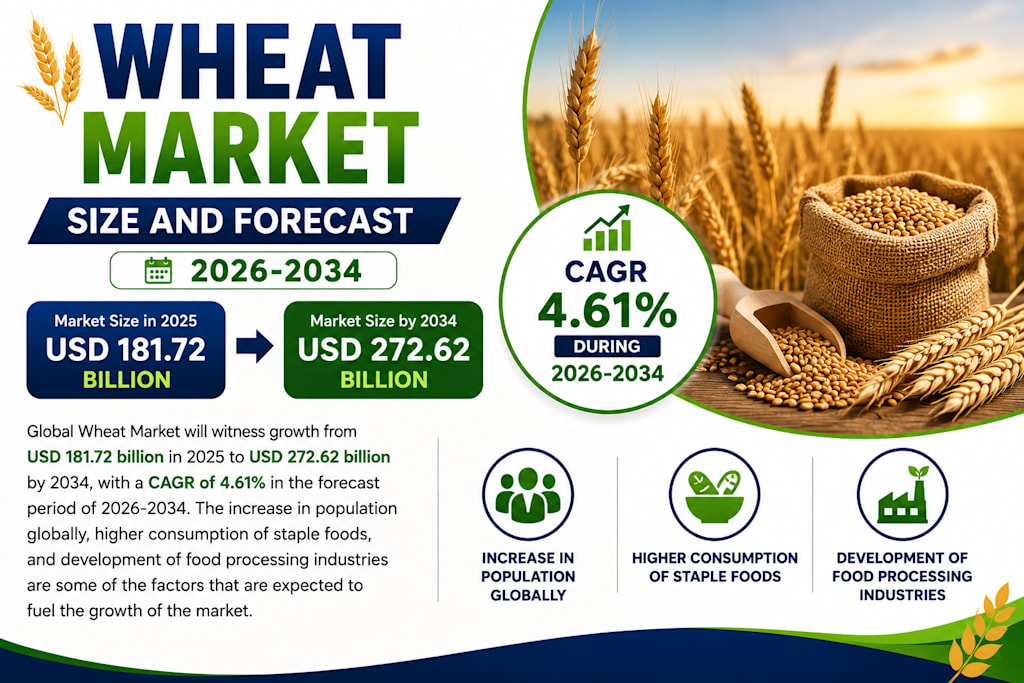
According to the latest market outlook, the Global Wheat Market is projected to grow from USD 181.72 billion in 2025 to USD 272.62 billion by 2034, expanding at a compound annual growth rate (CAGR) of 4.61% during 2026–2034. The market's steady growth reflects increasing demand for staple foods, continued expansion of food processing industries, and ongoing investments in agricultural productivity.
Wheat Remains an Essential Global Staple
Wheat is one of the world's most widely cultivated cereal grains and serves as a primary source of carbohydrates, proteins, dietary fiber, vitamins, and minerals.
Its versatility allows it to be processed into thousands of food products that are consumed daily across developed and emerging economies alike. Unlike many agricultural commodities, wheat can be stored for extended periods without significant quality loss, making it a strategic crop for governments seeking to strengthen national food security.
Because wheat adapts well to a wide variety of climatic conditions, it is cultivated extensively across North America, Europe, Asia, and parts of Africa, making it one of the most important agricultural commodities traded internationally.
Population Growth Continues to Increase Demand
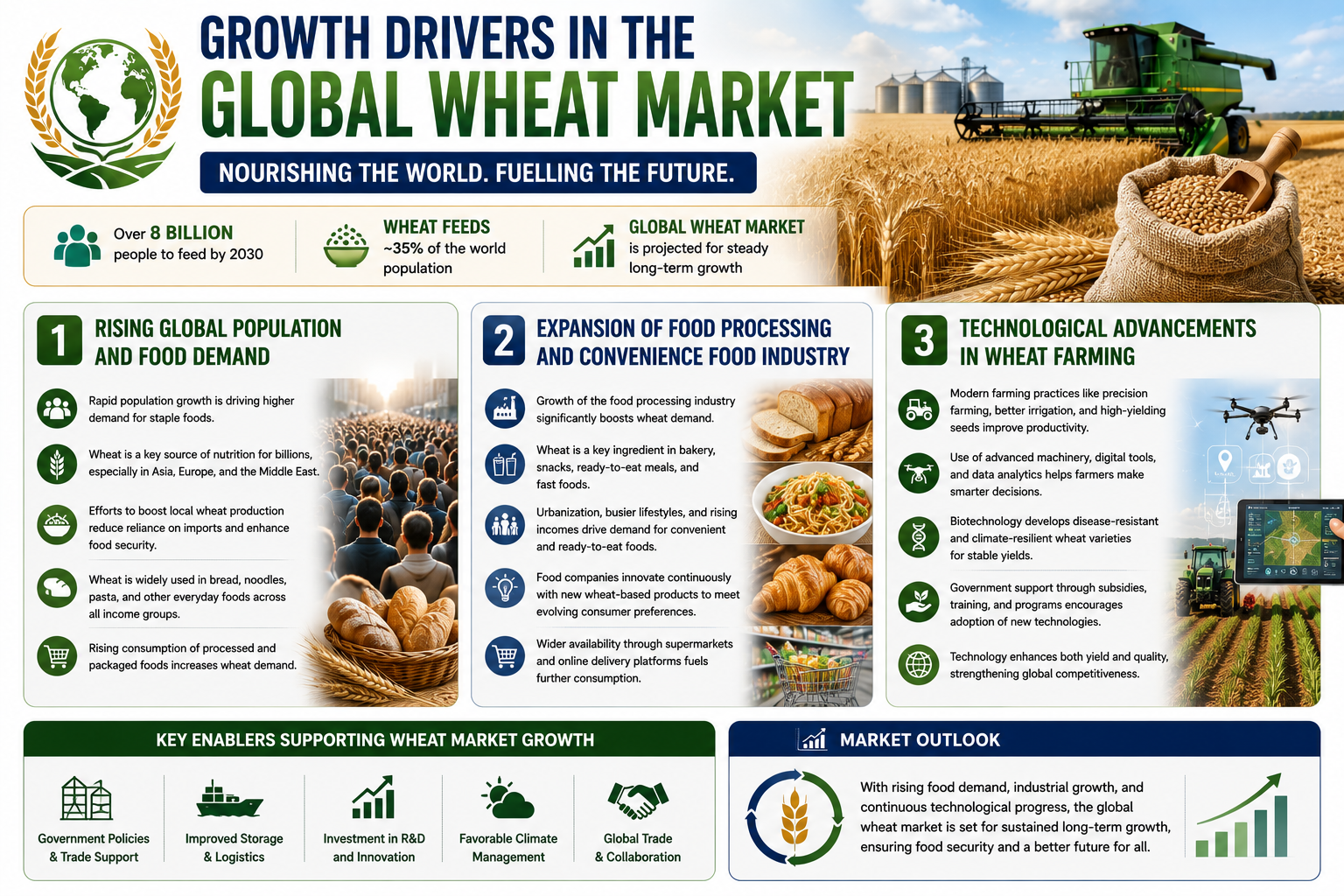
The world's growing population remains one of the strongest drivers supporting long-term wheat consumption.
As billions of people require reliable and affordable food supplies, governments and agricultural producers continue expanding wheat production to meet increasing nutritional needs.
In regions including Asia, Europe, and the Middle East, wheat forms a central part of daily diets through products such as bread, noodles, pasta, and baked goods.
At the same time, rising disposable incomes and changing consumer lifestyles have increased demand for processed foods, creating additional opportunities for wheat producers and food manufacturers worldwide.
Food Processing Industry Expands Wheat Consumption
The rapid development of global food processing has significantly strengthened demand for wheat.
Modern consumers increasingly purchase ready-to-eat meals, bakery products, frozen foods, snacks, breakfast cereals, and convenience foods that rely heavily on wheat flour as a primary ingredient.
Urbanization, busier lifestyles, and expanding supermarket chains have encouraged greater consumption of packaged food products, particularly in emerging economies.
Food manufacturers continue introducing innovative wheat-based products that meet changing consumer preferences while maintaining affordability and nutritional value.
The continued expansion of retail distribution channels and online grocery platforms is further supporting market growth.
Agricultural Technology Is Improving Productivity
Technological innovation has become a key factor behind rising wheat production worldwide.
Farmers increasingly utilize precision agriculture, satellite monitoring, digital farm management systems, improved irrigation technologies, and advanced agricultural machinery to maximize productivity.
High-yield seed varieties, biotechnology, and disease-resistant crops allow producers to maintain more consistent harvests despite changing environmental conditions.
Governments also support modernization through training programs, subsidies, and research initiatives that encourage adoption of advanced farming techniques.
These technological improvements not only increase production volumes but also enhance grain quality, allowing producers to compete more effectively in international markets.
Organic Wheat Gains Consumer Attention
Growing health awareness has contributed to increasing demand for organic wheat products.
Unlike conventional production, organic wheat cultivation avoids synthetic fertilizers, pesticides, and genetically modified organisms while emphasizing environmentally sustainable farming practices.
Consumers seeking healthier lifestyles increasingly purchase organic flour, bread, cereals, and pasta products.
Food manufacturers continue expanding their organic product portfolios as retailers dedicate more shelf space to certified organic foods.
Although organic wheat represents a smaller share of total production, demand continues rising steadily across developed markets.
Conventional Wheat Remains Market Leader
Despite the growing popularity of organic foods, conventional wheat continues dominating global production.
Modern conventional farming combines improved seed genetics, advanced fertilizers, crop protection products, and mechanized agriculture to achieve high yields capable of meeting global food demand.
Conventional wheat remains essential for supplying food manufacturers, livestock producers, industrial processors, and export markets.
Its cost efficiency and production scale ensure it continues serving as the foundation of the global wheat industry.
Food and Beverage Industry Drives Consumption
The food and beverage industry remains the largest end-user of wheat worldwide.
Bread, pasta, noodles, cakes, biscuits, pastries, breakfast cereals, and numerous processed food products all depend heavily on wheat flour.
Beyond food applications, wheat also contributes to beverage production, particularly in brewing and whiskey manufacturing.
Although consumer interest in gluten-free alternatives continues increasing, wheat remains one of the most versatile ingredients available to food manufacturers.
Ongoing product innovation allows companies to develop healthier formulations while maintaining the familiar taste and texture consumers expect.
Animal Feed Supports Additional Demand
Wheat also plays an important role in livestock nutrition.
Its high energy content and digestibility make it a valuable ingredient in feed formulations for poultry, swine, and other livestock.
As global demand for meat, dairy, and poultry products continues expanding, livestock producers require reliable supplies of high-quality feed grains.
Although wheat competes with alternatives such as corn and soybean meal, it remains an important component of balanced animal nutrition in many regions.
Digital Trading Is Transforming Wheat Commerce
Technology is also changing how wheat is bought and sold.
Digital marketplaces and online agricultural trading platforms provide farmers, traders, exporters, and buyers with greater market transparency and improved access to international customers.
Online trading enables producers to monitor prices in real time, negotiate directly with buyers, reduce intermediary costs, and improve supply chain efficiency.
Digital inventory management, logistics coordination, and electronic payment systems continue modernizing global agricultural commerce.
As internet connectivity expands worldwide, digital wheat trading is expected to become increasingly common.
Climate Change Remains a Major Challenge
Despite positive growth prospects, climate change represents one of the industry's greatest risks.
Extreme weather events including droughts, floods, heatwaves, and unpredictable rainfall can significantly reduce crop yields and disrupt global supply.
Water scarcity presents another serious concern because irrigated wheat production depends heavily on reliable water resources.
Changing climatic conditions also increase the spread of pests and plant diseases, requiring additional investment in crop protection and adaptive farming practices.
These environmental pressures contribute to production uncertainty and greater market volatility.
Supply Chain Disruptions Continue Affecting Prices
Global wheat markets remain highly sensitive to geopolitical developments, transportation disruptions, trade restrictions, and fluctuating energy costs.
Because wheat is traded extensively across international markets, supply chain interruptions can quickly influence prices worldwide.
Currency exchange fluctuations, shipping costs, and fuel prices also affect profitability for producers, exporters, and food manufacturers.
Maintaining stable global supply chains has therefore become increasingly important for ensuring food affordability and protecting food security.
Regional Markets Shape Global Production
The United States remains one of the world's largest wheat producers and exporters, supported by advanced farming technology and strong international trade networks.
France continues producing premium-quality wheat widely used in baking and food processing throughout Europe and international markets.
India, the world's second-largest wheat producer, plays a crucial role in maintaining domestic food security while steadily increasing production through improved seed varieties and supportive government policies.
Brazil continues expanding domestic wheat production in an effort to reduce dependence on imports while meeting growing consumer demand for bakery products and processed foods.
These major producing nations will remain central to global wheat supply over the coming decade.
Final Thoughts
The global wheat market continues demonstrating remarkable resilience despite environmental challenges and changing consumer preferences.
The projected growth from USD 181.72 billion in 2025 to USD 272.62 billion by 2034, supported by a steady 4.61% CAGR, reflects wheat's enduring importance in global nutrition, food security, and agricultural trade.
Driven by population growth, expanding food processing industries, technological innovation, and continued modernization of farming practices, wheat will remain one of the world's most valuable agricultural commodities. While climate change and supply chain uncertainties present ongoing challenges, continued investment in sustainable agriculture and advanced production technologies is expected to strengthen the industry's long-term outlook.
About the Creator
Enjoyed the story? Support the Creator.
Subscribe for free to receive all their stories in your feed.
Comments
There are no comments for this story
Be the first to respond and start the conversation.