
Global Water Heater Market Expands as Smart Homes, Energy Efficiency, and Urban Living Drive Demand
Rising construction activity, growing middle-class populations, and demand for modern heating solutions are accelerating growth in the worldwide water heater industry.

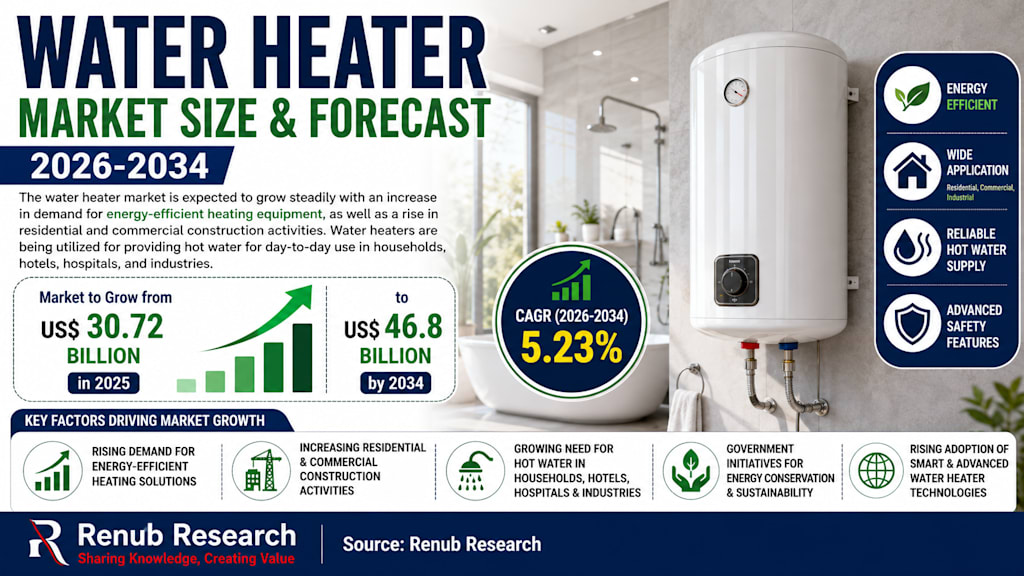
The global water heater market is experiencing steady growth as consumers worldwide increasingly prioritize comfort, convenience, energy efficiency, and modern living standards. From residential apartments and hotels to hospitals and commercial complexes, water heaters have become an essential appliance for daily life and infrastructure development.
According to Renub Research, the water heater market is projected to grow from US$ 30.72 billion in 2025 to US$ 46.8 billion by 2034, expanding at a compound annual growth rate (CAGR) of 5.23% during 2026–2034.
The market’s growth is being driven by a combination of rising urbanization, increasing disposable income, expanding construction activities, and growing awareness around energy-efficient technologies. At the same time, technological innovation is transforming traditional water heaters into smart, connected, and environmentally friendly systems that appeal to modern consumers.
As homes become smarter and sustainability becomes more important globally, the water heater industry is entering a new era of innovation and demand.
Why water heaters have become essential worldwide
A water heater is a device used to heat water for domestic, commercial, and industrial purposes. It supplies warm water for activities such as bathing, cooking, cleaning, and space heating. Water heaters operate using different energy sources including electricity, natural gas, solar energy, and heat-pump technologies.
Over time, these systems have evolved from basic heating appliances into highly efficient and technologically advanced products. Today’s water heaters often include digital temperature controls, energy-saving systems, mobile connectivity, and advanced safety features.
In colder regions such as North America and Europe, water heaters are considered essential household equipment because of seasonal weather conditions. However, demand is also growing rapidly in warmer regions across Asia and the Middle East due to improving lifestyles, rising living standards, and increasing urbanization.
Hot water is now viewed as a standard household necessity rather than a luxury, making water heaters an increasingly important part of residential and commercial infrastructure worldwide.
Modern lifestyles are driving market growth
One of the strongest growth drivers for the water heater market is the global shift toward modern and comfortable living standards.
As disposable incomes rise and middle-class populations expand, especially in developing economies, consumers are spending more on home appliances that improve comfort and convenience. Water heaters have become a common feature in modern homes, apartments, and smart housing projects.
Urbanization is playing a major role in this transformation. Rapid urban growth is increasing demand for residential construction, including apartments, gated communities, and mixed-use developments where water-heating systems are now considered standard amenities.
Real-estate developers are increasingly installing water heaters as part of modern housing packages to enhance property value and meet evolving customer expectations.
The growing emphasis on hygiene and personal wellness has also strengthened demand. Consumers now expect instant access to hot water for daily activities such as bathing, cleaning, and cooking, particularly in urban households.
As living standards continue improving globally, water-heater adoption is expected to rise steadily.
Energy efficiency is reshaping the industry
Technological advancement has become another major catalyst for market growth. Manufacturers are focusing heavily on developing energy-efficient and environmentally friendly water-heating technologies that align with changing consumer expectations and government regulations.
Modern water heaters now offer features such as smart temperature control, remote operation through smartphones, faster heating systems, and advanced safety mechanisms.
Tankless water heaters are becoming especially popular because they heat water only when needed, helping consumers reduce energy consumption and operating costs. Unlike traditional storage systems, tankless units eliminate standby heat loss, making them more energy efficient.
Hybrid and heat-pump water heaters are also gaining strong momentum. These systems transfer heat from surrounding air instead of generating heat directly through electricity, significantly improving efficiency while lowering carbon emissions.
Solar water heaters continue expanding as well, supported by growing awareness regarding renewable energy and sustainability. Governments in many countries are promoting energy-efficient appliances through incentives, rebates, and environmental regulations that encourage adoption of greener technologies.
This shift toward efficiency is transforming the water heater market from a basic appliance sector into a technologically advanced and sustainability-focused industry.
Smart homes are creating new opportunities
The rise of smart-home technology is creating exciting opportunities for water-heater manufacturers.
Consumers increasingly prefer connected appliances that can be monitored and controlled remotely through smartphones or home automation systems. Smart water heaters equipped with Wi-Fi connectivity, energy monitoring, and automated temperature adjustments are becoming highly attractive in premium residential markets.
These systems offer both convenience and energy savings by allowing users to optimize usage patterns and reduce unnecessary electricity consumption.
As smart-home ecosystems expand globally, water heaters are becoming integrated into broader digital home-management platforms. This trend is particularly strong among younger consumers and urban homeowners seeking greater automation and energy control.
Manufacturers are responding by investing heavily in intelligent product design and connected appliance ecosystems.
Hospitality and healthcare sectors boost commercial demand
Commercial demand is another important factor supporting market growth.
Hotels, resorts, hospitals, office complexes, shopping centers, and educational institutions require continuous hot-water supply for daily operations. As global tourism and healthcare infrastructure continue expanding, demand for commercial water-heating systems is rising significantly.
The hospitality industry relies heavily on large-capacity water heaters to maintain guest comfort and operational efficiency. Similarly, healthcare facilities require dependable hot-water systems for sanitation, patient care, and medical operations.
Commercial establishments are increasingly investing in energy-efficient systems because hot-water usage represents a major operational expense. This is encouraging adoption of hybrid systems, smart controls, and advanced storage technologies that improve efficiency while reducing long-term energy costs.
The growth of commercial infrastructure worldwide is therefore becoming a major long-term driver for the industry.
Electric water heaters remain highly popular
Electric water heaters continue to dominate large parts of the global market because of their simplicity, affordability, and ease of installation.
Unlike gas-powered systems, electric models do not require complex pipelines or ventilation systems, making them ideal for apartments, residential buildings, and smaller commercial establishments.
Electric water heaters are also perceived as safer in many markets because they eliminate risks associated with gas leaks and combustion systems.
Technological innovation is further improving this segment through compact designs, smart temperature controls, faster heating technologies, and enhanced energy efficiency.
As electrification expands in developing economies, the demand for electric water heaters is expected to remain strong.
Storage tank systems continue to lead the market
Storage tank water heaters remain one of the most widely used categories globally.
These systems heat and store a predetermined volume of water inside insulated tanks, ensuring continuous availability of hot water whenever needed. Their reliability, cost-effectiveness, and ability to support large-volume water usage make them especially popular in homes, hotels, hospitals, and commercial buildings.
Manufacturers have improved modern storage systems with better insulation technologies, faster heating mechanisms, and advanced energy-saving features.
Although tankless systems are gaining popularity, storage tank heaters continue leading the market because of their proven reliability and suitability for households with high hot-water demand.
Hybrid water heaters are gaining momentum
Hybrid water heaters, also known as heat-pump water heaters, represent one of the fastest-growing segments in the industry.
These systems combine traditional electric heating with heat-pump technology that extracts heat from surrounding air to warm water more efficiently. This significantly reduces electricity consumption compared to conventional electric systems.
Governments and environmental agencies worldwide are encouraging the adoption of hybrid systems because of their lower environmental impact and reduced carbon emissions.
Although hybrid models generally involve higher upfront costs, their long-term energy savings and sustainability advantages are attracting environmentally conscious consumers and businesses.
As energy-efficiency regulations become stricter globally, the hybrid segment is expected to grow rapidly over the next decade.
High costs remain a challenge for advanced systems
Despite positive growth prospects, the market still faces several challenges.
One of the biggest obstacles is the high upfront cost associated with advanced water-heating technologies such as solar and hybrid systems. While basic water heaters remain affordable, premium energy-efficient models can be expensive for consumers in developing regions.
Installation costs also create barriers. Solar water heaters, for example, often require rooftop modifications and specialized installation processes that increase overall expenses.
For many consumers, especially in price-sensitive markets, affordability remains a key purchasing factor.
Manufacturers therefore face the challenge of balancing innovation and efficiency with competitive pricing.
Environmental concerns are influencing industry trends
Energy consumption and environmental impact remain important concerns across the water heater industry.
Traditional water heaters powered by electricity or fossil fuels can consume substantial amounts of energy, contributing to higher utility bills and carbon emissions. Governments worldwide are increasingly implementing stricter energy-efficiency standards aimed at reducing environmental impact.
This is pushing manufacturers to develop more efficient products capable of meeting sustainability targets without sacrificing performance.
Consumers are also becoming more environmentally conscious, which is accelerating demand for eco-friendly solutions such as solar heaters, hybrid systems, and smart energy-management technologies.
The ability to meet both regulatory expectations and consumer sustainability preferences will likely shape the future competitive landscape of the industry.
India emerges as a fast-growing market
India is witnessing rapid growth in water-heater adoption because of urbanization, rising incomes, and increasing awareness of modern appliances.
Known locally as “geysers,” water heaters are becoming common in apartments, residential housing projects, hotels, hospitals, and commercial buildings throughout the country.
Demand is particularly strong during winter seasons in northern and central India where temperatures fall significantly.
Electric storage water heaters remain highly popular because of their affordability and simple installation process. At the same time, solar water heaters are gaining traction due to government incentives promoting renewable-energy adoption.
As India continues urbanizing and improving living standards, its water heater market is expected to expand steadily.
The United States remains a mature but innovative market
The United States continues to represent one of the largest global water-heater markets.
Strong residential demand, seasonal climate conditions, and high replacement rates for aging systems continue supporting the industry. Consumers are increasingly shifting toward tankless, smart, and energy-efficient models that reduce electricity usage and improve convenience.
Technological innovation remains a major theme in the U.S. market as companies compete through digital integration, sustainability, and advanced energy management.
The country’s focus on smart-home technologies and environmentally efficient appliances is likely to continue shaping future market trends.
Saudi Arabia’s construction boom supports demand
Saudi Arabia’s water-heater market is also expanding steadily due to large-scale residential and tourism infrastructure development.
Although the climate is generally warm, water heaters remain important for household comfort and hospitality services. The country’s growing tourism sector, supported by Vision 2030 initiatives, is increasing demand for large-capacity commercial systems.
Government sustainability initiatives are also encouraging the use of more efficient heating technologies.
As urban development accelerates, demand for modern water-heating systems in Saudi Arabia is expected to grow further.
Competitive landscape remains highly active
The market features strong competition among major global appliance and HVAC manufacturers.
Key companies operating in the sector include A.O. Smith, Rinnai Corporation, Whirlpool Corporation, Bajaj Electricals, Haier, Havells India, Lennox International, Kenmore, and Thermex Corporation.
Manufacturers are increasingly focusing on innovation, energy efficiency, smart technologies, and sustainable heating solutions to strengthen market position and attract environmentally conscious consumers.
Strategic partnerships, product launches, and acquisitions are also becoming more common as companies expand into new regional markets and technology segments.
Final thoughts
The global water heater market is evolving rapidly as modern lifestyles, urbanization, and sustainability goals reshape consumer expectations around home comfort and energy usage.
The market’s projected expansion from US$ 30.72 billion in 2025 to US$ 46.8 billion by 2034 demonstrates the growing importance of efficient and intelligent heating solutions in homes and commercial spaces worldwide.
While challenges related to cost and energy consumption remain significant, ongoing innovation in smart systems, hybrid technologies, and renewable-energy integration is creating strong long-term growth opportunities.
About the Creator
Enjoyed the story? Support the Creator.
Subscribe for free to receive all their stories in your feed.
Comments
There are no comments for this story
Be the first to respond and start the conversation.