
Global Vegetable Oil Market to Reach US$ 478.40 Billion by 2033 Driven by Health Trends and Expanding Industrial Applications
Rising Demand for Healthy Cooking Oils, Biofuel Expansion, and Growing Global Population Accelerate Vegetable Oil Industry Growth

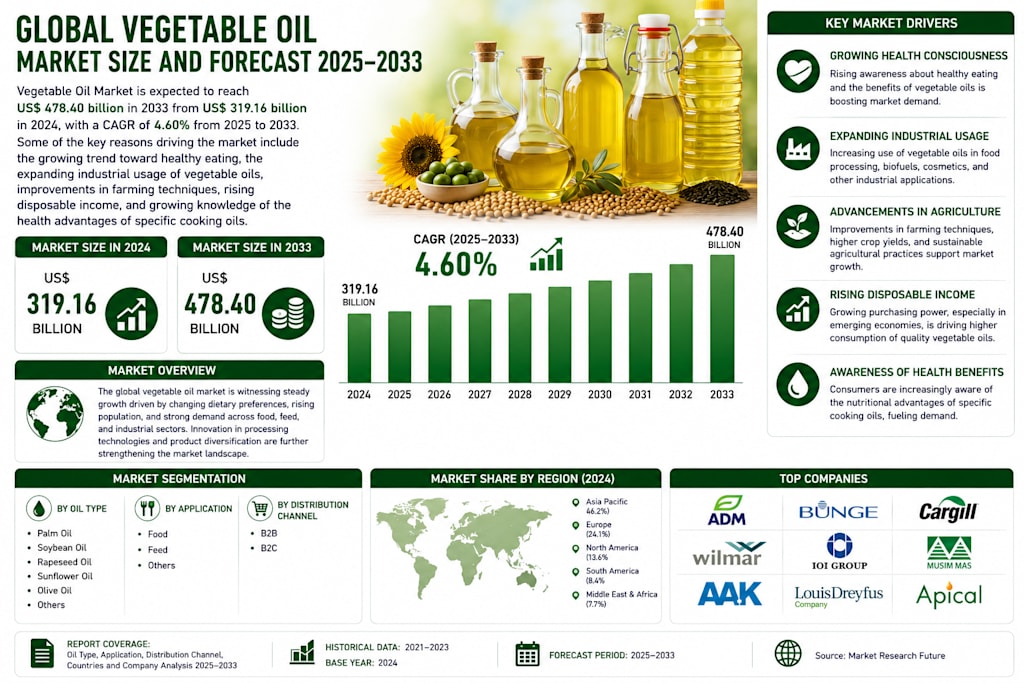
The global vegetable oil market is experiencing strong and sustained growth as changing dietary habits, increasing industrial applications, and rising global food demand continue reshaping the edible oils industry. Consumers worldwide are increasingly shifting toward healthier cooking ingredients and plant-based nutrition, creating major opportunities for vegetable oil manufacturers and suppliers.
According to Renub Research, the Global Vegetable Oil Market is projected to grow from US$ 319.16 billion in 2024 to US$ 478.40 billion by 2033, registering a CAGR of 4.60% during the forecast period from 2025 to 2033.
Vegetable oils are liquid fats extracted primarily from seeds, fruits, nuts, and legumes such as soybeans, sunflower, rapeseed, olives, and palm fruits. These oils are widely utilized in cooking, baking, food processing, cosmetics, detergents, pharmaceuticals, animal feed, and renewable energy production.
The increasing popularity of healthier diets, growing awareness regarding cardiovascular wellness, and rising demand for processed food products are significantly contributing to the expansion of the global vegetable oil industry. Additionally, industrial sectors such as biofuels, cosmetics, and personal care products are increasingly relying on vegetable oils due to their renewable and biodegradable properties.
As consumers become more conscious of nutrition and sustainability, the vegetable oil market is entering a transformative period marked by innovation, premiumization, and sustainable sourcing initiatives.
Growing Health Awareness Boosting Demand for Premium Vegetable Oils
Health consciousness has emerged as one of the most influential drivers of the global vegetable oil market. Consumers are increasingly prioritizing healthy fats and replacing traditional saturated oils with healthier alternatives rich in unsaturated fats and Omega-3 fatty acids.
Vegetable oils such as olive oil, sunflower oil, avocado oil, and canola oil are witnessing growing demand because of their perceived cardiovascular and nutritional benefits.
Public awareness campaigns, scientific research, and nutritional labeling regulations are encouraging consumers to adopt healthier cooking oils as part of balanced diets. The rising prevalence of obesity, diabetes, hypertension, and cardiovascular diseases is further accelerating this shift toward healthier edible oils.
Additionally, the rapid expansion of vegan and plant-based food trends is positively impacting the market. Food manufacturers are increasingly incorporating vegetable oils into meat alternatives, dairy-free products, ready-to-eat meals, sauces, and packaged snacks.
Consumers are also showing growing preference for organic, cold-pressed, and non-GMO oils, creating opportunities for premium product segments within the vegetable oil industry.
Industrial Applications Expanding Beyond Food Consumption
Vegetable oils are increasingly becoming essential raw materials across multiple industrial sectors. Beyond cooking and food processing, vegetable oils are extensively used in soaps, detergents, cosmetics, pharmaceuticals, lubricants, paints, and biofuel manufacturing.
The global biodiesel industry has emerged as a particularly important growth contributor for vegetable oil producers. Governments worldwide are promoting renewable fuels to reduce carbon emissions and dependence on fossil fuels, increasing demand for vegetable oil-based biodiesel.
Soybean oil, palm oil, and rapeseed oil are widely used in biodiesel production due to their efficiency and availability. As environmental sustainability becomes a global priority, industries are increasingly turning toward renewable and biodegradable raw materials such as vegetable oils.
Manufacturers are also investing heavily in research and development to identify new industrial applications for vegetable oils in green chemicals and eco-friendly manufacturing solutions.
The multifunctional properties of vegetable oils continue expanding their commercial relevance across diverse industries.
Population Growth Driving Long-Term Market Expansion
Rapid global population growth is another major factor supporting rising demand for vegetable oils worldwide. According to international population projections, the global population is expected to rise from approximately 8 billion currently to nearly 9.7 billion by 2050.
As populations expand, food consumption naturally increases, creating greater demand for cooking oils and processed food ingredients. Emerging economies across Asia-Pacific, Africa, and Latin America are witnessing rapid urbanization and rising middle-class populations, resulting in changing dietary patterns and higher edible oil consumption.
Busy lifestyles and increasing workforce participation are also encouraging greater reliance on convenience foods, restaurant meals, and packaged food products that require vegetable oils in production and preparation.
The growing popularity of international cuisines and fast-food chains is similarly driving higher edible oil consumption globally.
At the same time, technological advancements in agriculture and farming practices are improving crop productivity and supply chain efficiency, helping manufacturers meet rising global demand more effectively.
Palm Oil Continues to Dominate the Global Market
Palm oil remains the most widely produced and consumed vegetable oil globally due to its affordability, versatility, and high yield productivity. Southeast Asian nations such as Indonesia and Malaysia continue dominating global palm oil production and exports.
Palm oil is extensively used in processed foods, bakery products, confectionery items, cosmetics, detergents, and biodiesel manufacturing.
Its cost-effectiveness makes it highly attractive for large-scale food processing and industrial applications. However, sustainability concerns related to deforestation, biodiversity loss, and carbon emissions continue challenging the palm oil industry.
Environmental organizations and consumers are increasingly demanding sustainable sourcing and greater supply chain transparency from manufacturers and suppliers.
In response, many global companies are adopting certified sustainable palm oil initiatives to improve environmental accountability and maintain consumer trust.
Soybean Oil Maintains Strong Global Presence
Soybean oil continues to maintain a strong market position, especially across North America and Latin America. It remains one of the most widely used oils for frying, food processing, margarine manufacturing, and industrial applications.
The United States is among the largest producers and consumers of soybean oil due to its extensive agricultural infrastructure and strong food manufacturing industry.
Soybean oil is also becoming increasingly important in renewable fuel production as biodiesel demand continues growing globally.
Manufacturers are investing in improved processing technologies, supply chain modernization, and sustainable production methods to strengthen competitiveness within the soybean oil market.
Sunflower and Olive Oils Witness Rising Consumer Preference
Sunflower oil is gaining popularity worldwide because of its light texture, high vitamin E content, and lower saturated fat composition. Consumers increasingly view sunflower oil as a healthier cooking option suitable for daily use.
Similarly, olive oil continues experiencing rising global demand as consumers associate it with Mediterranean diets and long-term health benefits.
Premium olive oil products are particularly popular across Europe, North America, and urban markets in Asia-Pacific regions.
Rapeseed oil, commonly referred to as canola oil, is also becoming increasingly preferred because of its low cholesterol content and suitability for heart-healthy cooking.
The premium edible oils segment is expected to witness significant growth as consumers continue prioritizing nutrition, wellness, and clean-label food products.
United States Vegetable Oil Market Driven by Health and Renewable Energy Trends
The United States remains one of the largest vegetable oil markets globally due to strong demand for soybean oil, sunflower oil, and canola oil. Soybean oil dominates the U.S. market and is heavily utilized in packaged foods, restaurants, and food service industries.
American consumers are increasingly shifting toward healthier oils such as avocado oil and olive oil due to rising awareness regarding trans fats and heart health.
The country’s expanding biodiesel industry is also significantly increasing industrial demand for vegetable oils.
However, the U.S. vegetable oil industry continues facing challenges related to raw material price volatility, climate-related agricultural disruptions, and competition from alternative oil products.
Germany Emphasizes Sustainability and Healthy Consumption
Germany’s vegetable oil market is strongly influenced by sustainability awareness and health-conscious consumer behavior. Rapeseed oil, sunflower oil, and olive oil remain highly popular among German consumers.
Growing demand for organic, non-GMO, and sustainably sourced products is encouraging companies to prioritize ethical sourcing and environmentally responsible production practices.
Germany’s strict food safety and environmental regulations are also shaping market development by promoting transparency and sustainability throughout the supply chain.
The increasing popularity of plant-based diets and clean-label foods continues supporting demand for premium vegetable oils within the country.
India Emerging as a Key High-Growth Market
India has become one of the world’s largest vegetable oil markets due to rapid urbanization, changing dietary habits, and population growth. Palm oil, soybean oil, and sunflower oil dominate the Indian edible oil sector.
Rising disposable incomes and growing awareness regarding healthier cooking oils are encouraging Indian consumers to adopt refined and premium oil products.
In June 2022, Freedom Refined Sunflower Oil, a division of Gemini Edibles & Fats India, announced expansion plans into Tamil Nadu and Kerala to address rising demand for sunflower oil in southern India.
Additionally, Cargill strengthened its Indian operations through the acquisition of an edible oil refinery in Nellore and a subsequent US$ 35 million investment aimed at expanding production capacity.
India’s growing food processing industry and expanding retail infrastructure are expected to support long-term market growth.
Saudi Arabia Increasingly Depends on Imported Vegetable Oils
Saudi Arabia’s vegetable oil market is witnessing steady growth due to urbanization, changing dietary habits, and rising packaged food consumption. Palm oil, soybean oil, and sunflower oil remain among the most widely consumed oils within the Kingdom.
Despite limited domestic agricultural production, Saudi Arabia relies heavily on imports to satisfy growing consumer demand.
Government initiatives promoting food security and healthier food consumption are positively influencing market development. Premium and non-GMO oils are also gaining popularity among affluent consumers within the region.
Raw Material Price Volatility and Sustainability Concerns Challenge the Industry
Although the vegetable oil market demonstrates strong growth potential, several challenges continue affecting market stability and profitability.
One of the biggest concerns involves fluctuating raw material prices caused by unpredictable weather conditions, geopolitical tensions, crop failures, and supply chain disruptions.
Price volatility in palm oil, soybean oil, and sunflower seeds can significantly impact manufacturing costs and retail pricing.
Labor rights and fair trade concerns also remain major industry challenges, particularly within palm oil-producing regions where allegations of poor working conditions and labor exploitation have attracted international criticism.
Environmental sustainability and ethical sourcing are expected to remain central priorities for companies seeking long-term competitiveness and consumer trust.
10 Recent Developments by Leading Companies
Cargill acquired an edible oil refinery in Nellore, India, to strengthen manufacturing capacity.
Cargill invested approximately US$ 35 million to enhance edible oil production operations in India.
Freedom Refined Sunflower Oil expanded into Tamil Nadu and Kerala due to rising sunflower oil demand.
Wilmar International expanded sustainable palm oil sourcing initiatives globally.
Bunge increased investments in renewable fuel feedstock and vegetable oil refining operations.
Unilever Plc strengthened sustainable sourcing commitments across vegetable oil supply chains.
Archer Daniels Midland Company expanded vegetable oil processing and global logistics capabilities.
Sime Darby accelerated certified sustainable palm oil initiatives.
AAK enhanced specialty oil product solutions for food and cosmetic sectors.
Governments worldwide intensified sustainability regulations related to deforestation and ethical sourcing practices.
Competitive Landscape
The global vegetable oil market remains highly competitive, with major multinational companies focusing on sustainability, product innovation, supply chain expansion, and strategic partnerships.
Key market participants include:
Archer Daniels Midland Company
Wilmar International
AAK
Unilever Plc
Bunge
Cargill
Sime Darby
Associated British Foods
These companies are increasingly investing in renewable energy applications, sustainable sourcing, premium product development, and digital supply chain technologies to strengthen their global market positions.
Final Thoughts
The global vegetable oil market is entering a period of sustained growth supported by rising health awareness, expanding industrial applications, growing food consumption, and increasing demand for renewable energy solutions.
Healthier edible oils, biofuel production, sustainable sourcing initiatives, and premium food products are expected to remain major drivers of industry expansion through 2033.
At the same time, environmental sustainability, ethical labor practices, and supply chain transparency will continue shaping the future direction of the vegetable oil industry.
Companies capable of balancing innovation, affordability, and sustainability are likely to emerge as long-term leaders within the evolving global vegetable oil market.
About the Creator
Enjoyed the story? Support the Creator.
Subscribe for free to receive all their stories in your feed.
Comments
There are no comments for this story
Be the first to respond and start the conversation.