
Global Tilapia Market Set to Reach $12 Billion by 2034 as Demand for Affordable Seafood Continues to Rise
Growing appetite for high-protein diets, advances in aquaculture technology, and expanding global seafood trade are fueling the future of the tilapia industry.

As the global population grows and consumers seek healthier, more affordable protein options, the seafood industry is undergoing a significant transformation. Among the many species supporting this shift, tilapia has emerged as one of the world's most important farmed fish.
Often referred to as the "aquatic chicken" because of its affordability, adaptability, and efficient production cycle, tilapia has become a staple source of protein in both developed and developing economies. Its mild flavor, versatility in cooking, and year-round availability have made it a popular choice among households, restaurants, and foodservice providers worldwide.
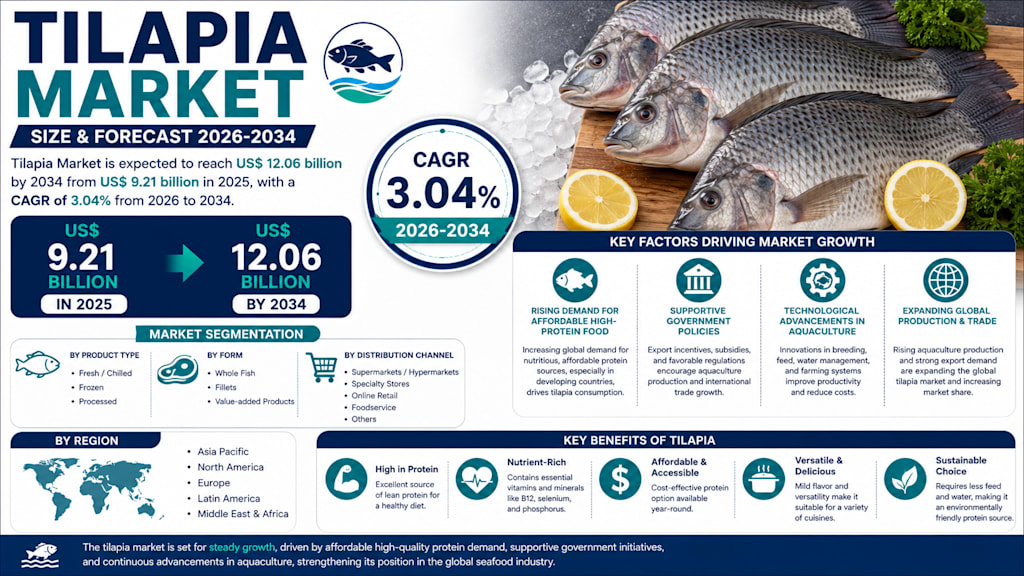
According to Renub Research, the global Tilapia Market is expected to grow from US$9.21 billion in 2025 to US$12.06 billion by 2034, registering a compound annual growth rate (CAGR) of 3.04% between 2026 and 2034. Growth is being driven by rising global demand for affordable protein, expanding aquaculture production, supportive government initiatives, technological advancements, and increasing international seafood trade.
As food security and sustainability become increasingly important global priorities, tilapia is playing a crucial role in meeting the world's growing nutritional needs.
Why Tilapia Has Become One of the World's Most Popular Fish
Tilapia's success is rooted in its unique combination of economic and biological advantages.
Unlike many other seafood species, tilapia grows quickly, adapts well to different farming environments, and converts feed into body mass efficiently. These characteristics make it highly attractive to fish farmers seeking reliable production and predictable returns.
Consumers also appreciate tilapia for its mild taste, low fat content, and versatility. It can be grilled, baked, fried, steamed, or incorporated into a wide range of cuisines without overpowering other ingredients.
Its affordability makes it particularly valuable in markets where consumers seek cost-effective alternatives to more expensive seafood options such as salmon, tuna, or cod.
These qualities have helped establish tilapia as one of the most widely farmed and consumed fish species globally.
Rising Demand for Affordable Protein Is Fueling Growth
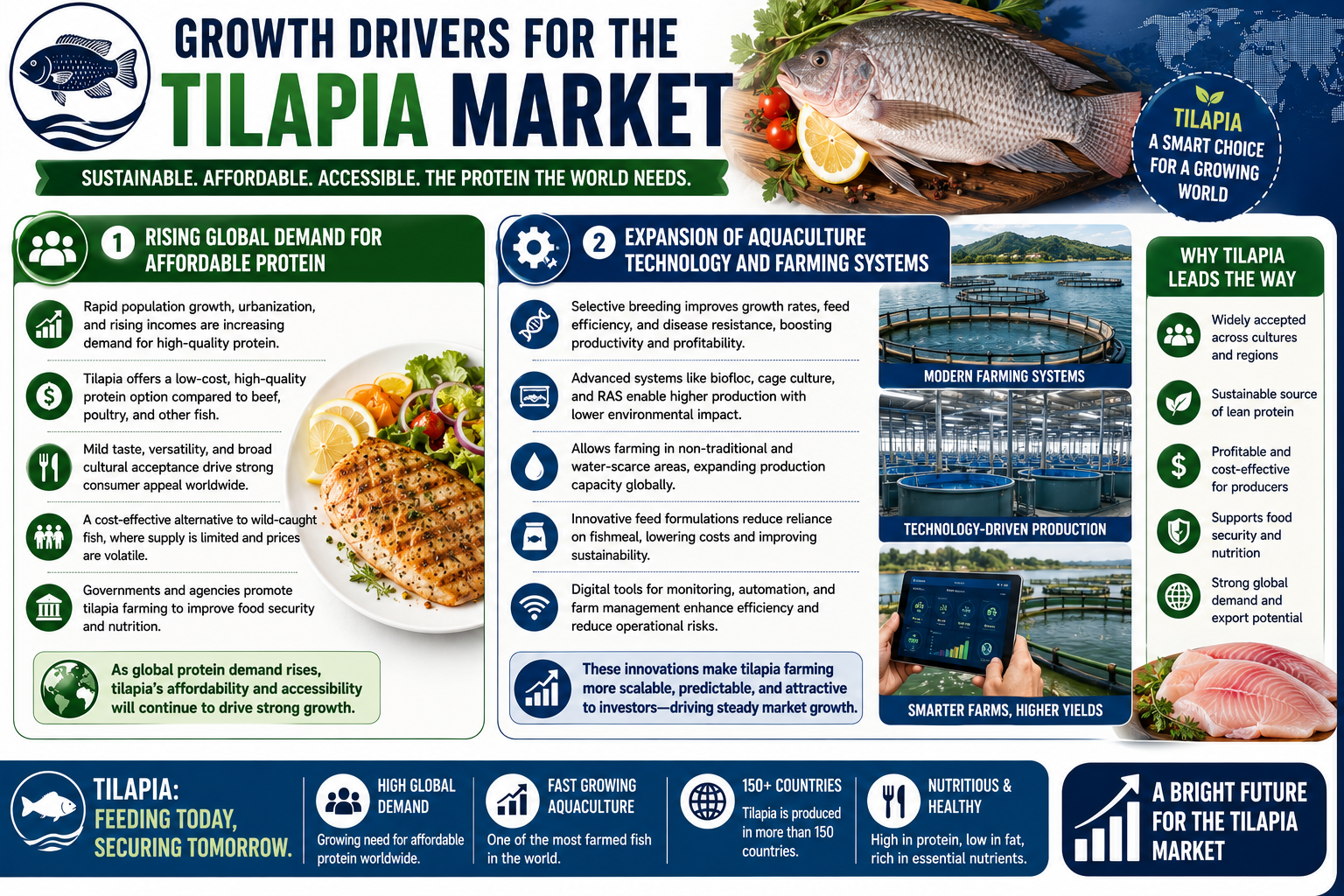
One of the strongest drivers behind the tilapia market is the growing global demand for accessible sources of animal protein.
Population growth, urbanization, and rising incomes are encouraging dietary shifts toward protein-rich foods. However, economic pressures continue influencing purchasing decisions, particularly in emerging economies.
Tilapia offers an attractive solution.
Compared to beef, poultry, and many seafood alternatives, tilapia can be produced at relatively low cost while still providing valuable nutritional benefits. This affordability allows consumers to incorporate quality protein into their diets without significantly increasing food expenditures.
Governments, development organizations, and food security programs also support tilapia farming as a practical method for improving nutrition and reducing dependence on wild fish stocks.
As the world's population continues expanding, demand for affordable protein sources is expected to remain a key growth driver for the industry.
Aquaculture Innovation Is Transforming Production
Technological advancements in aquaculture are helping the tilapia industry achieve new levels of efficiency and sustainability.
Modern breeding programs have produced tilapia strains with improved growth rates, stronger disease resistance, and better feed conversion ratios. These improvements allow farmers to produce more fish while reducing operational costs.
Advanced farming systems are also changing the industry's production landscape.
Technologies such as biofloc systems, cage culture, and recirculating aquaculture systems (RAS) enable producers to maximize output while minimizing environmental impact and water consumption.
Digital monitoring tools now allow farmers to track water quality, automate feeding schedules, and manage production more precisely than ever before.
These innovations help reduce risk, improve productivity, and make tilapia farming increasingly attractive to investors and producers alike.
As aquaculture technology continues evolving, tilapia production is expected to become even more efficient and scalable.
Global Seafood Trade Is Creating New Opportunities
International trade has become a major contributor to tilapia market growth.
Tilapia is widely traded across global seafood markets in multiple forms, including frozen whole fish, fresh fillets, frozen fillets, and value-added products such as breaded or marinated portions.
North America and Europe remain among the largest import markets, while countries such as China play a dominant role in global production and exports.
The expansion of cold-chain logistics, processing infrastructure, and food safety standards has strengthened international supply chains and improved product quality.
Consumers increasingly value convenient seafood options that are easy to prepare and consistently available, making tilapia particularly attractive to retailers and foodservice operators.
As global seafood consumption continues rising, international trade is expected to remain a critical growth engine for the tilapia industry.
Value-Added Products Are Expanding Market Potential
The modern seafood consumer is looking for convenience.
This trend has encouraged producers and processors to develop a growing range of value-added tilapia products designed to simplify meal preparation and enhance consumer appeal.
Frozen fillets, seasoned portions, breaded products, and ready-to-cook options have become increasingly popular in supermarkets and foodservice establishments.
These products not only meet consumer demands for convenience but also create opportunities for higher profit margins throughout the supply chain.
Retailers benefit from improved product differentiation, while processors can increase value beyond basic commodity sales.
As consumer preferences continue shifting toward convenience-oriented food choices, value-added tilapia products are expected to capture an increasing share of the market.
Sustainability Is Becoming a Competitive Advantage
Environmental responsibility is becoming an increasingly important consideration within the seafood industry.
Consumers, retailers, and regulators are paying closer attention to how seafood products are produced, sourced, and distributed.
This trend has encouraged many tilapia producers to adopt sustainable farming practices, certification programs, and traceability systems that improve transparency and environmental performance.
Responsible feed sourcing, efficient water management, and reduced environmental impacts are becoming key priorities across the industry.
Certification programs and sustainability initiatives also help producers access premium markets where buyers increasingly require proof of responsible production practices.
Companies that successfully balance profitability with sustainability are likely to gain competitive advantages as consumer expectations continue evolving.
Disease Management Remains a Significant Challenge
Despite its positive outlook, the tilapia industry faces several important challenges.
One of the most pressing concerns is disease management.
As production systems become more intensive, fish are often raised at higher densities, increasing the risk of bacterial, viral, and parasitic infections. Disease outbreaks can spread rapidly, resulting in lower growth rates, increased mortality, and significant financial losses.
Managing these risks requires investments in biosecurity measures, water quality monitoring, veterinary support, and disease prevention programs.
For smaller producers, these costs can present substantial operational challenges.
Maintaining fish health while scaling production remains a critical priority for the industry moving forward.
Rising Costs Are Pressuring Producers
Production costs continue to create challenges throughout the tilapia supply chain.
Feed represents one of the largest expenses in aquaculture operations, and fluctuations in the prices of ingredients such as soybean meal and corn can significantly affect profitability.
Additional costs related to labor, energy, transportation, equipment maintenance, and regulatory compliance further increase financial pressure on producers.
Smaller and medium-sized farms often face greater difficulty absorbing these rising expenses, limiting their ability to expand production or invest in new technologies.
Managing cost efficiency while maintaining quality standards remains one of the industry's most important business challenges.
Environmental Concerns Require Long-Term Solutions
Environmental sustainability remains a major topic of discussion within the tilapia industry.
Intensive aquaculture operations can contribute to water pollution through excess nutrients, fish waste, and uneaten feed. In some regions, concerns also exist regarding the introduction of non-native species and their potential impact on local ecosystems.
Water resource competition presents another challenge, particularly in areas facing agricultural or urban water shortages.
As environmental regulations become stricter, producers must increasingly invest in waste management systems, eco-friendly technologies, and sustainability programs.
While these investments can increase costs, they are becoming essential for maintaining social acceptance and long-term industry growth.
Regional Markets Show Strong Potential
The United States remains one of the world's largest import markets for tilapia, driven by strong demand for affordable, convenient seafood products. Most tilapia consumed in the country is imported, as domestic production remains relatively limited. Health-conscious consumers continue supporting demand for lean protein options.
Germany relies heavily on imported tilapia and places significant emphasis on sustainability, traceability, and responsible sourcing. Consumer interest in healthy seafood options supports stable demand.
India is emerging as an increasingly important producer, benefiting from favorable farming economics, expanding aquaculture infrastructure, and growing domestic seafood consumption. Government initiatives supporting modern farming practices are helping accelerate development.
Saudi Arabia continues investing in aquaculture as part of broader food security initiatives. Domestic production is expanding through advanced farming systems designed to optimize output in water-scarce environments.
These regional trends demonstrate the global nature of the industry's growth opportunities.
Recent Industry Developments Highlight Future Momentum
The industry's commitment to innovation and expansion remains evident through recent developments.
In October 2024, environmental authorities in Chennai launched initiatives to manage invasive tilapia populations in local waterways to protect native species and biodiversity. Meanwhile, in July 2024, Aller Aqua and IDH partnered to support tilapia farmers in Kenya through training, improved inputs, and enhanced market access, promoting sustainable aquaculture development and economic opportunity for smallholder producers.
These efforts reflect the broader industry's focus on balancing growth with environmental stewardship and social responsibility.
Final Thoughts
The global tilapia market is entering a period of steady expansion fueled by rising protein demand, aquaculture innovation, and growing international trade.
With the market projected to reach US$12.06 billion by 2034, tilapia is expected to remain one of the world's most important and accessible seafood products. Its affordability, nutritional value, and production efficiency position it as a vital component of global food systems.
While challenges related to disease management, environmental sustainability, and rising costs remain, continued technological advancement and responsible farming practices are helping the industry navigate these obstacles.
As consumers increasingly seek healthy, affordable, and sustainable protein sources, tilapia's role in global nutrition is likely to become even more significant in the years ahead.
About the Creator
Enjoyed the story? Support the Creator.
Subscribe for free to receive all their stories in your feed.
Comments
There are no comments for this story
Be the first to respond and start the conversation.