
Global Tilapia Market Set for Steady Growth as Affordable Seafood Gains Popularity Worldwide
Rising demand for affordable protein, advances in aquaculture technology, and expanding international seafood trade are strengthening the future of the global tilapia industry.

As the global population continues to grow and consumers increasingly seek affordable, nutritious sources of protein, the seafood industry is undergoing significant transformation. Among the many species contributing to global food security, tilapia has emerged as one of the most important and widely consumed farmed fish in the world.
Often referred to as the "aquatic chicken" due to its rapid growth, adaptability, and affordability, tilapia has become a staple protein source across developed and developing economies alike. Its mild flavor, versatility in cooking, and relatively low production costs have helped make it one of the most commercially successful aquaculture species globally.
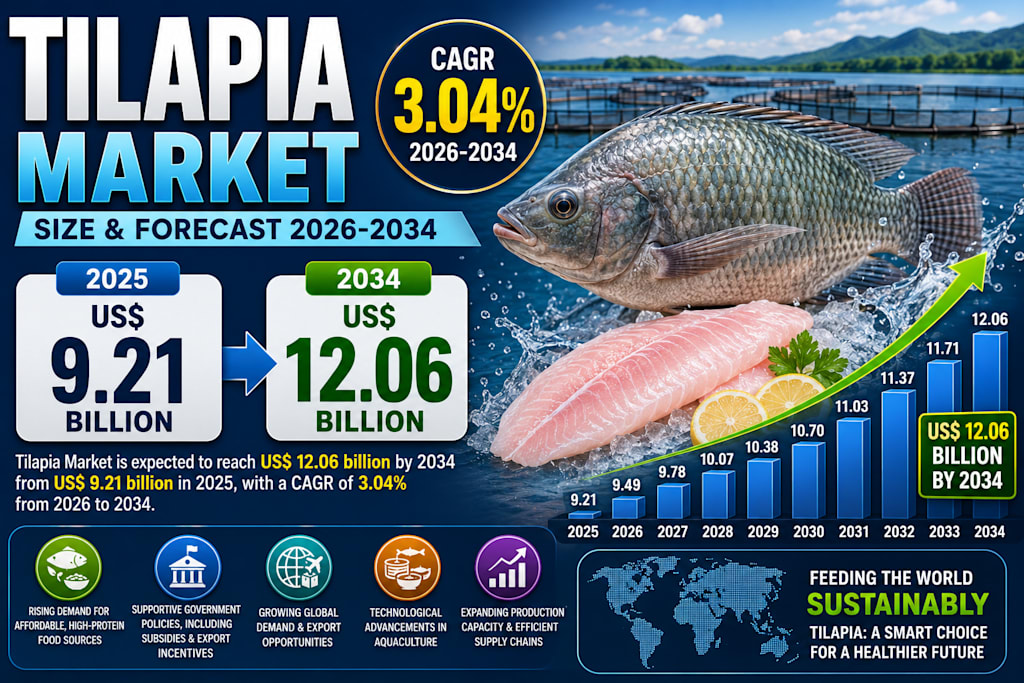
According to Renub Research, the Global Tilapia Market is expected to grow from US$9.21 billion in 2025 to US$12.06 billion by 2034, registering a compound annual growth rate (CAGR) of 3.04% from 2026 to 2034. The market's expansion is being driven by rising protein consumption, technological innovation in aquaculture, supportive government policies, and increasing demand for sustainable seafood products.
Tilapia Has Become a Global Aquaculture Success Story
The tilapia industry represents one of the most significant segments of the global aquaculture sector.
Unlike many seafood species that rely heavily on wild capture fisheries, tilapia is primarily farmed through controlled aquaculture systems. This production model enables consistent supply, predictable quality, and scalable operations capable of meeting growing consumer demand.
Tilapia's success stems from several biological advantages. The species grows quickly, adapts well to diverse environmental conditions, and converts feed efficiently into body mass. These characteristics allow producers to maintain relatively low production costs compared to many other animal protein sources.
As a result, tilapia has become an essential component of food systems in numerous countries, supporting both domestic consumption and international trade.
Rising Demand for Affordable Protein Is Fueling Growth
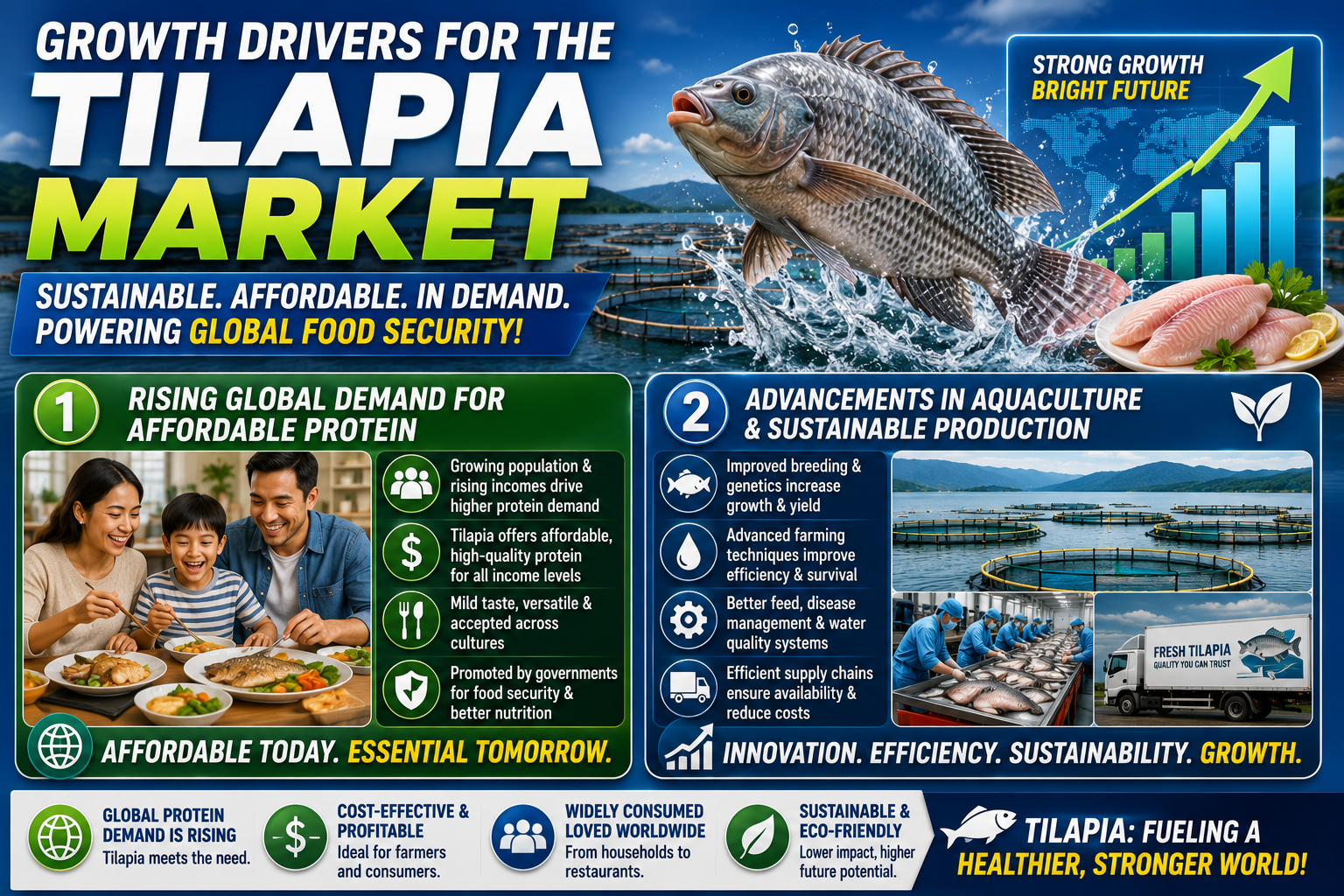
One of the strongest drivers behind the global tilapia market is the increasing demand for affordable protein.
Population growth, urbanization, and rising incomes are reshaping dietary habits worldwide. Consumers are seeking nutrient-rich foods that provide value without placing excessive strain on household budgets.
Tilapia meets these requirements exceptionally well.
Compared to beef, pork, and even some seafood species, tilapia offers a cost-effective source of lean protein. Its affordability makes it particularly attractive in emerging markets, where food security remains a critical concern.
Additionally, governments and international development organizations frequently promote aquaculture as a means of improving nutrition and increasing access to protein-rich foods.
As global protein consumption continues to rise, tilapia is expected to play an increasingly important role in meeting demand.
Health-Conscious Consumers Are Choosing Seafood
Consumer preferences are shifting toward healthier eating habits.
Many individuals are reducing consumption of heavily processed foods and seeking natural, nutrient-dense alternatives. Seafood has benefited significantly from this trend, and tilapia is among the fish species experiencing increased demand.
Tilapia is valued for its lean protein content, low fat levels, and versatility in meal preparation. It can be grilled, baked, fried, steamed, or incorporated into a wide range of cuisines.
Its mild flavor appeals to consumers who may not typically enjoy stronger-tasting seafood varieties, making it an accessible choice for families and first-time seafood buyers.
As awareness of healthy eating continues to grow, demand for affordable fish products is expected to remain strong.
Aquaculture Technology Is Transforming Production
Technological innovation has become one of the most important forces shaping the future of tilapia farming.
Modern aquaculture systems are enabling producers to increase productivity while improving sustainability and operational efficiency.
Selective breeding programs have produced tilapia strains that grow faster, resist disease more effectively, and utilize feed more efficiently. These improvements help farmers reduce costs while increasing yields.
Advanced farming systems such as recirculating aquaculture systems (RAS), biofloc technology, and cage culture are allowing producers to optimize production in a variety of environments.
These technologies improve water management, reduce environmental impacts, and support more consistent production throughout the year.
As innovation continues to accelerate, aquaculture technology will remain a critical growth driver for the tilapia industry.
Sustainable Farming Practices Are Becoming Essential
Sustainability is increasingly influencing decisions throughout the seafood supply chain.
Consumers, retailers, and regulators are demanding greater transparency regarding how seafood products are produced. This has encouraged tilapia producers to adopt more sustainable farming methods.
Modern aquaculture operations are implementing environmentally responsible practices such as improved feed management, water recycling systems, waste reduction technologies, and disease prevention measures.
Certification programs and traceability initiatives are also becoming more common, helping producers demonstrate compliance with sustainability standards while improving consumer confidence.
As environmental concerns continue to shape purchasing decisions, sustainable production practices are expected to become a major competitive advantage.
International Trade Is Expanding Market Opportunities
Global seafood trade has played a crucial role in the expansion of the tilapia market.
Tilapia is widely traded internationally in various forms, including whole frozen fish, fresh fillets, frozen fillets, and value-added products such as breaded, marinated, and seasoned portions.
North America and Europe remain among the largest import markets, creating significant opportunities for producing countries across Asia, Latin America, and Africa.
Advancements in processing technologies, cold-chain logistics, and food safety standards have strengthened global trade networks and improved market access.
As international demand for affordable seafood continues to increase, global trade is expected to remain a powerful growth engine for the industry.
Value-Added Products Are Driving Revenue Growth
Consumer demand is increasingly shifting toward convenience-oriented food products.
This trend has encouraged seafood companies to expand their offerings beyond traditional whole fish and basic fillets.
Today, tilapia is available in a variety of ready-to-cook and ready-to-eat formats designed to appeal to busy consumers seeking convenience without sacrificing nutrition.
Breaded fillets, seasoned portions, frozen meal kits, and marinated seafood products are becoming increasingly popular in retail and foodservice channels.
These value-added products often generate higher profit margins while expanding tilapia's appeal among mainstream consumers.
The continued growth of convenience foods is expected to create additional opportunities for product innovation and revenue generation.
China Continues to Dominate Global Production
China remains the world's largest producer and exporter of tilapia.
The country's extensive aquaculture infrastructure, favorable production economics, and established export networks have enabled it to maintain a leading position within the global market.
Chinese producers supply significant volumes of tilapia to international markets, particularly North America and Europe.
Beyond China, important producing countries include Indonesia, Brazil, Vietnam, Thailand, Bangladesh, Colombia, and the Philippines.
These nations are investing heavily in aquaculture development to strengthen food security, support rural livelihoods, and increase export revenues.
The United States Remains a Major Import Market
The United States plays a critical role within the global tilapia industry despite relatively limited domestic production.
American consumers appreciate tilapia for its affordability, mild taste, and versatility. As a result, the country imports substantial quantities of tilapia products each year.
Most tilapia consumed in the United States is sold as frozen or fresh fillets through retail supermarkets, restaurants, and foodservice providers.
Growing consumer interest in healthy eating and lean protein sources continues to support stable demand across the U.S. market.
Additionally, increasing attention to sustainability, traceability, and product quality is influencing purchasing decisions throughout the supply chain.
India Emerges as a Promising Growth Market
India's tilapia industry is experiencing steady expansion as farmers diversify beyond traditional aquaculture species.
Tilapia's adaptability, fast growth, and favorable production economics have attracted increasing interest from producers seeking profitable alternatives.
Government initiatives supporting hatchery development, improved fish strains, and modern farming practices are helping strengthen the sector.
Domestic demand is also increasing as consumers become more aware of seafood's nutritional benefits and seek affordable protein options.
With continued investment in production infrastructure and processing capabilities, India is expected to become an increasingly important player within the global tilapia market.
Saudi Arabia Is Investing in Aquaculture Growth
Saudi Arabia is actively expanding its aquaculture sector as part of broader food security initiatives.
Tilapia has become one of the most widely farmed fish species within the country due to its suitability for intensive production systems and strong domestic demand.
Government programs aimed at increasing self-sufficiency in food production are encouraging investment in modern aquaculture technologies and sustainable farming practices.
Despite challenges related to water availability and production costs, Saudi Arabia's tilapia market is expected to experience continued growth.
Disease Management Remains a Key Challenge
While growth prospects remain positive, the industry faces several important challenges.
Disease outbreaks represent one of the most significant risks to tilapia producers. Intensive farming systems can increase the likelihood of bacterial, viral, and parasitic infections spreading rapidly through fish populations.
Disease-related losses can reduce productivity, increase mortality rates, and create substantial financial burdens for farmers.
To address these risks, producers must invest in biosecurity measures, water quality management, vaccines, and improved monitoring systems.
Although these investments enhance long-term sustainability, they also increase operational costs.
Rising Input Costs Pressure Profitability
Feed represents the largest expense in tilapia farming operations.
Fluctuating prices for key feed ingredients such as soybean meal and corn have increased production costs for many farmers worldwide.
Additional expenses related to energy, labor, transportation, and regulatory compliance further pressure profit margins.
Smaller producers often face the greatest challenges because they may lack the financial resources needed to absorb rising costs or invest in efficiency-enhancing technologies.
Managing production expenses while maintaining competitiveness remains a critical industry priority.
Environmental Concerns Continue to Shape the Industry
Environmental sustainability remains an important issue for the tilapia sector.
Intensive aquaculture systems can contribute to water pollution through fish waste, excess feed, and nutrient-rich effluents. Concerns also exist regarding escaped farmed fish affecting local ecosystems, particularly in regions where tilapia is not native.
As regulators and consumers place greater emphasis on environmental responsibility, producers face increasing pressure to adopt sustainable practices.
Investments in waste management, water treatment systems, eco-friendly feeds, and environmental monitoring are becoming increasingly necessary.
Balancing environmental stewardship with economic viability will remain a defining challenge for the industry's future.
Final Thoughts
The global tilapia market continues to demonstrate resilience and long-term growth potential as consumers increasingly seek affordable, nutritious, and accessible protein sources.
Driven by technological innovation, expanding aquaculture production, growing international trade, and rising demand for healthy seafood, tilapia has established itself as one of the most important farmed fish species worldwide.
With the market expected to grow from US$9.21 billion in 2025 to US$12.06 billion by 2034, opportunities remain significant for producers, processors, exporters, and investors across the aquaculture value chain.
While challenges such as disease management, rising costs, and environmental sustainability require ongoing attention, continued innovation and responsible farming practices are expected to support the industry's evolution.
As global seafood consumption continues to rise, tilapia is likely to remain a cornerstone of affordable protein production and a vital contributor to food security around the world.
About the Creator
Enjoyed the story? Support the Creator.
Subscribe for free to receive all their stories in your feed.
Comments
There are no comments for this story
Be the first to respond and start the conversation.