
Global Tea Market to Reach US$123.22 Billion by 2034 as Health-Conscious Consumers Embrace Premium and Functional Beverages
Growing demand for healthier beverages, premium tea varieties, ready-to-drink innovations, and sustainable packaging is driving the steady expansion of the global tea market.

Tea Continues to Evolve Beyond a Traditional Beverage
Tea has remained one of the world's most beloved beverages for centuries, enjoyed across cultures for its refreshing taste, comforting aroma, and numerous health benefits. Whether served hot or cold, tea has become an essential part of daily routines for billions of people around the globe.
Today, however, the tea industry is undergoing a remarkable transformation. Consumers are increasingly seeking beverages that not only provide refreshment but also support wellness, immunity, relaxation, and overall health. This shift has fueled demand for premium teas, herbal infusions, ready-to-drink products, and innovative functional beverages that cater to changing lifestyles.
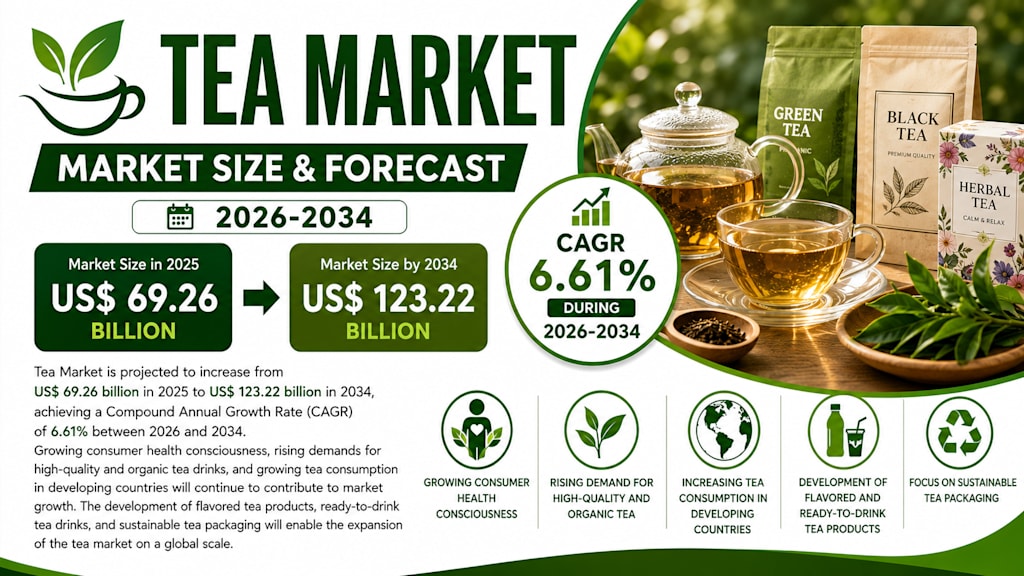
According to the latest market outlook, the Global Tea Market is expected to grow from US$69.26 billion in 2025 to US$123.22 billion by 2034, registering a compound annual growth rate (CAGR) of 6.61% during 2026–2034. Rising health awareness, increasing consumption in emerging economies, growing demand for premium products, and continuous product innovation are expected to support long-term market expansion.
Tea Remains One of the World's Most Popular Beverages
Tea is produced primarily from the leaves of the Camellia sinensis plant and is available in numerous varieties including green tea, black tea, oolong tea, white tea, and pu-erh tea.
Differences in flavor, aroma, and color result from variations in harvesting methods, oxidation, and processing techniques.
In addition to traditional tea leaves, many herbal beverages prepared from flowers, fruits, herbs, and spices are also commonly consumed as tea because of their refreshing taste and wellness benefits.
Tea is widely appreciated for its versatility, making it suitable for everyday consumption across households, workplaces, restaurants, and cafés.
Health Awareness Continues Driving Market Growth
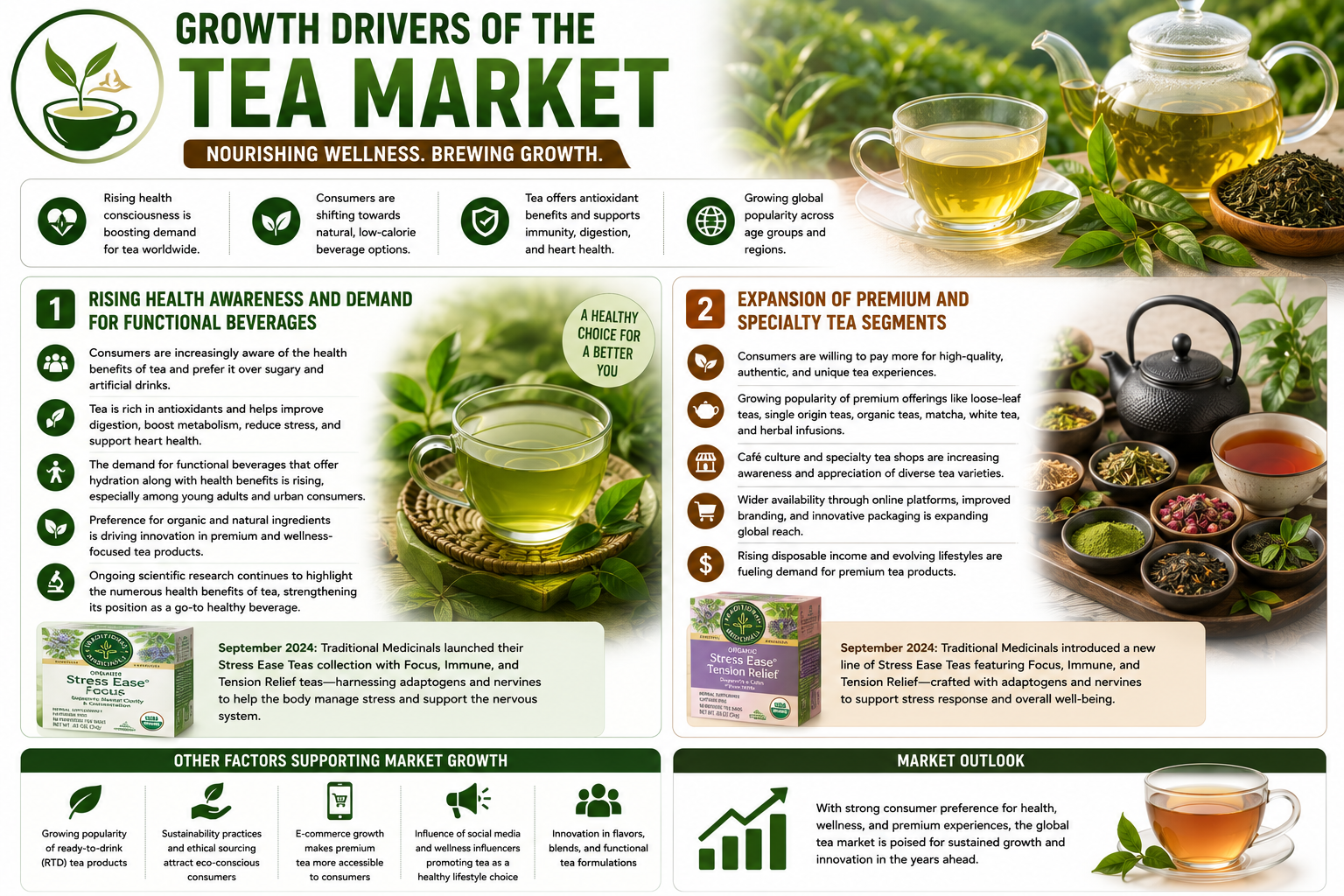
One of the strongest factors supporting the expansion of the tea market is growing consumer interest in healthier lifestyles.
Many consumers are replacing sugary soft drinks with tea because of its natural antioxidant content and perceived health benefits.
Green tea, herbal tea, and wellness blends are increasingly consumed to support heart health, digestion, metabolism, immune function, stress management, and overall well-being.
Scientific research highlighting the benefits of plant-based beverages has further strengthened consumer confidence in tea products.
As preventive healthcare becomes increasingly important worldwide, tea continues gaining popularity among health-conscious consumers.
Premium and Specialty Tea Segments Expand Rapidly
Consumer preferences are steadily shifting toward premium tea experiences.
Rather than purchasing only conventional packaged tea, many consumers now seek loose-leaf tea, single-origin products, artisan blends, organic tea, matcha, white tea, and premium herbal infusions.
Specialty tea cafés and boutique retailers have introduced customers to a wider variety of flavors, brewing techniques, and tea origins.
Growing disposable incomes and increased willingness to pay for high-quality products continue supporting the premium tea segment across both developed and emerging markets.
Brand storytelling, ethical sourcing, and premium packaging have become important competitive advantages.
Ready-to-Drink Tea Meets Modern Lifestyles
Convenience has become one of the biggest trends shaping the global tea industry.
Busy consumers increasingly purchase ready-to-drink (RTD) tea products that require no preparation and can be consumed while traveling, working, or exercising.
Manufacturers continue introducing innovative iced teas, sparkling teas, fruit-infused beverages, low-sugar formulations, and vitamin-enriched functional drinks.
Creative packaging, portable bottles, and expanding retail availability have made RTD tea one of the fastest-growing beverage categories.
The popularity of these products is particularly strong among younger consumers seeking healthier alternatives to carbonated soft drinks.
Green Tea Leads Wellness Trends
Green tea remains one of the fastest-growing segments within the global tea market.
Rich in catechins and other antioxidants, green tea is widely recognized for supporting metabolism, cardiovascular health, immune function, and weight management.
Consumers increasingly choose green tea because it aligns with growing interest in natural wellness, plant-based nutrition, and clean-label products.
Manufacturers continue expanding flavor options through combinations with jasmine, mint, lemon, matcha, berries, and tropical fruits.
Growing availability through supermarkets, specialty stores, cafés, and online retailers has further accelerated global demand.
Specialty Tea Stores Enhance Consumer Experience
Specialty tea stores have become an increasingly important retail channel.
Unlike traditional supermarkets, these stores offer premium loose-leaf teas, personalized recommendations, educational experiences, tea tastings, and brewing demonstrations.
Knowledgeable staff help consumers explore new varieties while explaining flavor profiles, brewing methods, and tea origins.
Many specialty retailers also emphasize sustainable sourcing, organic certification, and direct relationships with tea producers.
The combination of premium products and personalized customer experiences continues strengthening this segment.
Sustainable Packaging Gains Importance
Environmental sustainability has become an important purchasing consideration.
Consumers increasingly prefer brands that utilize recyclable, reusable, or environmentally responsible packaging materials.
Manufacturers continue investing in biodegradable tea bags, recyclable plastic containers, paper-based packaging, and reduced plastic usage.
Sustainability initiatives also extend beyond packaging to include ethical sourcing, environmentally responsible cultivation, and support for tea-growing communities.
Companies that successfully combine product quality with sustainability are expected to strengthen long-term customer loyalty.
Residential Consumption Remains Strong
Household consumption continues representing one of the largest application segments within the tea market.
Tea remains a daily beverage in millions of homes, consumed during breakfast, afternoon breaks, family gatherings, and moments of relaxation.
The increasing popularity of remote work has further encouraged at-home tea consumption as consumers seek comforting beverages throughout the day.
Online grocery platforms now provide households with access to premium international tea brands that were previously difficult to obtain.
Growing urbanization and rising disposable incomes continue supporting residential demand worldwide.
Plastic Containers Support Product Distribution
Plastic packaging remains widely used throughout the tea industry because of its durability, affordability, and ability to protect product freshness.
Plastic containers provide effective barriers against moisture, contamination, and physical damage while simplifying transportation and storage.
Manufacturers continue improving packaging design to enhance shelf appeal while investing in recyclable materials that reduce environmental impact.
As packaged tea consumption increases worldwide, demand for safe and practical packaging solutions is expected to remain strong.
Competition and Consumer Preferences Continue Evolving
Although the tea market enjoys strong growth, manufacturers face increasing competition from coffee, functional beverages, flavored water, kombucha, and plant-based drinks.
Consumers continuously seek new flavors, innovative ingredients, and beverages offering additional health benefits.
Maintaining brand loyalty therefore requires continuous product innovation, premium quality, attractive packaging, and effective marketing strategies.
Companies that successfully anticipate changing consumer preferences are expected to maintain competitive advantages.
Regional Markets Continue Supporting Growth
The United States continues experiencing steady tea market growth through rising demand for iced tea, functional beverages, herbal infusions, and premium wellness products.
The United Kingdom remains one of the world's most established tea markets, where traditional black tea consumption continues alongside growing interest in green tea, herbal blends, and specialty products.
India serves as both one of the world's largest tea producers and consumers, with strong domestic demand supported by traditional chai culture while premium and flavored tea categories continue expanding.
Saudi Arabia also demonstrates steady market growth as consumers increasingly explore premium, herbal, and wellness-oriented tea products through modern retail channels.
Together, these major markets continue driving global tea consumption and innovation.
Innovation Will Shape the Future of Tea
The future of the tea industry will be defined by functional nutrition, premiumization, sustainability, and digital commerce.
Manufacturers are expected to introduce more wellness-focused beverages enriched with adaptogens, vitamins, probiotics, botanical ingredients, and natural flavors.
Artificial intelligence and consumer analytics will help companies better understand evolving purchasing habits while accelerating product development.
Ready-to-drink beverages, personalized tea experiences, environmentally friendly packaging, and premium specialty blends are expected to remain major industry trends throughout the coming decade.
Final Thoughts
The global tea market continues demonstrating remarkable resilience as consumers increasingly prioritize healthier lifestyles and premium beverage experiences.
The projected growth from US$69.26 billion in 2025 to US$123.22 billion by 2034, supported by a 6.61% CAGR, reflects expanding demand for green tea, specialty blends, functional beverages, and convenient ready-to-drink products.
Although changing consumer preferences and intense competition present ongoing challenges, continuous innovation, sustainable sourcing, premium product development, and expanding global distribution position the tea industry for strong long-term growth. As tea continues evolving beyond a traditional beverage into a wellness-focused lifestyle product, it is expected to remain one of the world's most valuable and widely consumed drinks.
About the Creator
Enjoyed the story? Support the Creator.
Subscribe for free to receive all their stories in your feed.
Comments
There are no comments for this story
Be the first to respond and start the conversation.