
Global Soup Market Grows as Consumers Seek Convenient, Nutritious, and Comfort-Focused Meal Solutions
Rising demand for ready-to-eat foods, increasing health consciousness, and innovation in flavors and packaging are driving steady expansion across the global soup industry.

Soup has long been one of the world's most versatile and comforting food categories. Whether enjoyed as a starter, a light meal, or a hearty main course, soup continues to hold a unique place in cuisines across cultures and regions. From traditional homemade recipes to modern ready-to-eat formats, soups have evolved to meet changing consumer lifestyles while retaining their reputation as nutritious and satisfying meal options.
In today's fast-paced world, consumers increasingly seek food products that combine convenience, taste, and health benefits. Soup manufacturers have responded by introducing a wide variety of products, including instant soups, chilled soups, organic options, plant-based varieties, and premium gourmet recipes. These innovations have helped transform soup from a traditional comfort food into a dynamic and growing segment of the global packaged food market.
As urbanization accelerates and health-conscious eating habits become more widespread, the global soup market continues to gain momentum. Strong retail distribution networks, product innovation, and growing demand for quick meal solutions are expected to support long-term market growth.
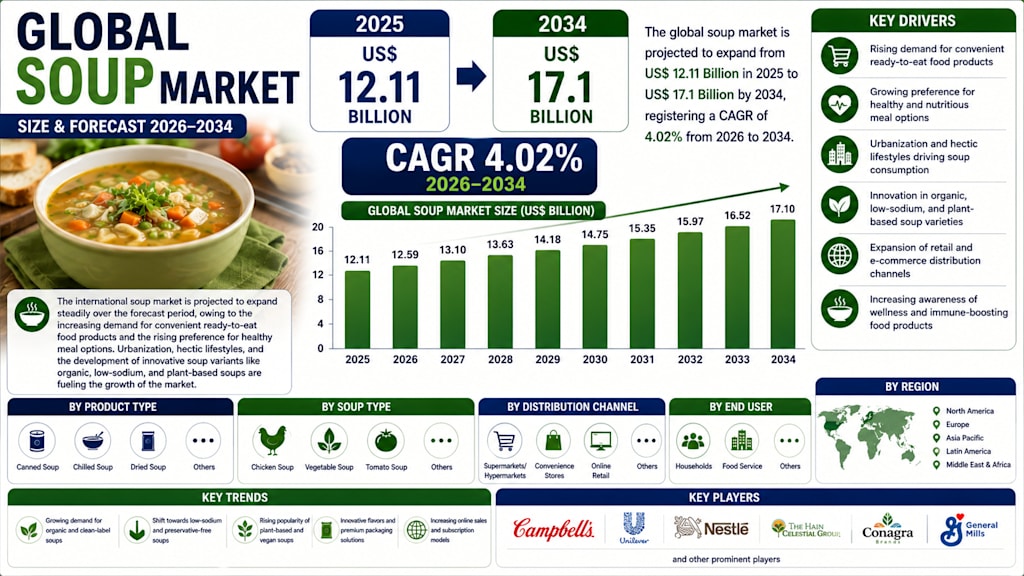
According to Renub Research, the Global Soup Market is projected to grow from US$12.11 billion in 2025 to US$17.1 billion by 2034, registering a compound annual growth rate (CAGR) of 3.91% between 2026 and 2034. Rising demand for convenient meal options, increasing preference for nutritious foods, and expanding product innovation are expected to drive sustained market expansion.
Soup Remains a Universally Popular Food Category
Soup is a liquid or semi-liquid food prepared by combining ingredients such as vegetables, meat, seafood, grains, legumes, herbs, and spices with water or stock.
Available in countless regional and international variations, soups range from light broths and clear soups to rich, creamy, and hearty meal-based options.
Consumers appreciate soup for its versatility, ease of digestion, nutritional value, and ability to incorporate diverse ingredients.
It is consumed across all age groups and remains a staple in many households worldwide.
The category's adaptability to changing dietary preferences and cultural traditions has helped maintain its popularity while creating opportunities for continued innovation and market growth.
Demand for Convenient Meal Solutions Continues Rising
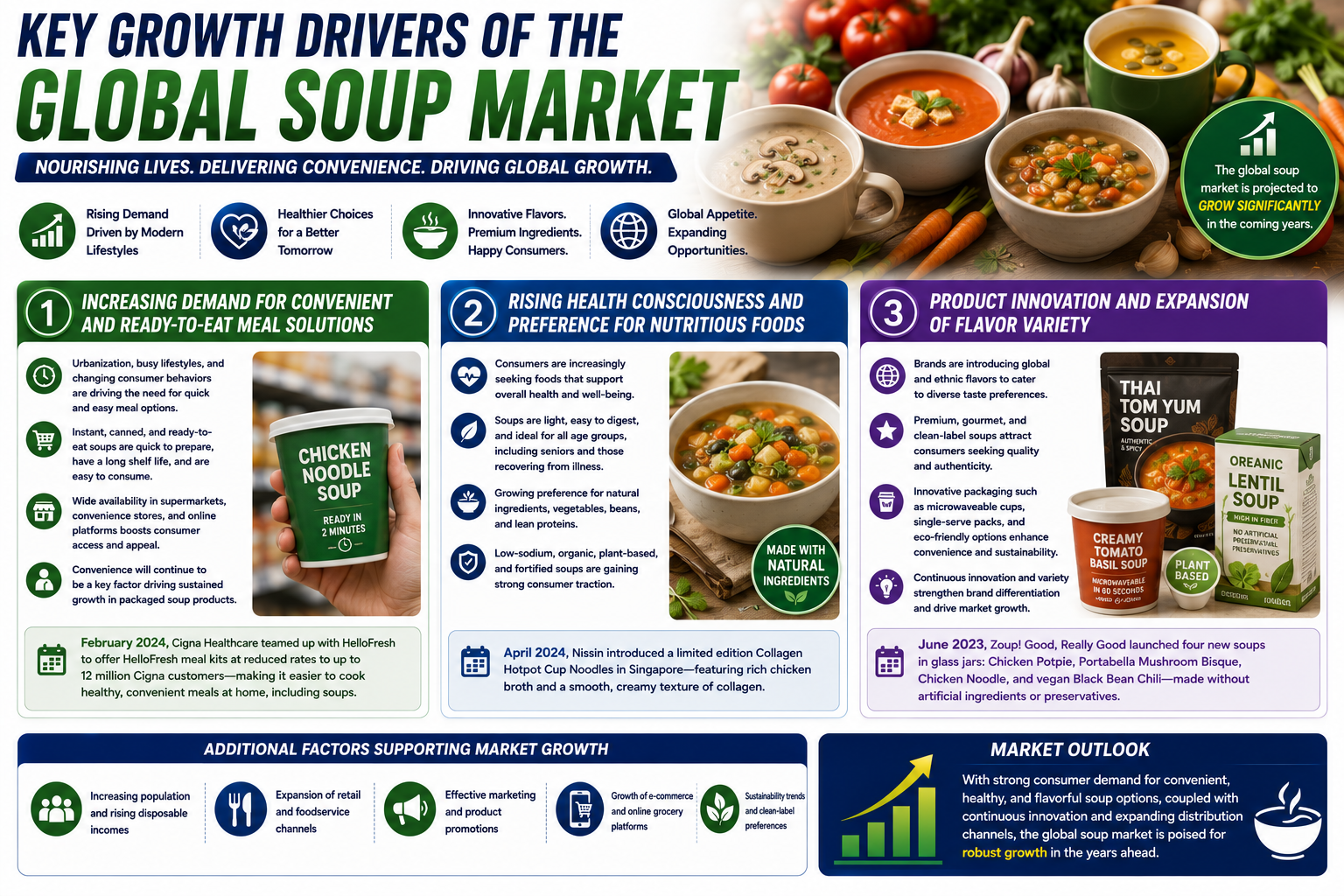
One of the strongest growth drivers in the soup market is the increasing consumer demand for convenient meal solutions.
Modern lifestyles often leave consumers with limited time for preparing meals from scratch.
Ready-to-eat soups, canned soups, dehydrated products, and instant soup formats provide quick and practical alternatives that fit busy schedules.
These products require minimal preparation while offering a satisfying and often nutritious meal option.
The growing number of working professionals, students, and urban households continues supporting demand for convenient food products.
As convenience remains a major purchasing factor globally, soup manufacturers are expected to benefit from sustained consumer interest.
Urbanization Supports Market Expansion
Rapid urbanization has significantly influenced food consumption patterns worldwide.
Consumers living in urban environments often seek products that align with busy work schedules and limited cooking time.
Soup products fit these needs perfectly by providing quick meal solutions that are easy to prepare and consume.
The growth of modern retail channels, supermarkets, convenience stores, and online grocery platforms has also improved product accessibility.
As urban populations continue expanding globally, demand for packaged soup products is expected to remain strong.
Health-Conscious Consumers Are Driving Product Evolution
Health and wellness trends are playing an increasingly important role in shaping the soup market.
Consumers today are more focused on balanced nutrition and healthier eating habits than ever before.
Soup is widely viewed as a nutritious and easy-to-digest food, making it particularly attractive to health-conscious individuals, older adults, and people seeking lighter meal options.
Manufacturers are responding by developing soups featuring vegetables, legumes, lean proteins, whole grains, and functional ingredients.
Products that are organic, low-sodium, plant-based, gluten-free, and fortified with vitamins and minerals are becoming increasingly popular.
This shift toward healthier eating continues creating new opportunities across the global soup industry.
Plant-Based and Functional Soups Gain Popularity
Plant-based diets have become increasingly mainstream across many regions of the world.
As a result, demand for vegetable-based, vegan, and plant-forward soups continues to grow.
Consumers are actively seeking products that align with sustainability goals while supporting personal health objectives.
Functional soups enriched with protein, fiber, vitamins, collagen, probiotics, and immune-supporting ingredients are also attracting attention.
Manufacturers are increasingly combining nutrition and convenience to create products that appeal to wellness-focused consumers.
These trends are expected to remain important growth drivers throughout the forecast period.
Product Innovation Is Strengthening Consumer Engagement
Innovation continues to play a central role in the soup market's evolution.
Manufacturers regularly introduce new flavors, ingredients, and product formats designed to attract diverse consumer groups.
Global and ethnic soup varieties are becoming increasingly popular as consumers explore international cuisines and unique flavor experiences.
Premium and gourmet soups featuring high-quality ingredients, artisanal recipes, and authentic regional flavors are also gaining traction.
At the same time, packaging innovations such as microwaveable containers, single-serve cups, and environmentally friendly packaging are improving convenience and sustainability.
These advancements help brands differentiate themselves in an increasingly competitive marketplace.
Instant Soup Remains a Fast-Growing Segment
Among product categories, instant soup continues to represent one of the fastest-growing segments.
Instant soups appeal strongly to consumers seeking quick, affordable, and portable meal options.
Their long shelf life and easy preparation make them particularly attractive for students, office workers, travelers, and busy families.
Manufacturers continue improving instant soup offerings by introducing healthier formulations, enhanced nutritional profiles, and a wider variety of flavors.
As demand for convenience foods continues increasing worldwide, the instant soup segment is expected to maintain strong growth momentum.
Chilled Soups Cater to Premium Consumers
The chilled soup segment is gaining popularity among consumers seeking fresh, minimally processed food products.
Chilled soups are often perceived as offering superior taste, texture, and nutritional value compared with shelf-stable alternatives.
Health-conscious consumers increasingly prefer chilled soups because they often contain fewer preservatives and cleaner ingredient lists.
The expansion of cold-chain logistics and refrigerated retail infrastructure has helped improve availability across many markets.
As consumer interest in premium and fresh foods continues rising, chilled soups are expected to capture a larger share of the overall market.
Non-Vegetarian Soups Maintain Strong Demand
Non-vegetarian soups remain an important category within the global market.
Soups made from chicken, beef, seafood, and other animal proteins are widely consumed due to their rich flavor profiles and high protein content.
These products are popular across households, restaurants, and foodservice establishments.
Growing global demand for protein-rich foods continues supporting this segment's growth.
Manufacturers are also introducing premium ready-to-eat meat-based soups that appeal to consumers seeking both convenience and satisfying meal experiences.
Convenience Stores Play a Key Distribution Role
Convenience stores remain a major distribution channel for soup products.
Their accessibility, extended operating hours, and focus on quick purchases make them ideal locations for ready-to-eat and instant soup sales.
Busy consumers frequently purchase soups from convenience stores for workplace lunches, snacks, or quick dinners.
Manufacturers continue tailoring packaging and product sizes to suit convenience-store purchasing patterns.
As urban living and on-the-go consumption continue increasing, convenience stores are expected to remain a vital sales channel.
Online Sales Continue Expanding
The growth of e-commerce has created new opportunities for soup manufacturers and retailers.
Consumers increasingly purchase grocery products online because of convenience, wider product selection, and home delivery services.
Online channels also provide greater visibility for specialty, organic, and premium soup brands that may have limited shelf space in physical stores.
Subscription services and direct-to-consumer sales models are helping brands build stronger relationships with customers.
As online grocery shopping becomes more common globally, digital sales channels are expected to contribute significantly to market growth.
Sodium Content Remains a Key Industry Challenge
Despite strong growth prospects, the soup market faces several challenges.
One of the most significant concerns involves the sodium content found in many packaged soup products.
High sodium intake has been linked to health conditions such as hypertension and cardiovascular disease.
As consumers become more health-conscious, demand for lower-sodium alternatives continues increasing.
Governments and health organizations are also encouraging manufacturers to reduce sodium levels through regulatory guidance and public health initiatives.
Balancing taste, shelf stability, and nutritional improvements remains an ongoing challenge for the industry.
Competition Continues Intensifying
The soup industry operates within a highly competitive food market.
Consumers have access to numerous alternative meal options, including frozen foods, prepared meals, fresh foods, and homemade recipes.
Private-label products and regional brands also contribute to competitive pricing pressures.
In addition, changing consumer preferences require companies to continuously invest in product development, marketing, and innovation.
Maintaining brand loyalty while adapting to evolving dietary trends remains a key challenge for soup manufacturers worldwide.
United States Remains a Major Market
The United States represents one of the largest soup markets globally.
Soups remain popular as convenient lunches, comfort foods, and meal starters, particularly during colder seasons.
Consumer demand for low-sodium, organic, and plant-based soups continues encouraging product innovation.
Major brands benefit from strong retail distribution networks and widespread consumer familiarity.
Busy lifestyles, aging populations, and increasing health awareness continue supporting steady demand across the U.S. market.
United Kingdom Consumers Embrace Premium and Healthy Soups
The United Kingdom soup market continues benefiting from rising health awareness and demand for convenient meal solutions.
Consumers increasingly prefer fresh, organic, low-salt, and premium soup products.
Chilled soups have become especially popular among shoppers seeking higher-quality and minimally processed alternatives.
Supermarkets play a significant role in driving market growth by offering diverse product selections and competitive pricing.
Health-conscious purchasing behavior is expected to continue supporting expansion within the UK market.
India Emerges as a Growing Opportunity
India's soup market is expanding steadily as changing lifestyles and urbanization influence eating habits.
Instant soups are particularly popular among students, working professionals, and younger consumers seeking convenient meal options.
Exposure to international cuisines has also increased interest in global soup flavors.
Health-oriented vegetable soups and low-calorie options are gaining popularity among wellness-focused consumers.
The continued growth of e-commerce and modern retail channels is expected to improve market accessibility and support future expansion.
Saudi Arabia Shows Strong Growth Potential
Saudi Arabia's soup market is benefiting from rising urbanization, changing consumer lifestyles, and growing interest in convenient food products.
Instant and ready-to-eat soups are becoming increasingly popular among younger consumers and working professionals.
International food trends and increasing health awareness are also influencing purchasing decisions.
The market is expected to benefit from ongoing investments in food innovation and premium product development across the region.
Recent Product Launches Highlight Market Innovation
The soup industry continues introducing innovative products designed to meet evolving consumer preferences.
In February 2024, Nissin launched a limited-edition Collagen Hotpot Cup Noodles product featuring a rich chicken broth and collagen-enhanced formulation.
Meanwhile, Zoup! introduced four premium soup varieties, including Chicken Potpie, Portabella Mushroom Bisque, Chicken Noodle, and Vegan Black Bean Chili.
Additionally, several companies have launched plant-based, organic, and protein-rich soup products aimed at health-conscious consumers.
These developments demonstrate the industry's commitment to innovation and consumer-focused product development.
Final Thoughts
The global soup market continues evolving as consumers seek convenient, nutritious, and flavorful meal options that fit modern lifestyles.
Driven by rising urbanization, growing health awareness, product innovation, and expanding retail accessibility, the industry remains positioned for steady long-term growth.
With the market projected to grow from US$12.11 billion in 2025 to US$17.1 billion by 2034, substantial opportunities exist for manufacturers, retailers, foodservice providers, and investors.
Although challenges related to sodium reduction, competition, and changing consumer preferences remain important considerations, continued innovation and strong consumer demand provide a solid foundation for future expansion.
As convenience and wellness continue shaping food choices worldwide, soups are expected to remain a trusted and versatile meal solution for consumers across all age groups.
About the Creator
Enjoyed the story? Support the Creator.
Subscribe for free to receive all their stories in your feed.
Comments
There are no comments for this story
Be the first to respond and start the conversation.