
Global Soup Market Expected to Grow Steadily as Consumers Seek Convenient and Healthier Meal Solutions
Rising demand for ready-to-eat foods, increasing health consciousness, and growing interest in organic, low-sodium, and plant-based soup varieties are fueling expansion in the global soup industry. The market is projected to grow from US$ 12.11 Billion in 2025 to US$ 17.1 Billion by 2034, registering a CAGR of 3.91% from 2026 to 2034.

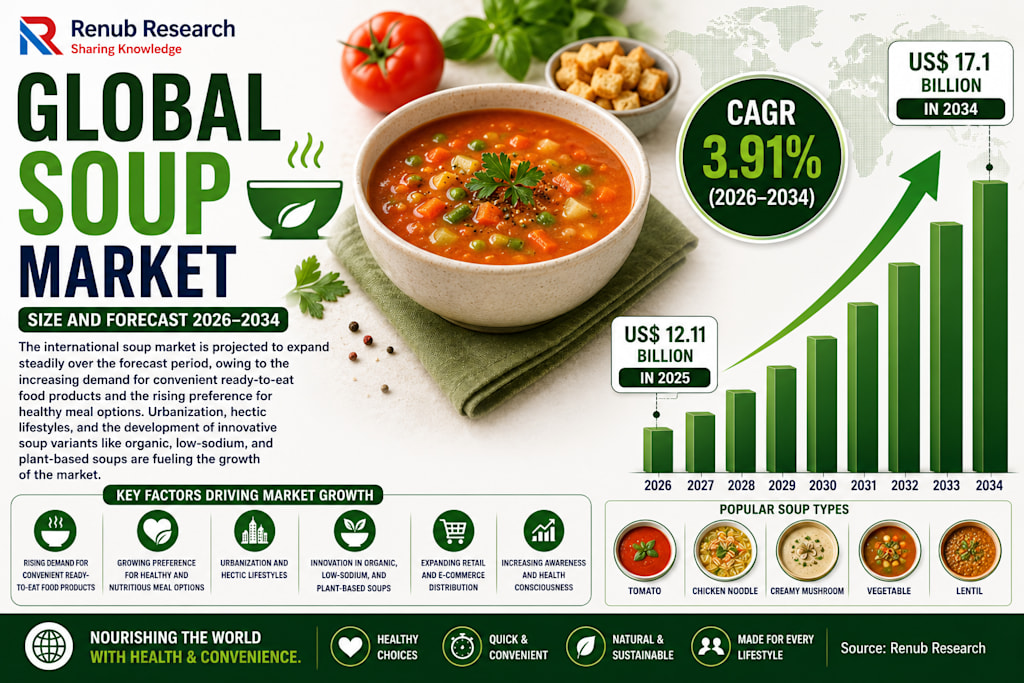
Soup Market Overview
The global soup market continues to evolve as consumers increasingly prioritize convenience, nutrition, and quick meal solutions. Soup has long been a staple food across many cultures due to its versatility, ease of preparation, and ability to combine a wide range of ingredients such as vegetables, meat, seafood, grains, beans, and spices. Whether served hot or cold, soups remain popular as comfort foods, starters, or complete meal options for consumers across all age groups.
According to Renub Research, the international soup market is expected to witness steady growth over the forecast period, supported by urbanization, changing food habits, and increasing consumer preference for convenient meal options. The market is projected to expand from US$ 12.11 Billion in 2025 to US$ 17.1 Billion by 2034, highlighting the growing role of ready-to-eat and health-focused soup products in modern diets.
The soup industry has diversified significantly over the years. Consumers today can choose from instant soups, canned soups, chilled soups, dehydrated soups, vegetarian and non-vegetarian variants, as well as premium gourmet options. Product innovation and flavor diversification are helping manufacturers cater to evolving dietary preferences, including plant-based, low-sodium, organic, and clean-label food trends.
The popularity of soups is also closely tied to changing lifestyles. Busy work schedules, urban living, and reduced time for home cooking are increasing demand for food products that are quick to prepare while still offering taste and nutrition. As convenience continues to shape food purchasing behavior globally, soups are becoming an increasingly important segment within the packaged food industry.
Growth Drivers of the Soup Market
One of the strongest growth drivers of the global soup market is the rising demand for convenient and ready-to-eat meals. Modern consumers are spending less time preparing food at home due to hectic lifestyles, increased workforce participation, and urbanization. Ready-to-eat, instant, and canned soups provide practical solutions for busy consumers because they are quick to prepare, easy to consume, and widely available through supermarkets, convenience stores, and online platforms.
The portability and long shelf life of packaged soups make them particularly attractive for office workers, students, travelers, and families seeking fast meal alternatives. Single-serve packaging, microwaveable containers, and ready-to-heat formats have further improved convenience and accessibility for consumers. As convenience-driven consumption continues to expand globally, soup manufacturers are benefiting from rising demand across both developed and emerging markets.
Growing health consciousness is another major factor supporting market growth. Consumers increasingly view soups as nutritious, easy-to-digest, and relatively low-calorie meal options. Health-focused consumers, senior citizens, and individuals recovering from illness often prefer soups because they can combine vegetables, lean proteins, grains, and functional ingredients in balanced meal formats.
In response to these trends, manufacturers are expanding their portfolios with low-sodium, organic, plant-based, gluten-free, and vitamin-fortified soup products. Functional soups enriched with protein, collagen, vegetables, and immunity-supporting ingredients are gaining popularity among consumers seeking healthier alternatives to traditional packaged meals. The increasing focus on balanced nutrition and wellness is expected to remain a long-term growth driver for the soup market worldwide.
Product innovation and flavor diversification are also transforming the industry. Soup manufacturers are introducing premium and gourmet products inspired by international cuisines and regional recipes to appeal to changing consumer tastes. Ethnic flavors, artisan recipes, and clean-label ingredients are helping brands differentiate themselves in an increasingly competitive market.
Packaging innovation is playing an equally important role. Eco-friendly packaging materials, microwaveable cups, resealable pouches, and portion-controlled packs are improving both convenience and sustainability. Companies are also using premium packaging and branding strategies to attract health-conscious and environmentally aware consumers.
The growth of online grocery shopping and e-commerce platforms is further supporting market expansion. Consumers increasingly value the convenience of home delivery, product variety, and subscription-based purchasing options. Online retail has become especially important for specialty and health-focused soup brands looking to reach broader customer bases.
Challenges Facing the Soup Market
Despite favorable growth trends, the soup market faces several important challenges. One of the biggest concerns involves rising consumer awareness regarding sodium content and preservatives in packaged soup products. Many canned and ready-to-eat soups contain high levels of salt and additives to improve flavor and extend shelf life. Excessive sodium intake has been linked to health conditions such as hypertension and cardiovascular disease, leading health-conscious consumers to reduce consumption of heavily processed products.
Governments and health organizations are also encouraging sodium reduction through stricter labeling regulations and public health campaigns. As a result, soup manufacturers face increasing pressure to reformulate products with healthier ingredients while maintaining taste, texture, and shelf stability. Balancing nutritional improvements with consumer flavor expectations remains a major challenge for the industry.
The market is also highly competitive. Packaged soup brands face competition not only from rival soup manufacturers but also from fresh meals, frozen foods, homemade soups, meal kits, and other convenience food products. Consumers increasingly prefer fresh and minimally processed foods, which may limit demand for traditional packaged soups in certain markets.
Private-label brands and regional manufacturers are intensifying price competition, especially in cost-sensitive markets. In addition, rapidly changing consumer preferences require constant product innovation, marketing investment, and flavor diversification. Companies must continuously adapt to evolving dietary trends and consumer expectations to maintain brand loyalty and market relevance.
Segment Insights
The instant soup segment represents one of the fastest-growing categories within the global soup market. Instant soups are highly popular because they require minimal preparation time and offer strong portability and convenience. Working professionals, students, and travelers are among the largest consumer groups driving demand for instant soup products.
Manufacturers are expanding instant soup portfolios with low-sodium, high-protein, and nutritionally enhanced options to appeal to health-conscious buyers. As convenience-oriented lifestyles continue growing globally, instant soups are expected to remain a major contributor to overall market expansion.
The chilled soup segment is also gaining traction among consumers seeking fresher and more natural meal solutions. Chilled soups are generally perceived as healthier because they contain fewer preservatives and offer improved taste and texture compared to shelf-stable products. Health-conscious urban consumers are increasingly choosing chilled soups with organic ingredients and gourmet recipes.
The non-vegetarian soup category continues to maintain a significant share of the market. Meat, poultry, and seafood-based soups remain popular because of their rich flavor profiles and protein content. Growing global demand for protein-rich foods is supporting consumption across households, restaurants, and foodservice establishments.
Convenience stores also play a major role in soup distribution, particularly for instant and ready-to-eat products. High foot traffic, extended operating hours, and growing urbanization are helping convenience stores maintain strong sales volumes for packaged soup products.
Meanwhile, online soup sales are expanding rapidly as e-commerce adoption increases worldwide. Consumers benefit from greater product variety, easy price comparison, and home delivery convenience. Subscription services and bulk purchasing options are further encouraging online soup purchases, particularly for specialty and premium brands.
Regional Market Insights
The United States remains one of the largest soup markets globally due to strong demand for convenient and comforting meal solutions. Soups are widely consumed in the U.S. as quick lunches, meal starters, and cold-weather comfort foods. The availability of canned, instant, and ready-to-eat soups through extensive retail networks continues supporting market growth.
Health-focused product innovation is especially strong in the U.S. market, where manufacturers are increasingly introducing organic, plant-based, low-sodium, and clean-label soup products. Busy lifestyles, aging populations, and growing health awareness are all contributing to sustained demand across the country.
The United Kingdom soup market is also expanding steadily due to rising demand for healthy, warming, and convenient foods. Chilled soups, premium soup varieties, and low-salt products are becoming increasingly popular among UK consumers. Supermarkets and private-label brands play an important role in offering affordable and diverse soup selections throughout the country.
India’s soup market remains in a developing stage but is experiencing rapid growth due to urbanization, evolving food preferences, and increasing exposure to international cuisines. Instant soups are particularly popular among urban consumers, students, and working professionals because of their convenience and affordability. Vegetable soups and low-calorie variants are also gaining traction among health-conscious consumers.
Modern retail expansion and growing e-commerce penetration are improving product accessibility throughout India. Although overall soup penetration remains lower than in Western countries, changing lifestyles and rising demand for convenience foods are expected to support long-term market growth.
Saudi Arabia’s soup market is growing steadily due to rising urbanization, increasing disposable incomes, and expanding demand for convenient packaged foods. Younger consumers in particular are driving demand for instant and ready-to-eat soup products. The market also benefits from growing awareness of global food trends and increasing interest in healthier meal alternatives.
Recent Industry Developments
The soup industry continues to witness strong innovation as companies introduce healthier and more specialized products. In April 2024, Nissin launched a limited-edition Collagen Hotpot Cup Noodles product in Singapore, featuring rich chicken broth and collagen-enhanced ingredients targeting health-conscious consumers.
In June 2023, Zoup! Good, Really Good introduced four premium soup recipes including Chicken Potpie, Portabella Mushroom Bisque, Chicken Noodle, and vegan Black Bean Chili. The products emphasize clean-label ingredients and homestyle flavors.
Freja Foods launched Instant Bone Broth sachets in October 2024 featuring beef and chicken varieties with high protein and collagen content, reflecting increasing consumer interest in functional and nutrient-rich soup products.
Competitive Landscape
The global soup market includes several major food companies competing through innovation, branding, flavor diversification, and health-focused product development. Key players operating in the market include The Campbell Soup Company, Nestlé S.A., Baxters Food Group Ltd., General Mills Inc., Conagra Brands Inc., Premier Foods, Hindustan Unilever Group, and Associated British Foods Inc.
Manufacturers are increasingly focusing on organic ingredients, plant-based recipes, low-sodium formulations, sustainable packaging, and premium gourmet products to strengthen their market positions. Product quality, nutritional value, convenience, and flavor innovation remain central competitive factors across the global soup industry.
Final Thoughts
The global soup market is positioned for continued growth as consumers increasingly prioritize convenience, health, and quick meal solutions. Product innovation, flavor variety, premiumization, and expanding e-commerce distribution are reshaping the industry and creating new opportunities for manufacturers worldwide.
With the market projected to grow from US$ 12.11 Billion in 2025 to US$ 17.1 Billion by 2034, soups are expected to remain an important segment within the global packaged food industry as consumers continue seeking balanced, convenient, and flavorful meal options.
About the Creator
Enjoyed the story? Support the Creator.
Subscribe for free to receive all their stories in your feed.
Comments
There are no comments for this story
Be the first to respond and start the conversation.