
Global Ready-to-Drink Tea and Coffee Market to Reach US$207.66 Billion by 2034 as Convenience and Premium Beverages Redefine Consumer Preferences
Busy lifestyles, rising demand for on-the-go beverages, premium café-inspired products, and health-conscious formulations are driving strong growth in the global ready-to-drink tea and coffee market.

Ready-to-Drink Tea and Coffee Are Reshaping the Global Beverage Industry
Consumer lifestyles have changed dramatically over the past decade, creating unprecedented demand for beverages that combine convenience, taste, and nutrition. Busy work schedules, urban commuting, and increasing preference for portable food and beverage options have transformed ready-to-drink (RTD) tea and coffee into one of the fastest-growing segments of the global beverage industry.
Unlike traditional brewed beverages that require preparation, RTD tea and coffee products are packaged in bottles, cans, and cartons, allowing consumers to enjoy premium beverages anytime and anywhere. Continuous innovation in flavors, functional ingredients, cold brew technology, and low-sugar formulations has expanded their appeal beyond convenience, positioning them as lifestyle beverages for modern consumers.
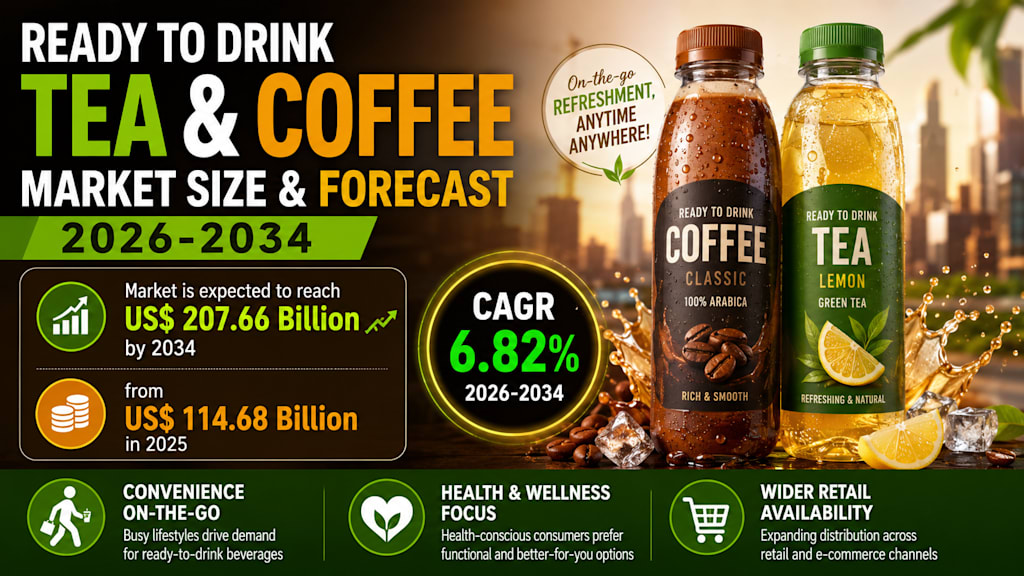
According to the latest market outlook, the Global Ready-to-Drink Tea and Coffee Market is projected to grow from US$114.68 billion in 2025 to US$207.66 billion by 2034, registering a compound annual growth rate (CAGR) of 6.82% during 2026–2034. Convenience-focused lifestyles, health-conscious beverage choices, premium product innovation, and expanding retail availability continue driving long-term market growth.
Ready-to-Drink Beverages Meet Modern Consumer Needs
Ready-to-drink tea and coffee products are pre-packaged beverages designed for immediate consumption without brewing or preparation.
These beverages are available in numerous varieties, including black tea, green tea, herbal tea, cold brew coffee, iced coffee, flavored lattes, cappuccinos, and functional beverages enriched with vitamins, minerals, or plant-based ingredients.
Modern RTD products increasingly emphasize premium taste, clean-label ingredients, reduced sugar, and convenient packaging to satisfy changing consumer preferences.
Their portability and long shelf life make them ideal for busy professionals, students, travelers, and health-conscious consumers.
Convenience Continues Driving Market Growth
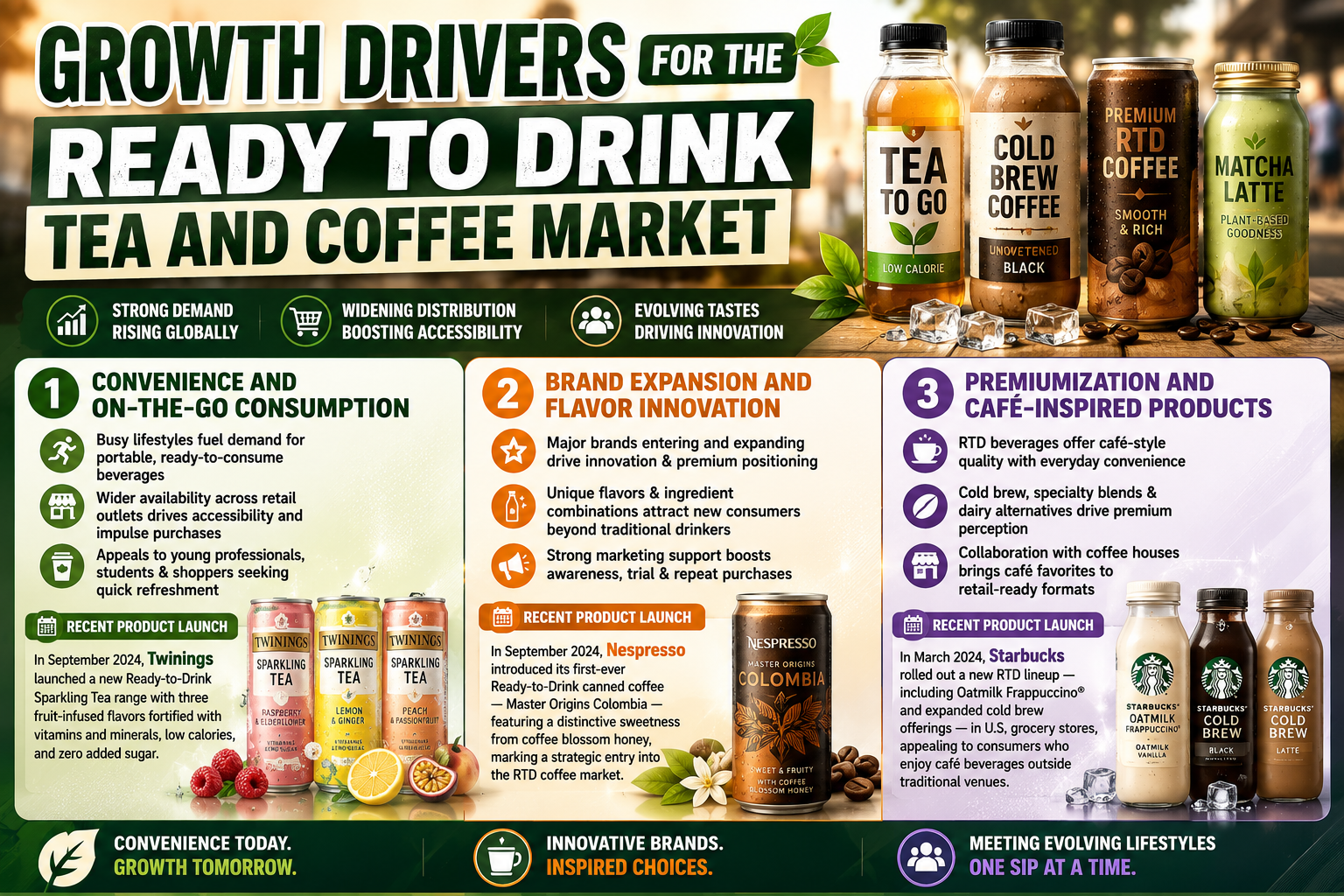
One of the strongest contributors to market expansion is the increasing demand for convenient beverages.
Urban lifestyles leave consumers with limited time for preparing traditional tea or coffee, encouraging greater reliance on grab-and-go products.
Ready-to-drink beverages fit naturally into commuting, office work, travel, fitness activities, and outdoor recreation.
The availability of RTD products through supermarkets, convenience stores, vending machines, petrol stations, and online retailers further strengthens consumer accessibility.
Growing urbanization worldwide is expected to continue supporting this long-term demand.
Premium Café-Inspired Products Expand Consumer Interest
Premiumization has become one of the defining trends within the RTD beverage industry.
Consumers increasingly seek café-quality beverages that deliver rich flavors without requiring visits to coffee shops.
Cold brew coffee, specialty espresso drinks, oat milk beverages, premium teas, and dairy-free formulations continue attracting younger consumers willing to pay higher prices for enhanced quality.
Manufacturers increasingly collaborate with well-known café brands to introduce retail-ready versions of popular beverages, strengthening brand recognition and consumer loyalty.
Health-Conscious Formulations Support Market Expansion
Health awareness continues reshaping product development across the beverage industry.
Consumers increasingly prefer beverages containing natural ingredients, lower sugar content, plant-based formulations, antioxidants, functional nutrients, and clean-label ingredients.
Manufacturers continue introducing products fortified with vitamins, minerals, herbal extracts, probiotics, and botanical ingredients that provide additional wellness benefits.
Sugar-free, low-calorie, and naturally sweetened beverages continue gaining popularity among health-conscious consumers seeking healthier alternatives to traditional soft drinks.
Flavor Innovation Continues Accelerating Growth
Continuous product innovation remains one of the industry's strongest competitive advantages.
Manufacturers regularly introduce new flavors inspired by seasonal beverages, regional tastes, desserts, fruits, spices, and specialty café drinks.
Innovative combinations including vanilla latte, caramel macchiato, mocha, matcha, fruit-infused tea, sparkling tea, and botanical blends continue attracting new consumers while encouraging repeat purchases.
Limited-edition product launches also generate excitement while strengthening brand engagement.
Tea Products Maintain Strong Consumer Demand
Ready-to-drink tea continues representing one of the largest segments within the market.
Green tea, black tea, herbal tea, fruit-infused tea, sparkling tea, and functional tea beverages appeal to consumers seeking refreshing drinks with perceived health benefits.
Growing awareness regarding antioxidants, hydration, and natural ingredients continues strengthening global tea consumption.
Manufacturers increasingly develop premium tea formulations featuring reduced sugar, organic ingredients, and innovative flavor combinations.
Coffee Products Continue Expanding Rapidly
Ready-to-drink coffee remains one of the fastest-growing beverage categories worldwide.
Cold brew coffee, iced coffee, cappuccino, latte, mocha, and espresso-based beverages increasingly appeal to younger consumers seeking premium coffee experiences without visiting cafés.
Growing coffee culture, expanding urban populations, and rising demand for portable energy beverages continue driving this segment.
Premium RTD coffee products increasingly incorporate plant-based milk alternatives and functional ingredients to broaden consumer appeal.
PET Bottles Lead Packaging Innovation
PET bottles continue dominating RTD beverage packaging because they are lightweight, durable, cost-effective, and convenient.
They provide excellent product visibility while supporting efficient transportation and retail display.
Manufacturers increasingly adopt recycled PET (rPET) materials to reduce environmental impact while meeting sustainability objectives.
Single-serve PET packaging also aligns closely with consumer demand for portable beverages suitable for daily commuting and travel.
Convenience Stores Strengthen Retail Distribution
Convenience stores remain one of the most important sales channels for ready-to-drink beverages.
Consumers frequently purchase RTD tea and coffee during daily commutes, work breaks, travel, and leisure activities.
Strategic placement within refrigerated display sections encourages impulse purchases while increasing product visibility.
Extended operating hours and widespread store availability continue strengthening convenience store sales across both developed and emerging markets.
Raw Material Price Volatility Remains a Challenge
Despite strong market growth, manufacturers continue facing fluctuating prices for coffee beans, tea leaves, milk, sweeteners, and packaging materials.
Weather conditions, climate change, transportation costs, currency fluctuations, and supply chain disruptions can significantly affect production expenses.
Maintaining product affordability while preserving premium quality remains a major challenge, particularly for smaller beverage companies.
Many manufacturers continue diversifying sourcing strategies to reduce supply risks.
Competition from Freshly Brewed Beverages Persists
Ready-to-drink beverages continue competing with freshly prepared drinks from cafés, coffee shops, and specialty tea retailers.
Many consumers still value personalized beverages featuring customized sweetness, milk alternatives, brewing methods, and freshly prepared ingredients.
Strong café culture in several countries also encourages social experiences that packaged beverages cannot fully replicate.
Manufacturers therefore continue improving flavor quality and introducing premium formulations that closely resemble freshly brewed beverages.
Regional Markets Continue Supporting Growth
The United States remains one of the world's largest ready-to-drink tea and coffee markets due to strong coffee consumption, expanding cold brew popularity, premium beverage innovation, and widespread retail availability.
Germany continues experiencing steady market growth through its well-established coffee culture, increasing demand for premium convenience beverages, and growing consumer interest in functional drinks.
China represents one of the fastest-growing markets because of its strong tea culture, rapid urbanization, expanding coffee consumption, and continuous innovation in bottled tea and coffee products.
Saudi Arabia continues strengthening market demand through rapid urbanization, growing youth demographics, expanding modern retail, increasing coffee culture, and rising demand for convenient chilled beverages suited to the country's climate.
Together, these regional markets continue shaping the future of the global ready-to-drink tea and coffee industry.
Innovation Will Shape the Future of RTD Beverages
The future of the RTD tea and coffee market will be driven by premiumization, healthier formulations, sustainable packaging, and digital retail expansion.
Manufacturers are expected to introduce personalized beverages, plant-based formulations, functional nutrition, biodegradable packaging, and artificial intelligence-supported product development.
Continued advances in cold brew extraction, natural flavor technologies, and packaging innovation will further improve product quality and consumer satisfaction.
As consumers increasingly prioritize convenience without sacrificing taste or health, ready-to-drink beverages will continue gaining popularity worldwide.
Final Thoughts
The global ready-to-drink tea and coffee market continues demonstrating strong growth as convenience, premium quality, and wellness become central to modern consumer lifestyles.
The projected expansion from US$114.68 billion in 2025 to US$207.66 billion by 2034, supported by a 6.82% CAGR, reflects rising demand for portable beverages across households, workplaces, retail stores, and on-the-go consumption occasions.
Although raw material price volatility and competition from freshly brewed beverages remain important challenges, continuous innovation in flavors, functional ingredients, sustainable packaging, and premium café-inspired products positions the ready-to-drink tea and coffee industry for sustained long-term growth. As global consumers continue seeking beverages that combine convenience, quality, and health benefits, the RTD market will remain one of the most dynamic segments within the worldwide food and beverage industry.
About the Creator
Enjoyed the story? Support the Creator.
Subscribe for free to receive all their stories in your feed.
Comments
There are no comments for this story
Be the first to respond and start the conversation.