
Global Radiation Dose Management Market to Reach US$1.07 Billion by 2034 as AI-Powered Imaging Safety Becomes a Healthcare Priority
Growing use of diagnostic imaging, stricter radiation safety regulations, artificial intelligence integration, and increasing focus on patient safety are driving strong growth in the global radiation dose management market.

Radiation Dose Management Is Becoming Essential for Safe Medical Imaging
Medical imaging has revolutionized modern healthcare by enabling physicians to diagnose diseases quickly and accurately. Technologies such as computed tomography (CT), X-rays, fluoroscopy, mammography, and nuclear medicine have become indispensable for detecting fractures, cardiovascular diseases, cancer, neurological disorders, and numerous other medical conditions. However, the increasing use of these imaging modalities has also heightened concerns regarding cumulative radiation exposure for both patients and healthcare professionals.
Radiation dose management solutions have emerged as a critical component of modern radiology by helping healthcare providers monitor, analyze, and optimize radiation exposure without compromising diagnostic quality. Advances in artificial intelligence, cloud computing, and healthcare information systems are making these platforms increasingly sophisticated and effective.
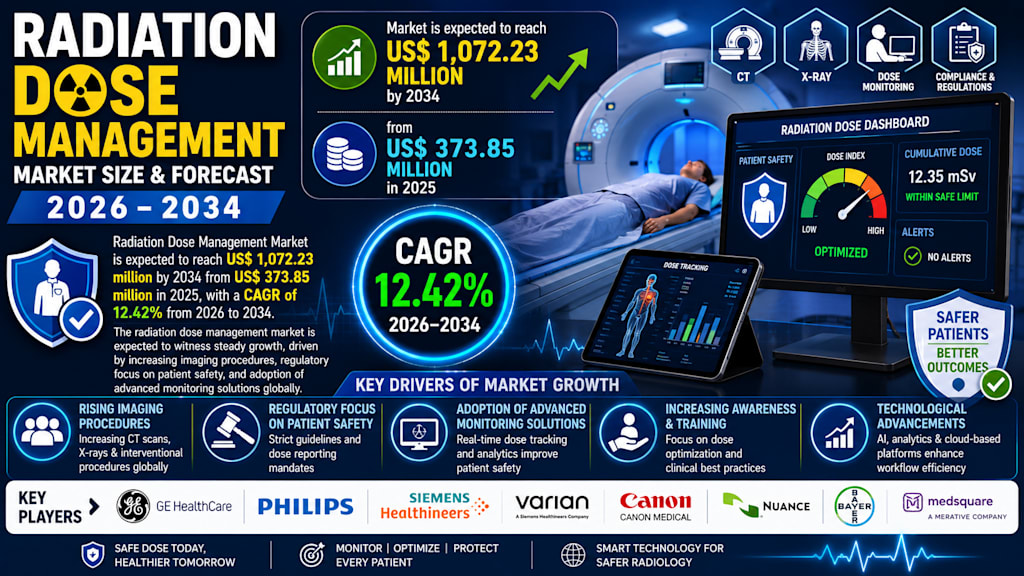
According to the latest market outlook, the Global Radiation Dose Management Market is projected to grow from US$373.85 million in 2025 to US$1,072.23 million by 2034, registering a compound annual growth rate (CAGR) of 12.42% during 2026–2034. Increasing imaging procedures, stronger regulatory requirements, technological innovation, and growing awareness of radiation safety continue supporting long-term market expansion.
Radiation Dose Management Enhances Imaging Safety
Radiation dose management refers to specialized software and monitoring systems that measure, record, analyze, and optimize radiation exposure during diagnostic imaging and radiation-based medical procedures.
These platforms collect dose information from imaging equipment, generate automated reports, identify unusually high radiation exposure, and support compliance with international safety standards.
Healthcare providers use these systems to improve patient safety while maintaining high-quality diagnostic imaging.
Radiation dose management also assists hospitals in quality assurance, regulatory reporting, and long-term patient dose tracking.
Growing Imaging Volumes Continue Driving Market Growth
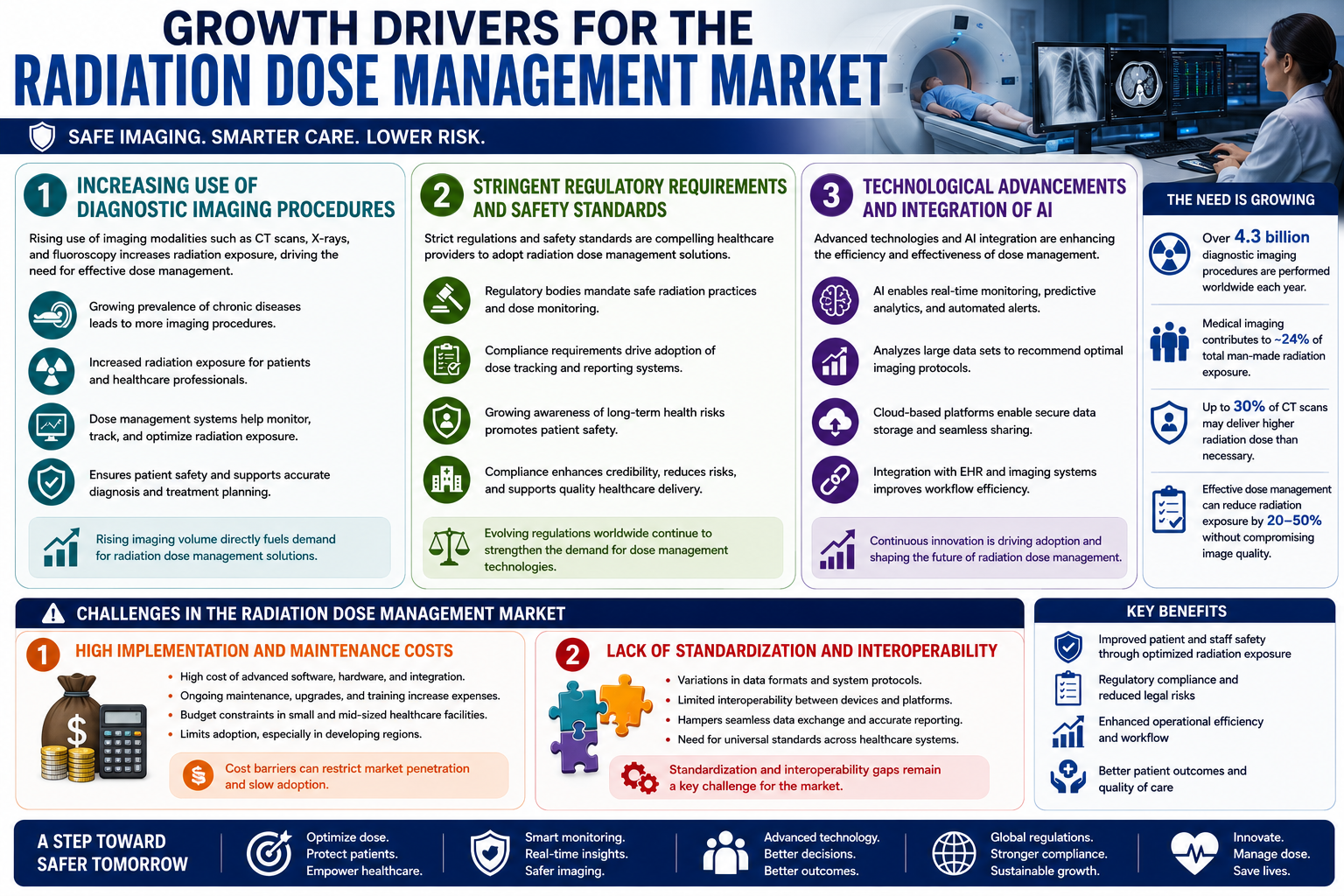
One of the strongest drivers of the market is the increasing use of diagnostic imaging worldwide.
Computed tomography, X-ray imaging, fluoroscopy, mammography, and nuclear medicine procedures continue expanding because of rising chronic disease prevalence and growing demand for early diagnosis.
As imaging volumes increase, healthcare providers require advanced monitoring systems capable of tracking cumulative radiation exposure while maintaining diagnostic accuracy.
Radiation dose management platforms help optimize imaging protocols and reduce unnecessary radiation exposure across diverse clinical settings.
Regulatory Requirements Encourage Wider Adoption
Governments and healthcare regulators continue strengthening radiation safety standards.
Hospitals and diagnostic centers increasingly must comply with regulations requiring dose monitoring, reporting, documentation, and quality assurance.
These regulatory frameworks encourage healthcare providers to implement comprehensive radiation dose management systems capable of supporting compliance while improving patient care.
Growing emphasis on accreditation and patient safety continues accelerating investment in advanced monitoring technologies.
Artificial Intelligence Improves Radiation Optimization
Artificial intelligence has become one of the most important innovations within radiation dose management.
AI-powered software analyzes imaging data in real time, identifies abnormal radiation patterns, recommends optimized imaging protocols, and automatically alerts clinicians when dose thresholds are exceeded.
Machine learning algorithms also improve workflow efficiency by reducing manual data analysis while supporting personalized imaging strategies based on patient characteristics.
As AI technologies continue advancing, radiation dose optimization is becoming increasingly automated and precise.
Cloud-Based Platforms Strengthen Healthcare Connectivity
Cloud computing has significantly expanded the capabilities of radiation dose management solutions.
Cloud-based systems enable secure storage, centralized reporting, remote monitoring, and seamless sharing of radiation exposure data across multiple healthcare facilities.
Healthcare providers can monitor imaging performance across different departments while improving collaboration between radiologists, medical physicists, and quality assurance teams.
Cloud integration also simplifies software updates and supports enterprise-wide radiation safety programs.
Computed Tomography Leads Market Demand
Computed tomography represents one of the largest application areas for radiation dose management.
CT scans generally involve higher radiation doses than many other imaging procedures, making careful monitoring particularly important.
Dose management software assists radiologists in optimizing CT protocols while maintaining image quality for accurate diagnosis.
Growing CT utilization for oncology, trauma, cardiovascular disease, and neurological disorders continues strengthening demand for advanced dose monitoring technologies.
Radiation Dose Management Solutions Dominate the Market
Radiation dose management software solutions remain the largest product segment.
These platforms automatically collect radiation exposure information from imaging equipment, generate comprehensive analytical reports, monitor regulatory compliance, and support quality improvement initiatives.
Modern software increasingly incorporates artificial intelligence, predictive analytics, automated alerts, and integration with electronic health records.
Continuous software innovation continues improving clinical efficiency and patient safety.
Hospitals Remain the Largest End Users
Hospitals continue representing the largest end-user segment within the radiation dose management market.
Large healthcare institutions perform substantial numbers of diagnostic imaging procedures every day, requiring sophisticated monitoring systems capable of managing radiation exposure across multiple imaging modalities.
Hospitals also benefit from enterprise-wide integration connecting radiology departments, electronic medical records, picture archiving systems, and quality management platforms.
Growing hospital investment in digital healthcare infrastructure continues driving market expansion.
Patient Safety Remains the Primary Focus
Radiation dose management systems directly support patient-centered healthcare by minimizing unnecessary radiation exposure while preserving diagnostic accuracy.
Continuous monitoring allows clinicians to compare radiation doses across similar procedures and identify opportunities for protocol optimization.
Patients undergoing repeated imaging—particularly individuals with cancer, cardiovascular disease, or chronic illnesses—benefit significantly from long-term dose tracking.
Growing awareness regarding radiation-related health risks continues encouraging healthcare providers to strengthen dose optimization programs.
High Implementation Costs Remain a Challenge
Despite strong market growth, advanced radiation dose management systems require considerable financial investment.
Software licensing, hardware infrastructure, cloud services, implementation, staff training, and ongoing maintenance contribute to overall adoption costs.
Smaller hospitals and diagnostic centers with limited financial resources may delay implementation despite recognizing the clinical benefits.
Cost reduction through technological innovation remains an important objective for solution providers.
System Integration Creates Technical Complexity
Integrating radiation dose management platforms into existing healthcare information systems remains another important challenge.
Healthcare facilities often operate multiple imaging devices, electronic health records, radiology information systems, and picture archiving platforms from different vendors.
Achieving seamless interoperability requires careful planning, technical expertise, and standardized communication protocols.
Successful integration remains essential for maximizing the effectiveness of radiation safety programs.
Regional Markets Continue Driving Growth
The United States remains the world's largest radiation dose management market because of advanced healthcare infrastructure, widespread diagnostic imaging utilization, strong regulatory oversight, and rapid adoption of artificial intelligence within radiology.
The United Kingdom continues expanding its market through growing emphasis on patient safety, modern healthcare digitization, regulatory compliance, and increasing implementation of advanced imaging technologies.
India has emerged as a rapidly growing market owing to expanding healthcare infrastructure, rising diagnostic imaging volumes, increasing chronic disease prevalence, and growing awareness regarding radiation safety.
The United Arab Emirates continues strengthening demand through healthcare modernization, investment in advanced diagnostic facilities, digital healthcare initiatives, and government focus on improving medical quality and patient safety.
Together, these regional markets continue shaping the future of the global radiation dose management industry.
Innovation Will Shape the Future of Radiation Safety
The future of radiation dose management will be driven by artificial intelligence, predictive analytics, cloud computing, automation, and personalized imaging protocols.
Manufacturers continue developing intelligent software platforms capable of real-time optimization, automated compliance reporting, advanced analytics, and seamless interoperability across healthcare systems.
Future innovations are expected to improve workflow efficiency while further reducing unnecessary radiation exposure for patients and healthcare professionals.
As healthcare increasingly embraces digital transformation, radiation dose management will become an essential component of intelligent diagnostic imaging.
Final Thoughts
The global radiation dose management market continues experiencing rapid expansion as healthcare providers increasingly prioritize patient safety, regulatory compliance, and high-quality diagnostic imaging.
The projected growth from US$373.85 million in 2025 to US$1.07 billion by 2034, supported by a 12.42% CAGR, reflects rising imaging volumes, stronger radiation safety regulations, expanding artificial intelligence integration, and continued investment in healthcare digitization.
Although implementation costs and system integration challenges remain important considerations, continuous advances in AI-powered monitoring, cloud-based healthcare platforms, and intelligent imaging technologies position the radiation dose management industry for exceptional long-term growth. As diagnostic imaging continues expanding worldwide, radiation dose management will remain a cornerstone of safer, smarter, and more patient-centered healthcare.
About the Creator
Enjoyed the story? Support the Creator.
Subscribe for free to receive all their stories in your feed.
Comments
There are no comments for this story
Be the first to respond and start the conversation.