
Global Processed Meat Market Set for Steady Growth as Convenience and Protein Demand Drive Consumption
Rising urbanization, busy lifestyles, product innovation, and growing demand for convenient protein-rich foods are shaping the future of the global processed meat industry.

The global food industry continues to evolve as consumers seek products that combine convenience, taste, affordability, and nutritional value. Among the many categories benefiting from these changing lifestyles, processed meat remains one of the most significant segments within the global food and beverage market.
From breakfast sausages and deli meats to frozen nuggets and ready-to-eat meals, processed meat products have become staples in households, restaurants, and foodservice operations worldwide. Their ability to provide convenient, protein-rich meal solutions has made them increasingly popular among modern consumers with busy schedules and limited time for food preparation.
At the same time, advances in food processing technologies, packaging innovations, and expanding retail distribution networks have helped manufacturers improve product quality, safety, and accessibility.
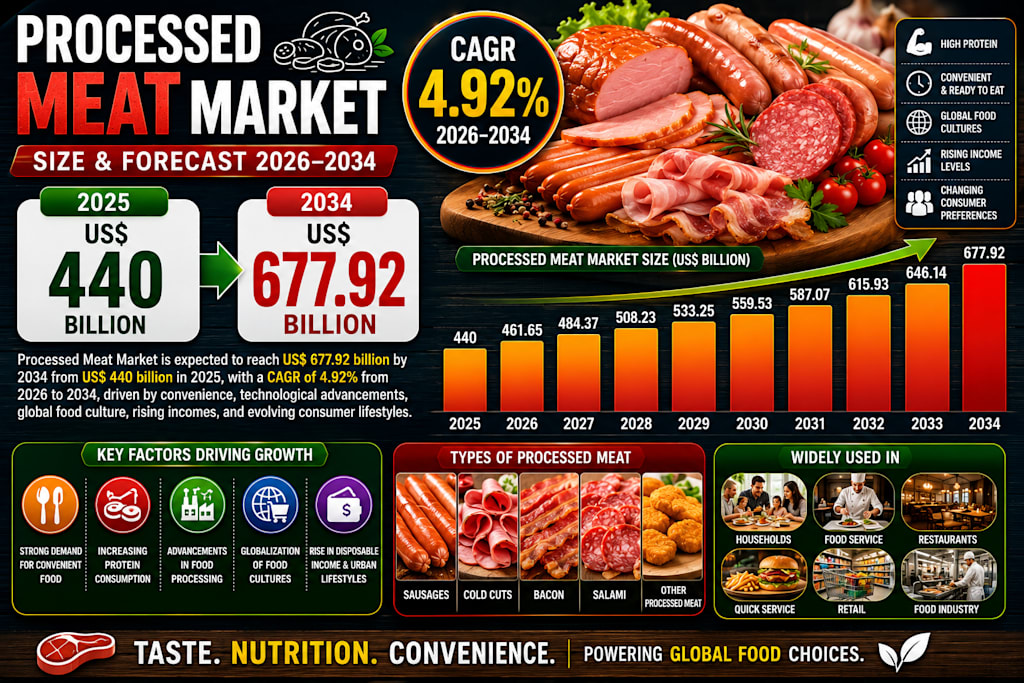
According to Renub Research, the Global Processed Meat Market is expected to grow from US$440 billion in 2025 to US$677.92 billion by 2034, registering a compound annual growth rate (CAGR) of 4.92% between 2026 and 2034. Rising consumer demand for convenience foods, increasing protein consumption, expanding urban populations, and ongoing product innovation are expected to support this sustained market growth.
Processed Meat Remains a Key Segment of the Global Food Industry
Processed meat refers to meat products that have been transformed through techniques such as curing, smoking, salting, fermentation, canning, or preservation to enhance flavor, extend shelf life, and improve convenience.
The category includes a wide variety of products such as sausages, bacon, ham, hot dogs, salami, canned meat, deli meats, frozen meat products, and ready-to-cook meals.
These products are manufactured using different meat sources including poultry, pork, beef, and other animal proteins.
Processed meats play an important role in modern food systems because they offer consumers practical meal solutions while helping reduce food waste through longer shelf life.
Their versatility and accessibility have contributed significantly to their popularity across both developed and emerging economies.
Convenience Continues to Drive Consumer Demand
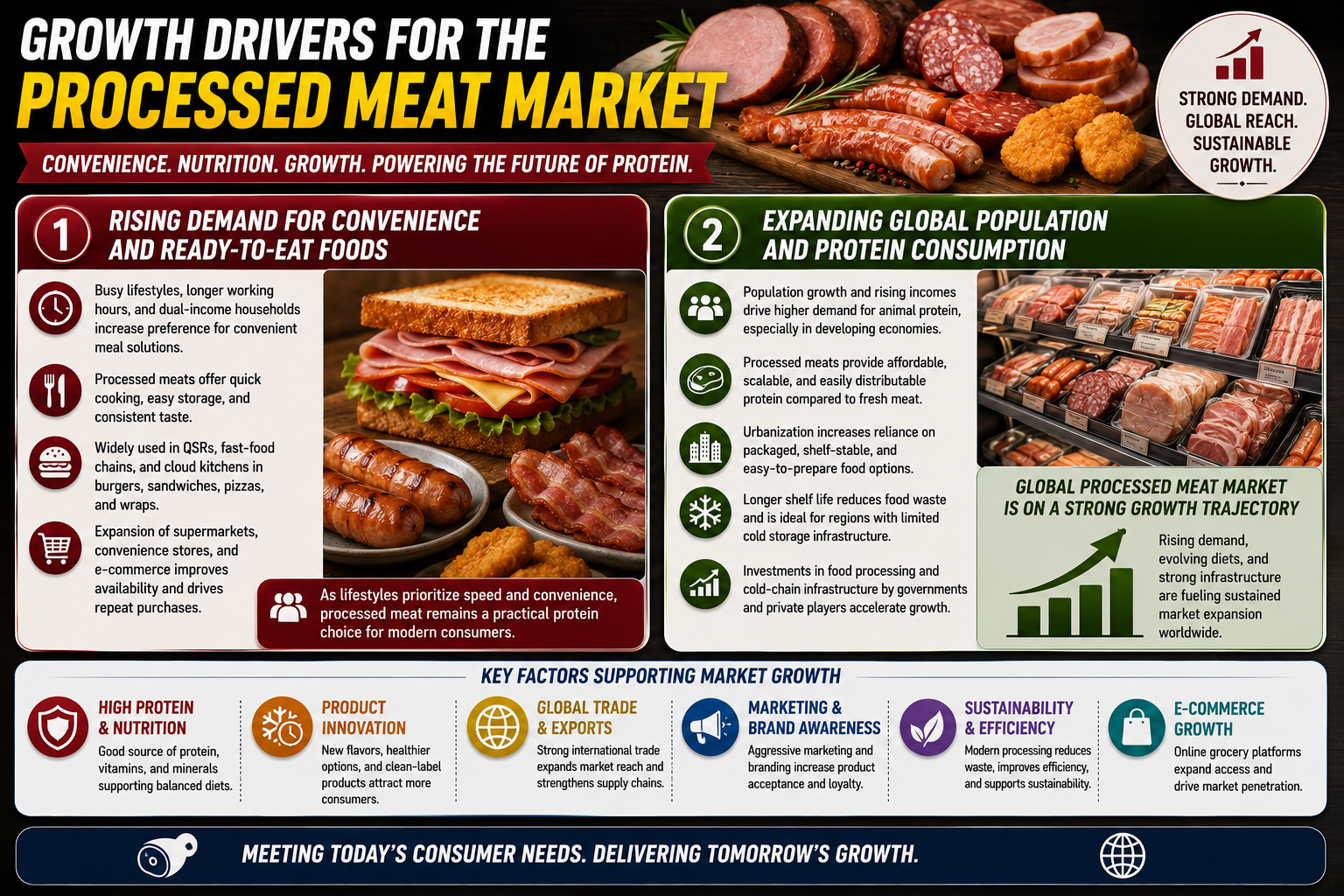
One of the most important factors supporting the growth of the processed meat market is the increasing demand for convenience.
Modern lifestyles have become increasingly fast-paced, leaving consumers with less time to prepare meals from scratch. Longer working hours, urban living, and the growth of dual-income households have increased demand for products that require minimal preparation.
Processed meats address this need exceptionally well.
Products such as sausages, bacon, frozen nuggets, deli slices, and ready-to-cook meals provide quick meal solutions without compromising taste or protein content.
Consumers value these products because they are easy to store, simple to prepare, and suitable for a wide variety of meal occasions.
As convenience continues to influence purchasing decisions worldwide, processed meat products are expected to remain highly relevant.
Growing Protein Consumption Supports Market Expansion
Global demand for protein-rich foods continues to increase.
As incomes rise in developing economies, dietary preferences are shifting toward greater consumption of animal protein. Consumers increasingly view protein as an essential component of healthy diets, supporting muscle development, energy levels, and overall wellness.
Processed meat products provide an affordable and widely accessible source of protein.
In many regions, they offer practical advantages over fresh meat due to longer shelf life, easier transportation, and reduced spoilage risks.
Population growth is further strengthening demand. As the global population expands, the need for efficient and scalable protein sources continues to grow.
Processed meat manufacturers are well positioned to benefit from these long-term demographic and nutritional trends.
Urbanization Is Reshaping Food Consumption Patterns
Urbanization remains a major force driving the processed meat industry.
As more people move into cities, dietary habits often shift toward packaged foods, convenience meals, and ready-to-eat products.
Urban consumers frequently face time constraints, making processed meat products attractive solutions for breakfast, lunch, dinner, and snacking occasions.
The growth of modern retail infrastructure in urban areas has also improved product accessibility.
Supermarkets, hypermarkets, convenience stores, and online grocery platforms increasingly offer extensive selections of processed meat products.
These developments continue to strengthen market penetration and consumer awareness worldwide.
Quick-Service Restaurants Fuel Market Demand
The expansion of quick-service restaurants (QSRs), fast-food chains, and delivery-focused foodservice businesses has become another major growth driver.
Processed meats serve as key ingredients in many popular menu items, including burgers, sandwiches, wraps, pizzas, hot dogs, and breakfast products.
As food delivery services and cloud kitchens continue growing, demand for consistent, easy-to-handle protein ingredients has increased significantly.
Restaurants value processed meat products because they offer predictable quality, standardized portions, and operational efficiency.
The continued expansion of the global foodservice industry is expected to support long-term market growth.
Product Innovation Is Transforming the Industry
Innovation has become essential for maintaining competitiveness within the processed meat sector.
Manufacturers are continuously developing new products, flavors, formulations, and packaging solutions to meet changing consumer preferences.
Health-conscious consumers are encouraging the introduction of lower-sodium products, reduced-fat options, nitrate-free formulations, organic varieties, and clean-label alternatives.
Premium products featuring unique seasonings, gourmet ingredients, and artisanal production methods are also gaining popularity.
These innovations help manufacturers address consumer concerns while expanding market opportunities.
Companies that successfully balance taste, convenience, and health considerations are likely to achieve stronger growth in the years ahead.
Advanced Processing Technologies Improve Quality
Technological advancements continue to enhance the efficiency and quality of processed meat production.
Modern food processing systems allow manufacturers to improve consistency, safety, and product performance while reducing waste.
Packaging innovations such as vacuum sealing, modified atmosphere packaging, and high-pressure processing help extend shelf life while maintaining freshness.
Automation technologies improve production efficiency, reduce labor costs, and enhance quality control.
Digital monitoring systems and traceability tools also strengthen food safety compliance and consumer confidence.
These advancements are helping manufacturers respond to growing demand while maintaining high operational standards.
Frozen Products Continue to Gain Popularity
Frozen processed meat products represent one of the fastest-growing categories within the market.
Consumers appreciate frozen products because they provide convenience, extended shelf life, and flexibility for meal planning.
Frozen sausages, nuggets, meatballs, burgers, and ready-to-cook products are increasingly popular among households seeking quick meal solutions.
Advances in freezing technology have significantly improved product quality, texture, and taste retention.
The expansion of freezer capacity within retail outlets and improvements in cold-chain infrastructure continue supporting this segment's growth.
As consumer demand for convenience increases, frozen products are expected to remain a major market driver.
Poultry Products Lead Market Growth
Among different meat types, poultry-based processed products continue to experience strong demand.
Chicken products are often perceived as healthier alternatives to red meat while remaining affordable and versatile.
Processed poultry products such as nuggets, sausages, deli slices, and marinated items are widely consumed across multiple markets.
Their broad consumer acceptance and favorable pricing contribute significantly to market expansion.
In many developing countries, poultry-based processed meats are becoming increasingly popular due to rising incomes and changing dietary habits.
Supermarkets and Hypermarkets Remain Key Distribution Channels
Retail distribution plays a critical role in the processed meat industry.
Supermarkets and hypermarkets remain the largest sales channels due to their extensive product selection, competitive pricing, and widespread accessibility.
Consumers appreciate the convenience of purchasing multiple food categories in a single shopping trip.
Retailers continue expanding refrigerated and frozen product sections to accommodate growing demand.
Promotional campaigns, private-label products, and premium offerings further stimulate consumer interest.
The continued growth of organized retail is expected to support market expansion across numerous regions.
Online Grocery Platforms Expand Market Reach
The rise of e-commerce is creating new opportunities for processed meat manufacturers.
Online grocery platforms allow consumers to purchase chilled and frozen products from the comfort of their homes.
Advancements in cold-chain logistics and last-mile delivery services have improved the viability of online meat sales.
Consumers increasingly appreciate the convenience of digital shopping, particularly in urban areas.
Subscription services, meal kits, and direct-to-consumer models are further expanding distribution possibilities.
As online grocery adoption continues increasing, digital channels are expected to become increasingly important.
Health Concerns Remain a Major Challenge
Despite strong growth prospects, the processed meat industry faces several challenges.
One of the most significant concerns is the growing awareness of health risks associated with excessive processed meat consumption.
Scientific research has linked high intake of certain processed meat products to cardiovascular disease, obesity, and other chronic health conditions.
Consumers are increasingly scrutinizing nutritional labels and ingredient lists.
Governments and health organizations have introduced stricter regulations regarding additives, preservatives, sodium content, and marketing practices.
Manufacturers must continue investing in healthier formulations and transparent communication to address these concerns.
Competition from Plant-Based Alternatives Intensifies
The rapid growth of plant-based protein products presents another major challenge.
Consumers interested in health, sustainability, and animal welfare are increasingly exploring alternative protein sources.
Plant-based meat products are often marketed as healthier and more environmentally friendly alternatives to traditional processed meats.
Major food companies and emerging startups continue investing heavily in this category.
As consumer awareness grows, processed meat producers face increasing pressure to innovate and diversify their product portfolios.
Successfully adapting to evolving dietary trends will be critical for maintaining market relevance.
Sustainability Becomes Increasingly Important
Environmental sustainability is becoming a major consideration throughout the food industry.
Livestock production contributes to greenhouse gas emissions, water usage, and land resource consumption, leading consumers and regulators to demand greater accountability.
Many processed meat manufacturers are investing in sustainable sourcing practices, improved animal welfare standards, and more efficient production methods.
Efforts to reduce environmental impact are becoming increasingly important for brand reputation and long-term competitiveness.
Companies that successfully address sustainability concerns are likely to strengthen consumer trust and market positioning.
The United States Remains a Major Market
The United States continues to be one of the largest processed meat markets globally.
Strong consumer demand for convenience foods, high protein consumption, and an extensive foodservice sector support market growth.
Products such as bacon, sausages, hot dogs, deli meats, and frozen prepared foods remain popular among American consumers.
Manufacturers are increasingly introducing premium, organic, low-sodium, and clean-label products to address changing preferences.
Despite competition from plant-based alternatives, the U.S. market remains resilient due to continuous innovation and strong consumer demand.
Germany Maintains Strong Traditional Demand
Germany represents one of Europe's most important processed meat markets.
Traditional products such as Bratwurst, Frankfurter sausages, salami, and cured meats remain deeply embedded in German food culture.
Consumers value quality, regional specialties, and food safety standards.
At the same time, demand for organic and reduced-additive products is increasing as health and sustainability concerns gain prominence.
Manufacturers continue adapting to changing preferences while preserving traditional product offerings.
India Emerges as a Fast-Growing Opportunity
India's processed meat market is expanding rapidly due to urbanization, rising incomes, and evolving dietary habits.
Demand for ready-to-cook and ready-to-eat poultry products is particularly strong in metropolitan and Tier-2 cities.
Modern retail channels, e-commerce platforms, and improvements in food processing infrastructure are increasing accessibility and consumer confidence.
The country's young population and growing preference for convenience foods create substantial long-term growth potential.
Saudi Arabia Benefits from Lifestyle Changes
Saudi Arabia's processed meat market is experiencing significant growth driven by urbanization, increasing disposable incomes, and rising demand for convenient meal solutions.
Halal-certified products dominate the market and remain essential for consumer acceptance.
The expansion of supermarkets, hypermarkets, and foodservice establishments continues supporting demand.
As lifestyles become increasingly modernized, processed meat products are expected to maintain strong popularity throughout the Kingdom.
Final Thoughts
The global processed meat market remains a vital part of the modern food industry, supported by rising demand for convenience, affordability, and protein-rich nutrition.
Urbanization, technological innovation, expanding retail infrastructure, and growing foodservice consumption continue creating opportunities for manufacturers worldwide.
With the market projected to grow from US$440 billion in 2025 to US$677.92 billion by 2034, the industry is positioned for sustained expansion despite evolving consumer expectations.
While challenges related to health perceptions, regulatory pressures, sustainability concerns, and alternative proteins remain significant, ongoing innovation and product diversification are helping manufacturers adapt.
As consumers continue seeking practical and flavorful meal solutions, processed meat products are expected to remain an important component of global food consumption for years to come.
About the Creator
Enjoyed the story? Support the Creator.
Subscribe for free to receive all their stories in your feed.
Comments
There are no comments for this story
Be the first to respond and start the conversation.