
Global Milk Powder Market on Track to Reach $47 Billion by 2034 as Demand for Nutrition and Convenience Grows Worldwide
Rising dairy consumption, expanding infant nutrition needs, and advancements in processing technology are fueling the next phase of growth in the milk powder industry.

Milk has long been a nutritional cornerstone in diets around the world. Yet as modern lifestyles become increasingly fast-paced and global food supply chains grow more complex, consumers and manufacturers alike are looking for products that combine nutrition, convenience, and long shelf life.
This is where milk powder has carved out an essential role.
From infant formula and bakery products to nutritional supplements and processed foods, milk powder has become one of the most versatile ingredients in the global food industry. Its ability to deliver the benefits of dairy while offering easier storage, transportation, and extended shelf life has made it indispensable across both developed and emerging markets.
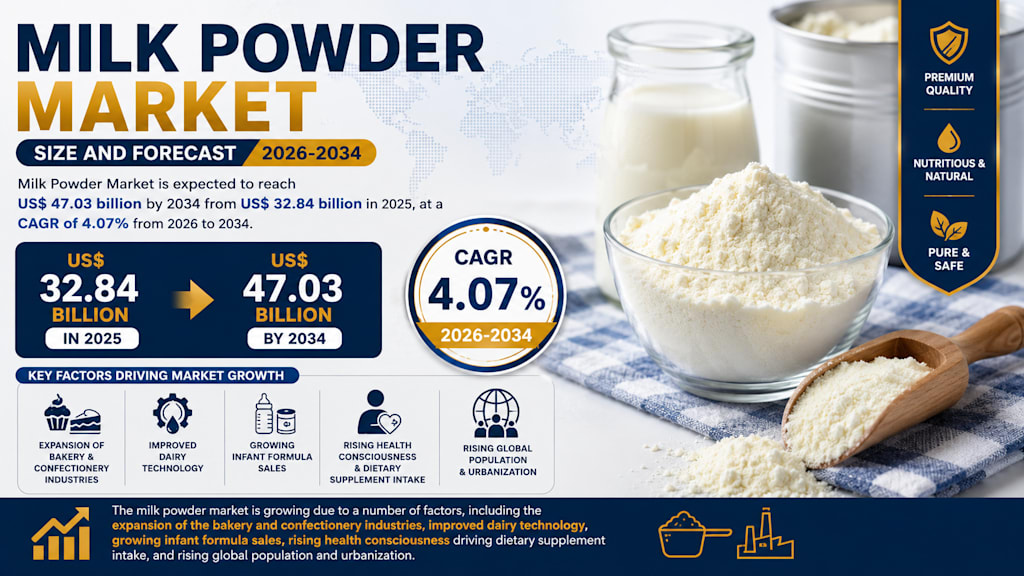
According to Renub Research, the global Milk Powder Market is expected to grow from US$32.84 billion in 2025 to US$47.03 billion by 2034, registering a compound annual growth rate (CAGR) of 4.07% between 2026 and 2034. Growth is being driven by rising dairy consumption, expanding infant nutrition demand, technological advancements in dairy processing, urbanization, and increasing health awareness among consumers.
As food systems continue evolving to meet the needs of a growing global population, milk powder is becoming an increasingly important part of the solution.
Why Milk Powder Matters in the Modern Food Industry
Milk powder is created by removing water from liquid milk through advanced drying processes, producing a shelf-stable product that retains much of milk’s nutritional value.
This simple concept has enormous advantages.
Unlike fresh milk, milk powder can be stored for extended periods without refrigeration, making it particularly valuable in regions where cold-chain infrastructure is limited. It is easier to transport, less vulnerable to spoilage, and highly adaptable for use across a wide range of food products.
Manufacturers rely on milk powder in infant formula, bakery items, confectionery products, beverages, dairy products, nutritional supplements, and even animal feed. Its versatility has made it one of the most important ingredients in global food production.
As populations grow and food distribution networks become increasingly global, demand for shelf-stable nutritional products continues to rise.
Global Demand for Dairy Products Is Accelerating
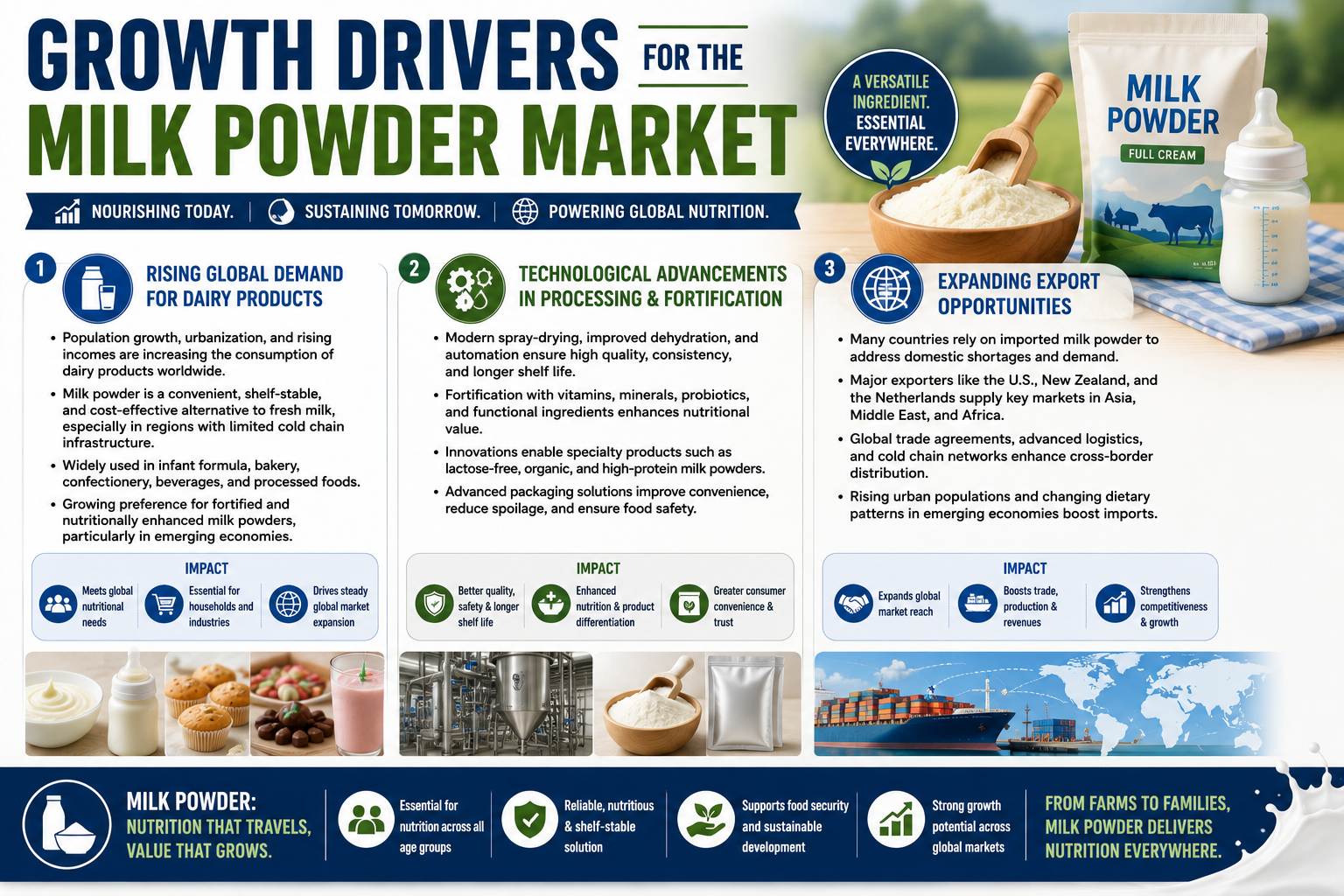
One of the biggest drivers of market growth is the increasing global demand for dairy-based nutrition.
Population growth, urbanization, and rising incomes are encouraging greater consumption of dairy products in many parts of the world. In developing economies, expanding middle-class populations are increasingly incorporating dairy into their diets as living standards improve.
Milk powder plays a crucial role in meeting this demand, particularly in regions where fresh dairy distribution remains challenging.
Consumers appreciate its convenience, while manufacturers value its flexibility as an ingredient. The product's long shelf life also makes it ideal for emergency food supplies, institutional feeding programs, and export markets.
The growing popularity of dairy-enriched foods and beverages continues to strengthen demand across both consumer and industrial applications.
Infant Nutrition Remains a Key Growth Engine
Among the many applications for milk powder, infant nutrition remains one of the most important.
Parents increasingly prioritize nutritional quality when selecting products for infants and young children. As a result, demand for fortified infant formula and specialized nutritional products continues to grow worldwide.
Milk powder provides the foundation for many infant formula products due to its nutritional profile and processing flexibility. Manufacturers can enrich formulations with vitamins, minerals, probiotics, and other ingredients designed to support healthy growth and development.
In emerging markets, rising awareness of infant nutrition is contributing to increased demand for premium and scientifically formulated products.
The infant nutrition segment remains one of the industry's most stable and profitable growth drivers, supported by ongoing investment in research, product innovation, and regulatory compliance.
Technology Is Transforming Milk Powder Production
The milk powder industry has benefited significantly from technological innovation.
Modern processing technologies allow manufacturers to preserve nutritional quality while improving efficiency and product consistency. Advanced spray-drying systems, automated production lines, and enhanced quality-control measures have elevated production standards across the industry.
These improvements help manufacturers meet increasingly strict regulatory requirements while maintaining product safety and nutritional integrity.
Technology has also enabled the development of specialized milk powders tailored to different consumer needs. Today, products are available in organic, high-protein, lactose-free, fortified, and functional formulations designed to serve specific dietary requirements.
As innovation continues, manufacturers are finding new ways to improve both product performance and consumer appeal.
Fortified Nutrition Is Becoming More Popular
Health-conscious consumers are driving demand for products that offer more than basic nutrition.
Milk powder manufacturers are increasingly responding by fortifying products with vitamins, minerals, probiotics, and other functional ingredients that support immunity, digestive health, bone strength, and overall wellness.
Fortified milk powders are particularly popular among children, older adults, athletes, and individuals seeking convenient nutritional support.
The trend reflects a broader shift toward preventive health and wellness, where consumers actively seek products that contribute to long-term health outcomes.
As awareness of nutrition continues to grow globally, fortified milk powder products are expected to become an increasingly important segment of the market.
Export Markets Continue to Expand
International trade plays a vital role in the milk powder industry.
Many countries lack sufficient domestic dairy production to meet growing consumer demand, creating strong opportunities for exporters.
Major dairy-producing nations such as the United States, New Zealand, and several European countries supply milk powder to markets across Asia, the Middle East, and Africa. These regions often rely on imported dairy products to supplement local production and support food manufacturing industries.
Improved logistics, international trade agreements, and advancements in transportation infrastructure have made global distribution more efficient than ever before.
As emerging economies continue to urbanize and dietary patterns evolve, export demand is expected to remain a significant growth engine for the industry.
Challenges Facing the Industry
Despite strong growth prospects, the milk powder market faces several important challenges.
One of the most significant concerns is the volatility of raw milk prices.
Milk production is influenced by numerous factors, including weather conditions, feed costs, government policies, and seasonal supply fluctuations. These variables can create uncertainty for manufacturers and affect profitability.
Milk powder production is also highly energy-intensive. Processes such as pasteurization, homogenization, and spray drying require substantial energy inputs, contributing to operational costs.
In addition, packaging, storage, and transportation expenses continue to rise, creating additional pressure on manufacturers operating in highly competitive markets.
Managing these costs while maintaining product quality and affordability remains a constant challenge.
Plant-Based Alternatives Are Changing the Competitive Landscape
Another growing challenge comes from the rise of plant-based alternatives.
Products made from soy, almond, oat, coconut, and other plant-based ingredients have gained popularity among consumers seeking vegan, lactose-free, or environmentally conscious options.
Many of these alternatives are marketed as sustainable, cholesterol-free, and easier to digest, attracting health-conscious consumers who may previously have chosen traditional dairy products.
As a result, milk powder manufacturers are increasingly investing in innovation, cleaner labels, fortified products, and specialized formulations to remain competitive.
The industry's future will likely involve coexistence between traditional dairy products and alternative nutrition solutions, each serving different consumer needs.
Regional Markets Show Strong Growth Potential
The United States remains one of the world's most important milk powder markets, supported by advanced dairy infrastructure, strong domestic demand, and significant export activity. Demand for protein-rich and value-added dairy products continues to drive growth.
Germany benefits from a strong dairy production base and extensive use of milk powder in infant nutrition, bakery products, and food processing applications.
India is experiencing rapid growth due to increasing urbanization, population expansion, rising disposable incomes, and growing awareness of nutritional products. Milk powder plays a crucial role in both household consumption and industrial food production.
Meanwhile, the United Arab Emirates relies heavily on imported milk powder to meet consumer demand, creating significant opportunities for international suppliers.
These regional trends highlight the global importance of milk powder as both a consumer product and an industrial ingredient.
Recent Industry Developments Reflect Market Momentum
Several notable developments illustrate the industry's ongoing expansion.
In June 2025, Darigold opened a major dairy processing facility in Washington State capable of processing up to eight million pounds of milk daily for domestic and international markets. Meanwhile, Asahi Group entered the dairy-alternative segment with Like Milk, a yeast-based milk substitute designed to appeal to consumers seeking allergen-free options. Nova Dairy introduced a new skimmed milk powder targeting health-conscious consumers, while Tanzania's ASAS Dairies launched the country's first domestically produced milk powder product.
These developments demonstrate the industry's commitment to innovation, expansion, and adaptation to evolving consumer preferences.
Final Thoughts
The global milk powder market is entering a period of sustained growth driven by rising dairy consumption, expanding infant nutrition demand, technological innovation, and increasing health awareness.
With the market projected to exceed US$47 billion by 2034, manufacturers have significant opportunities to serve growing populations seeking convenient, nutritious, and long-lasting dairy products.
At the same time, challenges related to raw material costs, sustainability, and plant-based competition will require continued innovation and strategic adaptation.
The companies that succeed will be those that balance tradition with modernization, offering products that meet changing consumer expectations while maintaining the nutritional value and reliability that have long defined the dairy industry.
As global food systems evolve, milk powder will remain an essential ingredient helping feed an increasingly connected and growing world.
About the Creator
Enjoyed the story? Support the Creator.
Subscribe for free to receive all their stories in your feed.
Comments
There are no comments for this story
Be the first to respond and start the conversation.