
Global Manga Market Size and Forecast 2025–2033: Digital Reading, Anime Boom, and Global Fandom Drive a New Era of Growth
Global Manga Industry Set to Reach US$ 63.08 Billion by 2033 as Digital Platforms and Anime Adaptations Expand Worldwide Readership

Global Manga Market Size and Forecast 2025–2033
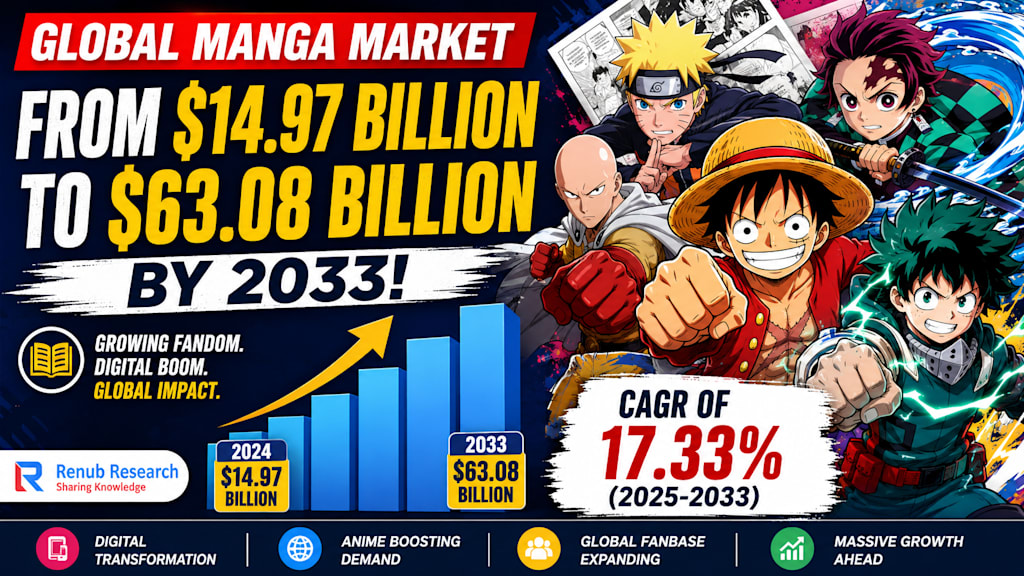
The global manga market is entering an extraordinary phase of expansion as digital transformation, growing anime consumption, and international demand for Japanese storytelling continue reshaping the entertainment landscape. According to Renub Research, the Global Manga Market is expected to grow from US$ 14.97 billion in 2024 to US$ 63.08 billion by 2033, registering an impressive CAGR of 17.33% during the forecast period from 2025 to 2033.
Manga, the iconic Japanese comic and graphic novel format, has evolved from a domestic cultural phenomenon into a worldwide entertainment powerhouse. Once primarily consumed in Japan, manga now attracts millions of readers across North America, Europe, Latin America, the Middle East, and Asia-Pacific. Its influence extends beyond printed pages, serving as the foundation for blockbuster anime series, films, merchandise, mobile games, and streaming content.
The growing acceptance of manga among mainstream audiences, combined with the rapid expansion of digital reading platforms, is creating unprecedented opportunities for publishers, creators, distributors, and technology companies worldwide.
Understanding Manga's Global Appeal
Manga encompasses a diverse collection of illustrated stories that span genres such as action, romance, fantasy, science fiction, sports, horror, mystery, and slice-of-life narratives. Unlike many Western comics, manga is traditionally serialized and read from right to left, offering long-form storytelling that allows readers to develop deep connections with characters and fictional worlds.
Its universal themes of friendship, perseverance, adventure, love, and personal growth resonate across cultures and age groups. This broad appeal has transformed manga into one of Japan's most successful cultural exports.
Today, manga serves multiple functions beyond entertainment. Educational institutions increasingly use illustrated content to encourage literacy and engagement. Brands incorporate manga-style visuals into marketing campaigns, while therapists and educators explore its potential as a communication and emotional learning tool.
As global audiences seek immersive storytelling experiences, manga continues to bridge cultural boundaries and attract readers from diverse backgrounds.
Digital Platforms Revolutionizing Manga Consumption
One of the strongest growth drivers in the global manga market is the rapid adoption of digital reading platforms.
The traditional model of purchasing printed manga volumes from bookstores has been supplemented—and in many markets partially replaced—by mobile applications and subscription-based digital services. Platforms such as Manga Plus, Crunchyroll Manga, and other digital reading ecosystems provide instant access to thousands of titles across multiple languages.
Digital distribution offers several advantages:
Immediate global accessibility
Faster localization and translation
Lower distribution costs
Convenient mobile reading experiences
Simultaneous international releases
Modern readers, particularly Gen Z and millennials, increasingly prefer consuming content through smartphones and tablets. Digital manga platforms cater directly to these habits by offering affordable subscriptions, personalized recommendations, and extensive content libraries.
The launch of new manga-focused services across North America and Europe continues expanding readership while helping publishers combat piracy through legal alternatives.
Globalization of Japanese Pop Culture Fuels Demand
The international success of Japanese pop culture has become a major catalyst for manga market growth.
Anime streaming services have introduced countless viewers to manga-based stories, encouraging fans to explore original source material. Popular franchises often experience dramatic increases in manga sales following successful anime adaptations.
The worldwide popularity of Japanese entertainment conventions, cosplay events, gaming communities, and fan gatherings has further strengthened manga's cultural influence.
Series such as Naruto, One Piece, Demon Slayer, Attack on Titan, and My Hero Academia have become global brands recognized far beyond traditional manga audiences. Their success demonstrates how manga content can evolve into multimedia franchises generating revenue from publishing, streaming, merchandise, gaming, and live events.
As streaming platforms continue investing in anime production and international distribution, demand for original manga content is expected to grow alongside it.
Expanding Audience Demographics Strengthen Market Potential
Manga's versatility allows it to appeal to virtually every age group and demographic segment.
Unlike many entertainment formats that target specific audiences, manga offers specialized content categories designed for children, teenagers, young adults, and mature readers.
Popular audience segments include:
Children's Manga
Children's manga focuses on educational themes, humor, friendship, and creativity. These titles often serve as introductory reading materials that help young readers develop literacy skills while enjoying engaging visual storytelling.
Teen Manga
Teen readers remain one of the largest consumer groups. Action-packed adventures, sports narratives, school-life stories, and fantasy worlds continue attracting millions of adolescent readers worldwide.
Adult Manga
Adult-oriented manga has emerged as one of the fastest-growing categories. These stories explore sophisticated topics such as politics, psychology, crime, relationships, and social issues.
The growing demand for mature storytelling among adult readers is encouraging publishers to diversify content offerings and expand genre availability.
Print Manga Maintains Strong Market Position
Despite digital growth, printed manga remains a significant component of the global market.
Collectors and dedicated fans continue purchasing physical volumes due to their artistic value, ownership benefits, and collectible appeal. Special editions, limited releases, hardcover volumes, and boxed sets often generate strong sales among enthusiasts.
Physical bookstores, comic shops, and online retailers remain essential distribution channels, particularly in Japan, North America, and Europe.
Many readers appreciate the tactile experience of reading physical books and view manga collections as long-term investments. This emotional attachment ensures ongoing demand for printed editions even as digital formats gain popularity.
Sci-Fi and Fantasy Genres Lead Global Revenue
Among all manga genres, science fiction and fantasy remain dominant revenue generators.
These genres captivate readers through expansive world-building, imaginative settings, supernatural elements, and complex character arcs. Their cinematic storytelling naturally lends itself to anime adaptations and merchandise opportunities.
Fantasy and sci-fi franchises often develop into comprehensive entertainment ecosystems that include:
Anime television series
Feature films
Video games
Toys and collectibles
Apparel
Licensing agreements
The commercial success of these franchises significantly contributes to overall manga market growth.
Sports Manga Continues Building International Popularity
Sports manga represents another highly successful category.
Titles centered on volleyball, basketball, football, baseball, cycling, and other sports inspire readers through themes of determination, teamwork, discipline, and personal growth.
The global popularity of series such as Haikyuu!!, Blue Lock, and Slam Dunk demonstrates the genre's ability to attract readers regardless of athletic interest.
Sports manga frequently benefits from anime adaptations that introduce stories to broader audiences, creating a powerful cycle of readership growth and franchise expansion.
Challenges Facing the Global Manga Industry
Piracy and Copyright Infringement
Despite strong growth prospects, piracy remains one of the industry's most significant challenges.
Unauthorized scanlation websites distribute translated manga without licensing agreements, reducing publisher revenues and limiting creator compensation. The availability of free pirated content often discourages consumers from purchasing legitimate versions.
Publishers are responding through legal action, international partnerships, and expanded digital offerings designed to provide affordable alternatives.
Cultural and Translation Barriers
Successful global expansion requires careful localization.
Certain cultural references, linguistic nuances, and traditional Japanese concepts may not translate easily into international markets. Publishers must balance authenticity with accessibility when adapting content for foreign audiences.
Translation delays and localization challenges can affect reader engagement, particularly in regions where demand for simultaneous releases continues growing.
Regional Market Analysis
United States
The United States has emerged as one of the world's most dynamic manga markets outside Japan.
Anime's mainstream popularity has significantly increased manga consumption among teenagers and young adults. Retail chains, online bookstores, and specialty comic retailers continue reporting strong demand for translated manga titles.
Partnerships between American distributors and Japanese publishers have accelerated localization efforts and improved market accessibility.
Germany
Germany remains one of Europe's strongest manga markets.
A vibrant convention culture, widespread bookstore availability, and strong fan communities support consistent growth. High-quality translations and extensive genre diversity have helped establish manga as a mainstream entertainment category among German readers.
India
India represents one of the most promising emerging markets.
Rising smartphone adoption, affordable internet access, and growing anime awareness are introducing manga to millions of young consumers. Digital platforms are playing a particularly important role in market development due to accessibility and affordability advantages.
As local publishers expand translation efforts and awareness continues increasing, India is expected to become a significant contributor to future market growth.
Brazil
Brazil possesses one of Latin America's most passionate manga communities.
Strong fan engagement, localized publishing initiatives, anime streaming services, and recurring conventions have established a robust ecosystem for manga consumption. The country's youthful population and enthusiastic fandom continue supporting market expansion.
Saudi Arabia
Saudi Arabia is witnessing growing interest in manga among younger generations.
Increasing internet penetration, digital platform adoption, and broader entertainment sector development are creating favorable conditions for market growth. Arabic-language manga releases are helping expand accessibility and attract new readers.
Competitive Landscape
Competition within the global manga industry continues intensifying as publishers pursue international expansion strategies.
Major companies are investing in digital distribution, licensing agreements, localization initiatives, cross-media partnerships, and global marketing campaigns to strengthen their market positions.
Publishers increasingly collaborate with streaming platforms, gaming developers, merchandise manufacturers, and entertainment studios to maximize franchise value and audience reach.
Innovation in digital delivery, subscription models, and multilingual content availability is expected to remain a key competitive differentiator throughout the forecast period.
10 Recent Industry Developments
Kodansha expanded its international awareness campaign promoting Japanese culture and travel etiquette through manga-based initiatives at major transportation hubs.
Crunchyroll announced enhanced digital manga offerings to strengthen subscriber engagement and broaden content accessibility in North America.
Kadokawa increased investment in global anime and manga licensing partnerships to expand international market penetration.
Shogakukan accelerated digital publication initiatives aimed at reducing release delays between Japan and overseas markets.
Bilibili Comics expanded multilingual content offerings to attract wider international audiences.
Seven Seas Entertainment secured additional licensing agreements for popular Japanese manga titles targeting English-speaking readers.
Good Smile Company introduced new merchandise collaborations tied to successful manga and anime franchises.
Akita Publishing strengthened digital distribution partnerships to increase readership across international platforms.
Futabasha expanded cross-media adaptation projects connecting manga properties with animation and gaming opportunities.
Archie Comic Publications explored broader collaborations involving Japanese-inspired storytelling formats and global publishing partnerships.
Future Outlook
The future of the global manga market appears exceptionally bright. Rising digital consumption, expanding anime viewership, growing international licensing activity, and broader demographic appeal are creating powerful long-term growth drivers.
As publishers continue improving accessibility through multilingual platforms and simultaneous global releases, manga's audience base is expected to expand significantly. Emerging markets such as India, Southeast Asia, Latin America, and the Middle East present particularly attractive growth opportunities.
By 2033, manga will likely evolve from a successful publishing segment into an even more integrated global entertainment ecosystem spanning digital media, animation, gaming, merchandise, education, and cultural experiences.
About the Creator
Enjoyed the story? Support the Creator.
Subscribe for free to receive all their stories in your feed.
Comments
There are no comments for this story
Be the first to respond and start the conversation.