
Global Luxury Jewelry Market Size and Forecast 2025–2033: Wealth Expansion, Personalization Trends, and Digital Luxury Reshape the Industry
Rising Affluence and Evolving Consumer Preferences Drive the Global Luxury Jewelry Market Toward US$ 99.15 Billion by 2033

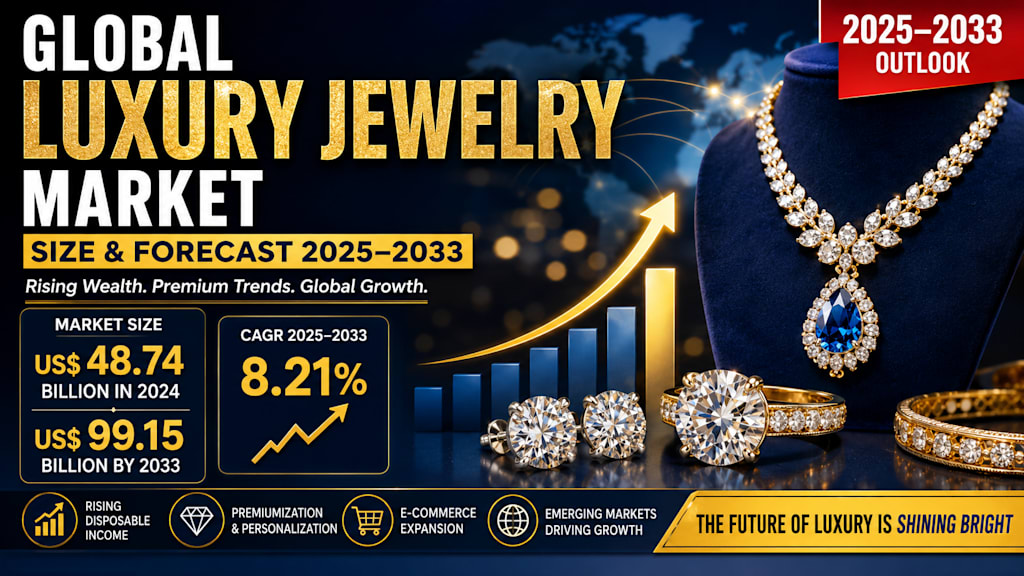
Global Luxury Jewelry Market Size and Forecast 2025–2033
The global luxury jewelry market is entering a transformative decade marked by rising consumer affluence, digital retail innovation, and growing demand for personalized luxury products. According to Renub Research, the Global Luxury Jewelry Market is projected to grow from US$ 48.74 billion in 2024 to US$ 99.15 billion by 2033, registering a CAGR of 8.21% during 2025–2033
Luxury jewelry has long been associated with prestige, heritage, and timeless elegance. Crafted from precious metals such as gold and platinum and adorned with diamonds, pearls, and rare gemstones, luxury jewelry continues to symbolize wealth, status, and personal expression. However, today's market extends far beyond traditional notions of luxury. Modern consumers increasingly seek unique designs, sustainable sourcing, digital shopping experiences, and jewelry pieces that reflect individuality.
As disposable incomes rise across developed and emerging economies alike, luxury jewelry brands are adapting their strategies to appeal to a broader and younger customer base. Technological advancements, social media influence, and growing cross-border e-commerce capabilities are further accelerating industry growth.
Luxury Jewelry Continues to Hold Strong Emotional and Investment Value
Luxury jewelry occupies a unique position within the luxury goods industry because it combines emotional significance with financial value. Unlike many luxury purchases that depreciate over time, high-quality jewelry often retains or appreciates in value, making it attractive as both a fashion statement and an investment asset.
Consumers purchase luxury jewelry for various occasions, including engagements, weddings, anniversaries, milestone celebrations, and family inheritance purposes. The emotional connection associated with these purchases often translates into strong brand loyalty and long-term customer relationships.
Leading luxury jewelry houses have successfully cultivated exclusivity through exceptional craftsmanship, limited-edition collections, and strong heritage branding. As a result, consumers continue to perceive luxury jewelry as a symbol of sophistication and achievement.
Increasing Disposable Income and Wealth Creation Fuel Market Expansion
One of the most significant drivers of the luxury jewelry market is the steady rise in disposable income and wealth accumulation worldwide. Expanding middle-class populations and increasing numbers of high-net-worth individuals are creating favorable conditions for luxury spending.
Countries such as China, India, Saudi Arabia, and the United Arab Emirates are witnessing substantial growth in affluent consumers. Rising urbanization, economic development, and exposure to global luxury trends have encouraged aspirational purchasing behaviors among younger generations.
Luxury jewelry is increasingly viewed not only as an accessory but also as a lifestyle investment. Consumers are willing to allocate larger portions of their discretionary income toward premium products that offer exclusivity, craftsmanship, and long-term value.
Luxury brands are responding by expanding boutique networks, enhancing localized marketing campaigns, and launching collections specifically tailored to regional preferences and cultural traditions.
E-Commerce Revolution Is Redefining Luxury Jewelry Retail
The luxury jewelry industry has undergone a remarkable digital transformation over the past decade. Traditionally dependent on physical stores and personal consultations, luxury jewelry brands are now embracing sophisticated online retail strategies.
Advanced technologies such as virtual try-on features, augmented reality experiences, high-definition product visualization, and personalized digital consultations have significantly improved online purchasing confidence.
Consumers can now browse extensive collections, compare designs, and make secure purchases from anywhere in the world. International shipping infrastructure and cross-border e-commerce capabilities have further expanded market accessibility.
The digital shift has proven particularly effective among younger consumers who prefer seamless online shopping experiences. Brands that successfully integrate physical and digital channels are gaining a competitive advantage in an increasingly omnichannel retail environment.
A notable example is ANEKA, which announced international expansion plans, including a Paris store and a future U.S. location. Such initiatives reflect the industry's growing emphasis on global accessibility and multicultural brand positioning.
Celebrity Influence and Social Media Accelerate Consumer Demand
Social media platforms have emerged as powerful marketing channels for luxury jewelry brands. Instagram, TikTok, YouTube, and Pinterest allow companies to showcase collections directly to millions of consumers worldwide.
Celebrity endorsements continue to play a crucial role in shaping purchasing decisions. High-profile appearances at red-carpet events, fashion weeks, film premieres, and award ceremonies create instant visibility for luxury jewelry pieces.
Millennials and Generation Z consumers are particularly influenced by digital storytelling and influencer recommendations. These demographics value authenticity, brand purpose, and personalized experiences.
Luxury jewelry companies increasingly collaborate with actors, musicians, athletes, and fashion influencers to create aspirational campaigns that resonate with younger audiences.
For instance, David Yurman appointed actor and director Michael B. Jordan as a global brand ambassador, highlighting the growing importance of celebrity partnerships in driving brand engagement and product awareness.
Economic Volatility Remains a Significant Market Challenge
Despite strong long-term growth prospects, the luxury jewelry market remains vulnerable to economic fluctuations.
Luxury jewelry purchases are often discretionary, making them sensitive to changes in consumer confidence, inflation rates, and geopolitical uncertainty. During periods of economic instability, consumers may postpone large purchases or shift spending priorities.
Even affluent consumers can become more cautious during market downturns, affecting sales volumes for premium jewelry brands. Currency fluctuations, supply chain disruptions, and changing trade policies further contribute to market uncertainty.
To maintain profitability during challenging periods, luxury brands must adopt flexible pricing strategies, optimize inventory management, and diversify revenue streams across geographic regions.
Counterfeit Products Continue to Threaten Brand Integrity
Counterfeiting remains one of the most persistent challenges facing the global luxury jewelry industry.
The proliferation of counterfeit products through online marketplaces and unauthorized sellers undermines consumer trust and damages brand reputation. Fake luxury jewelry often mimics the appearance of authentic products while lacking quality, certification, and craftsmanship.
Luxury brands are investing heavily in authentication technologies, including blockchain-based verification systems, digital certificates, and advanced product tracking mechanisms.
Consumer education initiatives are also becoming increasingly important. By helping buyers identify authentic products and trusted retail channels, brands can strengthen confidence and reduce exposure to counterfeit risks.
Gold Luxury Jewelry Maintains Market Leadership
Gold remains one of the most sought-after materials in the luxury jewelry market. Its enduring appeal stems from cultural significance, intrinsic value, and versatility across design styles.
In countries such as India, Saudi Arabia, and the UAE, gold jewelry plays a central role in weddings, festivals, and family traditions. Consumers often view gold purchases as both decorative and financial investments.
Luxury gold jewelry brands continue to innovate through contemporary designs that appeal to younger buyers while preserving traditional craftsmanship techniques. This balance between heritage and modernity ensures sustained demand across generations.
Diamond Jewelry Continues to Symbolize Prestige and Romance
Diamond jewelry remains a cornerstone of the luxury market, particularly in engagement rings and celebratory gifts.
Consumers continue to associate diamonds with commitment, exclusivity, and luxury. Established brands have reinforced this perception through decades of successful marketing and iconic product collections.
Additionally, advancements in lab-grown diamond production are creating new opportunities within the luxury segment. Consumers increasingly appreciate the combination of sustainability, affordability, and visual quality offered by these alternatives.
North America remains a dominant market for luxury diamond jewelry, while demand in Asia-Pacific continues to rise rapidly due to growing wealth and urbanization.
Pearl Jewelry Experiences Modern Revival
Luxury pearl jewelry is undergoing a resurgence as designers reinterpret classic pearl aesthetics for contemporary consumers.
South Sea, Tahitian, and Akoya pearls are increasingly featured in modern collections that combine traditional elegance with fashion-forward styling. Younger consumers are embracing pearls as versatile accessories suitable for both formal and casual occasions.
The bridal segment remains a major contributor to pearl jewelry demand, particularly across Asian markets where pearls hold cultural significance.
Luxury Necklaces Lead Product Demand
Among product categories, luxury necklaces continue to generate significant consumer interest.
From minimalist pendants and diamond solitaires to elaborate gemstone statement pieces, luxury necklaces offer versatility and personal expression. Layering trends, customization options, and demand for everyday luxury have further strengthened this segment.
Women between the ages of 25 and 45 represent a particularly influential customer group, driving demand for distinctive necklace designs that blend fashion and individuality.
Women Remain the Largest Consumer Segment
Female consumers continue to dominate the luxury jewelry market worldwide.
Beyond traditional gifting occasions, women are increasingly purchasing luxury jewelry for themselves as symbols of achievement, empowerment, and personal style. This shift toward self-purchasing has created new opportunities for brands to develop targeted marketing campaigns and customized product offerings.
Personalization services, bespoke designs, and meaningful storytelling are becoming essential elements of successful customer engagement strategies.
Regional Market Insights
United States
The United States remains one of the world's most important luxury jewelry markets. Physical retail stores continue to play a vital role, particularly for high-value purchases where customers seek expert consultation, certification, and hands-on product evaluation.
Germany
Germany's luxury jewelry market is characterized by strong demand for precision craftsmanship, quality materials, and ethical sourcing. Sustainability considerations increasingly influence purchasing decisions among German consumers.
India
India represents one of the fastest-growing luxury jewelry markets globally. Strong cultural affinity for gold and diamonds, combined with rising disposable incomes and urbanization, continues to drive demand for premium jewelry products.
Brazil
Brazil's luxury jewelry sector benefits from a growing affluent population and strong appreciation for locally sourced gemstones. Major urban centers remain key retail hubs for luxury brands.
Saudi Arabia
Saudi Arabia offers substantial growth opportunities due to high purchasing power, cultural affinity for fine jewelry, and evolving consumer lifestyles. Ongoing economic reforms and increased female participation in retail spending are further supporting market expansion.
Competitive Landscape
The luxury jewelry market remains highly competitive, with established heritage brands competing alongside emerging luxury players. Companies focus on product innovation, digital transformation, sustainability initiatives, and global expansion to strengthen market positions.
Key market participants include Gucci, Swatch Group, Richemont, Tiffany & Co., Graff, Louis Vuitton, Signet Jewelers, Chopard, Mikimoto, and Pandora.
10 Recent Developments by Leading Luxury Jewelry Companies
1. Pandora
Pandora continued expanding its lab-grown diamond collection across major international markets, supporting sustainability-focused consumer demand.
2. Tiffany & Co.
Tiffany & Co. strengthened its global retail footprint through flagship store renovations and enhanced luxury customer experiences.
3. Louis Vuitton
Louis Vuitton expanded its high jewelry collections featuring rare gemstones and artistic craftsmanship inspired by global cultural themes.
4. Richemont
Richemont accelerated investments in digital luxury retail platforms and omnichannel customer engagement strategies.
5. Chopard
Chopard reinforced its commitment to responsible sourcing by increasing the use of ethically sourced gold in luxury collections.
6. Signet Jewelers
Signet Jewelers enhanced AI-powered personalization tools to improve customer engagement across online channels.
7. Graff
Graff unveiled exclusive high-jewelry creations featuring exceptionally rare diamonds targeted at ultra-high-net-worth clients.
8. Mikimoto
Mikimoto launched contemporary pearl jewelry collections designed to attract younger luxury consumers globally.
9. Gucci
Gucci expanded its fine jewelry portfolio with innovative designs combining heritage craftsmanship and modern luxury aesthetics.
10. Swatch Group
Swatch Group strengthened premium jewelry offerings through brand collaborations and expanded luxury retail initiatives.
Final Thoughts
The global luxury jewelry market is poised for remarkable growth through 2033, driven by rising wealth creation, digital transformation, expanding global consumer bases, and increasing demand for personalized luxury experiences. While challenges such as economic volatility and counterfeiting remain significant, industry leaders continue to innovate through technology, sustainability, and customer-centric strategies.
As luxury jewelry evolves from a traditional symbol of status into a modern expression of identity, craftsmanship, and investment value, brands that successfully balance heritage with innovation will be best positioned to capture future growth opportunities. With the market expected to nearly double in value by 2033, the luxury jewelry industry stands as one of the most dynamic and resilient segments within the global luxury goods landscape.
About the Creator
Enjoyed the story? Support the Creator.
Subscribe for free to receive all their stories in your feed.
Comments
There are no comments for this story
Be the first to respond and start the conversation.